
How to Conduct a Fire Drill
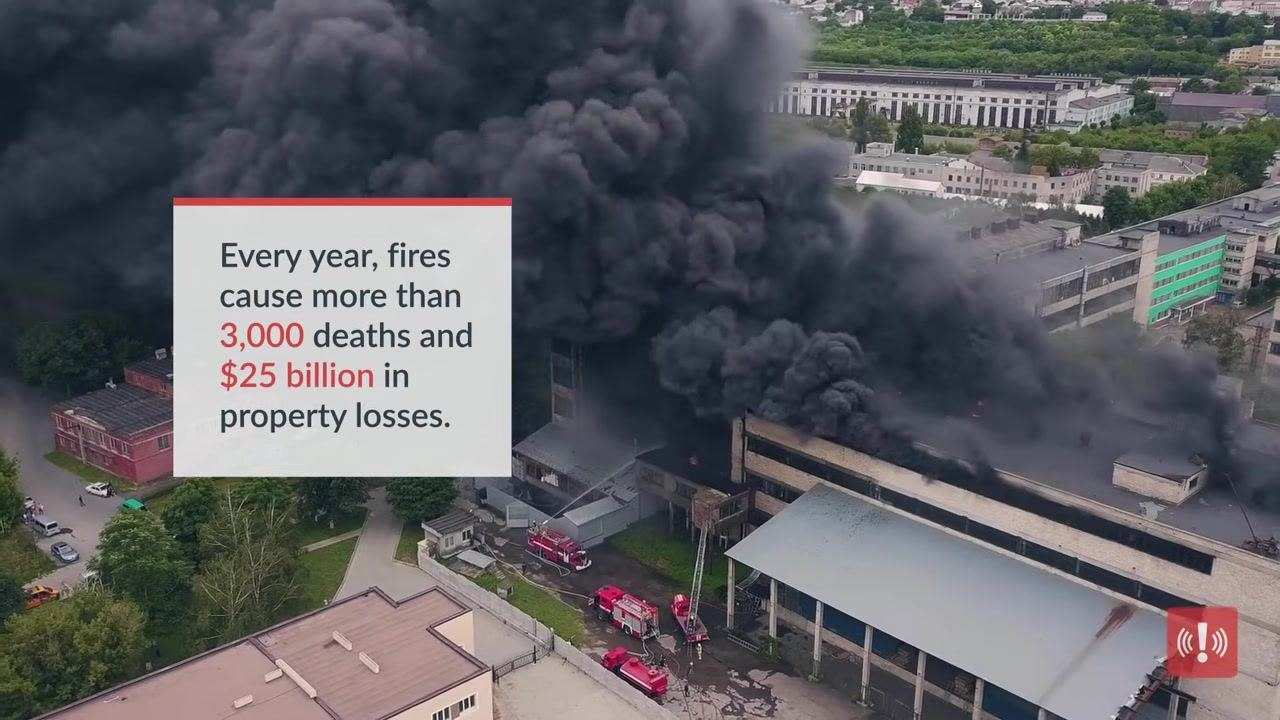
Every year, fires cause more than 3,000 deaths and $25 billion in property losses, yet many organizations still underestimate how much preparation a fire drill requires. This SOP explains how to conduct a fire drill using a structured, five-step process: getting everyone on board, communicating your plan, setting goals, rehearsing the drill, and appointing observers to evaluate performance. Following this plan helps you build a documented fire evacuation program, assign clear roles, and continuously improve your organization's readiness for a real emergency.
Video: How to Conduct a Fire Drill by AlertMedia (2022). All credit for the demonstration goes to the creator; watch the original on YouTube. The written guide below was generated from this video by Docsie. Creator? Request a change or removal.
Every year, fires cause more than 3,000 deaths and $25 billion in property losses, yet many organizations still underestimate how much preparation a fire drill requires. This SOP explains how to conduct a fire drill using a structured, five-step process: getting everyone on board, communicating your plan, setting goals, rehearsing the drill, and appointing observers to evaluate performance. Following this plan helps you build a documented fire evacuation program, assign clear roles, and continuously improve your organization's readiness for a real emergency.
Prerequisites
Before you conduct a fire drill, you need a written fire evacuation plan that documents roles, responsibilities, and expected actions. If you do not already have one, use a step-by-step fire evacuation template to build this document before scheduling your first drill.
Exercise scope
Drill type: Workplace fire evacuation drill, ranging from simple walk-throughs to full-scale exercises.
Location: Office buildings, factory floors, or warehouse facilities where employees, fire team members, and executives are present.
Scheduling: Add the fire drill event to the shared company Outlook or Google Calendar so all employees know the date and time in advance.
Participating groups: The dedicated fire safety team, all employees at the location, and executive leadership who authorize employees to leave workstations, factory lines, or warehouse duties.
Capabilities tested: Evacuation procedures, internal emergency communication, equipment shutdown (where applicable), and the fire team's ability to execute the plan under realistic conditions.
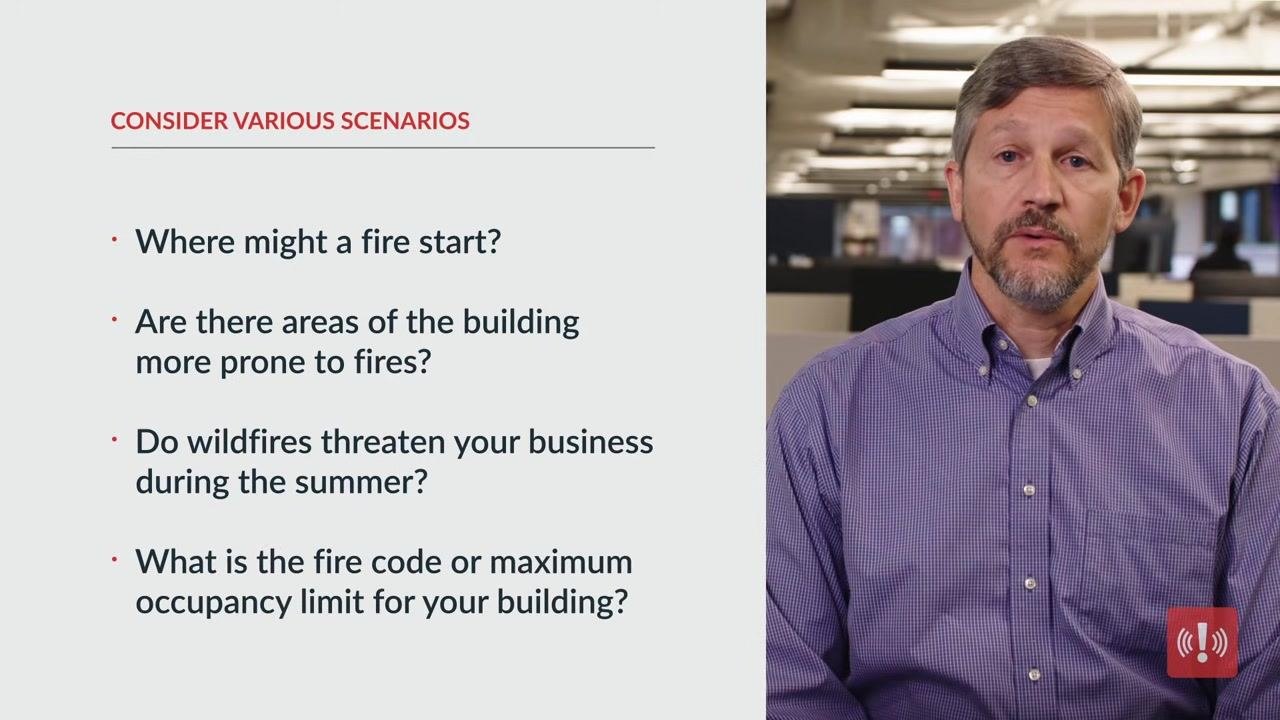
Before scheduling the drill, evaluate fire risks in your building:
- Where might a fire start? Consider all possible ignition sources.
- Are there areas of the building more prone to fires, such as those with kitchen appliances or stored chemicals?
- Could wildfires threaten your business, especially during the summer months?
- What is the fire code or maximum occupancy limit for your building, and is your office in compliance?
If you do not already have a fire evacuation plan, use a step-by-step fire evacuation template as your starting document. Treat this plan as your playbook: it should outline exactly how you want the drill to proceed and include various scenarios to prepare for different types of emergencies. Document roles, responsibilities, and required actions clearly, and review and update the plan regularly to reflect changes in personnel, building layout, or regulations.
Schedule fire drills regularly to condition employees to respond calmly and efficiently during a fire. Routine drills are among the most effective practices for ensuring company-wide safety.
Objectives and success criteria
Step 3 of the five-step process is to set goals for your fire drill. Before you run the exercise, define what you hope to achieve — for example, total evacuation time or participation rate. Use goal setting to create benchmarks for future improvement.
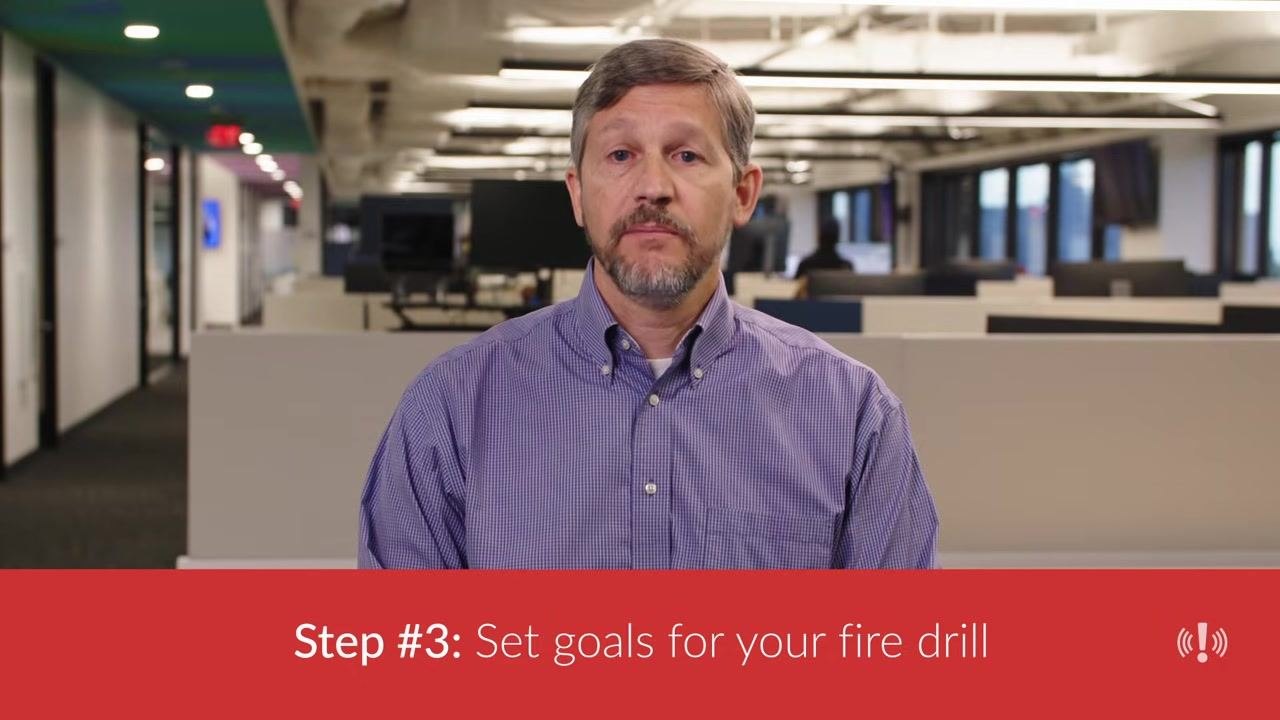
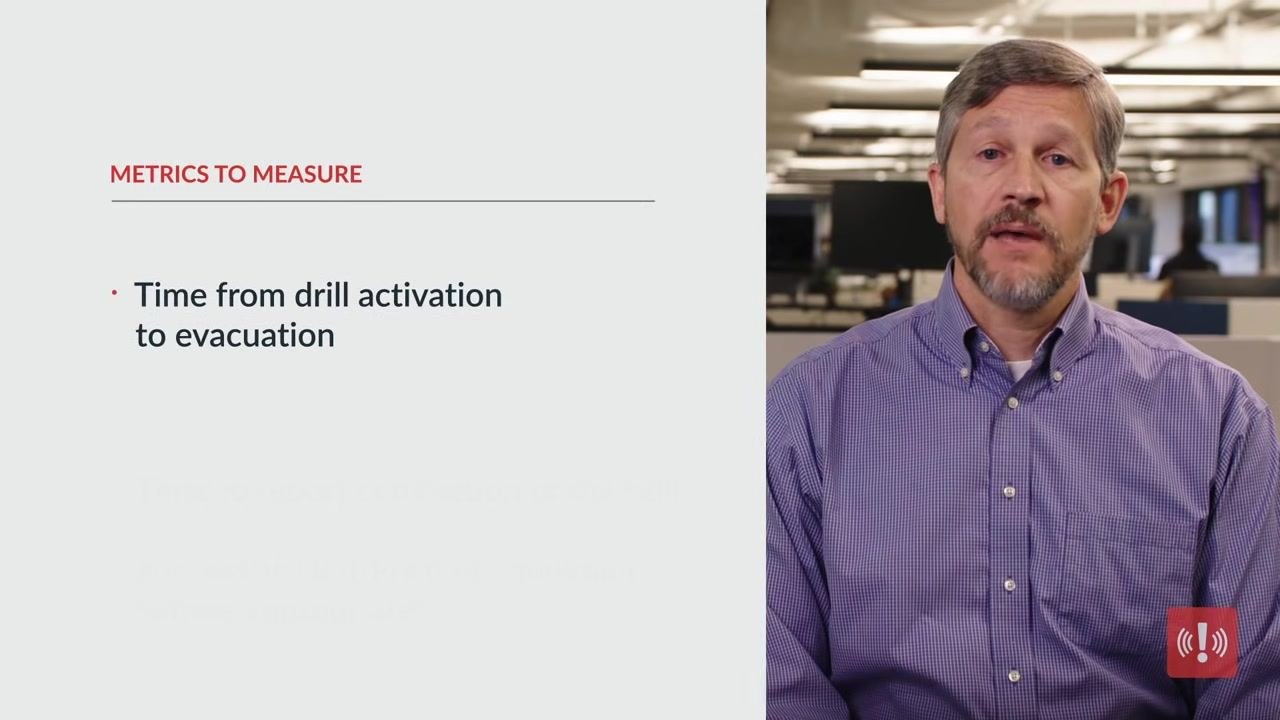
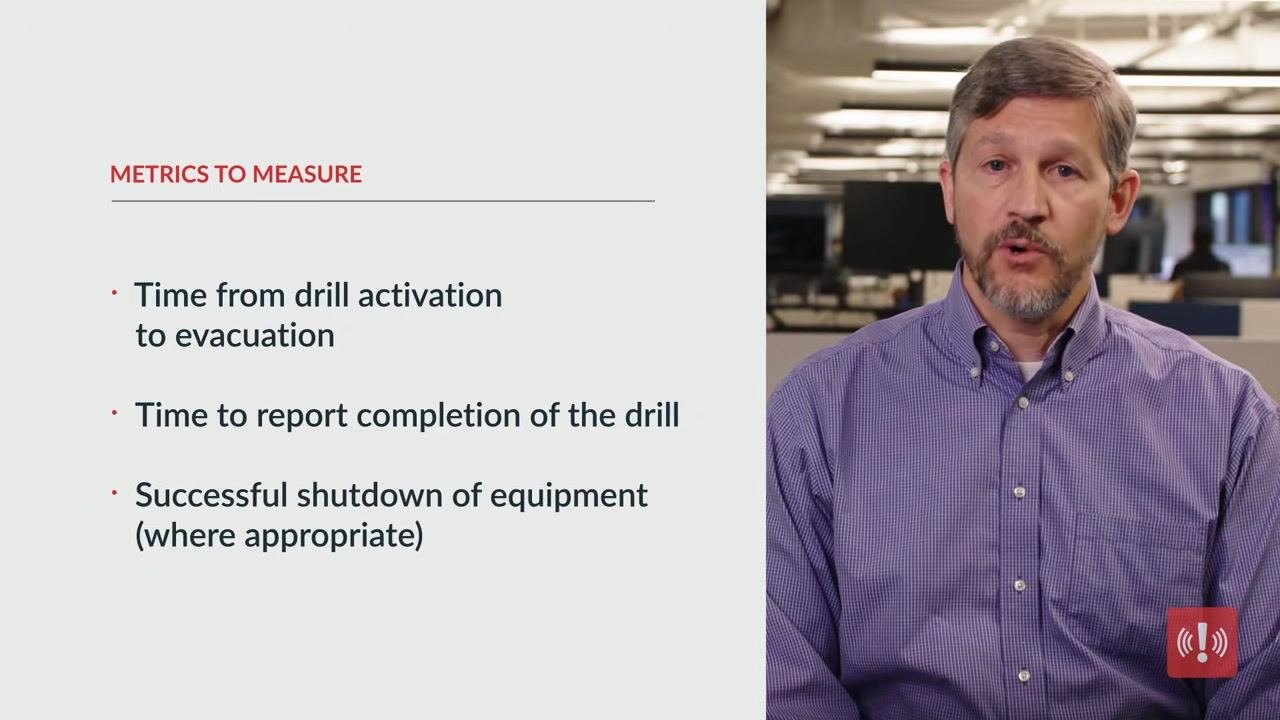
Identify specific metrics to measure during the drill:
- Time from drill activation to complete evacuation.
- Time to report completion of the drill.
- Successful shutdown of equipment, where appropriate.
Analyze the results of your first drill against these benchmarks. For example, if it takes 15 minutes to evacuate because employees are in restrooms or finishing calls, note this as an area for improvement in future exercises.
Success criteria are measured against the metrics above and refined after every drill using the deep-dive review questions described in the Evaluation Plan section below.
Scenario and injects
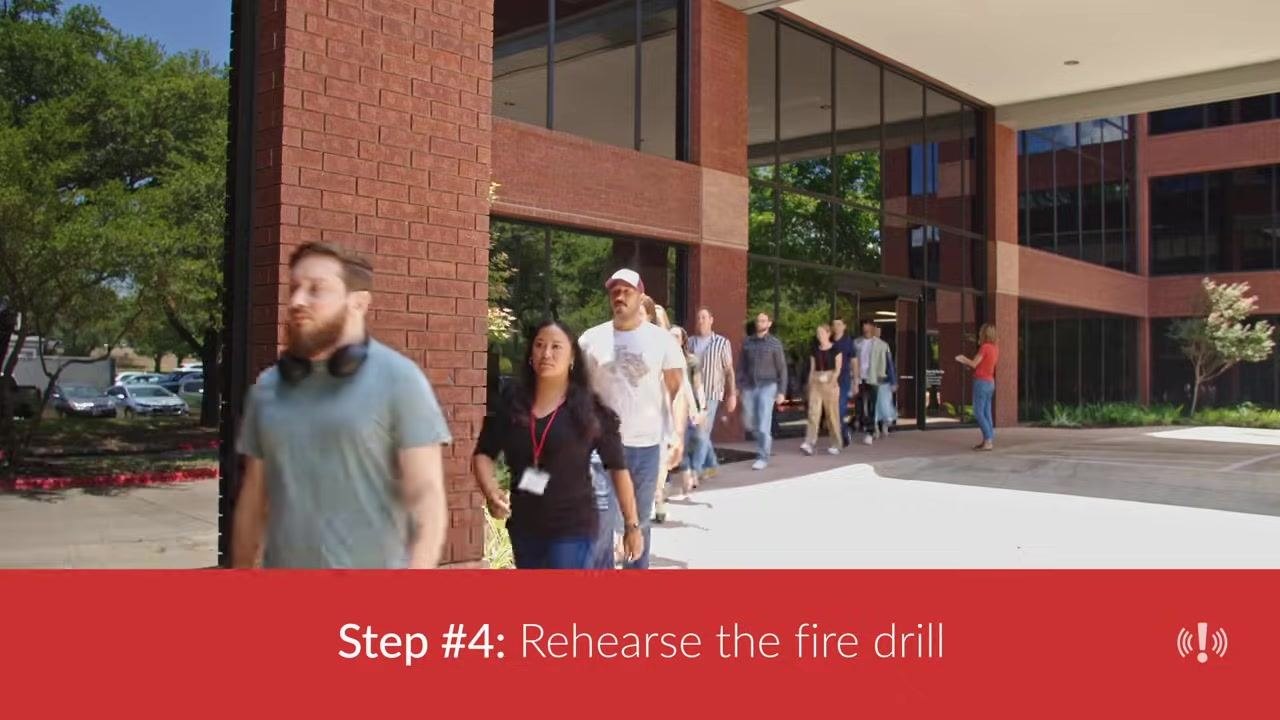
Step 4 is to rehearse the fire drill, beginning with simple walk-throughs and progressing to full-scale drills. Ensure all fire team members and employees involved in executing the drill are on the same page, and use rehearsals to identify potential issues, address confusion, and clarify expectations.
Gather your team to discuss the actions that should be taken during the drill. Ensure all team members understand their roles and responsibilities, and encourage open discussion to resolve any uncertainties or questions.
Physically walk through the fire drill step by step with your team:
- Assign each person their specific role for the drill.
- Have everyone follow the evacuation procedures as if it were a real emergency.
- Move through hallways and designated routes as a group.
Conduct the drill by building or by section to minimize business disruptions. Organize the exercise so that not all areas evacuate at once, if possible, and ensure each section practices the drill thoroughly.
Injects and simulated constraints: Introduce variations and obstacles to create more realistic scenarios. Change variables within the drill to train employees on how to react to different situations — for example, simulate blocked exits or other hazards — and encourage adaptability and problem-solving during the drill.
Controller notes: Address any issues and confusion during rehearsals. Observe participants closely to identify areas where confusion or uncertainty arises, provide immediate clarification, and use rehearsal feedback to update instructions, signage, or procedures as needed. Clearly communicate expectations for each participant, including evacuation routes, assembly points, and reporting procedures, and remind employees of the fire safety team's roles and how to seek assistance if needed. Emphasize that rehearsals are a learning opportunity, not a test, to reduce anxiety and improve participation.
Participants and roles
Step 1 is to ensure everyone is on board. Begin preparations well before the drill by discussing with your teams why fire drills are critical. Ensure the entire fire team is fully trained on evacuation procedures and ready to execute the drill successfully. Secure executive buy-in, since the drill will require employees to leave their workstations, factory lines, or warehouse duties. Make sure all employees understand the critical nature of the fire drill so they take it seriously.

Hold meetings or discussions to reinforce that all employees are aware of the drill's significance. If employees do not understand the importance, they may not take the drill — or your leadership — seriously.
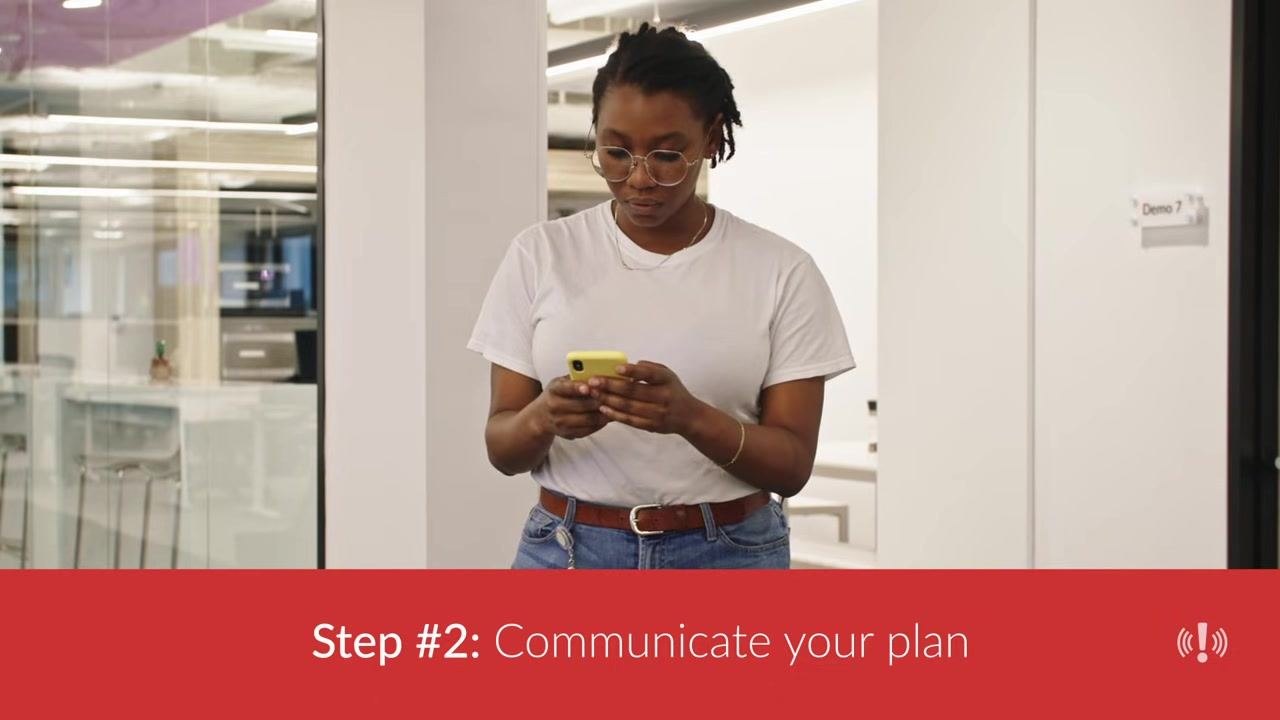
Step 2 is to communicate your plan. Announce the first fire drill in every location where employees will see it, such as the employee portal, intranet, company website, and relevant messaging channels. Insufficient communication is a common reason drills fail — in an actual emergency, leaving even one employee uninformed and in harm's way is a massive failure.
Use all available communication channels to announce the drill:
- Post notifications in the employee portal, intranet, company website, and relevant Microsoft Teams or Slack channels.
- Include the announcement in your employee newsletter.
- Send a text message using your emergency communication solution, which should support multi-channel messaging for maximum reach.

Communicate additional important context: inform employees which colleagues are on the dedicated fire safety team and what their specific roles are, and share evacuation routes and employee expectations so everyone knows what to do during the drill.
Document all communications and ensure every employee receives the information through at least one channel.
Step 5 is to appoint neutral observers. Select individuals who will not participate in the drill but will observe and take notes on employee behavior (see Evaluation Plan below).
Roles summary:
- Fire safety team — trained on evacuation procedures and responsible for executing the drill.
- Executive sponsors — provide buy-in so employees are authorized to participate.
- All employees — follow evacuation routes and expectations communicated in advance.
- Neutral observers — do not participate in the drill; they monitor and record behavior for the debrief.
Safety and real-world response
The source material does not define a separate stop-drill trigger, dedicated medical support team, or emergency contact list distinct from the drill itself; document these details separately for your facility before conducting a drill.
To keep the drill clearly separated from a real emergency, confirm the fire alarm is reset and the alarm company is notified of the drill as part of your post-drill checklist. This step, reviewed during debriefing, helps ensure your monitoring service and emergency systems are not left in a triggered state after the exercise.
Consider implementing two-way, multi-channel emergency communication software — such as AlertMedia — to streamline notifications and responses both during drills and during actual emergencies, so employees can stay informed and connected before, during, and after any incident.
Evaluation plan
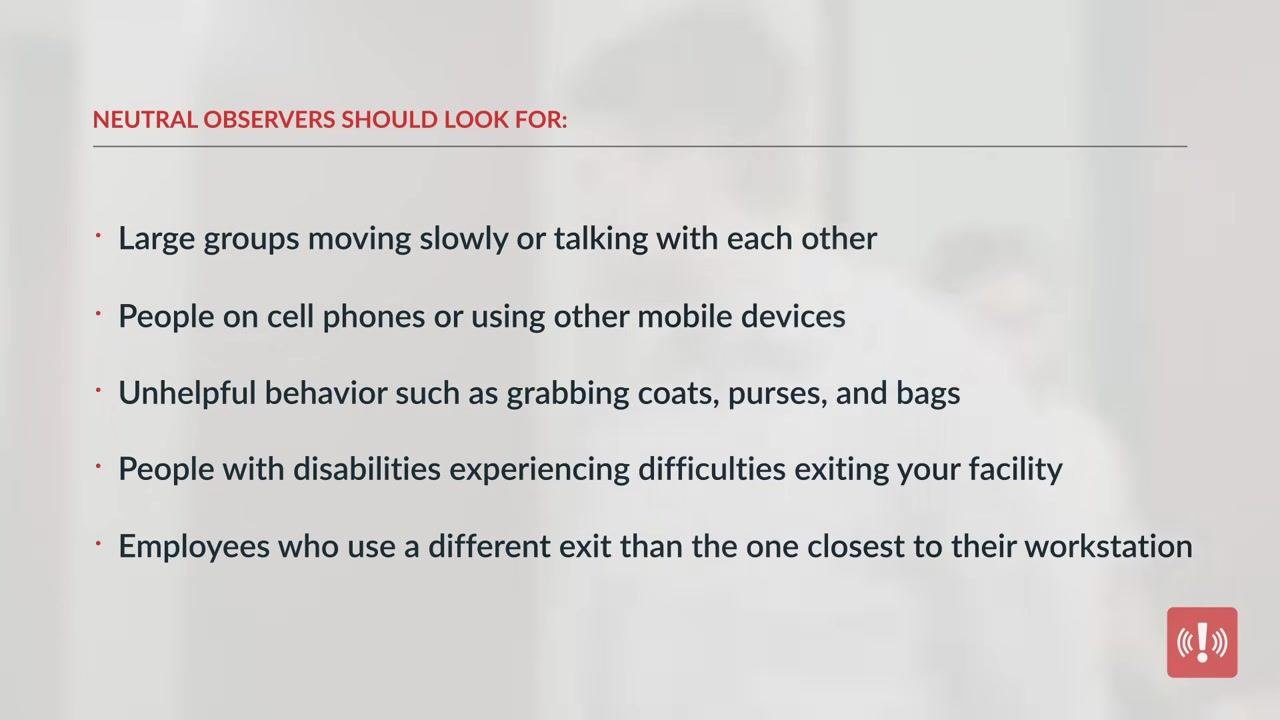
Appoint neutral observers to monitor the drill. Observers should look for:
- Large groups moving slowly or talking with each other.
- People on cell phones or using other mobile devices.
- Unhelpful behavior, such as grabbing coats, purses, and bags.
- People with disabilities experiencing difficulties exiting the facility.
- Employees who use a different exit than the one closest to their workstation.
Data collection tools consist of the metrics defined in the Objectives section (time from activation to evacuation, time to report completion, and successful equipment shutdown) combined with observer notes gathered during the walk-through.
Use a checklist of deep-dive questions to guide your review:
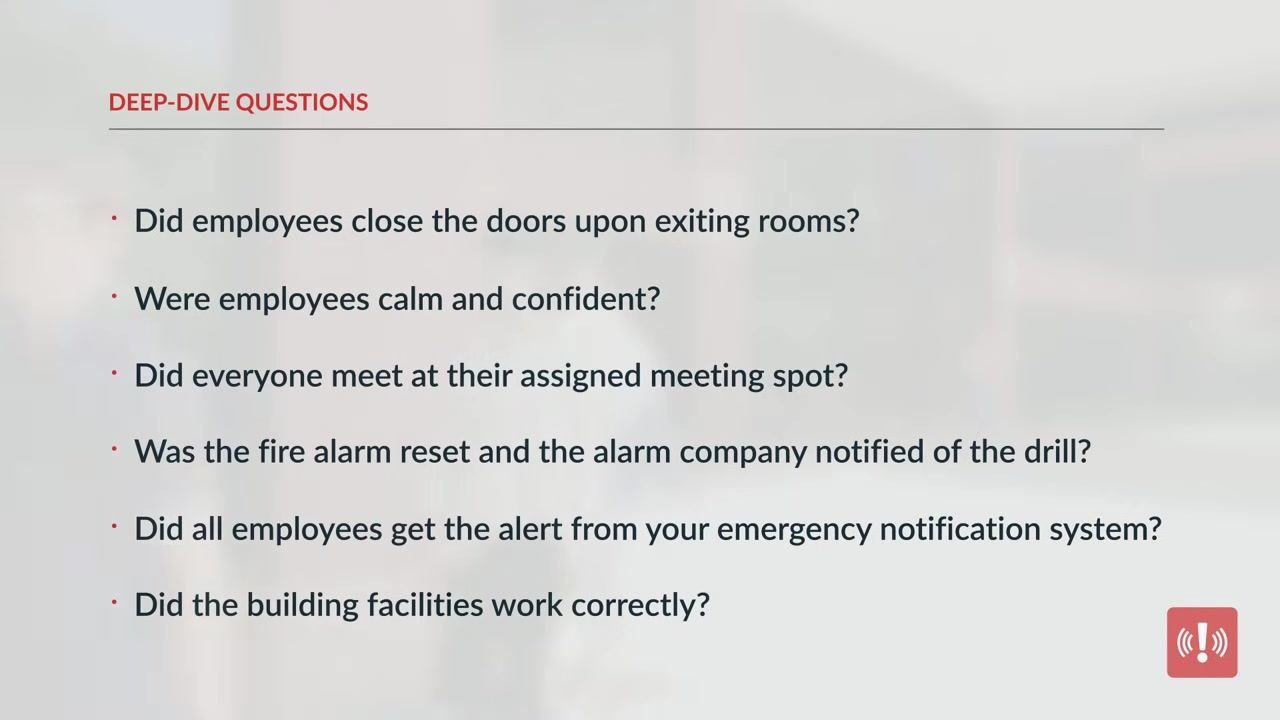
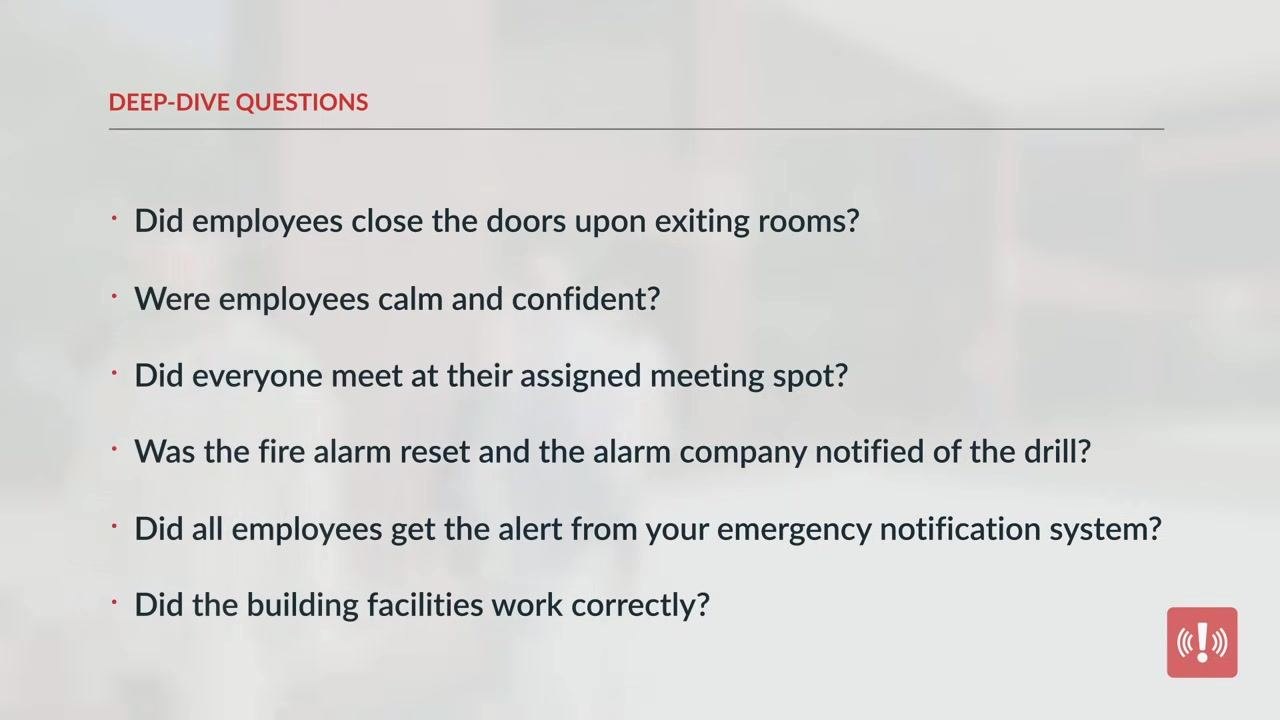
- Did employees close the doors upon exiting rooms?
- Were employees calm and confident?
- Did everyone meet at their assigned meeting spot?
- Was the fire alarm reset and the alarm company notified of the drill?
Expand your review to include additional critical questions:
- Did all employees get the alert from your emergency notification system?
- Did the building facilities work correctly?
Scoring method: Compare recorded metrics and observer findings against the goals set in Step 3. Note gaps — such as slow evacuation times caused by employees being in restrooms or finishing calls — as specific areas for improvement.
Debrief and improvement process
Immediately after the fire drill, gather the fire team for a debriefing session. Meet in a conference room or designated meeting area, ensure all key fire team members are present, and discuss observations while the details are still fresh.
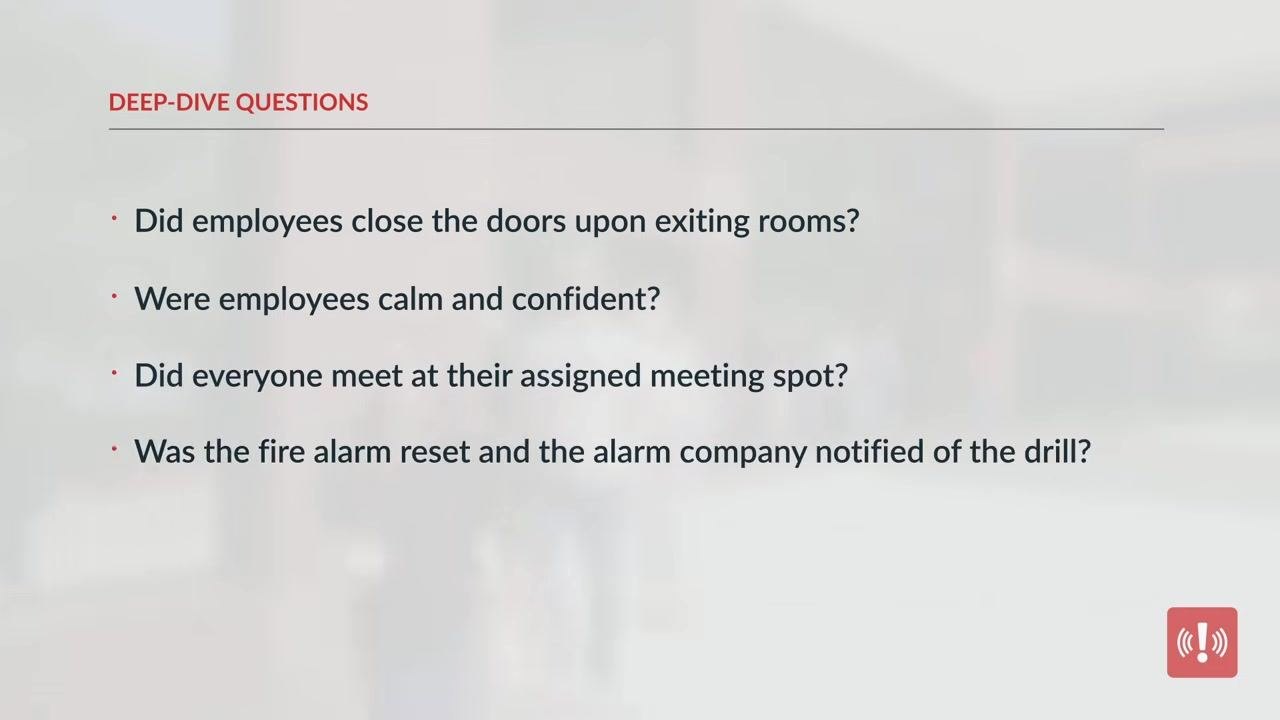
Assess all steps taken during the drill and compile notes. Each observer should share their findings, and the team should discuss what went well and what could be improved, using the deep-dive checklist questions listed in the Evaluation Plan section.
Ongoing best practices to build into your after-action process:
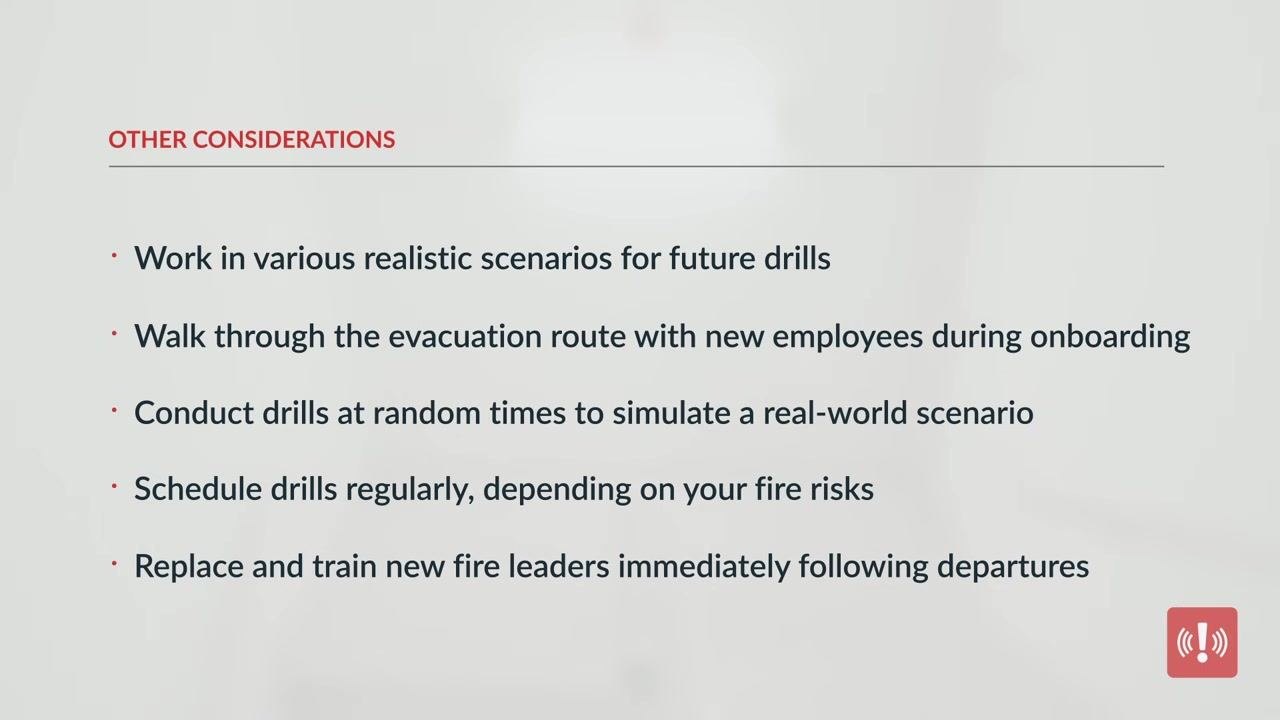
- Work in various realistic scenarios for future drills.
- Walk through the evacuation route with new employees during onboarding.
Further enhance your fire drill program by:
- Conducting drills at random times to simulate real-world scenarios.
- Scheduling drills regularly, depending on your fire risks.
- Replacing and training new fire leaders immediately following departures.
Ensure your fire drill process remains efficient and professional by holding regular review meetings with your fire team, encouraging open feedback and continuous improvement, and demonstrating leadership and preparedness to all employees.
Recognize that evacuation skills are a crucial component of every employee's safety training program, and reinforce that preparedness and practice are essential for effective emergency response.
Successful drills and emergency activities begin with strong communication. Prioritize clear, timely communication when facilitating drills or coordinating emergency activities across your organization, and leverage available resources and support to strengthen your communication strategy over time.
Encourage employees to subscribe to safety-focused resources for regular updates and tutorials, and direct staff to additional free fire safety resources for continuous improvement.
What's next
After completing your first fire drill and debrief, schedule your next drill at a random time to simulate a real-world scenario, incorporate the realistic variations and obstacles noted during rehearsal, and confirm that any departing fire team leaders have been replaced and trained before the following exercise.
Generation details: cost, quality tiers, downloads
Docsie billed 5,000 credits ($3.50) to analyze this 10-minute video at standard quality. The rewrite, template fill and Word/PDF exports were included. The same video at each quality tier:
| Quality | Frames sampled | Credits | Approx. cost |
|---|---|---|---|
| Draft | every 16-30 s | 2,500 | $1.75 |
| Standard (this guide) | every 8-15 s | 5,000 | $3.50 |
| Detailed | every 4-7 s | 10,000 | $7.00 |
| Ultra | every 1-3 s | 20,000 | $14.00 |
Credits priced at $0.70 per 1,000; plans include a monthly allowance. Enterprise customers on on-premise or bring-your-own-model deployments run this on their own inference and pay no per-video credits.
Generated by Docsie Video-to-Docs on 2026-09-28 from a 9-minute video. It was generated straight into Docsie's Emergency Drill Plan template, so every section of that template is filled from the video. Screenshots are frames from the source video and belong to their creator, AlertMedia, whose original is embedded above. If you own this video and want the guide removed or credited differently, contact us and we will act within one business day.