
How to Take an Apical Pulse
This patient care procedure explains how to take an apical pulse in adult patients, describing each step from initial preparation through auscultation, interpretation, and documentation. It is intended for nursing and allied health staff who need a reliable, repeatable technique for locating and counting the apical pulse at the bedside.
Video: Apical Pulse Assessment Location Nursing | Auscultate and Palpate Apical Pulse by RegisteredNurseRN (2017). All credit for the demonstration goes to the creator; watch the original on YouTube. The written guide below was generated from this video by Docsie. Creator? Request a change or removal.
This patient care procedure explains how to take an apical pulse in adult patients, describing each step from initial preparation through auscultation, interpretation, and documentation. It is intended for nursing and allied health staff who need a reliable, repeatable technique for locating and counting the apical pulse at the bedside.

Purpose and scope
You take an apical pulse to obtain an accurate heart rate directly over the apex of the heart rather than at a peripheral site. This assessment applies to adult patients and is performed before administering certain cardiac medications, such as digoxin, to confirm the heart rate is safe for dosing. For a healthy adult, the normal apical pulse rate falls between 60 and 100 beats per minute. A stethoscope is the only equipment required.
Patient assessment
Complete the following checklist before you begin locating and auscultating the apical pulse.
| Step | Action |
|---|---|
| Equipment | Obtain a stethoscope for the assessment. |
| Stethoscope hygiene | Clean the diaphragm, bell, ear pieces, and tubing before use, and clean the stethoscope again between each patient to prevent cross-contamination. |
| Hand hygiene | Wash your hands thoroughly or use hand sanitizer before beginning the procedure. |
| Patient explanation | Tell the patient what you are about to do, for example: "I am going to listen to your heart at the apex to check your pulse." |
| Indication check | Confirm whether the assessment is needed before a cardiac medication, such as digoxin. |
Vital sign monitoring frequency: the apical pulse is counted over one full minute at the point of assessment; the source material does not specify a routine monitoring interval beyond this single reading.
Pain assessment tool: the source material does not describe a pain assessment tool for this procedure, since taking an apical pulse is a non-invasive auscultation technique.
Neurovascular checks: the source material does not include neurovascular checks as part of this procedure; document those separately according to facility protocol if required for the patient's overall care.
Care protocol
Perform the assessment in the following phases.
Phase 1: Position the patient and identify the apical pulse location
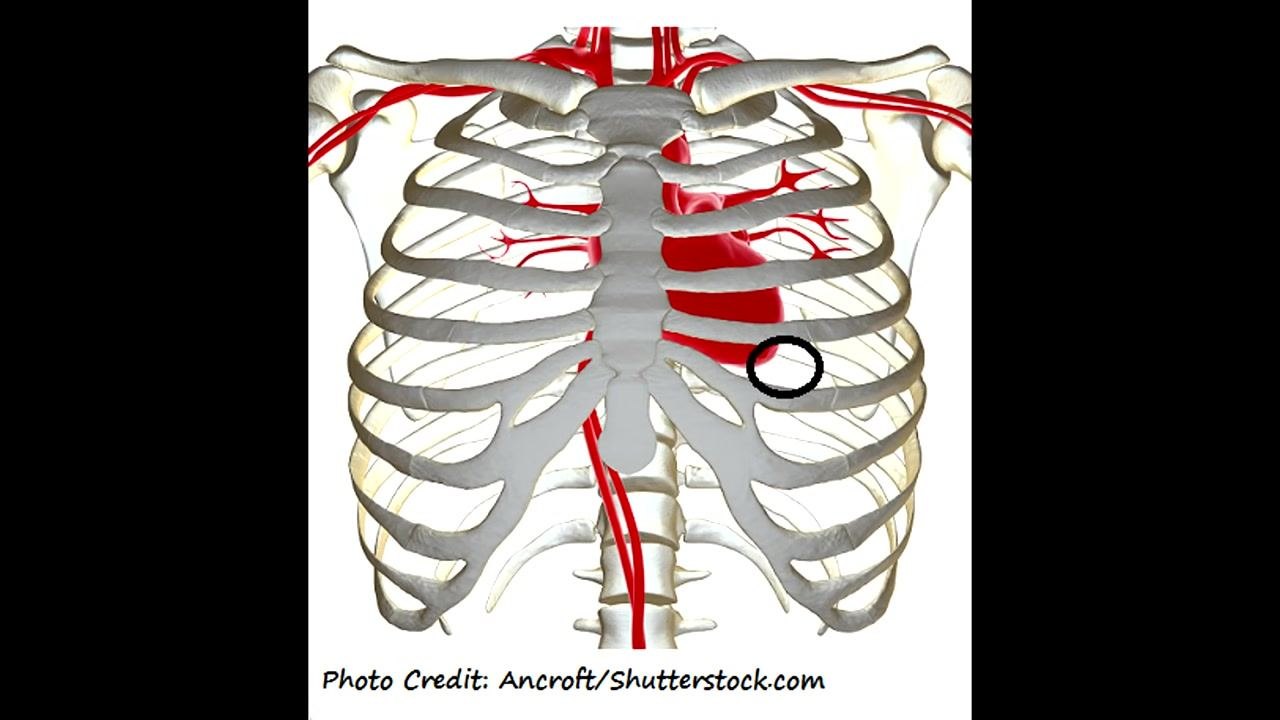
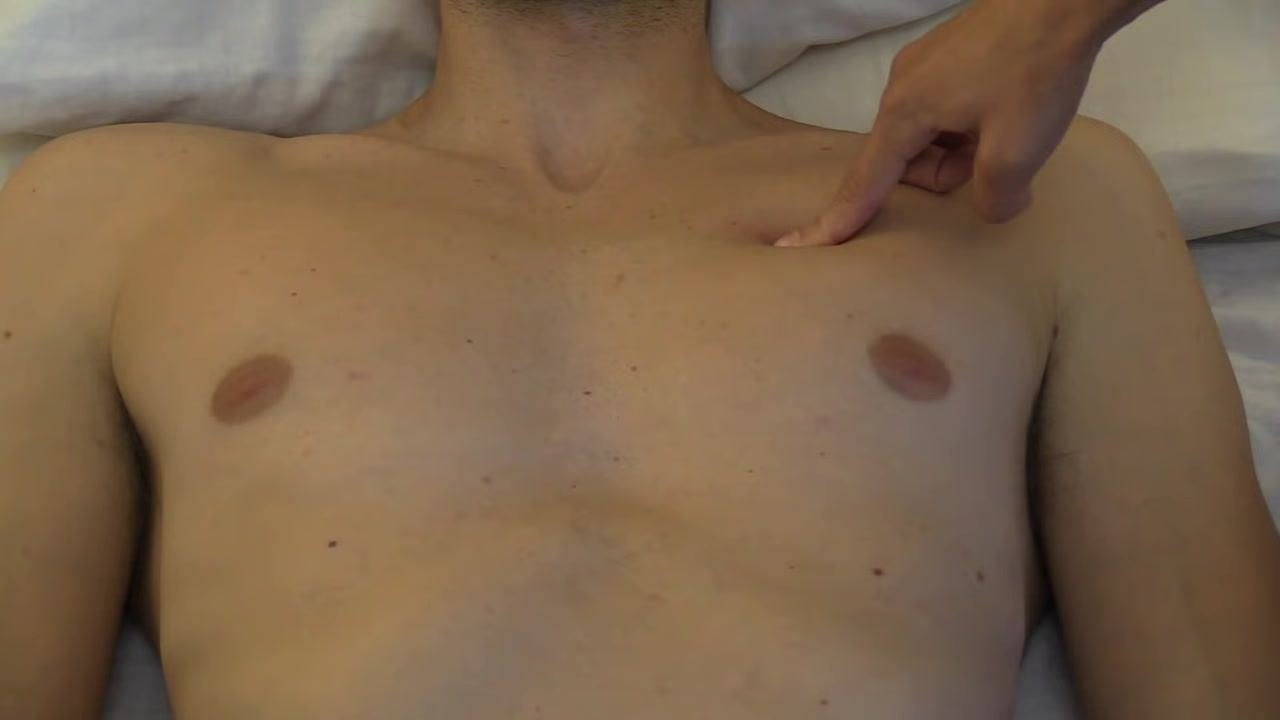
Have the patient lie back comfortably; they may sit up slightly, but lying back is preferred. The apical pulse is found at the point of maximal impulse (PMI), located at the fifth intercostal space, midclavicular line, on the left side of the chest — the apex of the heart, at its bottom.
Phase 2: Locate the landmarks by palpation
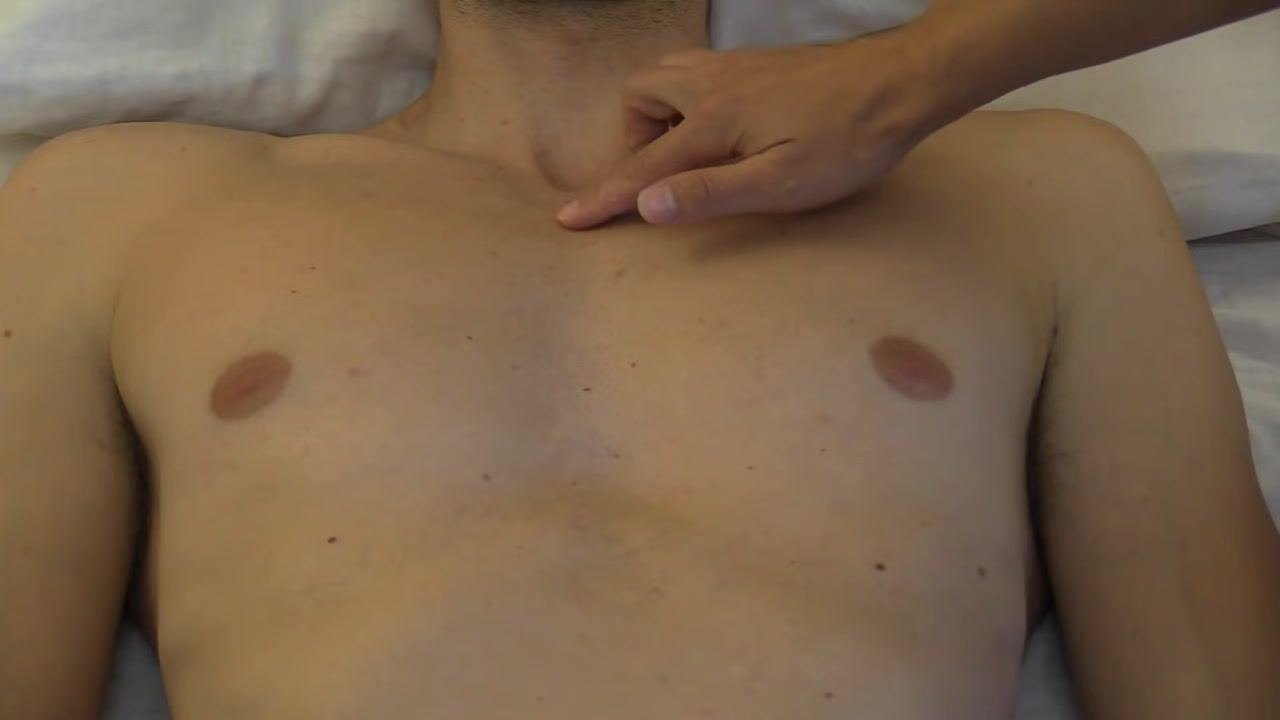
Find the sternal notch, a visible and palpable notch between the clavicles at the top of the sternum, then place your hand there before moving downward.
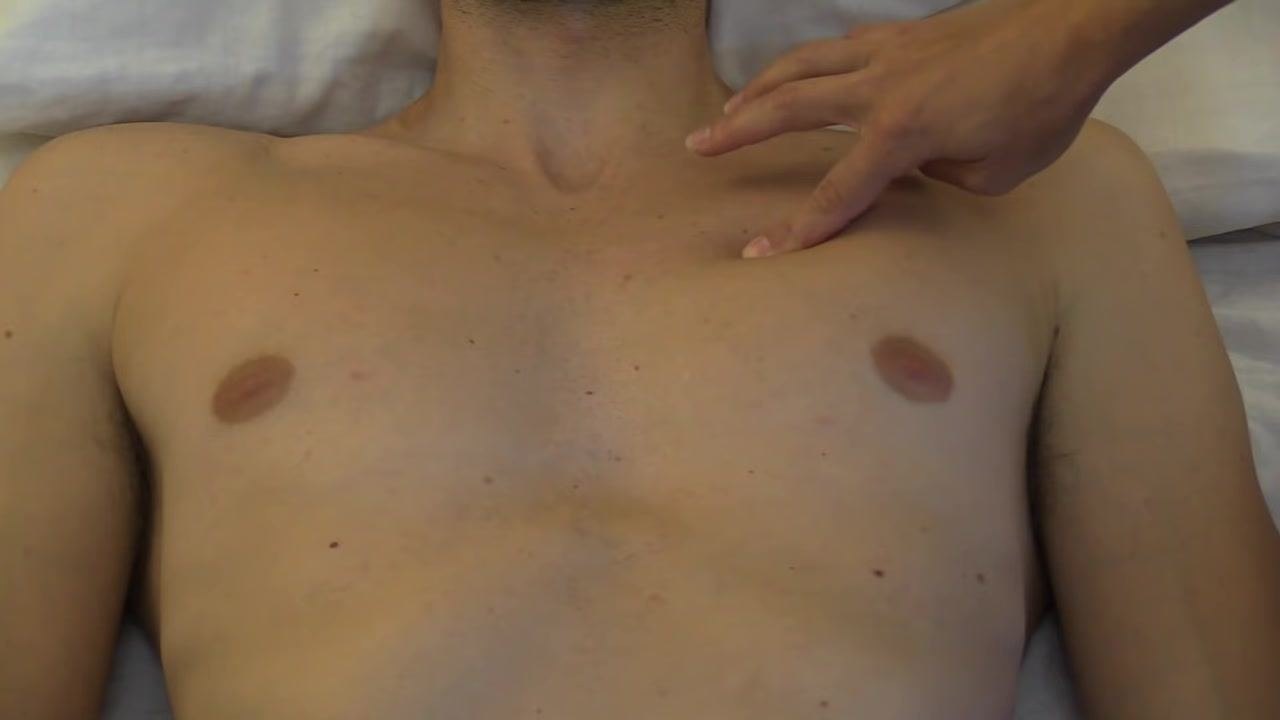
Move your fingers down from the sternal notch until you feel a slight protrusion — the angle of Louis, also called the sternal angle.
From the angle of Louis, move your fingers slightly left to find the second intercostal space, feeling for the gap between two ribs.
Starting at the second intercostal space, count down along the midclavicular line — an imaginary line running down from the middle of the clavicle — through the third, fourth, and fifth intercostal spaces.
| Intercostal space | Landmark reference |
|---|---|
| Second | Just left of the angle of Louis |
| Third | Continue counting down the midclavicular line |
| Fourth | Continue counting down the midclavicular line |
| Fifth | Midclavicular line — apical pulse location |
For female patients with large breasts, ask the patient to lift the breast to allow access to the fifth intercostal space, since you cannot accurately auscultate through thick tissue.
Phase 3: Palpate for the apical impulse
Once at the fifth intercostal space, midclavicular line, use your hand to feel for the apical impulse. You may feel a light thumping sensation, though this is not always palpable — it is more often felt in patients with a thin chest wall and less often in patients with a large chest or obesity. If you cannot feel the impulse, proceed to auscultation.

Phase 4: Auscultate and count the apical pulse
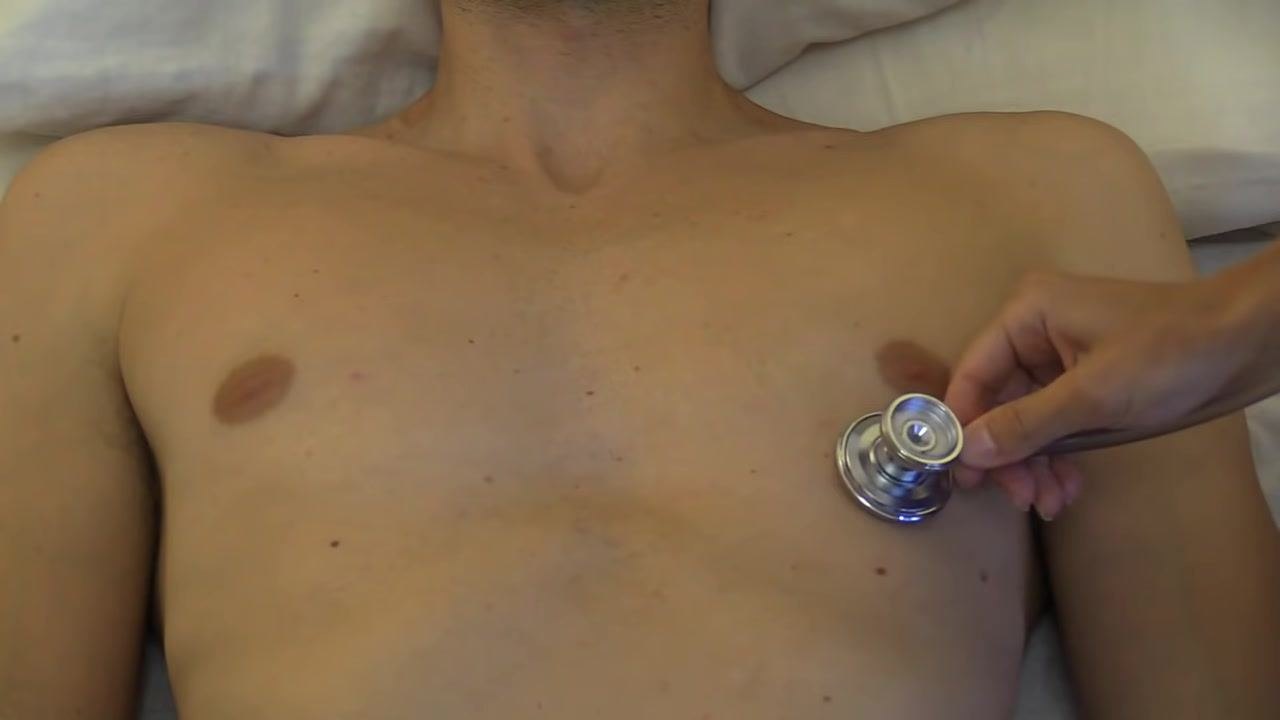
Prepare your stethoscope and use the diaphragm for auscultation. Place the diaphragm at the fifth intercostal space, midclavicular line, and listen for one full minute, counting each heartbeat.
In one demonstrated assessment, the counted apical pulse was 61 beats per minute, within the normal adult range of 60 to 100 beats per minute.
Phase 5: Conclude and document
Inform the patient that the assessment is complete, ensure they are comfortable and covered, clean your stethoscope, and wash your hands according to infection control guidelines. Record the apical pulse rate, the location of auscultation, and any notable observations, such as an irregular rhythm or difficulty palpating the impulse.
Pain management
This section would normally outline a multimodal pain management plan with a medication table listing drug, dose, route, and frequency, along with pain score targets and an escalation pathway. The source material does not include this information, since taking an apical pulse is a non-invasive auscultation procedure.
Mobility milestones
This section would normally set out progressive mobility goals on a timeline. The source material does not describe mobility milestones, as it covers only the technique for assessing the apical pulse.
Complication monitoring
After counting the apical pulse, interpret the result against the normal adult range of 60 to 100 beats per minute.
| Finding | Interpretation | Action |
|---|---|---|
| 60–100 bpm | Within normal range | Document as normal |
| Below 60 bpm | Bradycardia | Note the finding and follow your facility's protocol for further assessment or intervention |
| Above 100 bpm | Tachycardia | Note the finding and follow your facility's protocol for further assessment or intervention |
Discharge criteria
The source material does not describe discharge criteria in the sense of ending a patient's care episode. It does describe the criteria for completing the apical pulse assessment itself:
- The apical pulse has been counted for one full minute at the fifth intercostal space, midclavicular line.
- The patient has been informed that the assessment is finished and is comfortable and covered.
- The stethoscope has been cleaned and hand hygiene performed.
- The apical pulse rate, location, and any notable observations have been documented.
Patient education
Before beginning, explain the procedure clearly to the patient, for example: "I am going to listen to your heart at the apex to check your pulse." Throughout the assessment, ensure proper hygiene and clear communication, and adapt your technique as needed for different body types, such as asking a patient with large breasts to lift the breast tissue so you can access the fifth intercostal space. After the assessment, confirm the patient understands that the check is complete and that findings within the normal range of 60–100 beats per minute are expected for a healthy adult.
Generation details: cost, quality tiers, downloads
Docsie billed 2,000 credits ($1.40) to analyze this 4-minute video at standard quality. The rewrite, template fill and Word/PDF exports were included. The same video at each quality tier:
| Quality | Frames sampled | Credits | Approx. cost |
|---|---|---|---|
| Draft | every 16-30 s | 1,000 | $0.70 |
| Standard (this guide) | every 8-15 s | 2,000 | $1.40 |
| Detailed | every 4-7 s | 4,000 | $2.80 |
| Ultra | every 1-3 s | 8,000 | $5.60 |
Credits priced at $0.70 per 1,000; plans include a monthly allowance. Enterprise customers on on-premise or bring-your-own-model deployments run this on their own inference and pay no per-video credits.
Generated by Docsie Video-to-Docs on 2026-09-28 from a 3-minute video. It was generated straight into Docsie's Patient Care Procedure template, so every section of that template is filled from the video. Screenshots are frames from the source video and belong to their creator, RegisteredNurseRN, whose original is embedded above. If you own this video and want the guide removed or credited differently, contact us and we will act within one business day.