
How to Do a Head to Toe Assessment
This procedure explains how to do a head-to-toe assessment of the eyes, ears, nose, throat, mouth, tongue, and neck, including the key clinical findings you may observe and what they can indicate. Use this guide to build a consistent, thorough physical assessment routine while remaining aware that exact steps and expected findings can vary by facility.
Video: Head To Toe Assessment for Nursing Students: Physical Exam Skills | DEMO by SimpleNursing (2022). All credit for the demonstration goes to the creator; watch the original on YouTube. The written guide below was generated from this video by Docsie. Creator? Request a change or removal.
This procedure explains how to do a head-to-toe assessment of the eyes, ears, nose, throat, mouth, tongue, and neck, including the key clinical findings you may observe and what they can indicate. Use this guide to build a consistent, thorough physical assessment routine while remaining aware that exact steps and expected findings can vary by facility.
Purpose & scope
This procedure supports nursing and allied health staff performing a head-to-toe assessment of the eyes, ears, nose, throat (ENT), mouth, tongue, and neck. It applies broadly to adult patients, with particular relevance to elderly patients, patients with liver disease (such as cirrhosis or hepatitis), patients on long-term oxygen therapy, patients taking steroids, patients with a history of stroke, and patients at risk of fluid volume overload from heart failure.
Assessment findings and specific procedures may vary depending on your hospital or clinical facility. This guidance is intended for educational purposes only and is not a substitute for your facility's procedures, policies, or skills checklists. Always refer to your institution's protocols for graded demonstrations and clinical practice.
Patient assessment
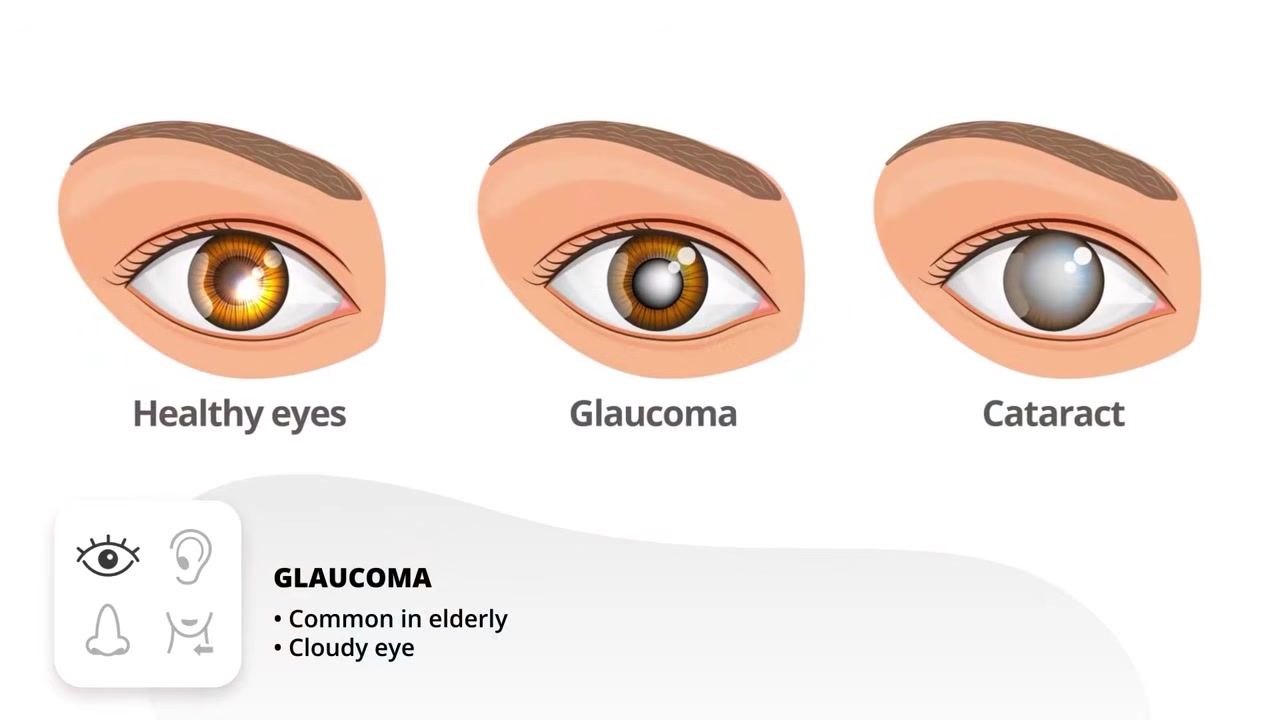
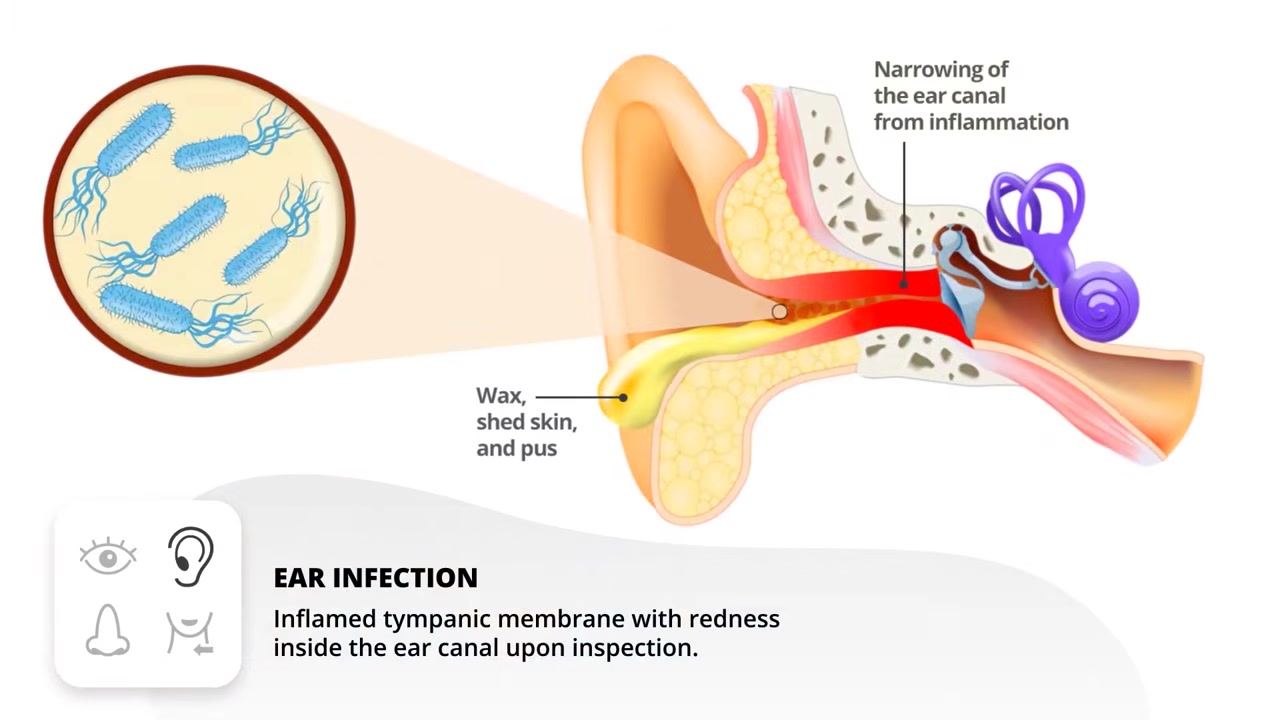
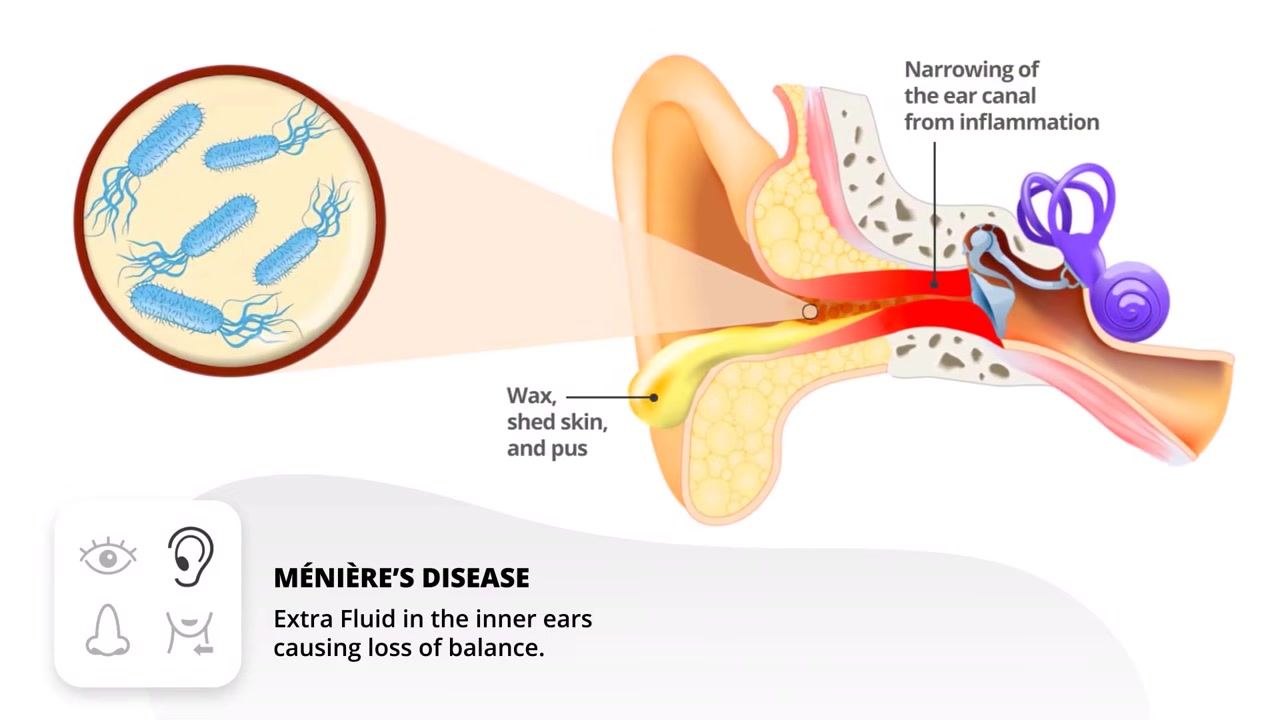
Work through each body area systematically, comparing your findings against expected normal presentation. The table below summarizes what to inspect and what abnormal findings may indicate.
| Body area | What to observe | Clinical significance |
|---|---|---|
| Eyes | Cloudy appearance of the eye | Often associated with glaucoma, especially in elderly patients |
| Eyes | Blue halo on the perimeter of the eye | Indicates cataracts |
| Eyes | Metal prongs visible inside the eye | Sign of prior cataract surgery |
| Eyes | Jaundice in the sclera (white of the eye) and under the bottom eyelid | Associated with liver disease such as cirrhosis or hepatitis |
| Ears | Redness inside the ear canal | May indicate ear infection |
| Ears | Inflamed tympanic membrane (eardrum) with redness | Confirms ear infection |
| Ears | Reported loss of balance with earache | May indicate Ménière's disease (extra fluid in the inner ear) |
| Nose | Crusting around the nostrils | Requires nasal cleaning |
| Nose | Dry mucous membranes | Common in patients on long-term oxygen therapy |
| Throat | White splotches in the back of the throat | May indicate strep throat |
| Throat | Inflamed uvula | Supports a strep throat finding |
| Mouth (smile) | Facial symmetry when smiling | Asymmetry or one-sided weakness may indicate stroke or stroke history |
| Gums | Inflammation, redness, or bleeding | Typically indicates gingivitis |
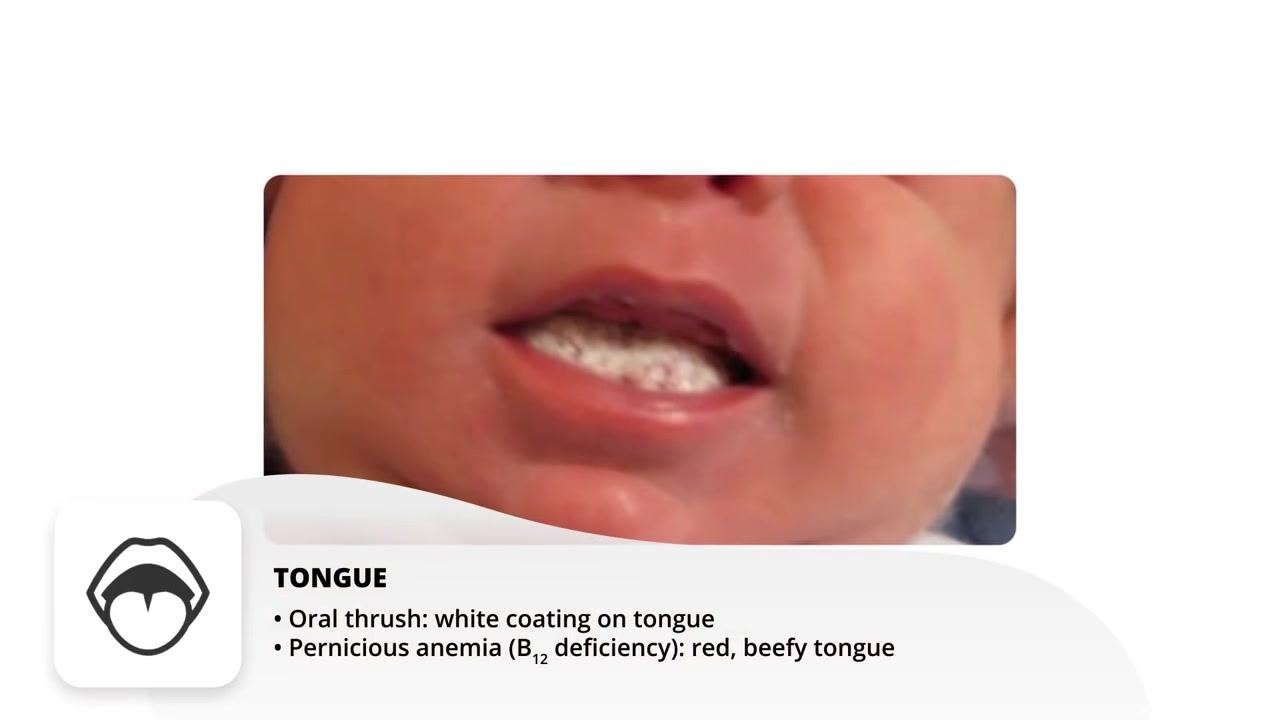
| Tongue | White coating on the tongue | Oral thrush (fungal infection), common with steroid use, including inhaled steroids |
| Tongue | Red, beefy appearance of the tongue | Pernicious anemia (vitamin B12 deficiency) |
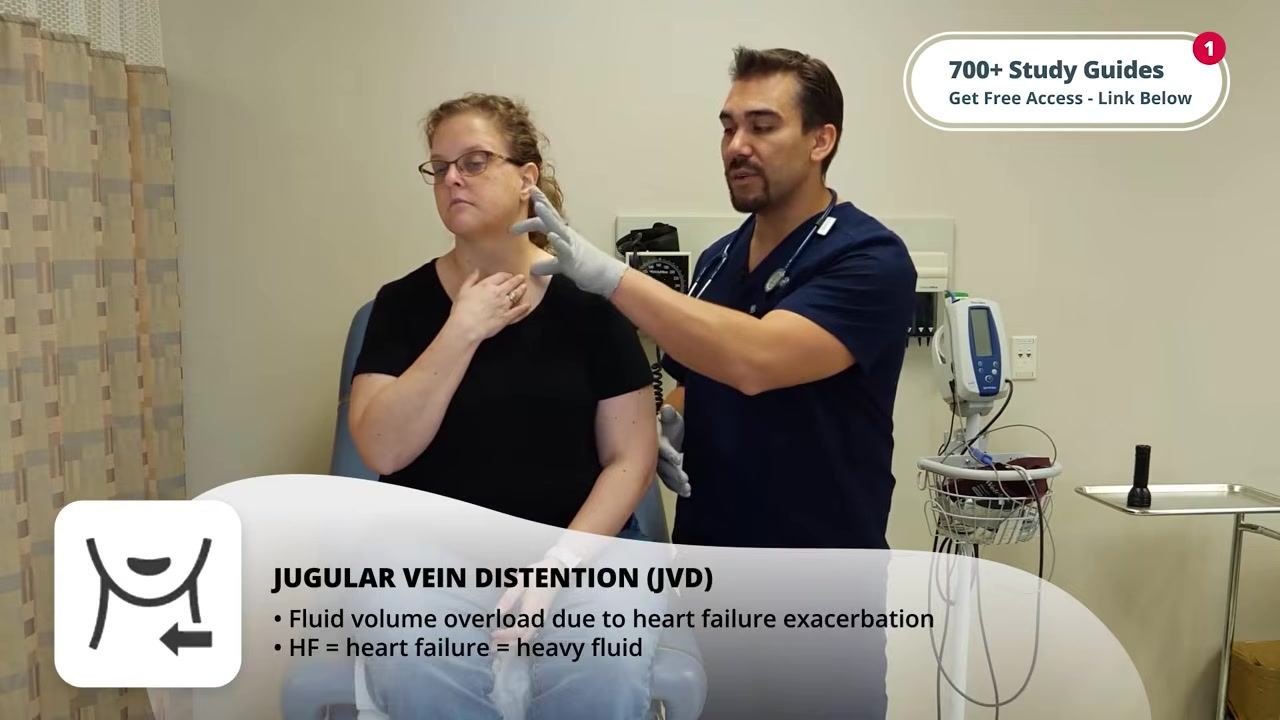
| Neck | Visible bulging of the jugular vein | Jugular vein distention (JVD), a sign of fluid volume overload, commonly from heart failure exacerbation |
Reference visual guides during assessment to distinguish between normal findings and abnormal presentations.
Care protocol
A facility-specific care plan (day-by-day interventions, wound care, nutrition, and medication administration) should be documented here based on the patient's diagnosis and unit protocols; the source material for this assessment covers physical examination technique only and does not include a phase-based care plan.
Pain management
A multimodal pain management plan, including a medication table (drug, dose, route, frequency), pain score targets, and an escalation pathway, should be documented here per your facility's pain management protocol; this information was not part of the head-to-toe ENT, mouth, and neck assessment covered in this procedure.
Mobility milestones
Progressive mobility goals with a timeline (for example, bed exercises, chair transfer, ambulation with a walker) should be recorded here as part of the patient's overall care plan; mobility progression was not addressed in this assessment procedure.
Complication monitoring
Monitor for the following signs during and after the head-to-toe assessment, and escalate according to your facility's protocol.
| Sign/symptom observed | Possible cause | Action |
|---|---|---|
| Cloudy eye appearance | Glaucoma | Document finding; refer per facility protocol |
| Blue halo on eye perimeter | Cataract | Document finding; refer per facility protocol |
| Yellow sclera | Liver disease (cirrhosis, hepatitis) | Document finding; refer per facility protocol |
| Redness or inflammation in ear canal/eardrum | Ear infection | Document finding; refer per facility protocol |
| Reported loss of balance | Ménière's disease | Document finding; refer per facility protocol |
| White splotches and inflamed uvula | Strep throat | Document finding; refer per facility protocol |
| One-sided facial weakness or drooping when smiling | New or previous stroke | Escalate immediately per facility stroke protocol |
| Inflamed, red, or bleeding gums | Gingivitis | Document finding; refer per facility protocol |
| White coating on tongue | Oral thrush, often linked to steroid use | Document finding; refer per facility protocol |
| Red, beefy tongue | Pernicious anemia (B12 deficiency) | Document finding; refer per facility protocol |
| Jugular vein distention (JVD) | Fluid volume overload / heart failure exacerbation | Escalate per facility heart failure protocol |
Note that if the patient is reclined, jugular vein distention may appear more pronounced due to increased pressure. Adjust the patient's position as needed to accurately assess for JVD.
Discharge criteria
Specific measurable criteria that must be met before discharge should be documented here based on the patient's diagnosis and clinical status; discharge criteria were not part of this head-to-toe assessment procedure.
Patient education
Before concluding the assessment, keep the following points in mind:
- Assessment findings and procedures may vary by hospital or clinical facility.
- This guidance is for educational purposes only and does not replace your facility's procedures, policies, or skills checklists.
- Always refer to your institution's protocols for graded demonstrations and clinical practice.
What's next
For additional learning resources, access the full assessment video and accompanying quiz bank through the provided link, and consider subscribing for further educational content.
Generation details: cost, quality tiers, downloads
Docsie billed 2,000 credits ($1.40) to analyze this 4-minute video at standard quality. The rewrite, template fill and Word/PDF exports were included. The same video at each quality tier:
| Quality | Frames sampled | Credits | Approx. cost |
|---|---|---|---|
| Draft | every 16-30 s | 1,000 | $0.70 |
| Standard (this guide) | every 8-15 s | 2,000 | $1.40 |
| Detailed | every 4-7 s | 4,000 | $2.80 |
| Ultra | every 1-3 s | 8,000 | $5.60 |
Credits priced at $0.70 per 1,000; plans include a monthly allowance. Enterprise customers on on-premise or bring-your-own-model deployments run this on their own inference and pay no per-video credits.
Generated by Docsie Video-to-Docs on 2026-09-28 from a 3-minute video. It was generated straight into Docsie's Patient Care Procedure template, so every section of that template is filled from the video. Screenshots are frames from the source video and belong to their creator, SimpleNursing, whose original is embedded above. If you own this video and want the guide removed or credited differently, contact us and we will act within one business day.