
How to Calculate an IV Drip Rate
This protocol document describes the procedure for how to calculate an IV drip rate, covering the tubing calibration systems, roller clamp mechanics, and the standard formats used to write IV fluid orders. It is intended to serve as a reference for interpreting drop factors, adjusting infusion rates manually, and determining total infusion volumes from a prescriber's order.
Video: Master IV Drip Rate Calculations in Minutes! by Lecturio Nursing (2022). All credit for the demonstration goes to the creator; watch the original on YouTube. The written guide below was generated from this video by Docsie. Creator? Request a change or removal.
This protocol document describes the procedure for how to calculate an IV drip rate, covering the tubing calibration systems, roller clamp mechanics, and the standard formats used to write IV fluid orders. It is intended to serve as a reference for interpreting drop factors, adjusting infusion rates manually, and determining total infusion volumes from a prescriber's order.
Protocol ID: IV-DRIP-CALC-001 Version: 1.0 Document Date: 2026-09-20
Study Synopsis
| Field | Details |
|---|---|
| Protocol Title | How to Calculate an IV Drip Rate |
| Protocol ID / Version | IV-DRIP-CALC-001 / Version 1.0 |
| Sponsor | Not applicable — this is a procedural training document rather than a sponsored clinical trial. |
| Phase | Not applicable — the content describes a bedside nursing procedure, not a trial phase. |
| Indication | Administration and rate calculation of intravenous (IV) fluid therapy |
| Study Population | Adult patients receiving macrodrip IV tubing (10, 15, or 20 gtt/mL) and pediatric or critical-medication patients receiving microdrip IV tubing (60 gtt/mL) |
| Design Summary | Manual calculation and adjustment of the IV drip rate using the drop factor printed on the tubing package and the roller clamp, cross-checked against the healthcare provider's written fluid order |
| Primary Endpoint | Delivery of the prescribed IV fluid at the correct rate (mL/h), as specified in the order |
| Estimated Duration | Variable, depending on the order type: continuous infusion, a fixed 8-hour duration, or infusion until a specified total volume (e.g., 2,000 mL) is reached |
Background & Rationale
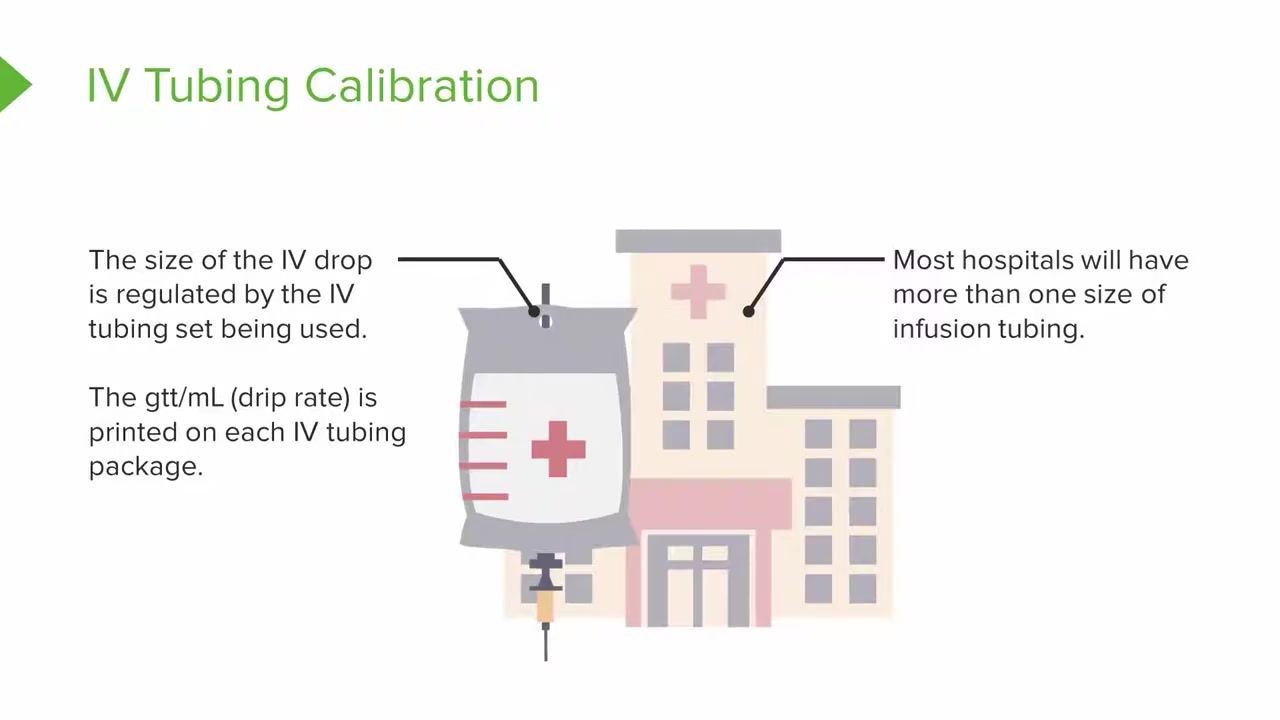
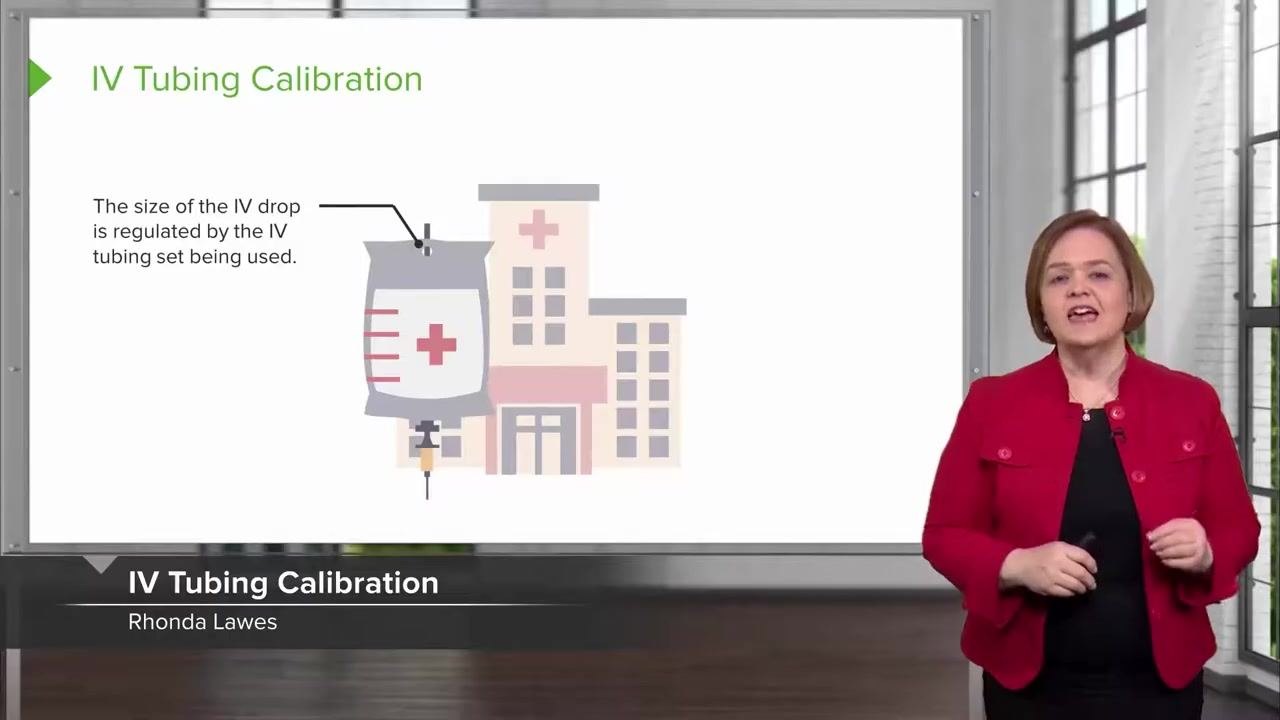
The size of each IV drop is regulated by the IV tubing set in use, not by the practitioner. The drop chamber built into the tubing set determines how large each drop is, and this is fixed by the manufacturer.
You do not need to memorize the drop size for every tubing set. This information is printed directly on the tubing packaging, so it should always be confirmed at the bedside rather than assumed.
Most hospitals stock more than one size of infusion tubing. When working in a clinical setting, check which tubing set is available and in use before calculating a rate, since the drop factor varies by set.
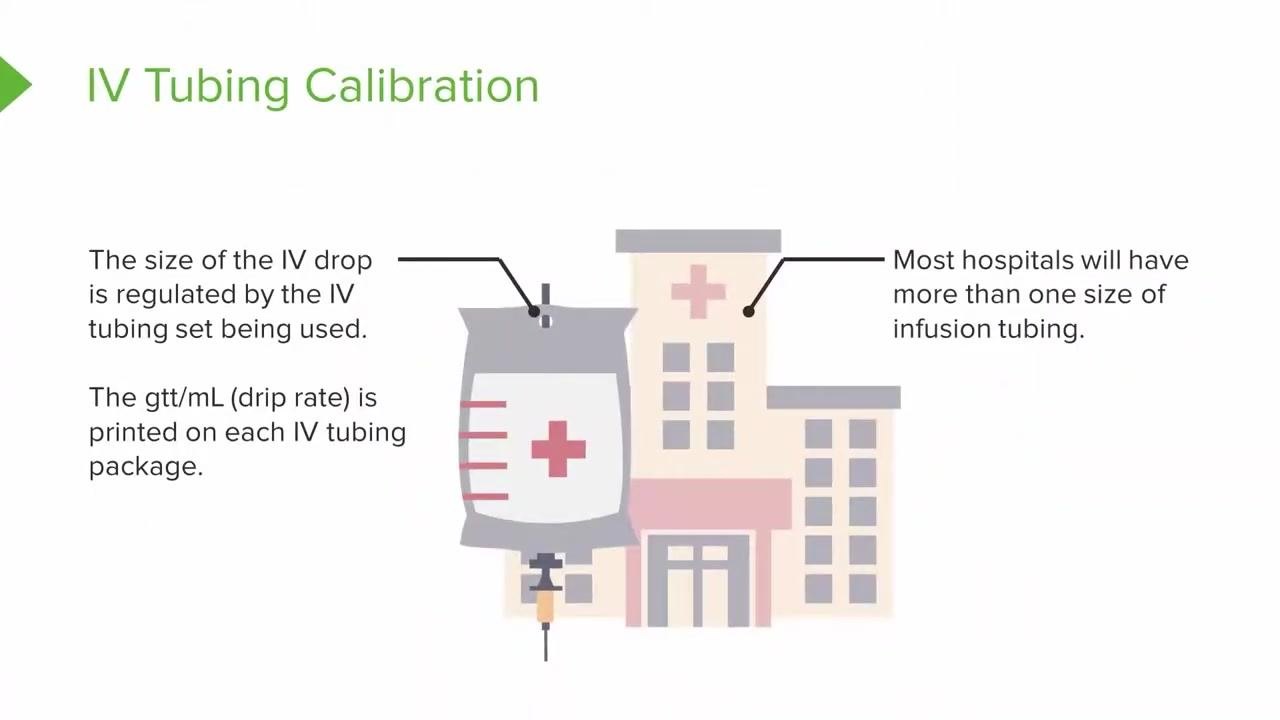
The abbreviation "GTT" refers to a drop, and the drip rate is expressed as gtt/mL (drops per milliliter). This value is always printed on the tubing package and must be checked before setting any rate.
Study Design
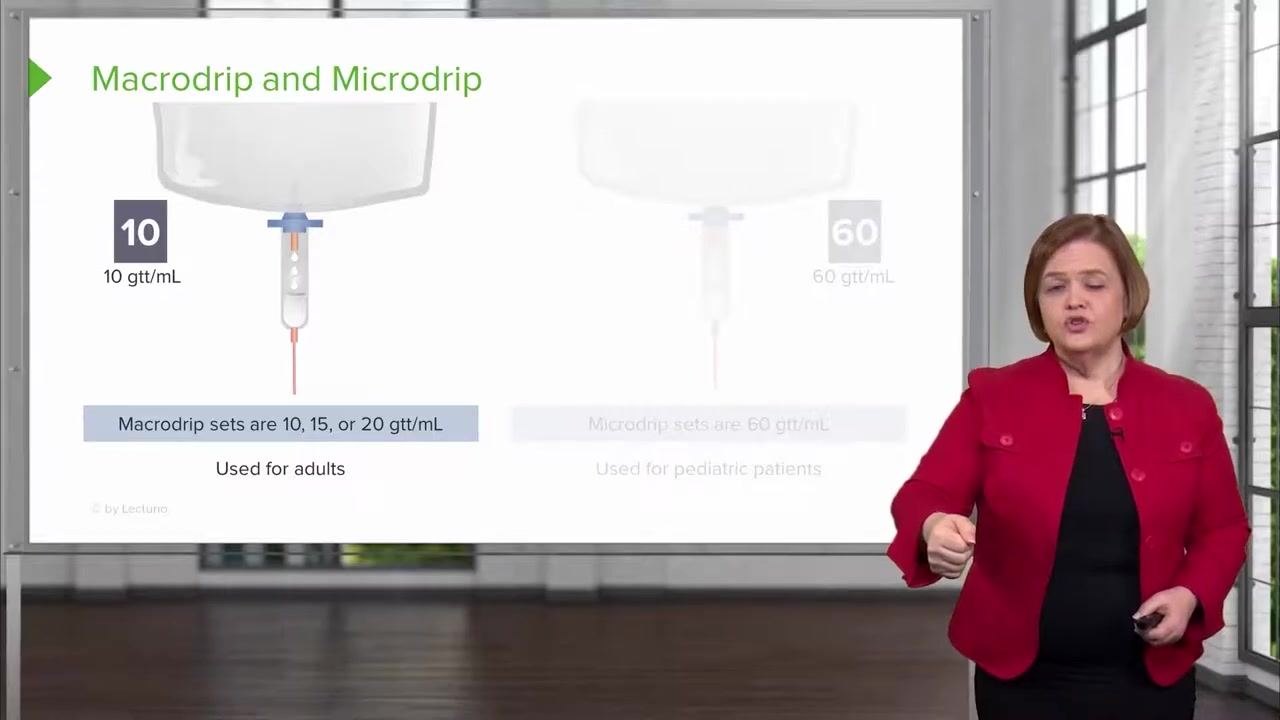
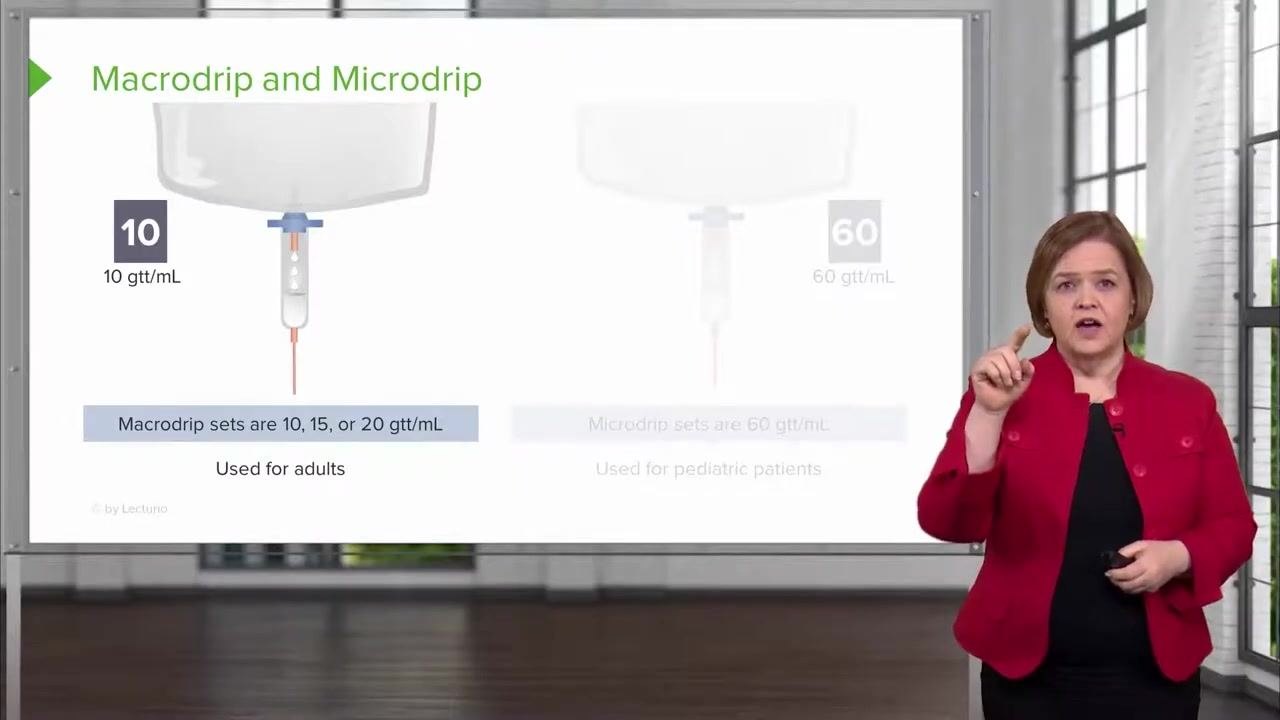
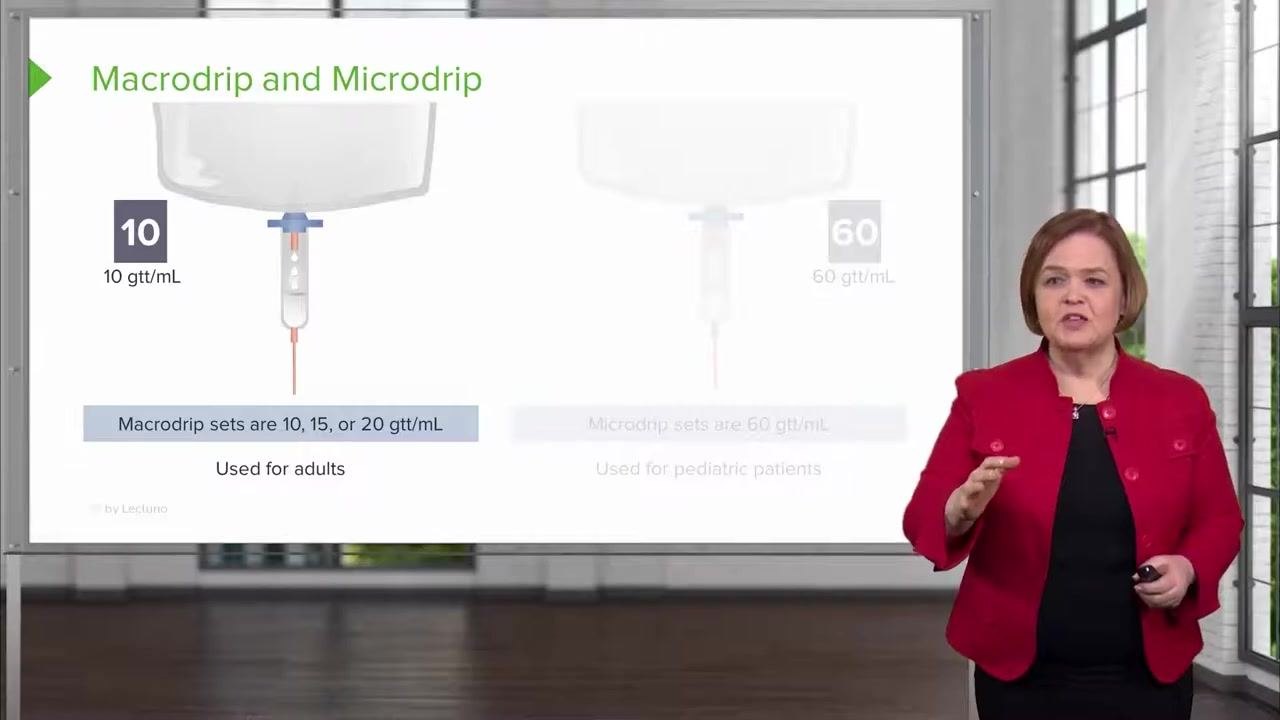
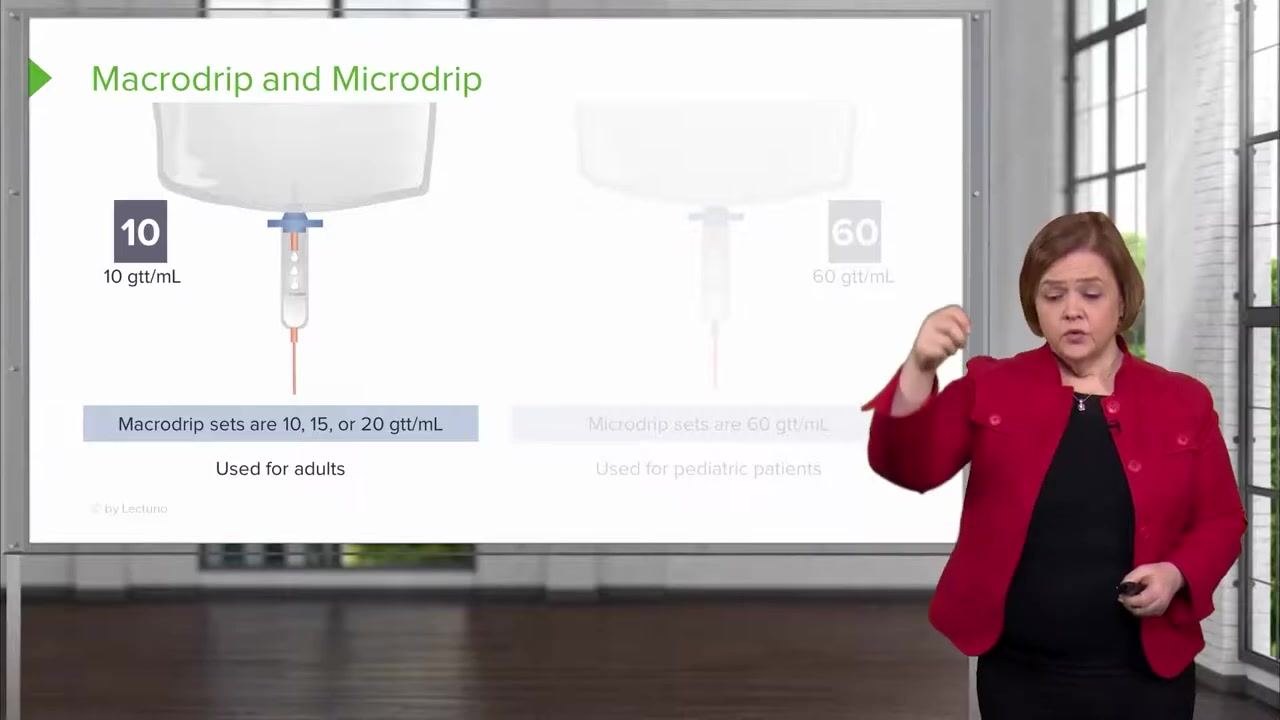
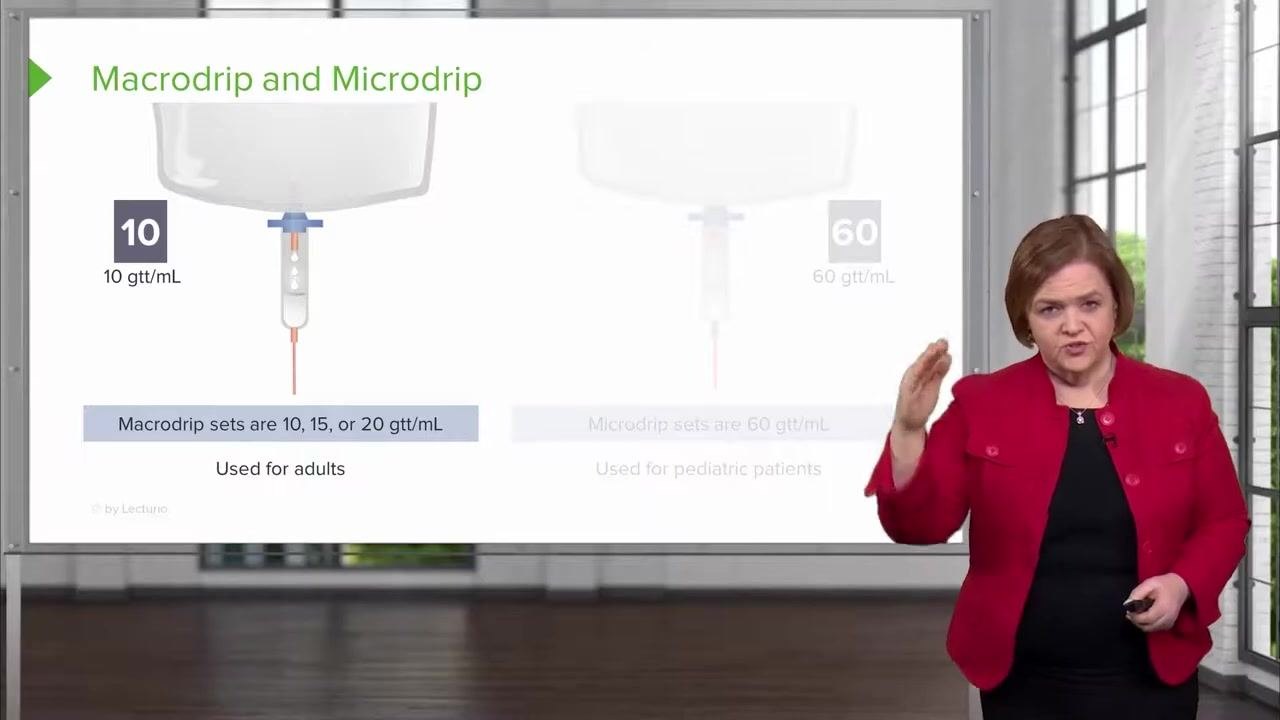
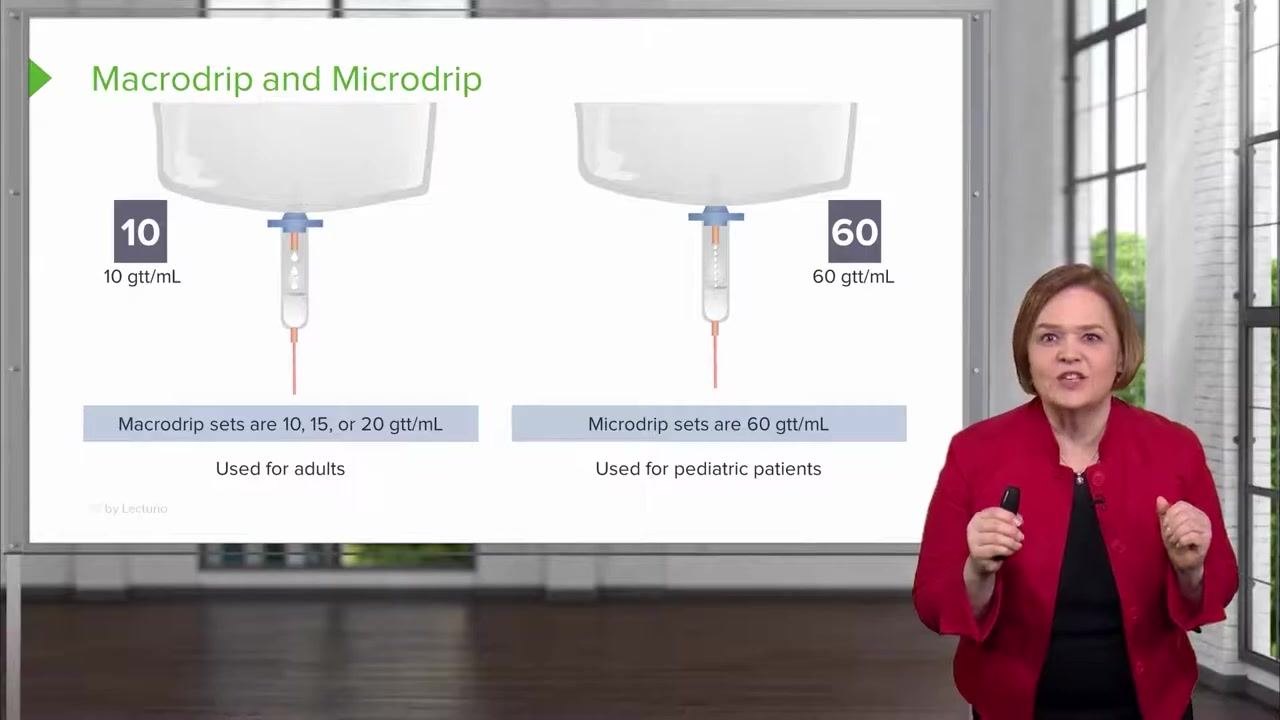
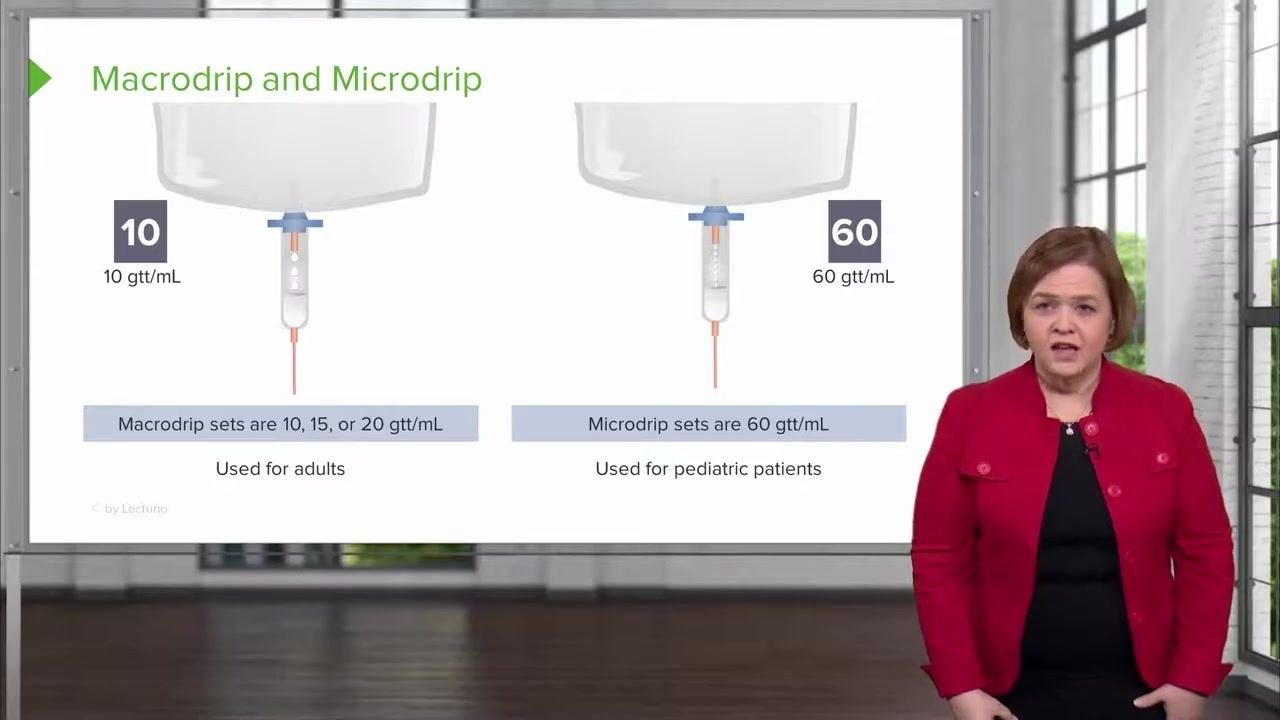
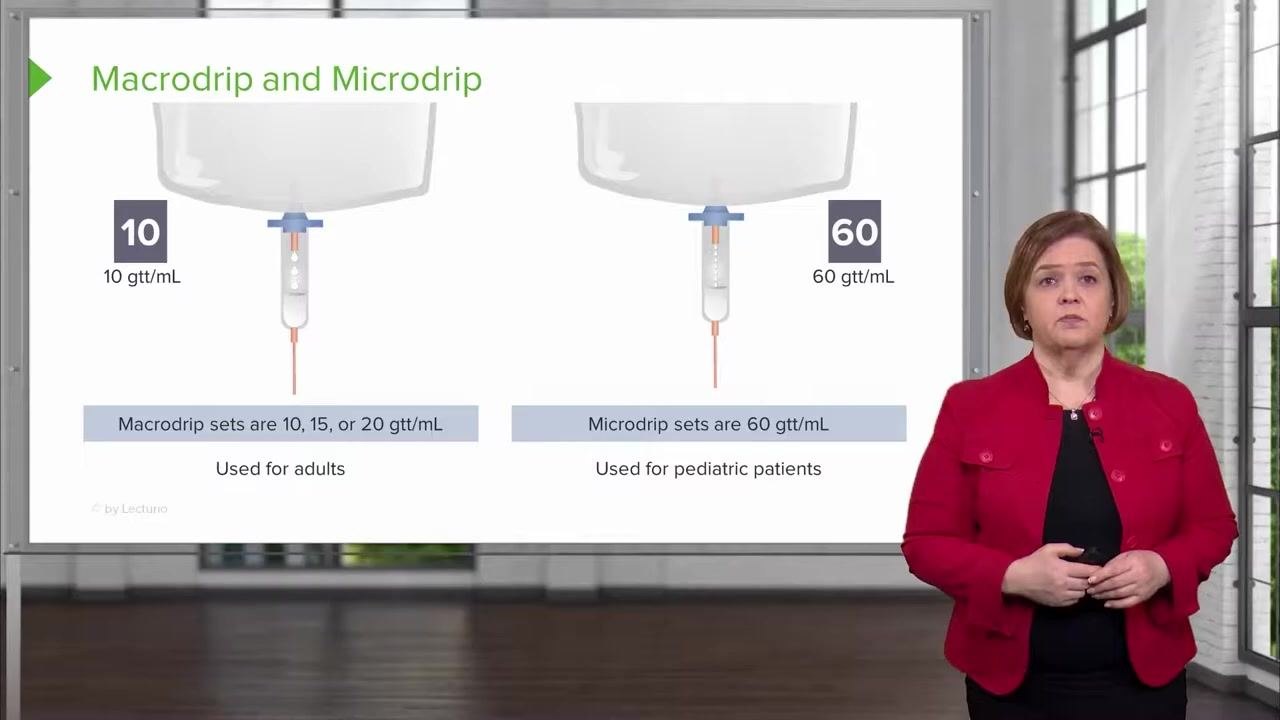
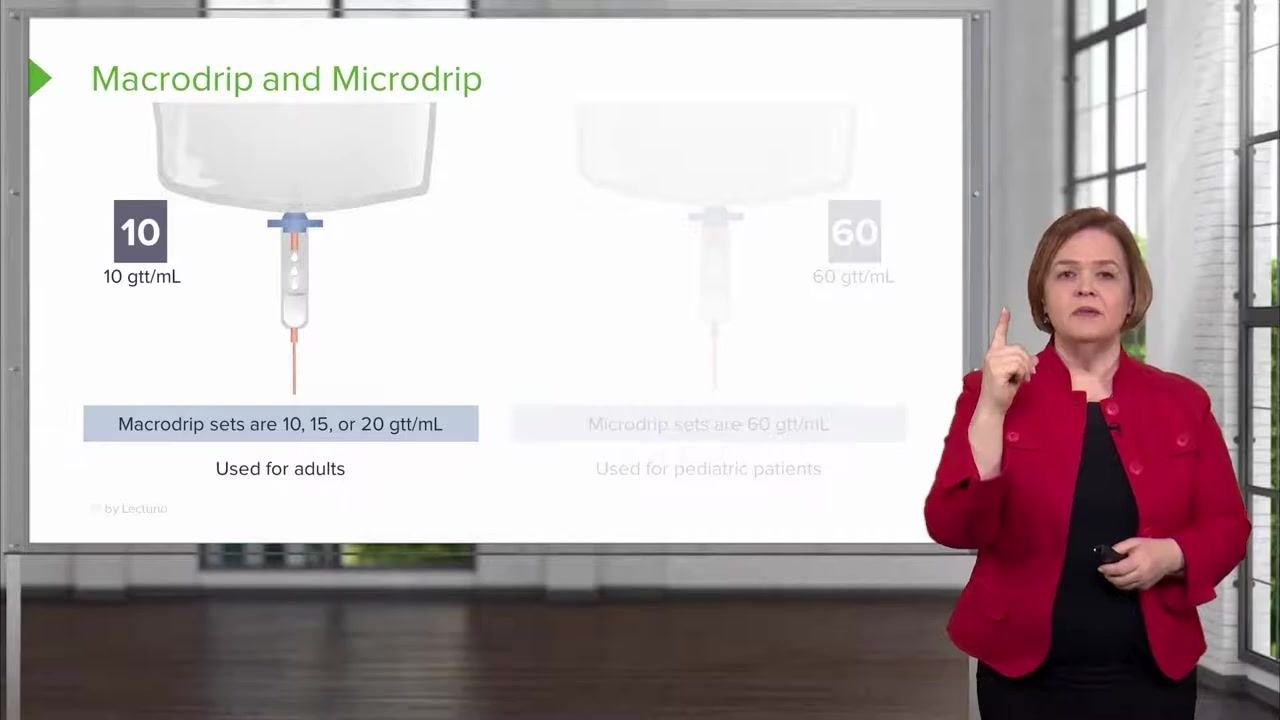
IV tubing sets fall into two categories: macrodrip and microdrip. Macrodrip sets, typically used for adults, come in drop factors of 10, 15, or 20 gtt/mL. Microdrip sets, used for pediatric patients, have a drop factor of 60 gtt/mL.
A macrodrip package marked "10" means 10 drops are required to deliver 1 mL of fluid. This printed drop factor is the basis for every manual rate calculation.
To set a rate manually, count the number of drops according to the tubing's drop factor. For a macrodrip set of 10 gtt/mL, count 10 drops to confirm that 1 mL has been delivered, then adjust as needed to meet the prescribed rate.
The roller clamp on the IV tubing controls flow by applying pressure to the tubing. Tightening the clamp increases pressure and slows the drip rate; loosening the clamp decreases pressure and speeds up the drip rate.
Adjust the clamp gradually while watching the drip chamber, counting drops per minute against the tubing's drop factor until the count matches the prescribed rate. If drops move too fast to count, tighten the clamp slightly until individual drops become visible.
Confirm the relationship between clamp position and rate before finalizing any adjustment: tighter produces slower drops, looser produces faster drops. Always adjust until the drip rate is steady and countable.
If the roller clamp is backed all the way off, fluid will flow too quickly and may form a continuous stream rather than countable drops, making an accurate rate impossible to verify. Always keep the clamp adjusted so individual drops can be counted.
Eligibility Criteria
Selection of the appropriate tubing set depends on the patient population and the clinical need for precise volume control.
Inclusion criteria — macrodrip tubing:
- Adult patients receiving standard IV fluid therapy.
- Tubing sets available in drop factors of 10, 15, or 20 gtt/mL.
- Clinical scenarios where a wide range of infusion rates is acceptable.
Exclusion / special population criteria — microdrip tubing:
- Pediatric patients, who are especially sensitive to fluid volume.
- Patients receiving crucial medications where precise volume control is required.
- Any scenario requiring a drop factor of 60 gtt/mL rather than a macrodrip set.
Microdrip tubing (60 gtt/mL) is reserved for pediatric patients and for administering medications where precise volume is critical, since this population is more sensitive to fluid load than adults.
Practice and training scenarios generally focus on macrodrip sets (10, 15, or 20 gtt/mL) rather than microdrip (60 gtt/mL). Microdrip tubing remains relevant in clinical practice for the specific populations above, even though it appears less often in general training exercises.
Study Endpoints
The primary endpoint of the drip rate calculation procedure is delivering the exact drop factor printed on the tubing package, so that the correct number of drops equals 1 mL of fluid delivered.
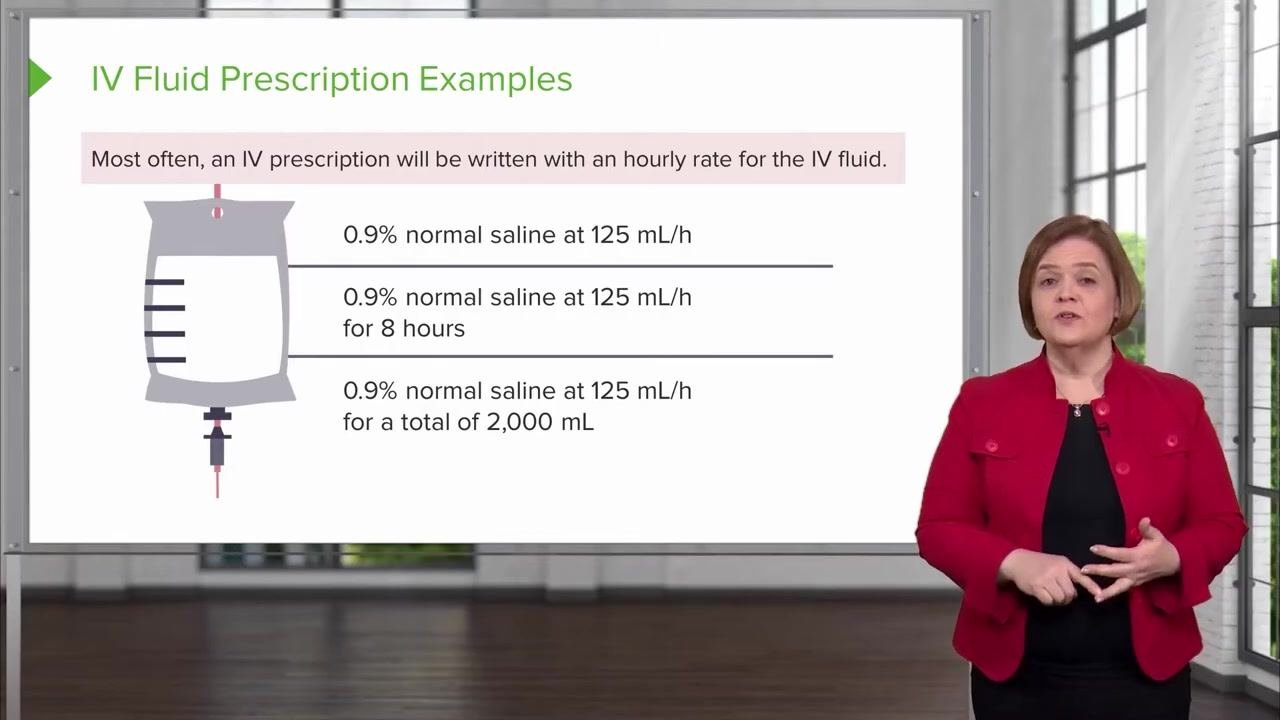
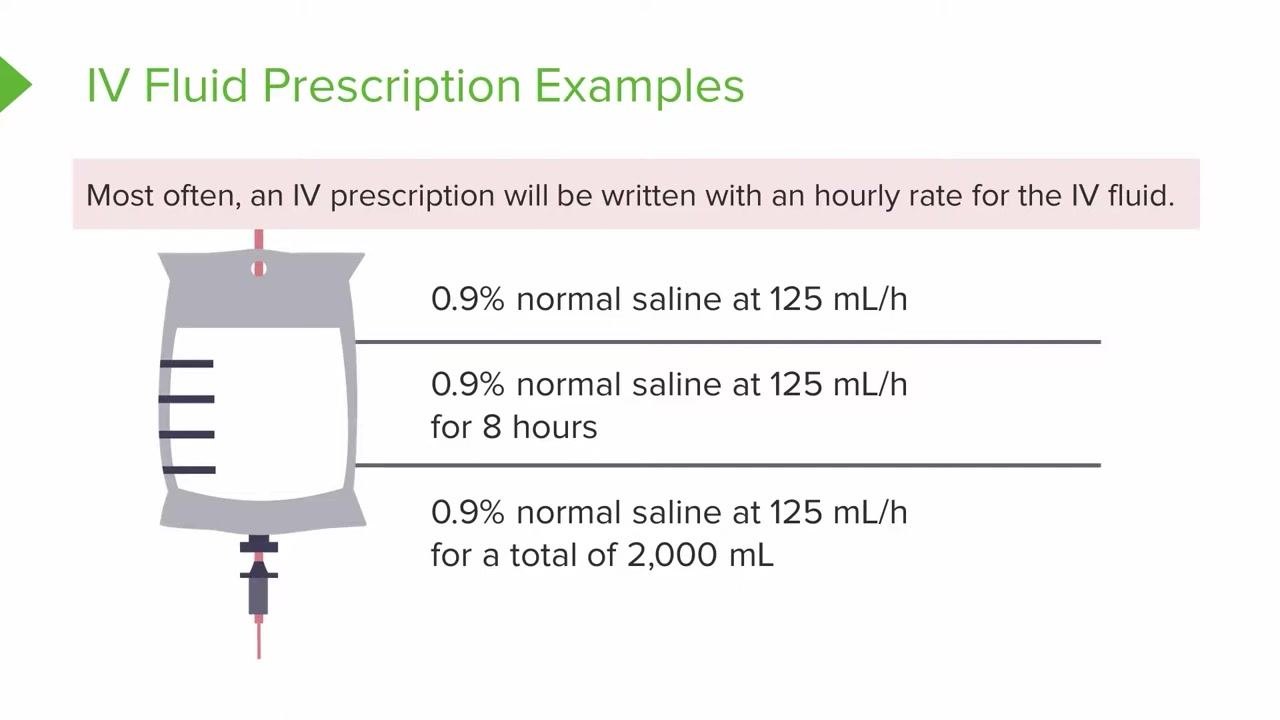
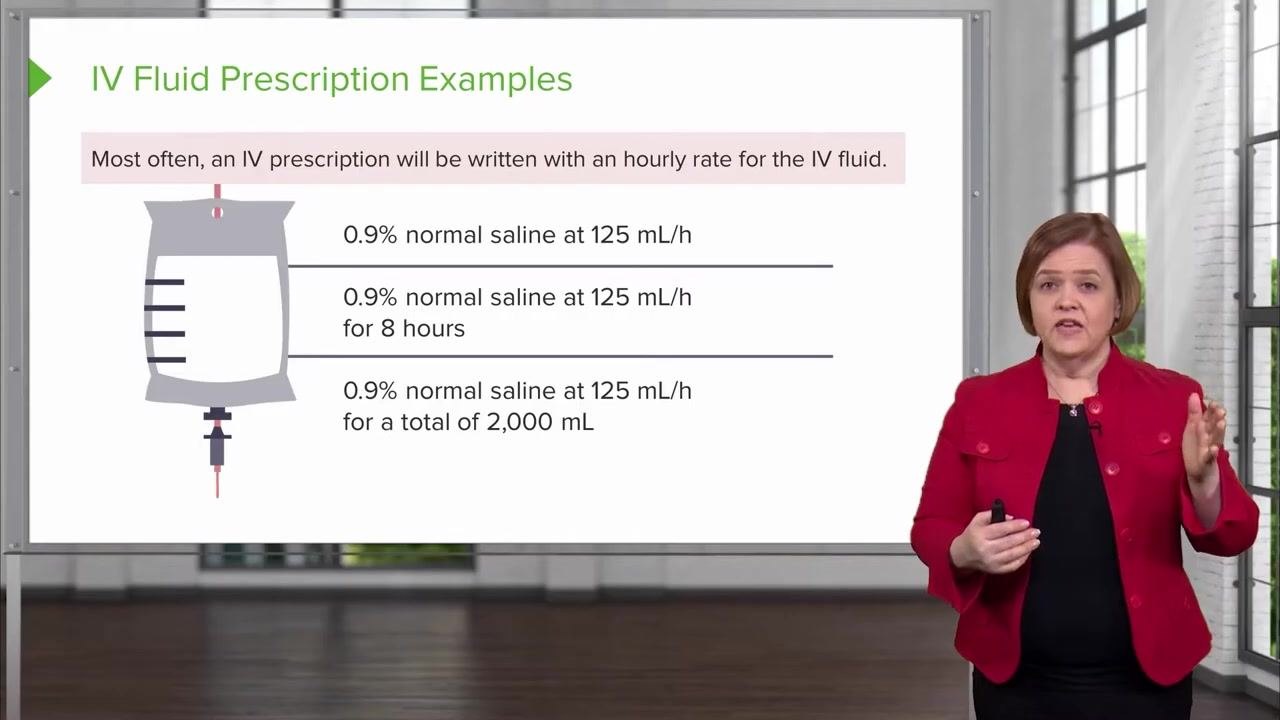
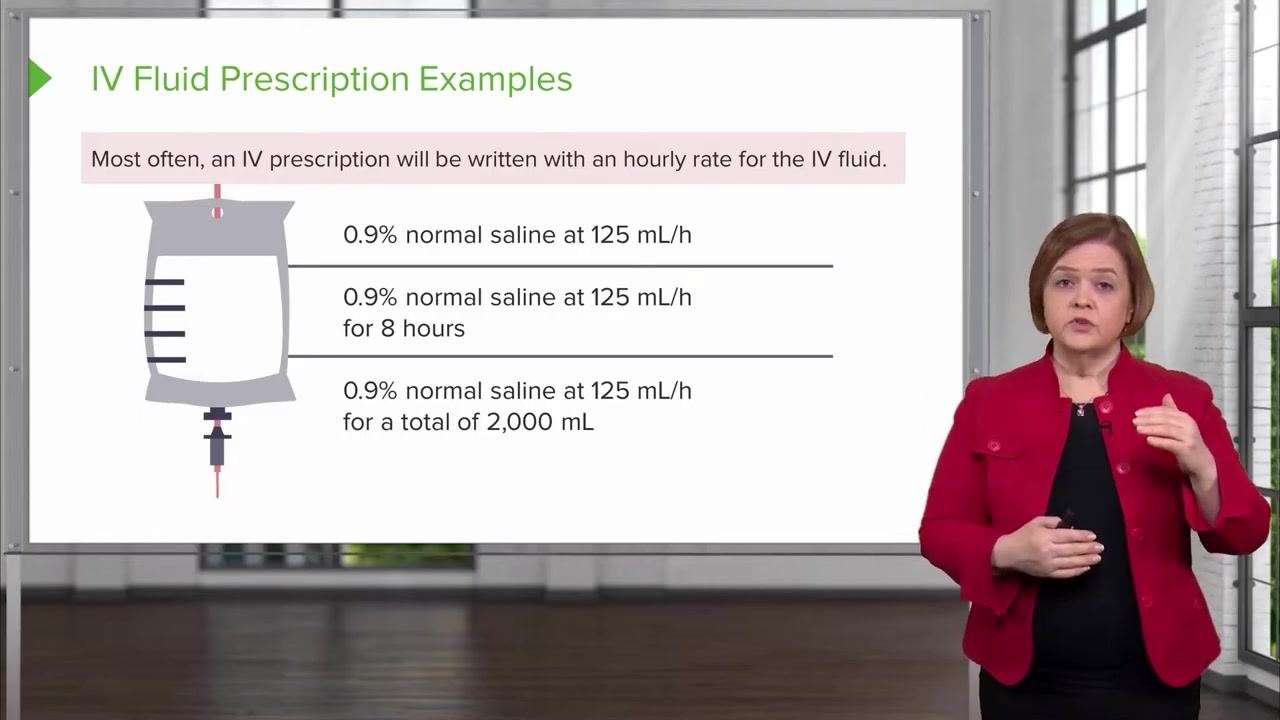
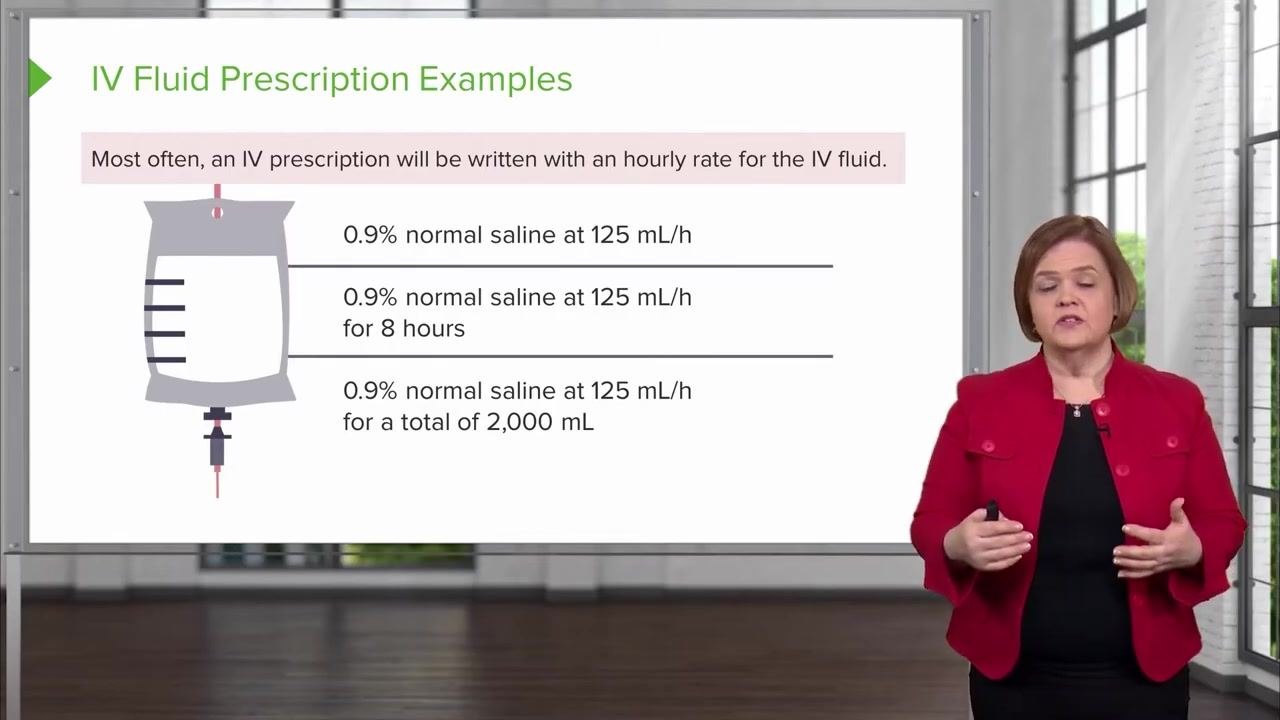
A secondary endpoint is correct interpretation of the written IV fluid order. Most orders are written with an hourly rate, such as "0.9% normal saline at 125 mL/h," meaning the patient should receive 125 milliliters of fluid every hour.
An exploratory endpoint is recognizing when an order specifies only a rate with no stated duration or total volume. In this case, the infusion should continue at the stated rate until further instructions are received from the healthcare provider.
Schedule of Assessments
The table below summarizes the assessment and action required for each type of IV fluid order, based on how the order is written.
| Order Format | Required Action | Timing Window |
|---|---|---|
| Rate only (e.g., "0.9% normal saline at 125 mL/h") | Hang the bag, set the rate, and continue infusing at that rate. | No specified end time or volume; continue until further orders are given. |
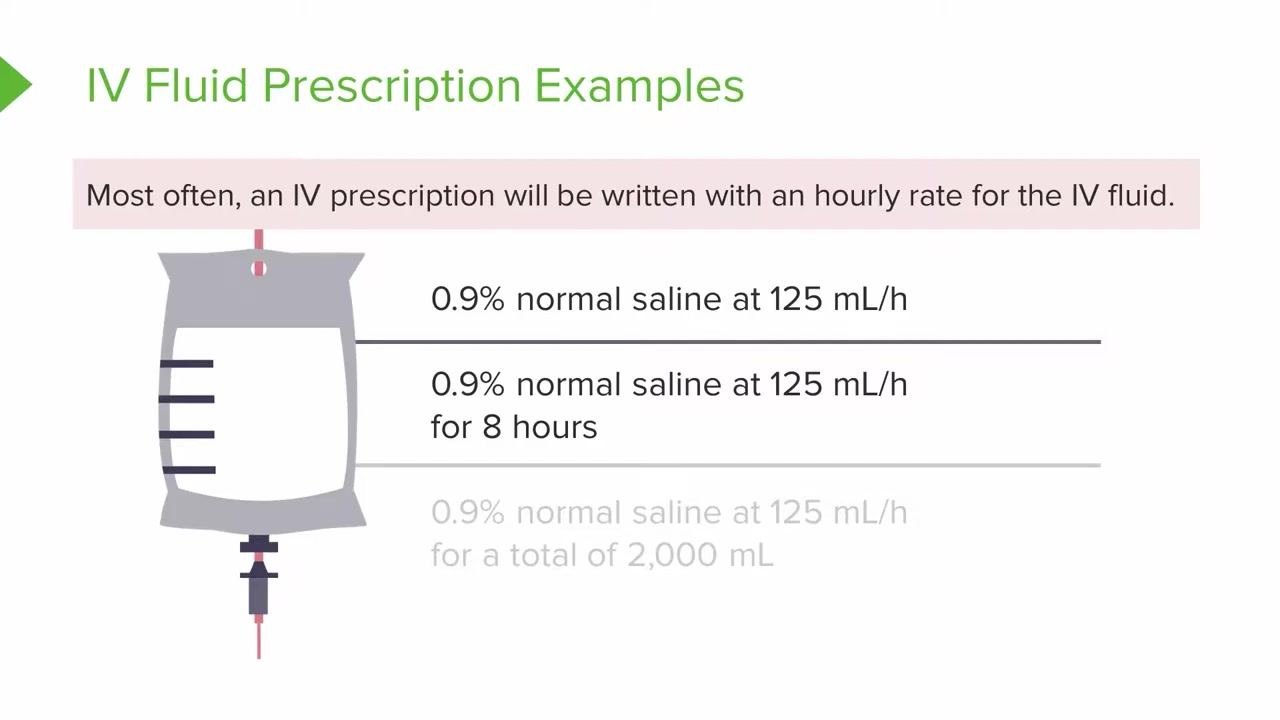
| Rate with fixed duration (e.g., "125 mL/h for 8 hours") | Calculate total volume (rate × hours) and infuse for the stated period. | Discontinue after the specified duration unless additional fluids are ordered. |
| Rate with total volume (e.g., "for a total of 2,000 mL") | Infuse at the stated rate until the total volume has been delivered. | Discontinue once the specified total volume has been reached. |
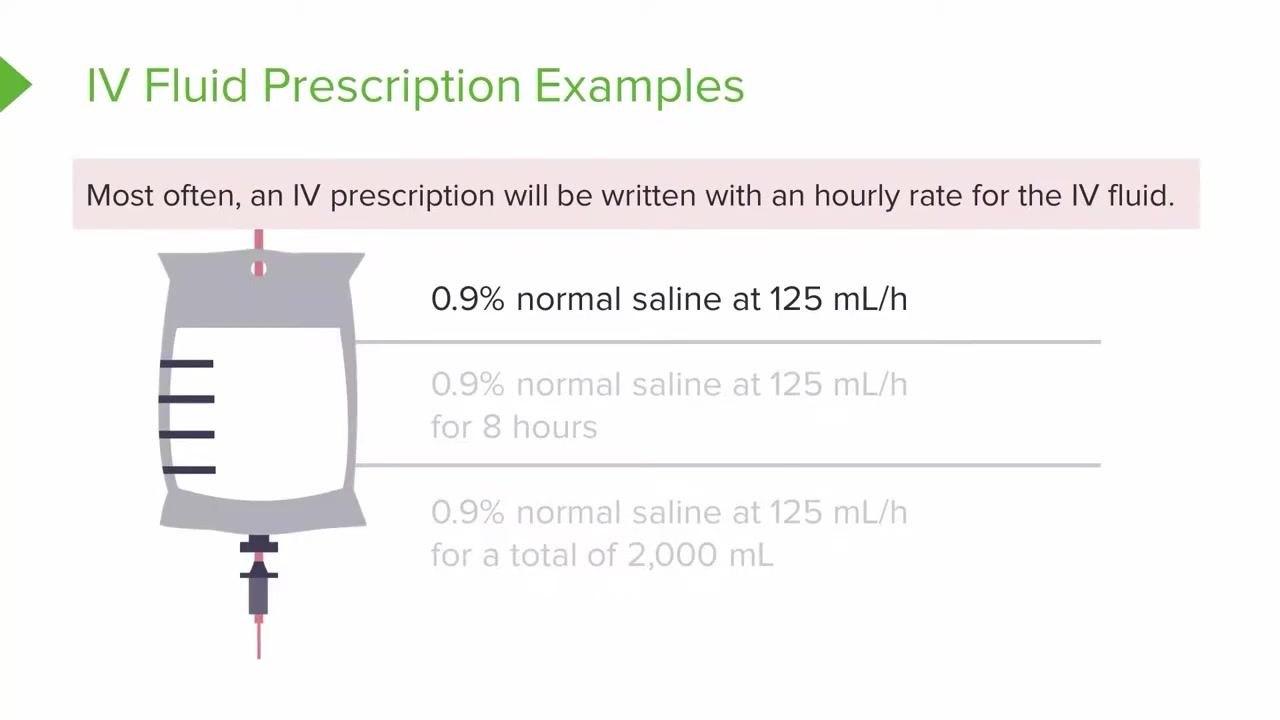
Orders with only a rate specified do not indicate how much fluid to give in total or for how long. Continue communicating with the healthcare provider to determine how long the patient should remain on therapy.
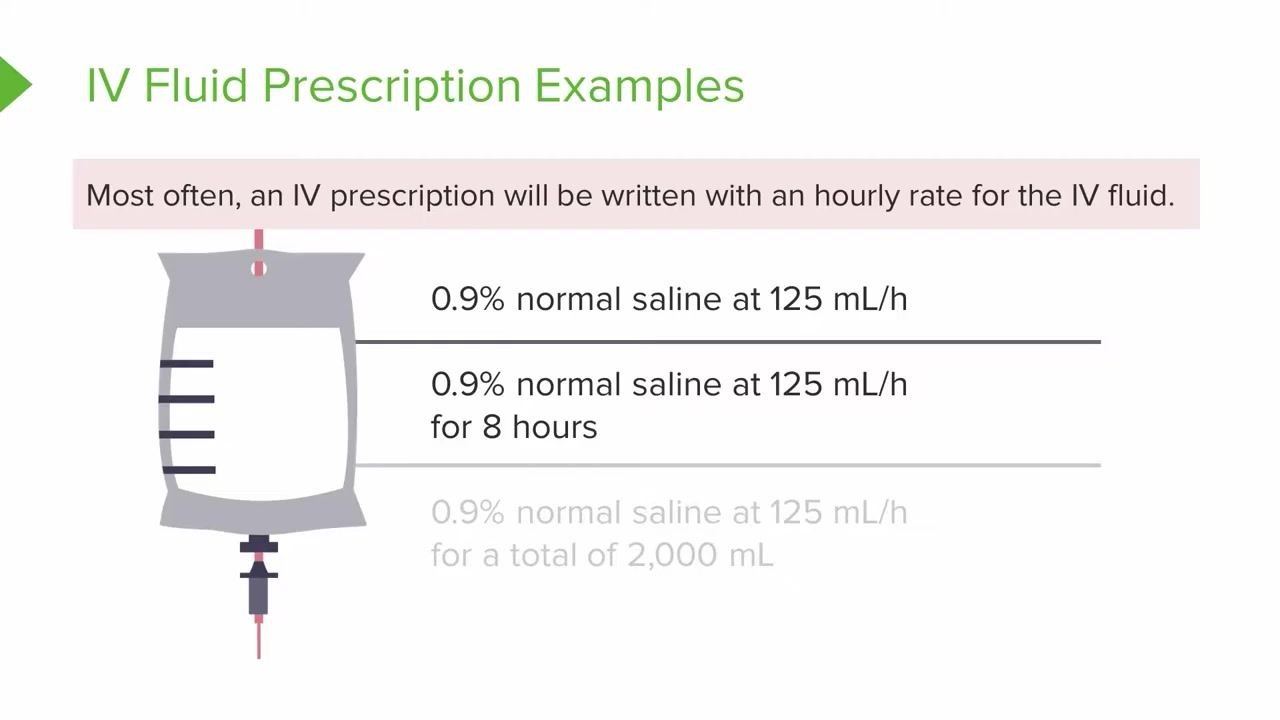
For a time-limited order such as "0.9% normal saline at 125 mL/h for 8 hours," calculate the total volume as 125 mL/h × 8 hours = 1,000 mL, and discontinue the IV after 8 hours unless additional fluids are ordered.
Multiply the hourly rate by the number of hours to determine total volume for any time-limited order, and ensure the IV is discontinued after that duration unless new orders are received.
Some orders specify a total volume instead of a duration (e.g., "for a total of 2,000 mL"). Always read the order carefully to determine whether rate, duration, or total volume is specified, and clarify with the healthcare provider if any detail is unclear.
Statistical Considerations
Sample size calculation and formal analysis populations do not apply to this procedural document; where such content would normally appear, this section instead documents the calculation method used to determine infusion rate and total volume.
There are three standard formats for writing an IV fluid prescription: rate only, rate with a fixed duration, and rate with a total volume. Each format specifies the concentration, rate, and either duration or total volume for administration.
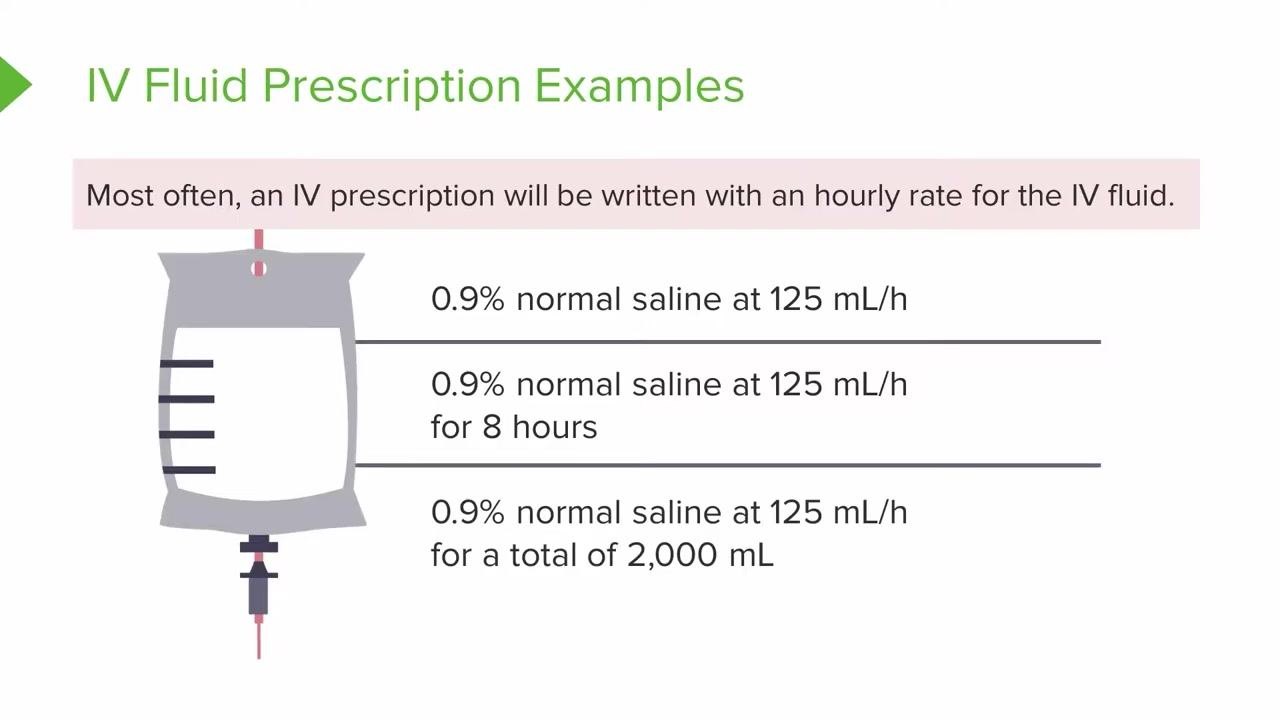
All three formats are valid and commonly used in clinical settings; no calculation is required beyond recognizing which format is in use. Familiarize yourself with all three before applying the corresponding calculation.
Safety Reporting
Adverse event grading scales and DSMB oversight, as understood in a formal clinical trial, do not apply to this bedside procedure; where such content would normally appear, this section instead documents the flow-rate risks and escalation points identified during the procedure.
For a rate-only order such as "0.9% normal saline at 125 mL/h," hang the IV and allow it to infuse continuously at that rate. Because there is no specified end time or volume, the infusion continues until further orders are given.
For a time-limited order such as "125 mL/h for 8 hours," administer the fluid at the stated rate for exactly 8 hours and then stop the infusion, since the order specifies both rate and duration.
For a total-volume order such as "125 mL/h for a total of 2,000 mL," administer the fluid at the stated rate until 2,000 mL (2 liters) has been infused, then stop, since the order specifies both rate and total volume. Monitor the total volume infused throughout to identify the correct stopping point.
A key safety consideration across all formats is fully loosening the roller clamp, which allows fluid to flow so quickly that drops cannot be counted, risking an unmonitored and inaccurate infusion rate. Always keep the clamp adjusted so that drops remain visible and countable, and clarify any ambiguous order with the healthcare provider before proceeding.
Generation details: cost, quality tiers, downloads
Docsie billed 3,500 credits ($2.45) to analyze this 7-minute video at standard quality. The rewrite, template fill and Word/PDF exports were included. The same video at each quality tier:
| Quality | Frames sampled | Credits | Approx. cost |
|---|---|---|---|
| Draft | every 16-30 s | 1,750 | $1.22 |
| Standard (this guide) | every 8-15 s | 3,500 | $2.45 |
| Detailed | every 4-7 s | 7,000 | $4.90 |
| Ultra | every 1-3 s | 14,000 | $9.80 |
Credits priced at $0.70 per 1,000; plans include a monthly allowance. Enterprise customers on on-premise or bring-your-own-model deployments run this on their own inference and pay no per-video credits.
Generated by Docsie Video-to-Docs on 2026-09-20 from a 6-minute video. It was generated straight into Docsie's Clinical Protocol Document template, so every section of that template is filled from the video. Screenshots are frames from the source video and belong to their creator, Lecturio Nursing, whose original is embedded above. If you own this video and want the guide removed or credited differently, contact us and we will act within one business day.