
How to Use a Three Compartment Sink
This HACCP plan documents how to use a three-compartment sink to properly wash, sanitize, rinse, and dry kitchen equipment and utensils in a commercial kitchen setting. The procedure follows the training standards issued by Kirby Chemical Company and covers each control point from initial soap setup through final drying, so kitchen staff can consistently protect food-contact surfaces from biological, chemical, and physical hazards.
Video: Using a Three Compartment Sink by Kirby Restaurant & Chemical Supply (2018). All credit for the demonstration goes to the creator; watch the original on YouTube. The written guide below was generated from this video by Docsie. Creator? Request a change or removal.
This HACCP plan documents how to use a three-compartment sink to properly wash, sanitize, rinse, and dry kitchen equipment and utensils in a commercial kitchen setting. The procedure follows the training standards issued by Kirby Chemical Company and covers each control point from initial soap setup through final drying, so kitchen staff can consistently protect food-contact surfaces from biological, chemical, and physical hazards.

Process Scope
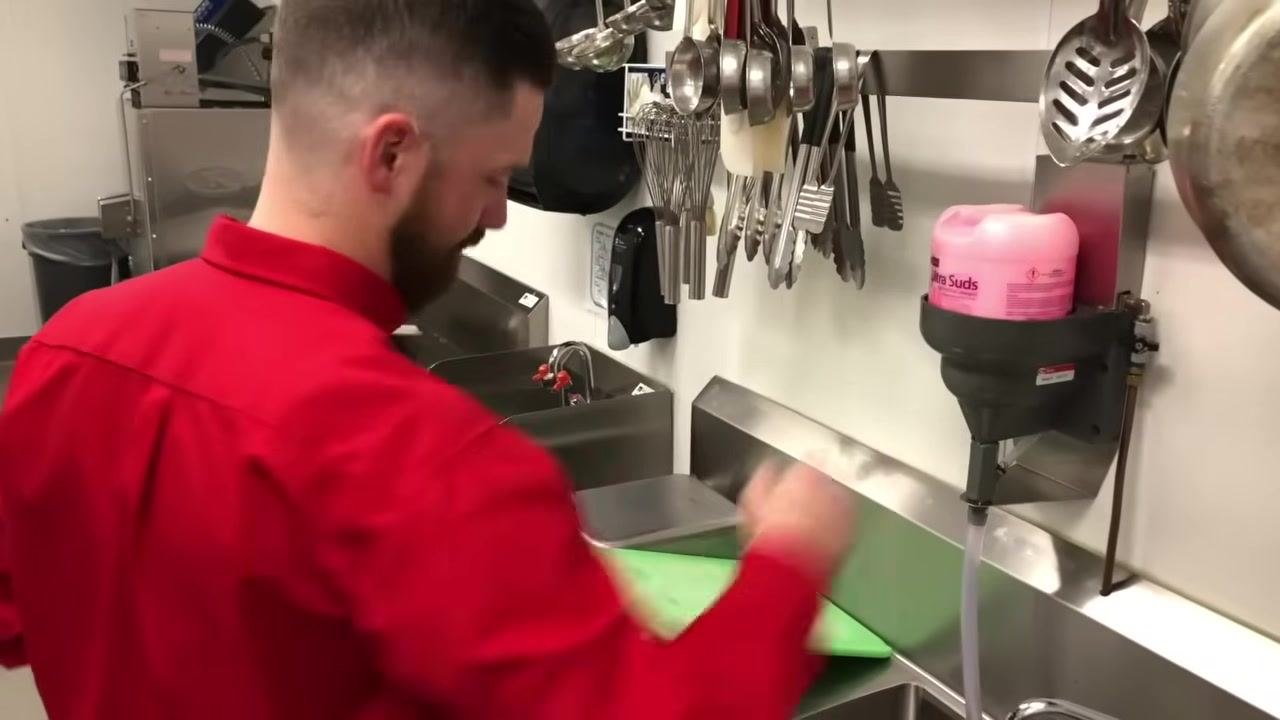
Product: Kitchen equipment and utensils that come into direct contact with food, including metal mixing bowls, rectangular pans, and green cutting boards.
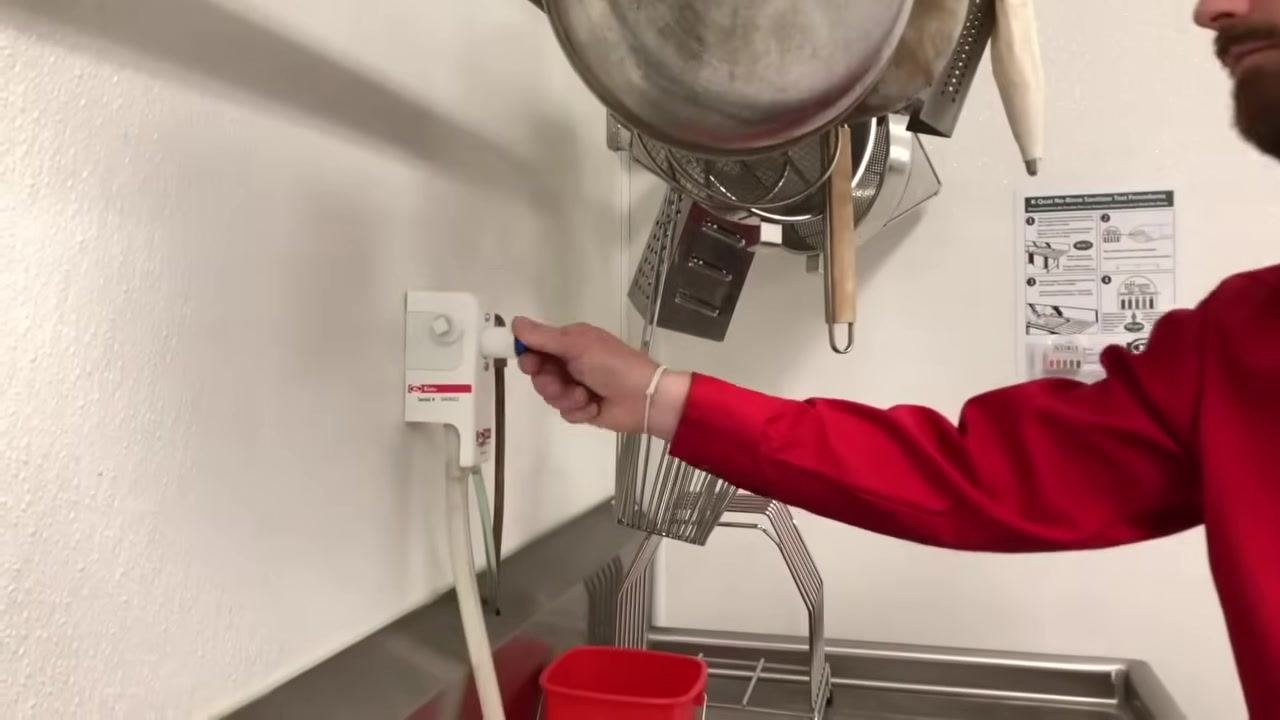
Location: A commercial kitchen three-compartment sink station equipped with wall-mounted racks for utensils, a wall-mounted soap dispenser, and a wall-mounted chemical (sanitizer) dispenser.
Preparation steps: Before washing begins, staff gather cleaning supplies — a pink "Ultra Suds" cleaning solution, a sponge, a cutting board, and a metal mixing bowl — and organize utensils on wall-mounted racks so they are accessible during the cycle. The "Ultra Suds" solution is loaded into the wall-mounted dispenser, which connects to the sink by a clear hose, and items to be washed are staged near the sink.
Service method: Once washed, sanitized, and rinsed, items are transferred to a metal drying rack on the stainless steel counter to air dry before being returned to kitchen use. Items are spaced on the rack to allow proper air circulation.
Intended consumers: Kitchen staff and, indirectly, all customers served food prepared using the equipment cleaned through this process.
Hazard Analysis
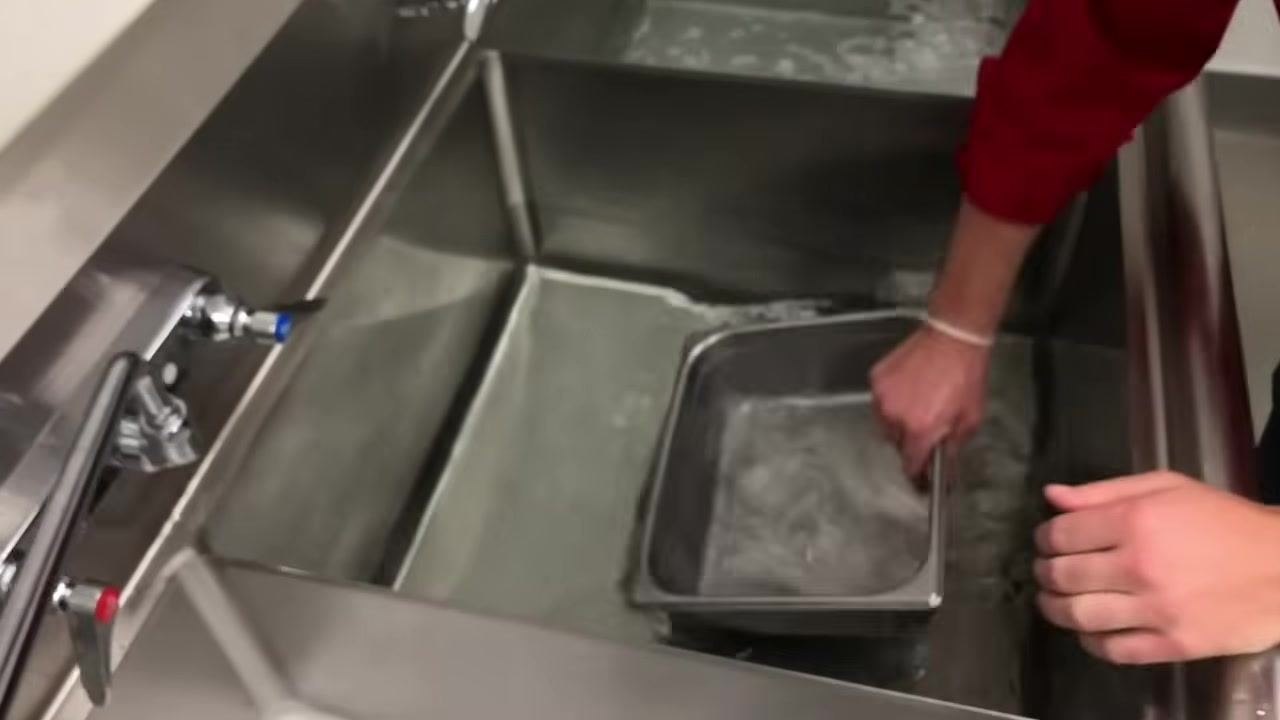
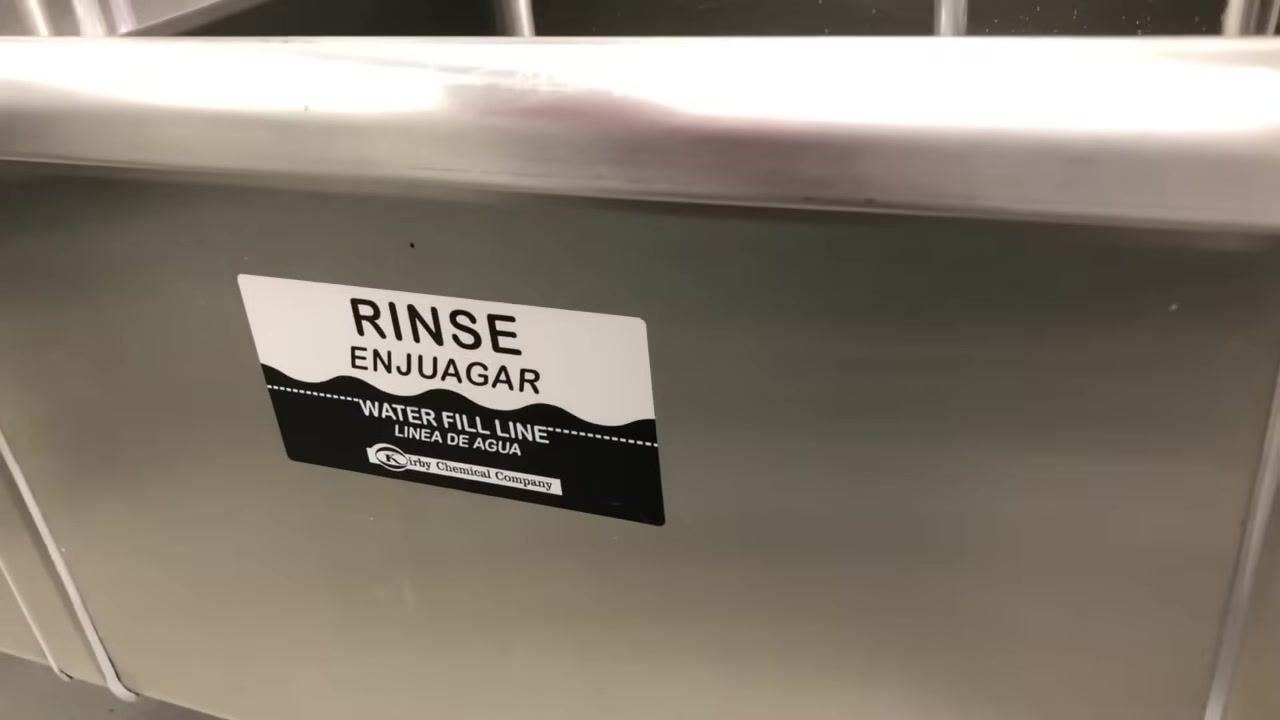
The three-compartment sink is divided into wash, sanitize, and rinse compartments, each marked with a sign showing the correct water fill line. Filling each compartment to the correct level is the first control against hazards carried over from prior use of the equipment.
| Process step | Biological hazard | Chemical hazard | Physical hazard |
|---|---|---|---|
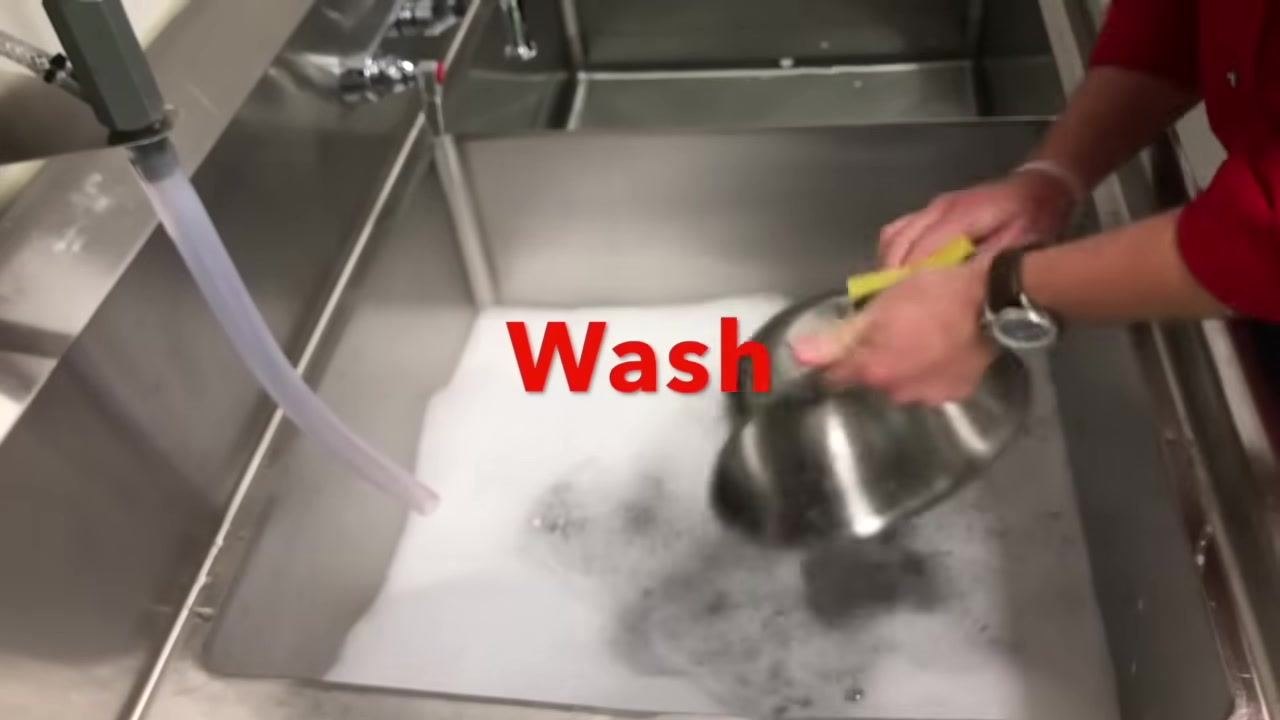
| Wash | Bacteria surviving on food-contact surfaces if soap concentration or water level is insufficient | Incorrect cleaning solution concentration if the "Ultra Suds" dispenser is not properly filled | Residual food debris not removed by scrubbing |
| Sanitize | Bacteria surviving if sanitizer concentration is too low or contact time is insufficient | Sanitizer concentration outside the safe range indicated on the reference chart | None identified in the source material |
| Rinse | Bacteria or residue reintroduced from contaminated rinse water | Leftover soap or sanitizer residue not fully rinsed away | Soap film or particulate residue remaining on surfaces |
| Dry | Bacterial growth if items are stacked wet or improperly spaced | None identified in the source material | Contamination from an unclean or crowded drying rack |
Critical Control Points
Each compartment of the sink functions as a distinct critical control point (CCP) in the wash-sanitize-rinse cycle.
| CCP | Process step | Critical limit | Responsible role | Required equipment |
|---|---|---|---|---|
| CCP1 | Wash | Water filled to the marked line on the WASH / LAVAR sign, using the "Ultra Suds" solution from the wall-mounted dispenser | Kitchen staff | Wall-mounted soap dispenser, sponge, wash compartment |
| CCP2 | Sanitize | Items fully submerged in the sanitizing solution for the required contact time, with concentration matching the reference chart | Kitchen staff | Sanitizer instruction chart, test strips, sanitize compartment |
| CCP3 | Rinse | Water filled to the marked line on the RINSE / ENJUAGAR sign, with all soap and sanitizer residue removed | Kitchen staff | Rinse compartment, sponge, clear water supply |

Monitoring
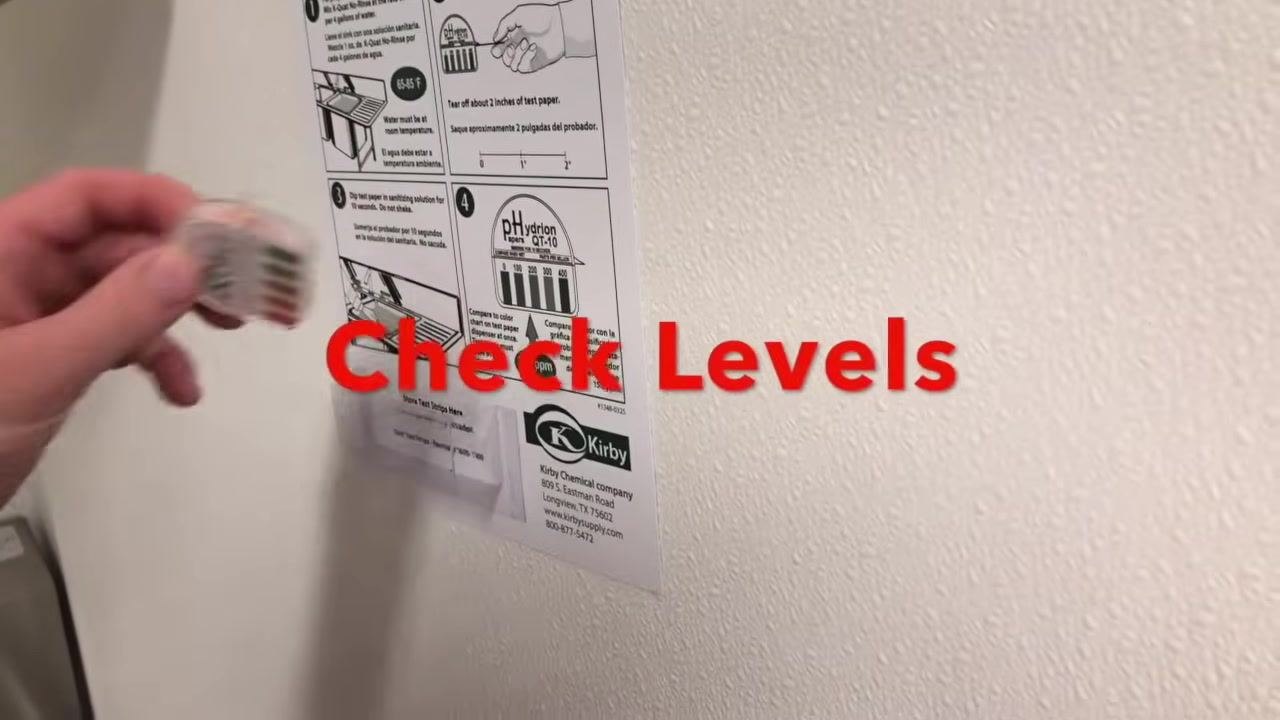
Monitoring confirms that the sanitize compartment is holding the correct chemical concentration before items are returned to service. Staff check this by holding a test strip up to the sanitizer instruction chart posted on the wall, which provides a color comparison guide, and by comparing the strip against the reference chart printed on the "NOBLE" test strip container itself.
| What is checked | Frequency | Method | Record location |
|---|---|---|---|
| Sanitizer concentration in the sanitize compartment | During the sanitizing step of each cycle, as shown in the training | Visual color comparison of a test strip against the wall-mounted instruction chart and the "NOBLE" container reference chart | Not specified in the source material |
Corrective Actions
The source material shows staff confirming that the sanitizer concentration matches the recommended levels before continuing but does not describe a specific corrective procedure for when a critical limit is missed. A complete corrective actions section would specify the exact steps to take when a test strip does not match the recommended range — such as re-dispensing sanitizer, refilling the compartment to the marked line, or holding items out of service — along with how affected product or equipment should be handled.
Verification
The sanitizer instruction chart, posted on the wall and issued by Kirby Chemical Company, serves as the reference standard against which test strip results are validated during the sanitizing step. The source material does not show a supervisor review, dispenser calibration check, or formal audit activity; a complete verification section would define who reviews monitoring results, how often the chemical dispenser is calibrated, and what periodic audits confirm that the wash-sanitize-rinse cycle is being followed correctly.
Records
The source material does not show any logbooks, checklists, or record-keeping activity associated with the wash, sanitize, or rinse steps. A complete records section would list the specific logs to maintain — such as sanitizer test strip results and dispenser refill records — along with the retention period for each log and the staff role accountable for maintaining them.
Generation details: cost, quality tiers, downloads
Docsie billed 2,000 credits ($1.40) to analyze this 4-minute video at standard quality. The rewrite, template fill and Word/PDF exports were included. The same video at each quality tier:
| Quality | Frames sampled | Credits | Approx. cost |
|---|---|---|---|
| Draft | every 16-30 s | 1,000 | $0.70 |
| Standard (this guide) | every 8-15 s | 2,000 | $1.40 |
| Detailed | every 4-7 s | 4,000 | $2.80 |
| Ultra | every 1-3 s | 8,000 | $5.60 |
Credits priced at $0.70 per 1,000; plans include a monthly allowance. Enterprise customers on on-premise or bring-your-own-model deployments run this on their own inference and pay no per-video credits.
Generated by Docsie Video-to-Docs on 2026-09-20 from a 3-minute video. It was generated straight into Docsie's Food Safety HACCP Plan template, so every section of that template is filled from the video. Screenshots are frames from the source video and belong to their creator, Kirby Restaurant & Chemical Supply, whose original is embedded above. If you own this video and want the guide removed or credited differently, contact us and we will act within one business day.