
How to Forklift Daily Inspection Checklist
This document provides the standard forklift daily inspection checklist for verifying that a forklift is safe to operate before each shift. Following these steps ensures the forklift's structural condition, safety systems, and operational controls are checked and confirmed functional prior to use.
Video: Pre-Shift Forklift Inspection by Atlantic Forklift Services (2017). All credit for the demonstration goes to the creator; watch the original on YouTube. The written guide below was generated from this video by Docsie. Creator? Request a change or removal.
Purpose
This document provides the standard forklift daily inspection checklist for verifying that a forklift is safe to operate before each shift. Following these steps ensures the forklift's structural condition, safety systems, and operational controls are checked and confirmed functional prior to use.
Scope
This procedure applies to any operator responsible for performing a pre-shift inspection on a forklift before beginning work. It covers the visual walk-around inspection, seated operational checks, and final functional tests.
Required equipment and PPE
No special tools are required to complete this checklist. You only need access to the forklift itself and its standard safety features, including the LP tank, overhead guard, seat belt, mirrors, parking brake, and hydraulic controls.
Pre-shift visual inspection
-
Approach the forklift. Begin your inspection from the front side or the operator's compartment. This is the recommended starting point for the forklift daily inspection checklist.
-
Check for visible damage. Perform a quick visual scan of the body and attachments, looking for dents, cracks, or any signs of impact.
-
Inspect the steering area. Check for debris, tangled objects, or leaks that could obstruct the steering mechanism.
-
Walk around the forklift. Continue your visual inspection on all sides, checking for any new or existing damage.
-
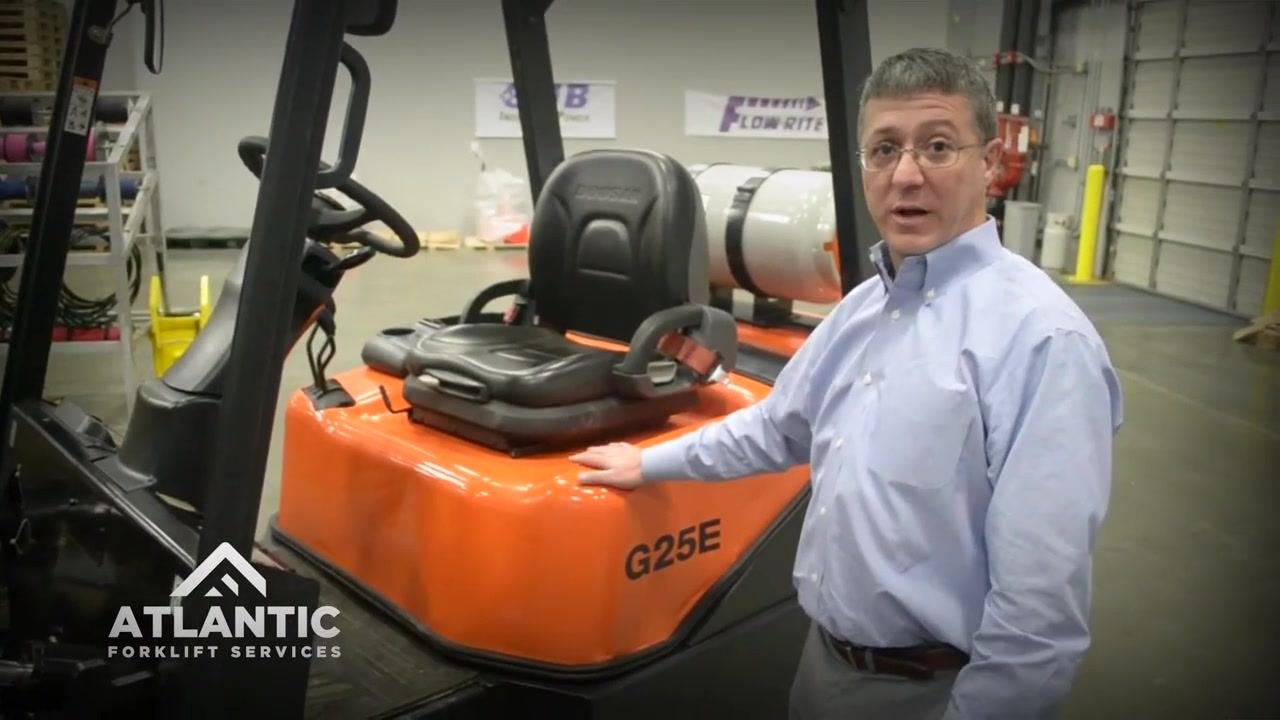
Examine the LP tank. Confirm the LP (liquefied petroleum) tank is locked securely and properly mounted. Physically check the mounting brackets and locking mechanism, and confirm there are no leaks or loose fittings.
-
Check the opposite side. Repeat the visual inspection on the other side of the forklift, looking for the same issues: damage or leaks.
-
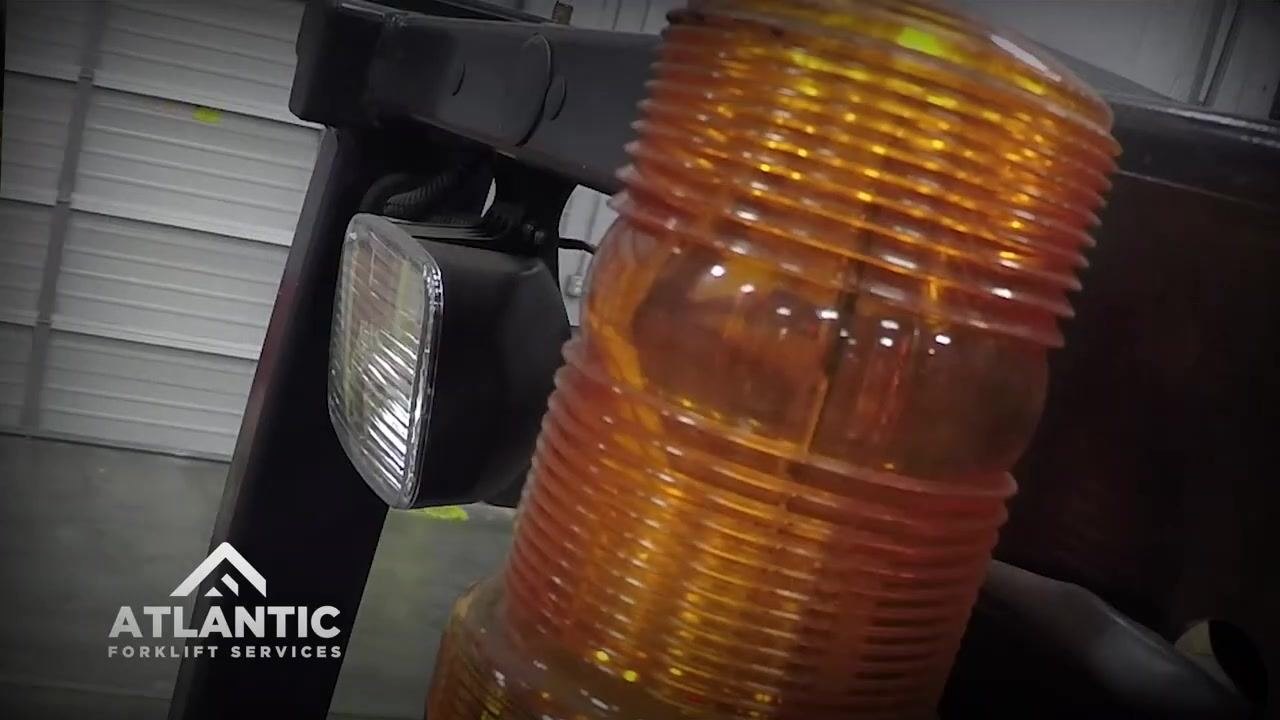
Inspect the overhead guard. Look for damaged lights or structural damage. Confirm all lights are intact and functional, and that the guard is not bent or compromised.
-
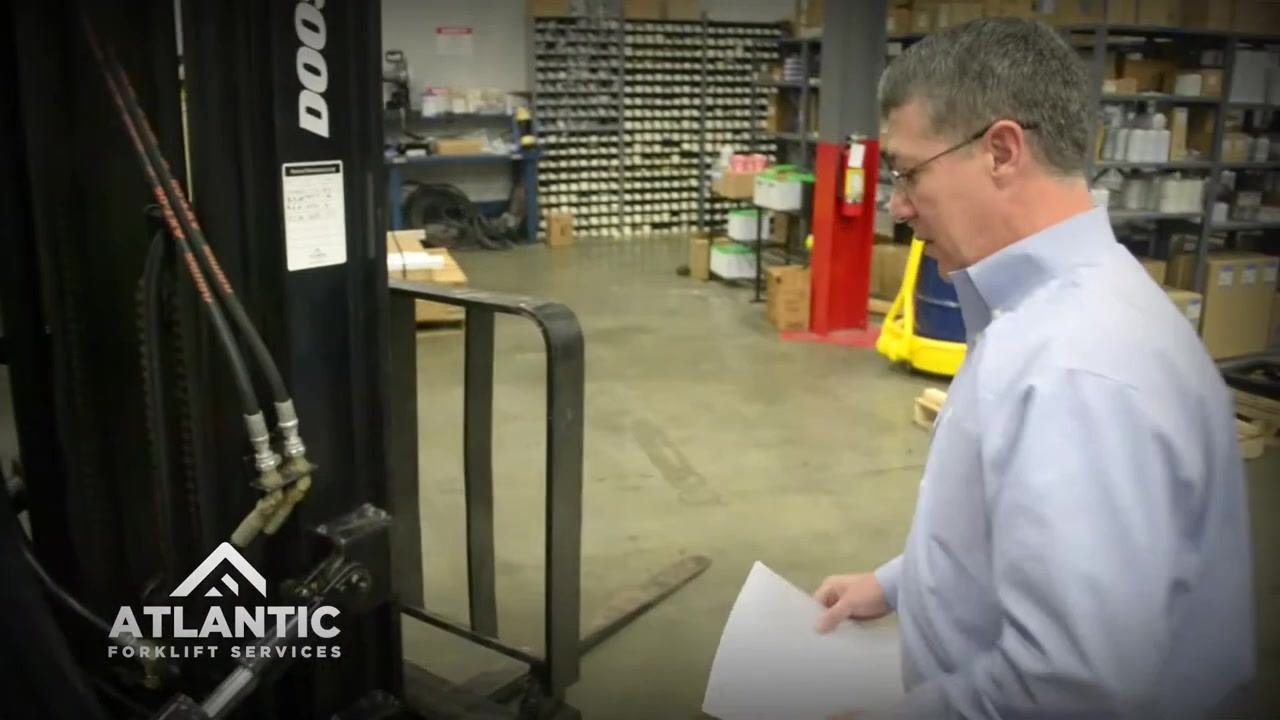
Check the mast for debris. Look through the mast for debris, shrink wrap, or broken pallets, and remove any foreign objects that could interfere with operation.
-
Complete the perimeter check. Continue around the forklift, repeating the inspection for debris, shrink wrap, or other obstructions, and confirm the entire perimeter is clear and safe.
-
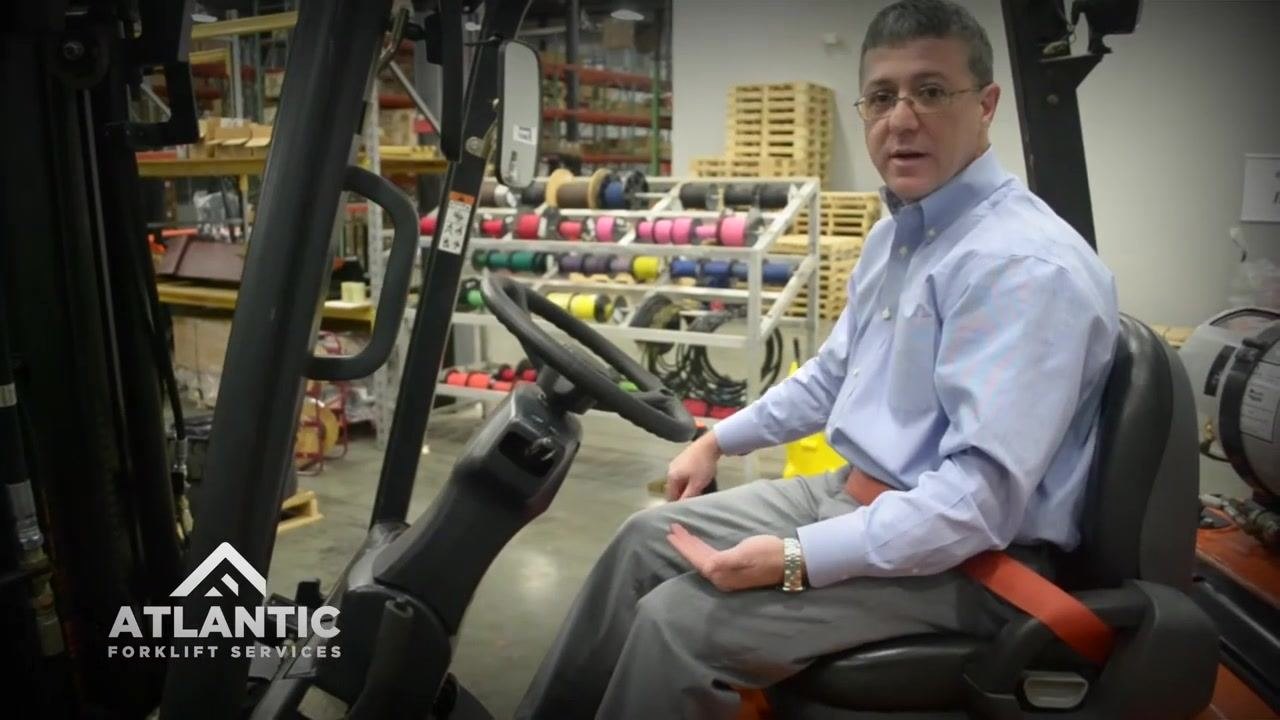
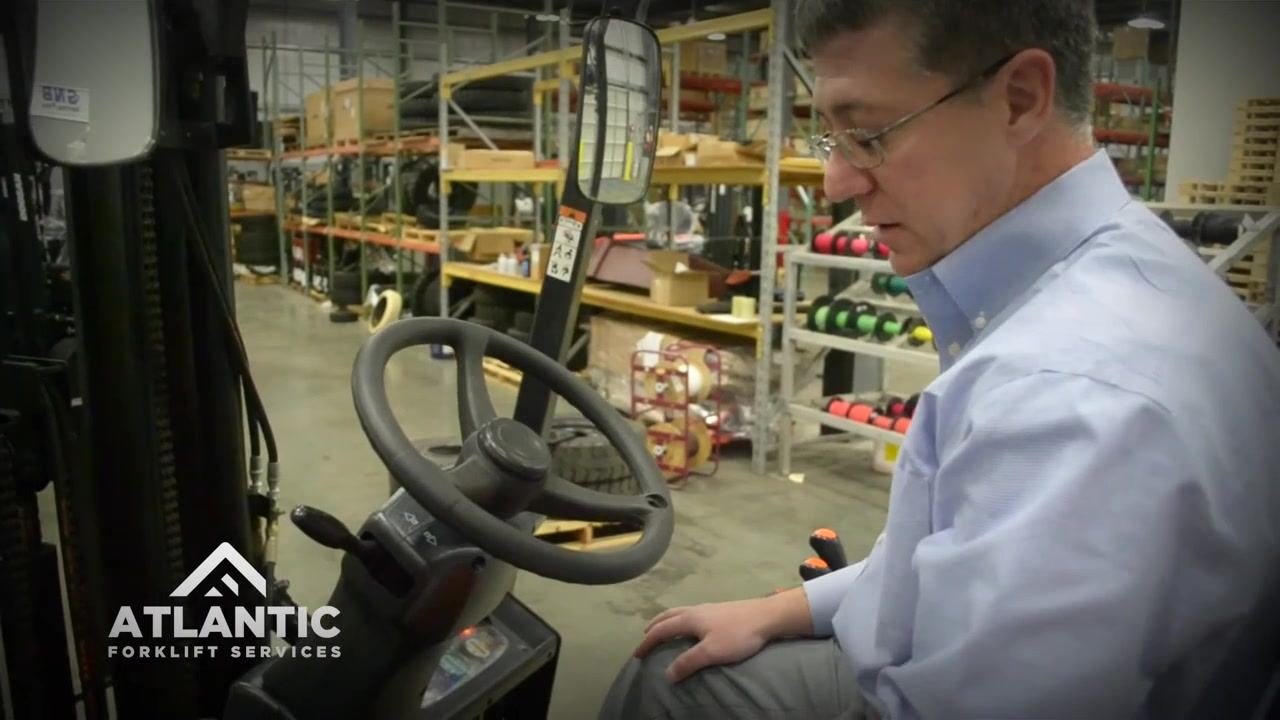
Check the seat belt. Pull the belt out fully and inspect it for fraying or cuts. Buckle and unbuckle it to confirm proper operation before proceeding.
Operational pre-shift checks
-
Confirm the emergency brake is engaged. Visually check the brake lever or pedal position before starting the forklift.
-
Start the forklift. Follow the manufacturer's instructions to start the vehicle.
-
Check the mirrors. Ensure all safety mirrors are properly installed and adjusted for maximum visibility.
-
Verify the brake is still engaged. After startup, confirm the brake remains engaged. Do not proceed until the brake is confirmed operational.
-
Test the parking brake. With the forklift running, gently attempt to move the vehicle to ensure the brake holds. If the forklift moves, the parking brake may need adjustment or repair.
Final operational tests
-
Test the parking brake in gear. Put the forklift in gear and gently attempt to move it. Confirm the parking brake holds and the lift remains secure. If the forklift moves, the parking brake may require adjustment or repair.
-
Exercise the hydraulic controls. Operate all hydraulic functions—lift, tilt, side shift, and others—to confirm smooth operation. Listen for any unusual sounds that could indicate a problem, and confirm all movements are responsive and free of hesitation.
-
Test the side shift and other hydraulic attachments. Move the side shift and any additional hydraulic features to verify proper function, observing for smooth, coordinated movement without abnormal noises.
-
Check the backup alarm. Shift the forklift into reverse and listen for the backup alarm to sound, confirming it is operational.
-
Perform a brake test. Drive the forklift forward a short distance, then apply the brakes to ensure they engage promptly and stop the forklift safely.
-
Complete the pre-shift inspection. Confirm that all checks have been performed and that the forklift is safe for use. If any issues were found, report them immediately and do not operate the forklift until repairs are made.
Support and contact information
- For service needs or questions, contact Atlantic Forklift Services: - Phone: 704-816-8960 - Website: ATLANTICFORKLIFTSERVICES.COM - Email: refer to the website for current contact information
- Keep this contact information accessible for future reference in case service or support is needed.
Verification and summary
By completing this forklift daily inspection checklist, you confirm that the forklift's structural components, safety systems, and operational controls have all been checked before use. The procedure covers the visual pre-shift inspection, seated startup checks, and final functional tests including the parking brake, hydraulic controls, backup alarm, and brakes. Following these steps in order promotes safety and compliance before operating the forklift, and gives you quick access to your service provider if any issues arise.
Generation details: cost, quality tiers
Docsie billed 2,000 credits ($1.40) to analyze this 4-minute video at standard quality. The rewrite, template fill and Word/PDF exports were included. The same video at each quality tier:
| Quality | Frames sampled | Credits | Approx. cost |
|---|---|---|---|
| Draft | every 16-30 s | 1,000 | $0.70 |
| Standard (this guide) | every 8-15 s | 2,000 | $1.40 |
| Detailed | every 4-7 s | 4,000 | $2.80 |
| Ultra | every 1-3 s | 8,000 | $5.60 |
Credits priced at $0.70 per 1,000; plans include a monthly allowance. Enterprise customers on on-premise or bring-your-own-model deployments run this on their own inference and pay no per-video credits.
Generated by Docsie Video-to-Docs on 2026-09-10 from a 3-minute video. Screenshots are frames from the source video and belong to their creator, Atlantic Forklift Services, whose original is embedded above. If you own this video and want the guide removed or credited differently, contact us and we will act within one business day.