
How to Write a Job Safety Analysis
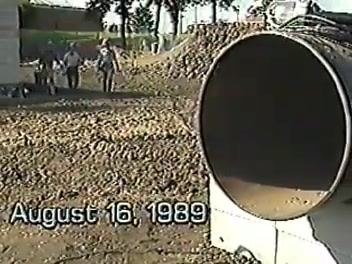
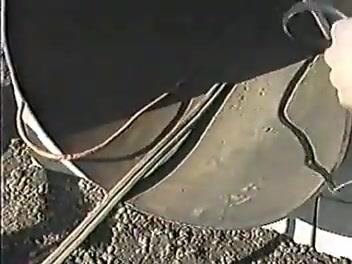
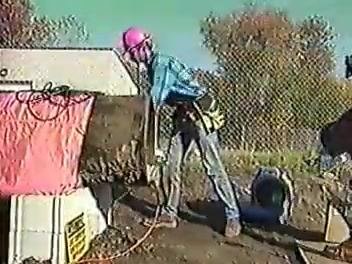
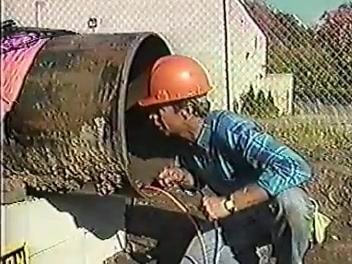
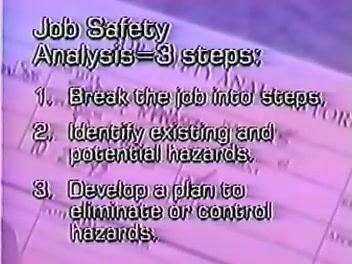
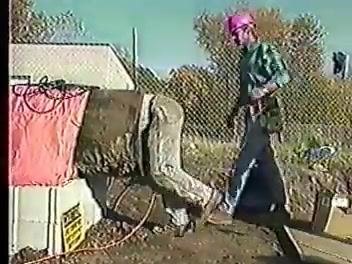
Understanding how to write a job safety analysis starts with recognizing what happens when hazards go unrecognized on a job site. On August 16, 1989, three field employees were assigned to grind a bad weld inside a large pipe, at a valve located about 20 feet from the pipe's entry point. This SOP walks through how to write a job safety analysis (JSA) for oil and gas field work such as this weld repair, using the three-step JSA method: break the job into steps, identify existing and potential hazards, and develop a plan to eliminate or control them.
Video: Job safety analysis: Step by step by georgedalan (2014). All credit for the demonstration goes to the creator; watch the original on YouTube. The written guide below was generated from this video by Docsie. Creator? Request a change or removal.
Understanding how to write a job safety analysis starts with recognizing what happens when hazards go unrecognized on a job site. On August 16, 1989, three field employees were assigned to grind a bad weld inside a large pipe, at a valve located about 20 feet from the pipe's entry point. This SOP walks through how to write a job safety analysis (JSA) for oil and gas field work such as this weld repair, using the three-step JSA method: break the job into steps, identify existing and potential hazards, and develop a plan to eliminate or control them.
A JSA finds and removes or minimizes hazards before work starts, helping prevent accidents and fatalities. You can also run a JSA throughout a project, not only before the job begins, to keep identifying and addressing hazards as conditions change.
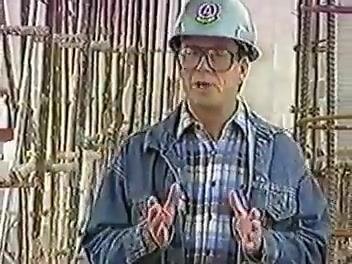
Prerequisites
Before you write a job safety analysis, confirm which safety standards apply to your site.
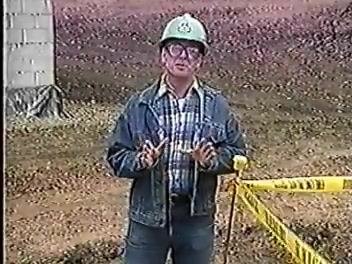
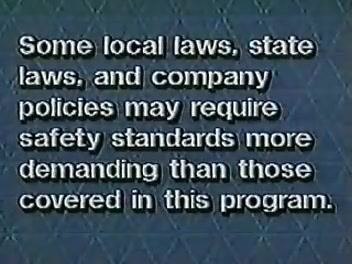
- Some local laws, state laws, and company policies require safety standards more demanding than the general JSA process described in this SOP.
- Check and comply with your local, state, and company-specific safety regulations before starting any job.
- Do not assume this SOP covers every possible safety requirement for your site.
Job scope
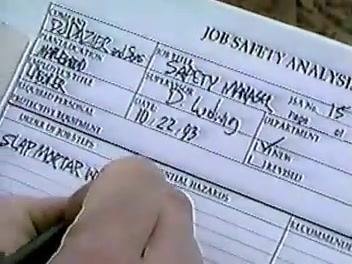
Record the job's identifying information at the top of the JSA worksheet before you begin the analysis.
- Job title: name the task being analyzed, such as grinding a bad weld inside a pipe.
- Work order / task objective: repair a defective weld found in a pipe section, near a valve located approximately 20 feet from the pipe's entry point.
- Date: enter the date the job is performed; the worksheet includes a dedicated date field so you can track when the analysis was conducted.
- Required personnel and protective equipment: the worksheet also includes fields for the personnel assigned and the protective equipment the job requires.
- Operating status: confirm and record whether the asset is live or isolated before entry, alongside the other job identification fields.
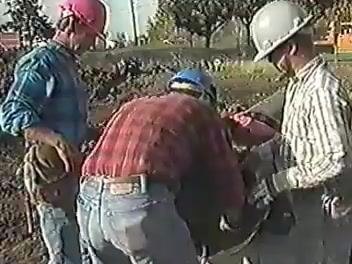
A real-world example of this scope is a pipe weld repair job in which three employees were assigned to grind a bad weld at a valve about 20 feet inside a large pipe.
Crew and equipment
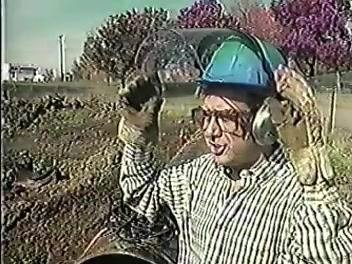
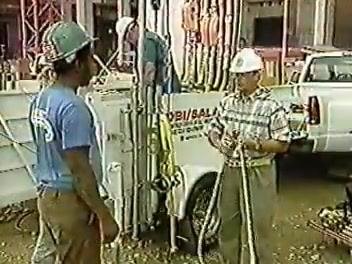
Identify who will perform and observe the job, then gather the tools and protective equipment the task requires.
- Roles: assign a worker to perform the job and a second person to observe and record the JSA; for confined-space work, designate a dedicated attendant.
- Competent persons: choose a worker who is capable, experienced, and willing to share ideas about the job, since this input strengthens the hazard analysis.
- Briefing: if the selected worker has never taken part in a JSA before, explain the purpose and process clearly before you start.
- Tools: a power grinder for weld work, a sampling pump with a hose for air testing, and non-sparking tools where sparks could ignite a hazardous atmosphere.
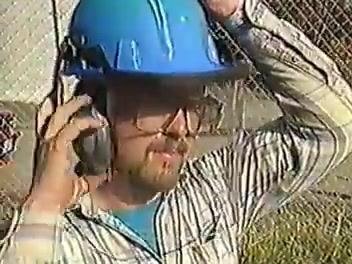
- PPE: hard hats, safety glasses, gloves, face shields, hearing protection, safety harnesses, and respiratory protection such as a breathing apparatus with air tanks and gauges.
- Critical spares: the source material for this SOP does not list specific spare parts or backup equipment; record any critical spares your site requires directly on the worksheet.
Task steps
Follow this sequence to write a job safety analysis, from selecting and prioritizing the job through observing and recording every step.
Prioritize the job
- Review injury and illness records and workers' compensation files to find jobs with frequent or severe incidents.
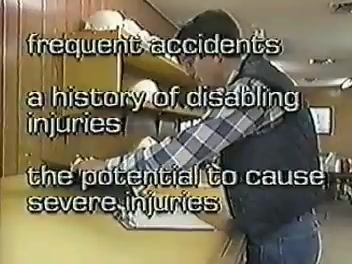
- Prioritize jobs with frequent accidents, a history of disabling injuries, or the potential to cause severe injury.
- Pay special attention to new jobs with little or no history, and to jobs where the procedure, equipment, or materials have changed.
Prepare to begin the analysis
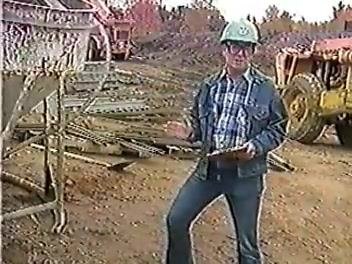
- Select the specific job to analyze, then bring the JSA worksheet, a clipboard, writing tools, and PPE to the job site.
- Choose a worker who is capable, experienced, and willing to share ideas, and explain the JSA process if the worker has not taken part before.
List the job steps
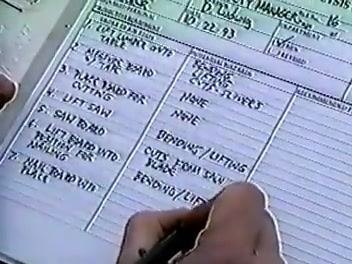
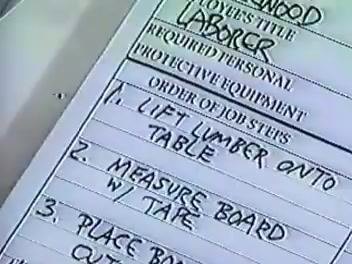
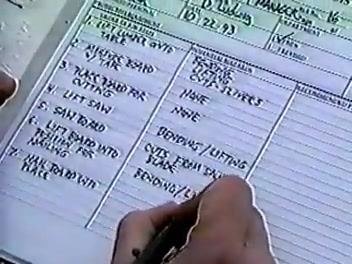
- Break the job into its basic steps and list each one in sequential order in the worksheet's first column.
- List every step of the job before you move on to identifying hazards.
- Complete this column fully before moving to the next one, so no step is overlooked.
Example: sequenced steps for a material-handling job
- Lift lumber onto table.
- Measure board with tape.
- Place board for cutting.
- Lift saw.
- Saw board.
- Lift board into trailer for hauling.
- Walk to and from trailer.
Example: sequenced steps for a confined-space weld repair
- Climb into the pipe.
- Grind the weld using a power grinder.
- Climb out of the pipe.
Observe the job on-site
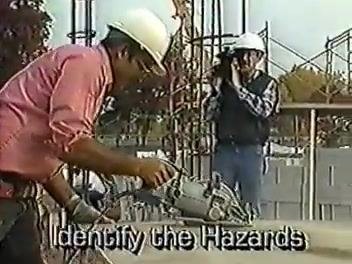
- Watch the worker perform the job and record each step in detail, standing close enough to observe but at a safe distance.
- Ask yourself what the worker is doing, what tools or equipment are in use, and what hazards could arise at each step.
- Record each action as it happens, such as lifting, bending, or handling materials.
- Use video recording where possible, then pause or rewind the footage to pinpoint and document details accurately.
- Conduct a JSA for every job on the site, not only for high-risk tasks.
Complete the handback
The source material for this SOP does not describe a formal handback step; record the job's completion and any final checks on the worksheet before you close out the JSA.
Hazards and controls
Identify the hazards tied to each job step, then document the engineering or administrative controls that eliminate or reduce them.
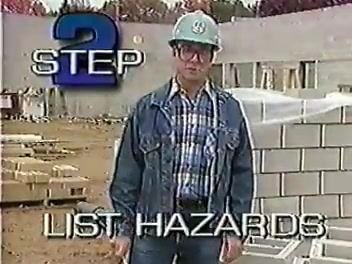
List hazards for each step
- Watch the employee perform the job again, this time focusing on hazards created by both the procedure and the environment.
- Talk with employees and ask questions about the job steps and potential hazards; this dialogue surfaces risks that are not immediately obvious.
- Recognize that any change to the environment, such as weather, lighting, or site layout, can introduce new hazards.
- Record hazards in the worksheet's second column, such as cuts, strains, bending/lifting injuries, and cuts from a saw blade.
- Once hazards are identified, record suggestions to eliminate or control each one in the worksheet's third column.
Confined-space hazard example
- Getting trapped while entering the confined space.
- Cuts from rough or sharp edges.
- Poor visibility inside the work area.
- An oxygen-enriched, flammable atmosphere: in the case-study incident, feeding an oxygen line into the pipe to help a worker breathe created an oxygen-rich atmosphere that ignited from grinding sparks, fatally injuring the worker.
Never introduce pure oxygen into a confined space unless a qualified safety professional directs it. This is the hazard that caused the fatal fire in the case-study incident.
Table hazards, energy sources, barriers, and residual risk for each step
| Job step | Hazard | Energy source | Barrier / control | Residual risk |
|---|---|---|---|---|
| Climb into the pipe | Entrapment, poor visibility, oxygen-enriched atmosphere | Confined-space geometry; oxygen feed line | Test air quality with a sampling pump instead of feeding oxygen into the space; assign an attendant; post confined-space signage | Fire or entrapment if the air is not tested or the attendant is not present |
| Grind the weld | Cuts, sparks, flying debris igniting a flammable atmosphere | Powered grinder | Face shield, gloves, non-sparking tools | Burns or cuts if PPE is not worn or non-sparking tools are unavailable |
| Climb out of the pipe | Smoke, fire, delayed rescue | Same atmosphere hazard as at entry | Attendant with a rescue line and constant communication; immediate rescue response | Severe injury if rescue is delayed, as in the case-study incident |
| Lift, measure, and saw lumber | Cuts, strains, bending/lifting injuries, cuts from the saw blade | Manual handling; saw blade | Replace manual lifting with machinery such as a forklift; use proper lifting technique | Strain injury if manual handling is still required for remaining steps |
Reduce hazards with engineering controls
- Replace manual labor with machinery, such as using a forklift instead of employees manually lifting and carrying heavy blocks.
- Assess whether the frequency of a hazardous job can be reduced, for example by optimizing delivery or storage locations to cut down on the number of times materials must be moved.
- Change physical conditions in the work environment, such as workspace layout or equipment, to remove or reduce risk.
- Plan and communicate changes to the worksite through site walkthroughs with supervisors and workers, using maps or plans to discuss modifications.
- Modify job procedures to reduce risk, such as using a sampling pump with a hose to test air quality in a confined space instead of sending a worker in to check it.
- Eliminate physical problems in confined spaces where possible, such as placing a board to allow safer entry or work inside the space.
- Use alternative tools, such as non-sparking tools, in environments where sparks could cause a fire or explosion.
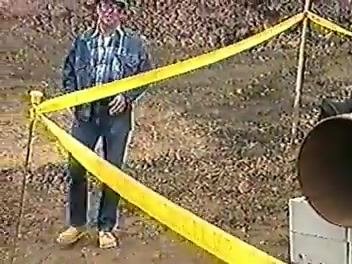
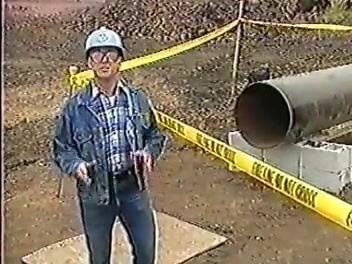
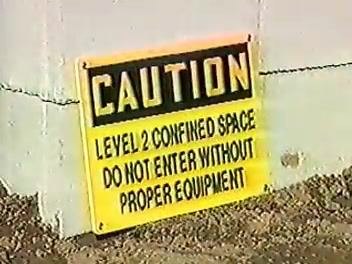
- Install warning guards and barriers, such as caution signage, to alert and protect workers from hazards.
Reduce exposure with administrative controls
- Rotate employees through different tasks to limit the time any one worker is exposed to hazardous conditions.
- Provide safety education and training on procedures, equipment use, and hazard recognition.
- Hold regular team discussions with workers and supervisors to identify solutions and address safety concerns.
- Apply lessons learned and experience from similar jobs, combined with your own judgment, to adapt safety procedures to the current situation- Apply lessons learned and experience from similar jobs, combined with your own judgment, to adapt safety procedures to the current situation, since every construction site is unique and presents its own set of potential hazards.
- Involve everyone in the JSA process so hazard identification and control benefit from the full team's observations and ideas.
Permit requirements
Confirm which permits apply to the task before work begins, based on the hazards identified in the JSA.
- Confined space entry: required for any job that involves entering a pipe or similarly enclosed space. Assign a dedicated attendant for all permit-required confined space jobs; the attendant stays outside the space, monitors the situation, and maintains communication with workers inside.
- Hot work: applicable when grinding or other spark-producing tools are used near a flammable or oxygen-enriched atmosphere; use non-sparking tools where sparks could cause an explosion or fire.
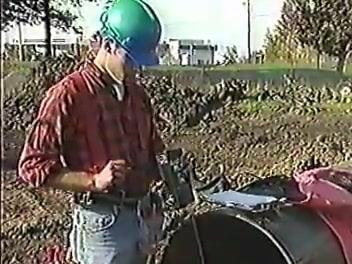
- Gas testing: use a sampling pump with a hose to test air quality inside a confined space before and during entry, rather than relying on a worker to check conditions manually.
- Lifting, excavation, line break, and SIMOPS permits: the source material for this SOP does not describe specific procedures for these permit types; confirm your site's requirements for each before starting work that involves them.
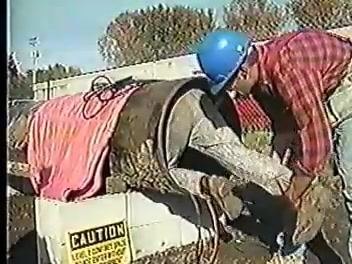
Post warning signage at the entrance to any hazardous or restricted area, such as a caution sign reading "LEVEL 2 CONFINED SPACE DO NOT ENTER WITHOUT PROPER EQUIPMENT."
Emergency response
Prepare emergency response resources before work begins, since a confined-space incident can escalate within minutes.
- Attendant and communication: maintain constant contact between the confined-space attendant and workers inside the space, and watch continuously for signs of overexposure or distress.
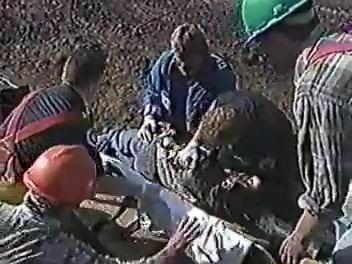
- Rescue resources: in the case-study incident, the two workers outside the pipe reacted immediately to the fire, rushing to the entrance and pulling the injured worker 20 feet back to safety.
- Medical response: after the injured worker was pulled from the pipe, one worker left to get help while the other stayed with the injured worker until responders arrived; emergency personnel later arrived with a stretcher and medical kits.
- PPE for responders: workers and responders should wear appropriate personal protective equipment, such as hard hats and safety harnesses, when assisting in a rescue.
- Outcome awareness: despite the immediate rescue and medical attention in the case-study incident, the injured worker died the next day from severe burns, underscoring why prevention through JSA is critical.
- Muster point, spill response, and medical transport route: the source material for this SOP does not specify a muster point, spill response procedure, or medical transport route; document these details for your site as part of the emergency response plan.
Signoff
Close out the JSA by capturing team input, supervisor approval, and everyone's authority to stop work if a new hazard appears.
- Toolbox talk attendance: engage all team members in the JSA process, since a comprehensive hazard review depends on input from everyone on the crew, not just the observer.
- Team acknowledgment: remind workers that accidents affect everyone on the job site, not just the individual involved, and thank all workers for their attention and participation in the safety discussion.
- Stop-work authority: foster a culture where everyone feels responsible for safety and is encouraged to contribute ideas and observations, and to identify hazards even after work has started.
- Supervisor approval: the source material for this SOP does not describe a formal supervisor sign-off step; record supervisor approval of the completed JSA worksheet according to your site's documentation requirements.
Improving safety procedures benefits everyone on the job site. Safety is a shared responsibility, and every worker's participation strengthens the analysis.
What's next
Use the completed JSA worksheet as an ongoing resource beyond the initial analysis:
- Train new or existing employees using documented job steps and hazards.
- Update or create standard operating procedures (SOPs) based on JSA findings.
- Record safety information for jobs that are performed infrequently.
- Support employee performance reviews, training programs, and accident investigations with the documented worksheet.
Continue running a JSA throughout the course of a project, not only before a job starts, so that hazards are identified and controlled continuously as site conditions change.
Generation details: cost, quality tiers, downloads
Docsie billed 7,500 credits ($5.25) to analyze this 15-minute video at standard quality. The rewrite, template fill and Word/PDF exports were included. The same video at each quality tier:
| Quality | Frames sampled | Credits | Approx. cost |
|---|---|---|---|
| Draft | every 16-30 s | 3,750 | $2.62 |
| Standard (this guide) | every 8-15 s | 7,500 | $5.25 |
| Detailed | every 4-7 s | 15,000 | $10.50 |
| Ultra | every 1-3 s | 30,000 | $21.00 |
Credits priced at $0.70 per 1,000; plans include a monthly allowance. Enterprise customers on on-premise or bring-your-own-model deployments run this on their own inference and pay no per-video credits.
Generated by Docsie Video-to-Docs on 2026-09-10 from a 14-minute video. It was generated straight into Docsie's Job Safety Analysis template, so every section of that template is filled from the video. Screenshots are frames from the source video and belong to their creator, georgedalan, whose original is embedded above. If you own this video and want the guide removed or credited differently, contact us and we will act within one business day.