
How to Use a Fire Blanket
This document explains how to use a fire blanket to control and extinguish a small fire safely. It covers where to install a fire blanket, how to release it in an emergency, and the correct technique for approaching, covering, and containing a fire. Following this procedure minimizes risk to you and others when responding to a small fire.
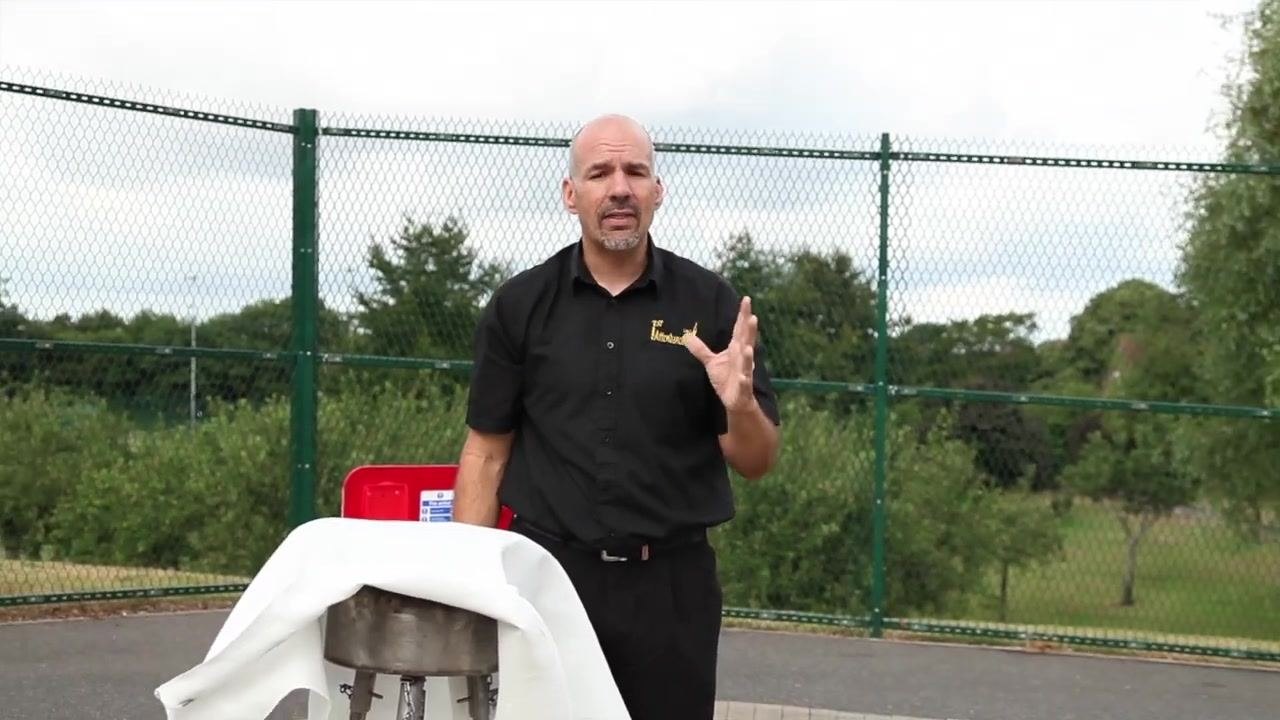
Video: How to use a Fire Blanket - 1st Attendance Ltd by 1st Attendance Fire & Safety Compliance Authority (2013). All credit for the demonstration goes to the creator; watch the original on YouTube. The written guide below was generated from this video by Docsie. Creator? Request a change or removal.
This document explains how to use a fire blanket to control and extinguish a small fire safely. It covers where to install a fire blanket, how to release it in an emergency, and the correct technique for approaching, covering, and containing a fire. Following this procedure minimizes risk to you and others when responding to a small fire.
Purpose
This procedure ensures that anyone responding to a small fire uses a fire blanket correctly, reducing the risk of injury and preventing the fire from spreading.
Scope
This procedure applies to small fires only — defined as fires no larger than a typical office bin. Do not attempt to use a fire blanket on large fires. If a fire exceeds this size, or if you are ever in doubt about your safety, evacuate the area immediately and call the fire service.
Required equipment
- A wall-mounted or surface-mounted fire blanket in its container
- Access to the gas or electricity supply controls for the fire source, where applicable
- A solid mounting surface for the fire blanket station
Step-by-step procedure
Understand when to use a fire blanket
Only use a fire blanket on a small fire, defined as one no larger than a typical office bin. Do not attempt to use a fire blanket on a large fire.
Position the fire blanket correctly
Install the fire blanket on a solid surface at home or in the workplace. Do not place it too close to the area of risk, such as directly next to a cooker, so that you never have to reach over or around a fire to access it. Keep the blanket easily accessible while ensuring it cannot be compromised by the fire itself.
Fit the fire blanket to the wall
Use the tabs at the top or bottom of the fire blanket box to mount it securely to a wall or solid surface. Confirm that the blanket can be released quickly and easily in an emergency.
Release the fire blanket
In an emergency, pull firmly on the tabs to release the blanket from its container. The tabs are designed for quick deployment.
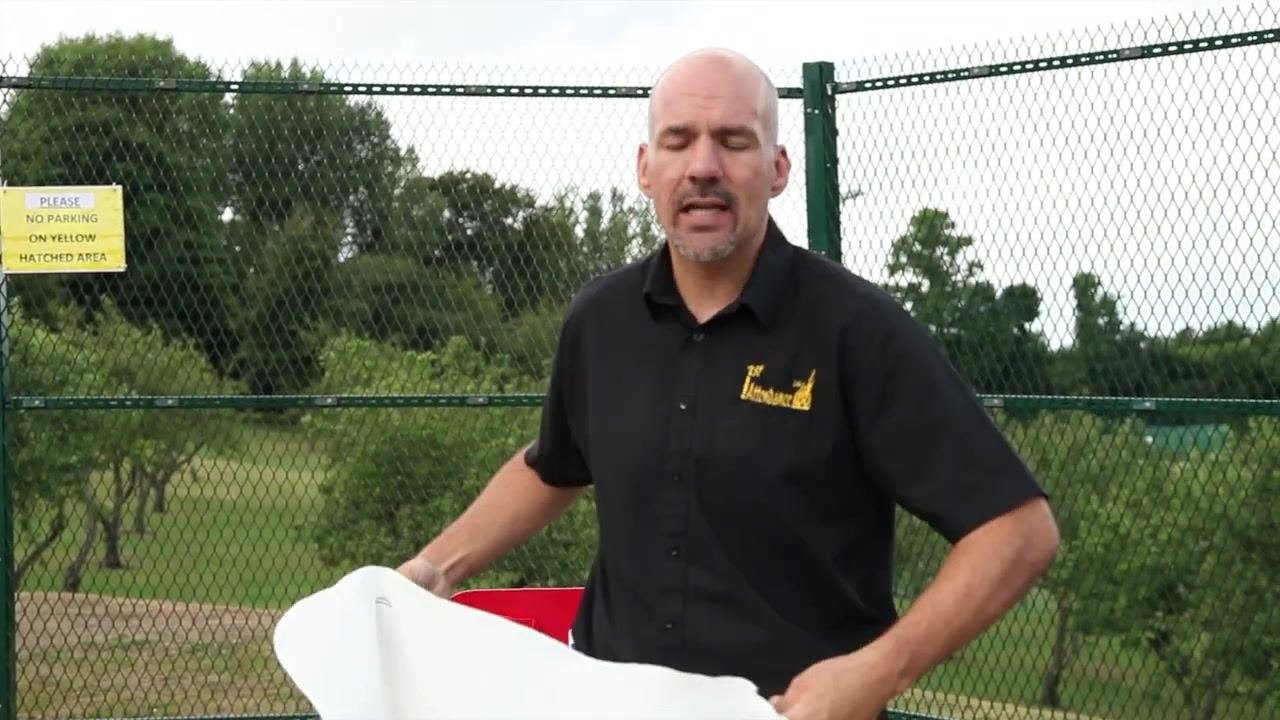
Shut off the power source before approaching
If it is safe to do so, turn off the gas or electricity supply to the fire source. This reduces the heat and helps extinguish the fire more effectively.
Protect your hands before using the blanket
Hold the tabs so the blanket hangs down, keeping your hands protected behind it. Shield your hands and forearms with the blanket to guard against radiated heat, and fold the top edge over your hands for extra protection.
Approach the fire safely
Extend your arms straight out, keeping the blanket between you and the fire. Place your weight on your back foot and move slowly and steadily toward the fire. Do not hold the blanket too high, as this blocks your view, or too low, as this could cause you to trip. Never throw the blanket onto the fire, as you may miss and worsen the situation.
Cover the fire
Once close enough, gently place the blanket over the fire to smother it. Do not pull the blanket away after placing it, as flames may stick to the blanket and follow you.
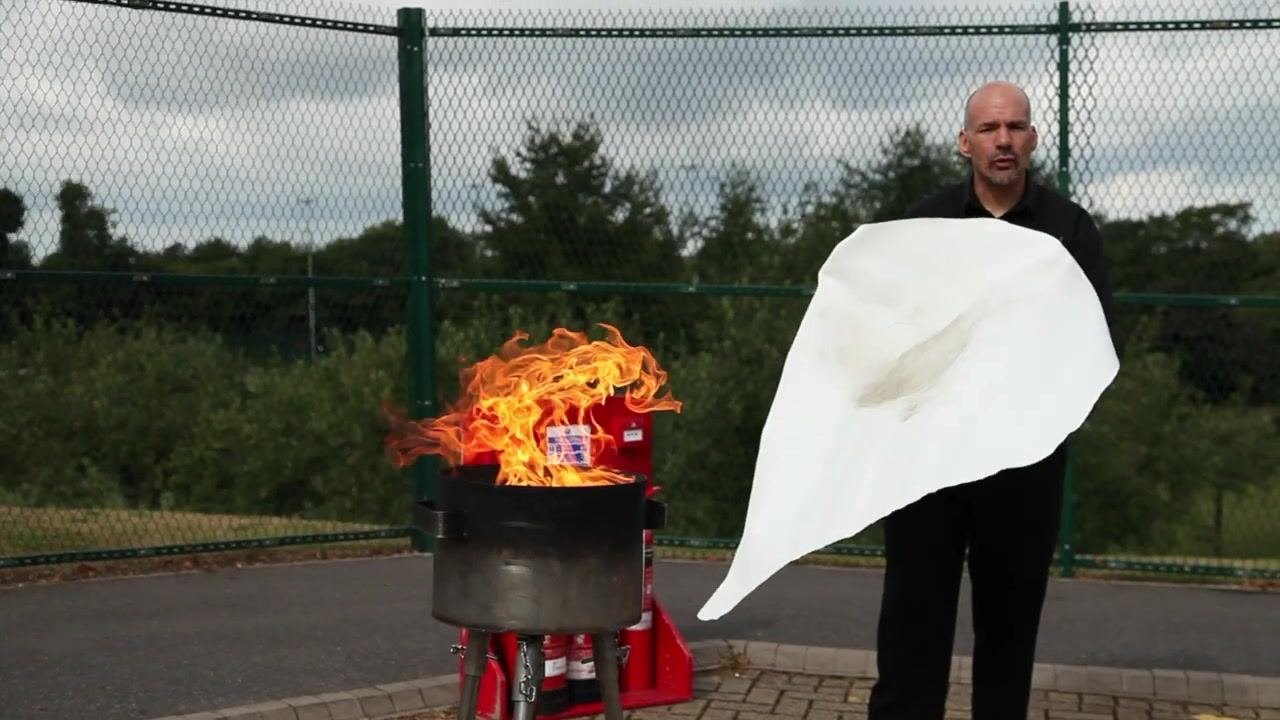
Keep the blanket in place after covering the fire
Do not remove the blanket immediately. Leave it in place to ensure the fire is fully extinguished and does not reignite, and do not disturb the area until it is safe and the fire is completely out.
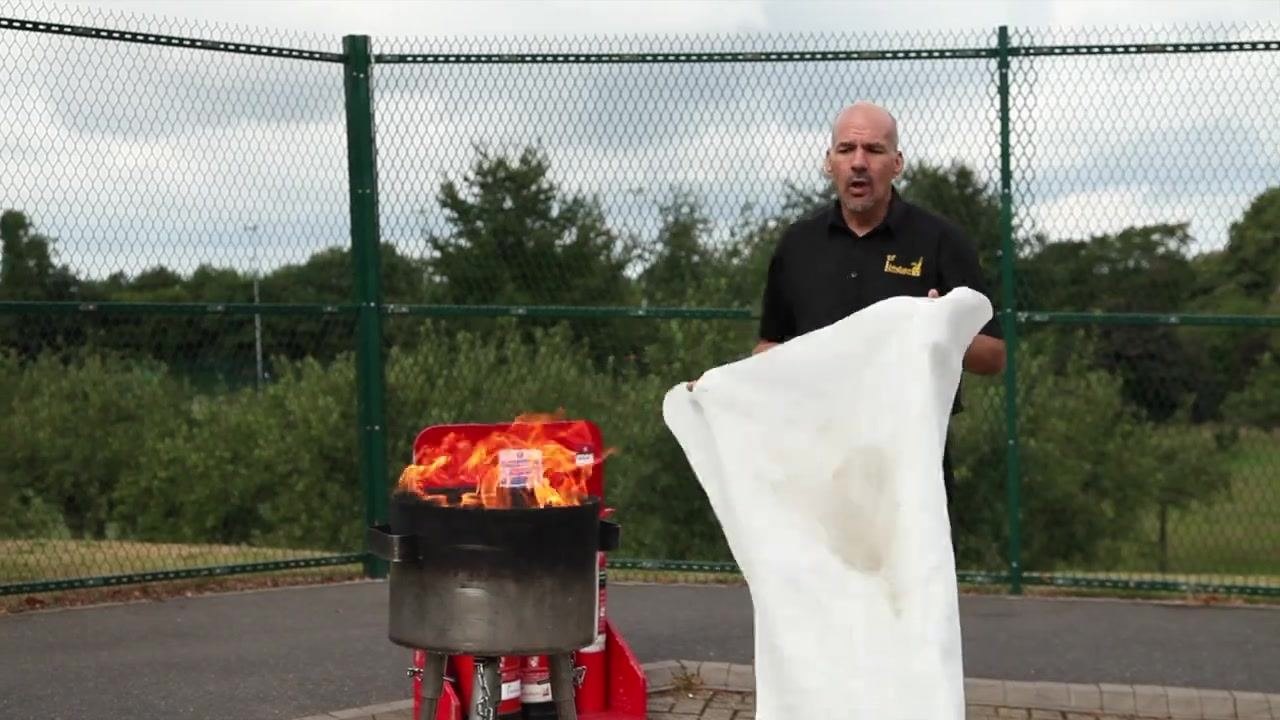
Apply the blanket with a swift, controlled motion
Approach the fire with the blanket held in front of you, shielding your hands and forearms. Use a quick, smooth, and controlled motion to place the blanket directly over the fire — do not throw it, as this can cause the fire to spread. Ensure the blanket fully covers the flames to cut off the oxygen supply, moving one step at a time, steadily and confidently.
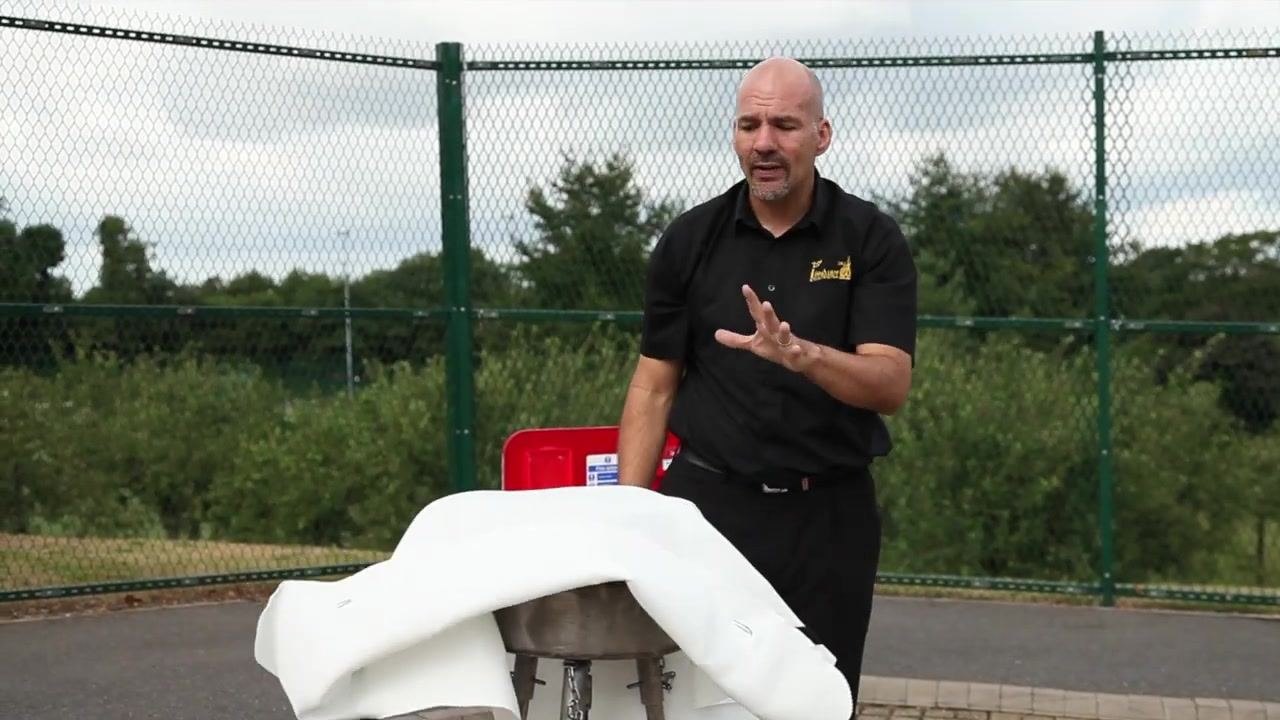
Leave the blanket in place for the required time
Once the fire is covered, leave the blanket on the fire for at least 30 minutes. Do not remove it too soon, as reintroducing oxygen can cause the fire to reignite. If the fire was in a pan, leave the pan in place for at least one hour to ensure it has cooled completely.
Assess the situation and call emergency services if needed
If there is any doubt about whether the fire is fully extinguished or whether the environment is safe, call the fire service immediately. Do not attempt to move the pan or blanket if you are unsure of your safety, and prioritize getting everyone outside and away from danger if the fire cannot be controlled.
Verification and summary
Before considering the procedure complete, confirm the following:
- The fire blanket was used only on a small fire, no larger than a typical office bin.
- The gas or electricity supply was turned off before approaching the fire, where safe to do so.
- The blanket was placed gently over the fire and left undisturbed for the required time.
- If any doubt existed about safety at any point, the area was evacuated and the fire service was called.
By following these steps, you can safely and effectively use a fire blanket to extinguish small fires while minimizing risk to yourself and others. Always prioritize personal safety, and call emergency services if the fire cannot be controlled.

Generation details: cost, quality tiers
Docsie billed 1,500 credits ($1.05) to analyze this 3-minute video at standard quality. The rewrite, template fill and Word/PDF exports were included. The same video at each quality tier:
| Quality | Frames sampled | Credits | Approx. cost |
|---|---|---|---|
| Draft | every 16-30 s | 750 | $0.52 |
| Standard (this guide) | every 8-15 s | 1,500 | $1.05 |
| Detailed | every 4-7 s | 3,000 | $2.10 |
| Ultra | every 1-3 s | 6,000 | $4.20 |
Credits priced at $0.70 per 1,000; plans include a monthly allowance. Enterprise customers on on-premise or bring-your-own-model deployments run this on their own inference and pay no per-video credits.
Generated by Docsie Video-to-Docs on 2026-09-09 from a 2-minute video. Screenshots are frames from the source video and belong to their creator, 1st Attendance Fire & Safety Compliance Authority, whose original is embedded above. If you own this video and want the guide removed or credited differently, contact us and we will act within one business day.