
How to Clean Up a Mercury Spill
This report documents a small mercury spill in a laboratory setting, caused by a single broken thermometer, and describes how to clean up a mercury spill safely from initial assessment through final clearance by Environmental Health & Safety (EH&S). It captures the containment, cleanup, waste handling, and verification steps taken by laboratory personnel and EH&S staff, and is intended to serve as a reference for responding to similar incidents.
Video: Cleaning Up a Small Mercury Spill by EHSUCBerkeley (2008). All credit for the demonstration goes to the creator; watch the original on YouTube. The written guide below was generated from this video by Docsie. Creator? Request a change or removal.
This report documents a small mercury spill in a laboratory setting, caused by a single broken thermometer, and describes how to clean up a mercury spill safely from initial assessment through final clearance by Environmental Health & Safety (EH&S). It captures the containment, cleanup, waste handling, and verification steps taken by laboratory personnel and EH&S staff, and is intended to serve as a reference for responding to similar incidents.
Incident summary
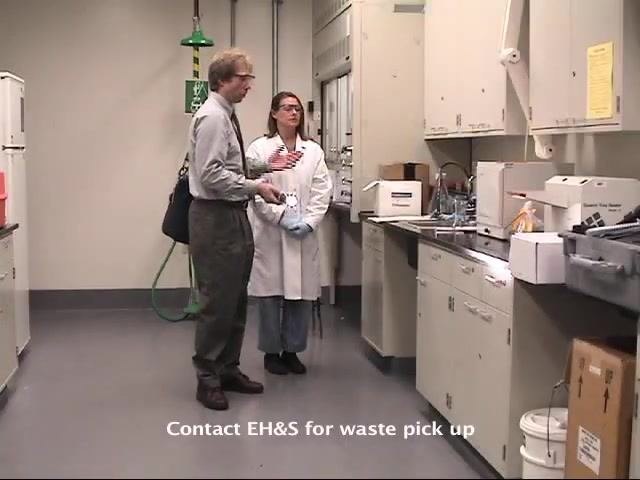
- Lab area: General laboratory workspace with cabinets, an emergency shower, and standard lab equipment.
- Activity: Routine use of a mercury thermometer.
- Incident type: Small mercury spill resulting from a single broken thermometer.
- Initial severity: Low. The spill was limited in volume, confined to one thermometer's worth of mercury, and was contained promptly by trained personnel following established procedures.
Specific date and time of the incident are not recorded in the source material; this field should be completed with the actual date, time, and case number when logging a real event.
People involved
- Affected personnel: The laboratory worker who broke the thermometer and performed the initial cleanup.
- Witness/assisting colleague: A second laboratory worker who helped inspect the area and discussed next steps.
- Responding authority: An EH&S staff member who arrived with a mercury vapor detector to perform a clearance evaluation.
- Supervisor: Not identified in the available record; this field should list the supervisor notified of the incident, if applicable.
- Medical evaluation status: No injury or significant exposure was reported. The laboratory worker confirmed to EH&S that the spill involved only a mercury thermometer and that no significant personal exposure occurred.

Hazard description
The hazard involved is chemical: liquid mercury released from a broken laboratory thermometer. Mercury poses an inhalation risk because it vaporizes readily, and this risk increases in warm rooms or heated equipment such as incubators.
Before proceeding with self-cleanup, personnel confirmed the spill met the following criteria:
- The spill is small (no more than the contents of one thermometer).
- The room is well ventilated.
- The spill is not in a heated area.
- The person responding feels comfortable performing the cleanup.
If a spill exceeds these criteria—multiple thermometers, a heated device, or an unclear extent—personnel are instructed to evacuate the room and seek EH&S assistance rather than attempting self-cleanup.
Immediate response
The following sequence describes how laboratory personnel cleaned up the mercury spill, from initial assessment through final EH&S clearance.
Assess the situation. Upon discovering the spill, personnel confirmed it involved a single broken thermometer. Any spill involving more than one thermometer, or occurring in a warm room or heated device, requires evacuation and outside assistance rather than self-cleanup.
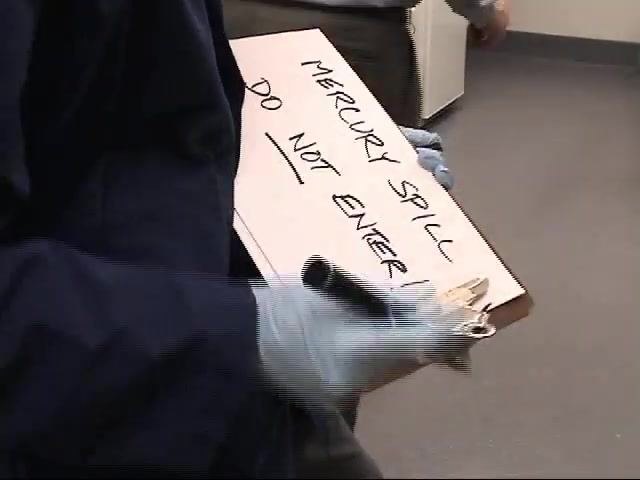
Alert others and restrict access. Personnel verbally warned others in the area not to walk through the spill and assigned someone to keep people out of the room. A sign reading "Mercury Spill – Do Not Enter" was posted at the entrance.
Avoid inappropriate cleaning tools. Personnel did not use a broom or dustpan, since these tools would become contaminated and could spread mercury further.
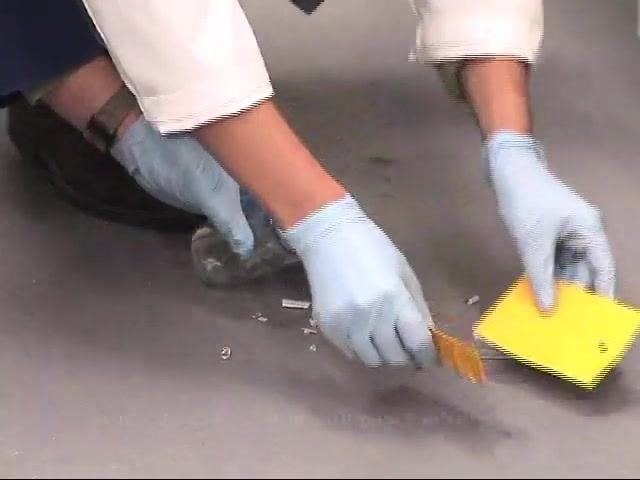
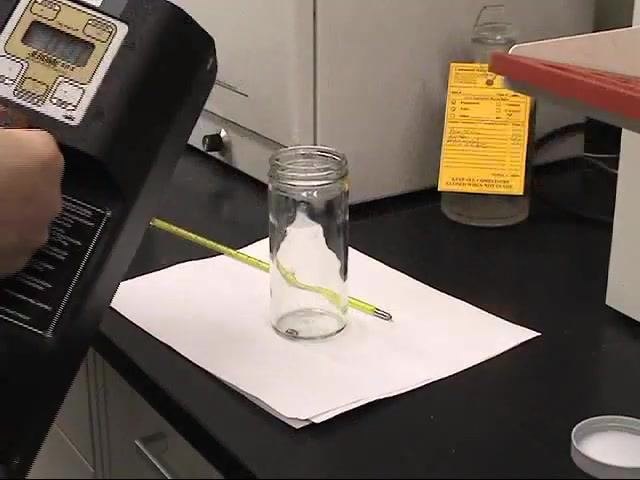
Gather cleanup materials and PPE. Personnel collected two pieces of stiff paper (such as index cards or cardstock) and a sealable glass jar to hold the mercury and broken glass. Before beginning cleanup, they put on a lab coat, gloves, and safety goggles.
Prepare the well-ventilated area. Personnel confirmed the room was well ventilated to reduce mercury vapor concentration and kept the spill area isolated from unnecessary foot traffic.
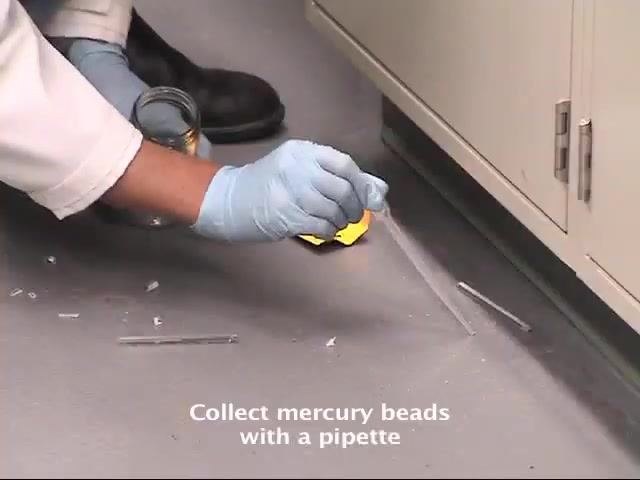
Collect the mercury and broken glass. Using the two pieces of stiff paper, personnel gently scooped up visible mercury beads and broken glass, working carefully since mercury tends to scatter and roll into cracks or under equipment. All collected material was placed into the sealable glass jar. A pipette was also used to carefully draw up additional mercury beads from the floor and deposit them into the jar.
Note on special conditions. Personnel did not attempt to clean spills inside heated devices such as incubators, since heat increases mercury vaporization and such spills may require professional cleanup. Mercury in cracks or hard-to-reach areas, or spills of uncertain extent, are also referred to EH&S rather than handled independently.
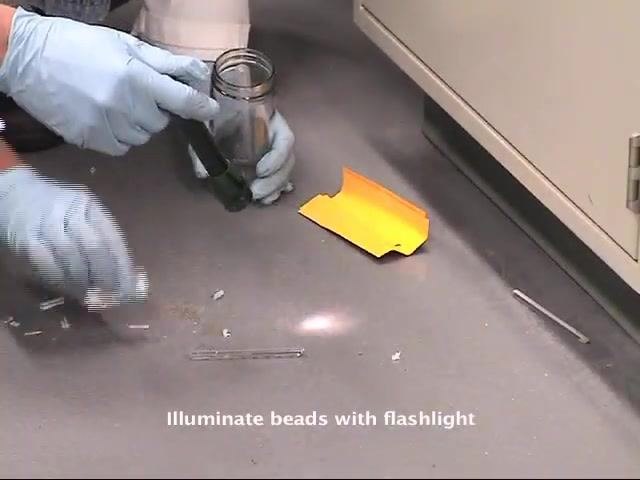
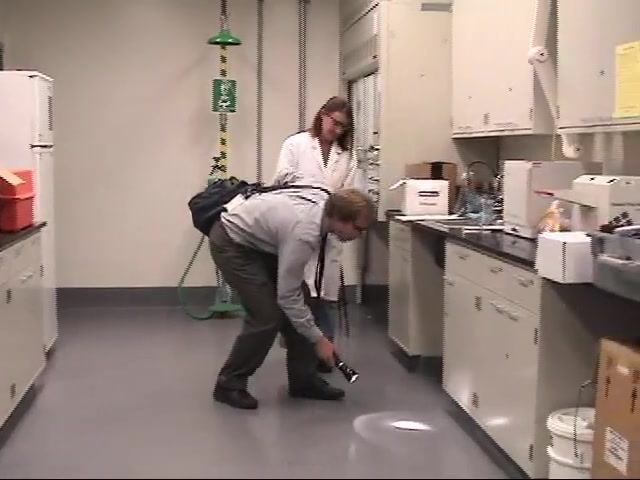
Inspect thoroughly with a flashlight. After the initial collection, personnel checked the area for remaining mercury, focusing on hard-to-see places such as under cabinets and equipment. A flashlight was used at a low angle, since mercury beads reflect light and become more visible under this technique. A second colleague double-checked the area to confirm nothing was missed.
Collect remaining beads with tape. Adhesive tape was used to dab the area and pick up small mercury beads that could not be collected with paper. The used tape was placed into the sealable glass jar with the other mercury waste.
Decide on further action. Personnel evaluated whether all visible mercury and glass had been collected and discussed whether to contact EH&S for a clearance evaluation, particularly given uncertainty about whether the cleanup was complete.
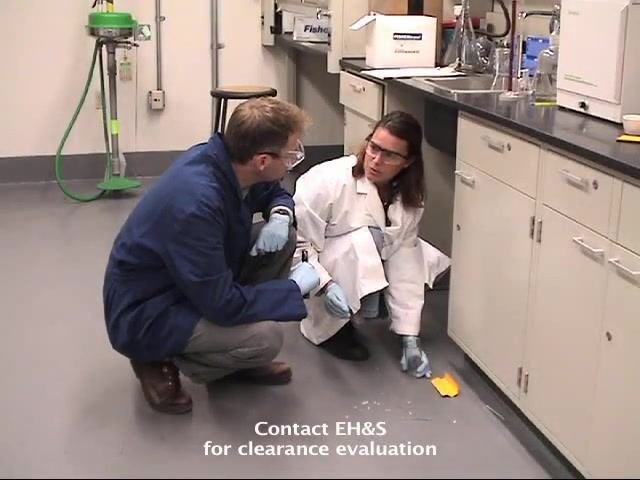
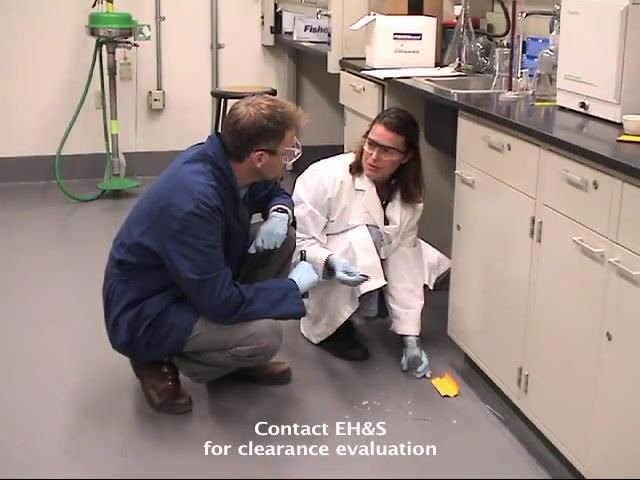
Contact EH&S for clearance evaluation. Personnel contacted EH&S, informed them that a mercury thermometer had broken, and requested that they bring monitoring equipment such as a mercury vapor detector.
Secure and label mercury waste. All collected mercury, broken glass, used tape, and cleaning materials were placed into a sealable container and clearly labeled "Mercury Waste," then stored in a designated hazardous waste area pending disposal.
Prepare waste for pickup. Waste materials were placed in secondary containment as required by the facility's hazardous waste procedures.
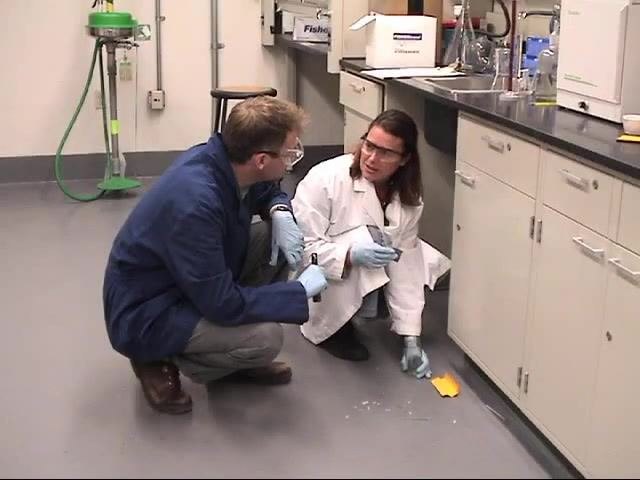
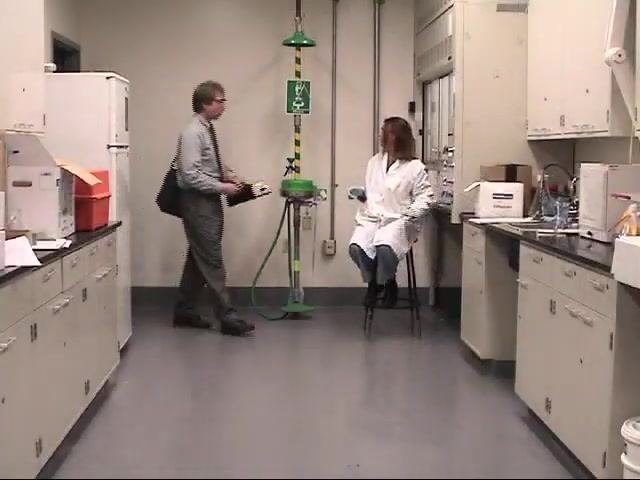
Escort EH&S personnel and describe the incident. When EH&S arrived, personnel directed them to the exact spill location and explained how the incident occurred (for example, that the thermometer was dropped and broke on the floor). They confirmed the spill was limited to a small area, that it was cleaned up promptly, and that no significant personal exposure occurred.
Confirm cleanup methods with EH&S. Personnel described the tools used for cleanup, including a pipette and tape for collecting mercury beads and stiff cards for gathering the initial spill, and confirmed with EH&S that these were appropriate methods.
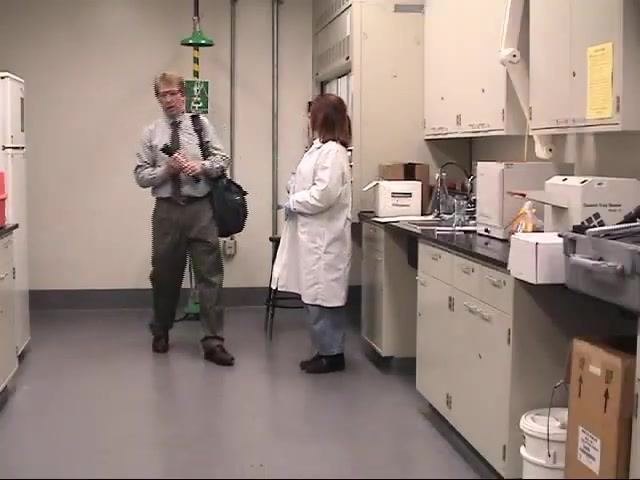
Discuss disposal and conclude. Personnel asked EH&S whether to store the mercury waste in the fume hood or arrange chemical waste pickup, followed the guidance provided, and thanked EH&S staff once confirmation was given that no further action was needed.
Exposure assessment
- Exposure route: Potential inhalation of mercury vapor and incidental dermal contact during handling of broken glass and mercury beads.
- Quantity involved: Limited to the mercury content of a single laboratory thermometer.
- PPE used: Lab coat, gloves, and safety goggles were worn throughout the cleanup.
- Symptoms reported: None. The affected worker confirmed to EH&S that no significant exposure occurred.
- Monitoring performed: EH&S used a mercury vapor detector to test the spill area for elevated mercury vapor levels.
EH&S also performed a final visual inspection with a flashlight, checking the floor near cracks and under cabinets for any remaining mercury beads, while the laboratory worker observed.
EH&S confirmed that the vapor detector showed no elevated mercury levels, and that the cleanup had been performed correctly and the area was safe.
Root cause
Direct cause: Breakage of a mercury thermometer during laboratory use, releasing a small quantity of liquid mercury and glass fragments onto the floor.
Contributing factors: No specific contributing factors, such as equipment defects or procedural deviations, are identified in the available record.
Failed controls: None identified. Personnel followed established self-cleanup criteria (small spill, well-ventilated room, no heat source, comfort with the procedure) and used appropriate materials and PPE throughout, rather than improper tools such as a broom or dustpan.
Corrective actions
-
Secure and label mercury waste (owner: laboratory worker; status: completed). All mercury-contaminated materials—broken glass, pipette, tape, gloves, and cleanup items—were placed into a sealable, clearly labeled hazardous waste container and stored in a designated hazardous waste area.
-
Contact EH&S for waste disposal (owner: laboratory worker; status: completed). EH&S was contacted following the cleanup for guidance on proper disposal or pickup of the labeled hazardous waste, in line with institutional protocols.
- Training needs: Personnel who are unsure about self-cleanup criteria, or who have not previously performed this procedure, should contact EH&S for a clearance evaluation before or during cleanup rather than proceeding independently.
- Effectiveness check: EH&S clearance evaluation, including mercury vapor detection and visual inspection, confirmed the area was free of hazardous residual mercury, closing out this incident with no further action required.
Institutions should refer to their local EH&S office for specific waste disposal procedures and contact information, as these details are not standardized across facilities.
Generation details: cost, quality tiers, downloads
Docsie billed 3,000 credits ($2.10) to analyze this 6-minute video at standard quality. The rewrite, template fill and Word/PDF exports were included. The same video at each quality tier:
| Quality | Frames sampled | Credits | Approx. cost |
|---|---|---|---|
| Draft | every 16-30 s | 1,500 | $1.05 |
| Standard (this guide) | every 8-15 s | 3,000 | $2.10 |
| Detailed | every 4-7 s | 6,000 | $4.20 |
| Ultra | every 1-3 s | 12,000 | $8.40 |
Credits priced at $0.70 per 1,000; plans include a monthly allowance. Enterprise customers on on-premise or bring-your-own-model deployments run this on their own inference and pay no per-video credits.
Generated by Docsie Video-to-Docs on 2026-09-14 from a 5-minute video. It was generated straight into Docsie's Lab Safety Incident Report template, so every section of that template is filled from the video. Screenshots are frames from the source video and belong to their creator, EHSUCBerkeley, whose original is embedded above. If you own this video and want the guide removed or credited differently, contact us and we will act within one business day.