
How to Perform Hand Hygiene
This protocol describes how to perform hand hygiene correctly in a clinical setting, following the step-by-step technique demonstrated with the Clinical Nursing Skills Deck. Proper hand hygiene is one of the most effective and fundamental infection prevention practices, and this guide walks you through each stage of the process, from preparation at the sink to safely turning off the faucet.
Video: Hand Hygiene: Clinical Nursing Skills | @LevelUpRN by Level Up RN (2022). All credit for the demonstration goes to the creator; watch the original on YouTube. The written guide below was generated from this video by Docsie. Creator? Request a change or removal.
This protocol describes how to perform hand hygiene correctly in a clinical setting, following the step-by-step technique demonstrated with the Clinical Nursing Skills Deck. Proper hand hygiene is one of the most effective and fundamental infection prevention practices, and this guide walks you through each stage of the process, from preparation at the sink to safely turning off the faucet.
Purpose & Scope
This protocol targets the prevention of pathogen transmission in clinical settings through correct hand hygiene technique. It applies broadly to infection prevention rather than to a single pathogen or organism. It is intended for clinical staff, including nurses and nursing students, who perform hand hygiene as part of routine patient care.
Pathogen overview
The source material does not identify a specific pathogen, transmission mode, incubation period, or risk factors. This section would normally describe the organism targeted by the protocol, how it spreads, and the clinical significance of exposure, but that information is not covered here.
Screening & identification
Admission screening criteria, diagnostic testing, turnaround times, and notification workflows are not addressed in this material. This section would typically outline how patients are screened on admission and how results are communicated to the care team.
Isolation precautions
Specific isolation categories (Contact, Droplet, Airborne), signage, patient placement, and duration of precautions are not covered in this material. This section would normally specify PPE requirements by role and the type of precautions in effect, but the source focuses instead on hand hygiene preparation rather than isolation procedures.
Hand hygiene protocol
Follow these steps to perform proper hand hygiene as demonstrated in the Clinical Nursing Skills Deck. Each action is critical for infection prevention in clinical settings.
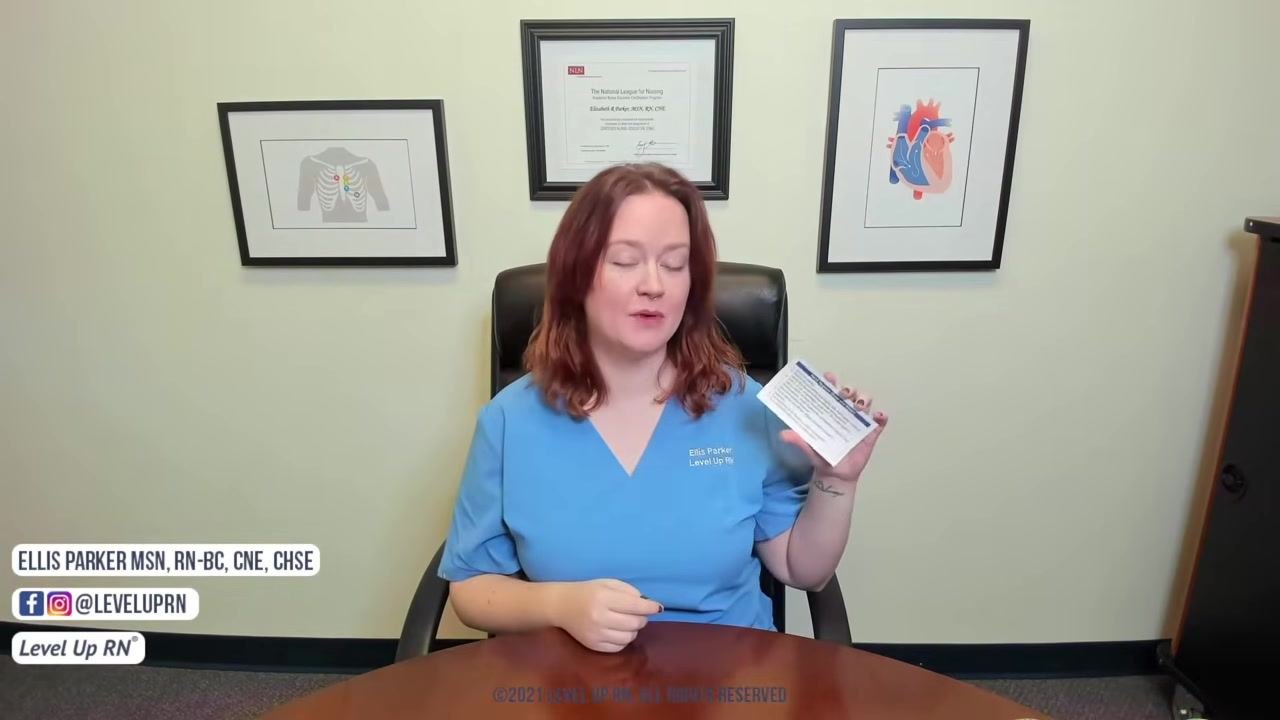
Prepare your reference material
- If you have the Clinical Nursing Skills Deck, retrieve the relevant card for hand hygiene and keep it nearby for reference.
- If you do not have the deck and want to learn more, visit leveluprn.com for additional information.
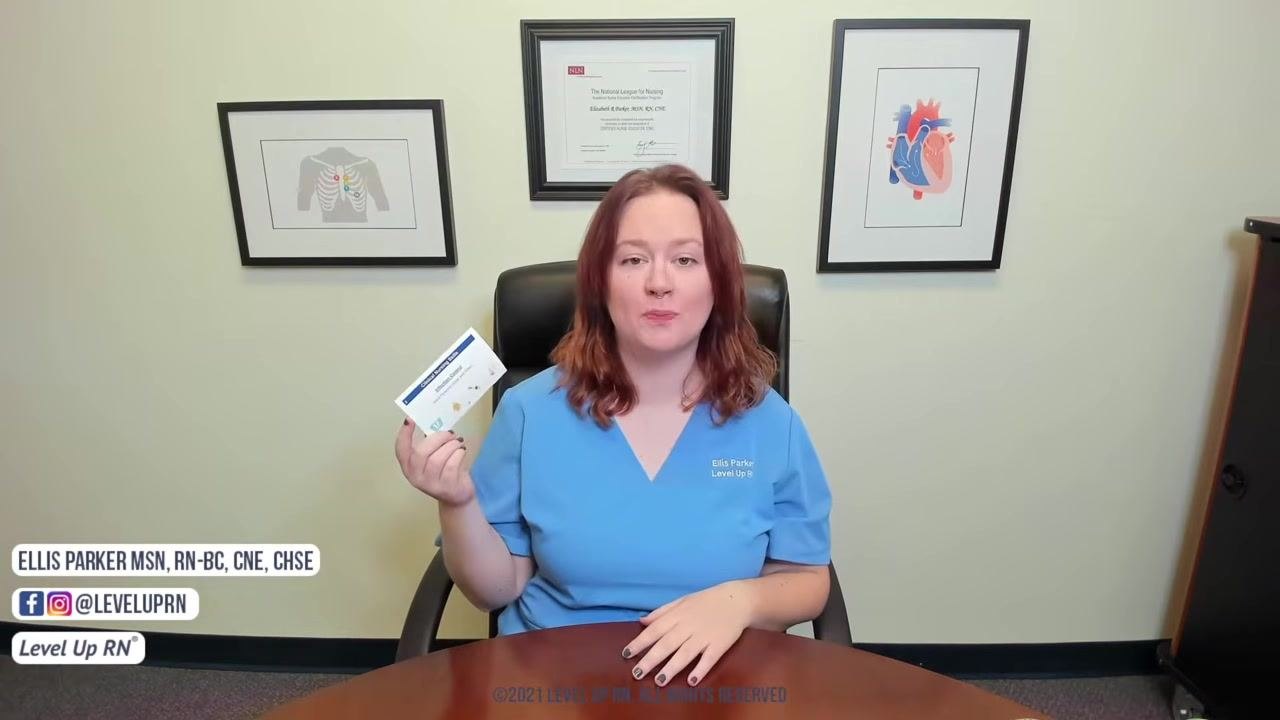
Remove jewelry and prepare your forearms
- Remove all jewelry from your hands and wrists, including rings and watches.
- Push long sleeves up well past your wrists to prevent contamination.
- Confirm your hands and wrists are free of any accessories before proceeding.
Approach the sink correctly
- Stand at the sink without letting your body touch the sink surface.
- Avoid leaning over the sink so your clothing does not contact potentially contaminated surfaces.
- Maintain a safe distance between your torso and the sink at all times.
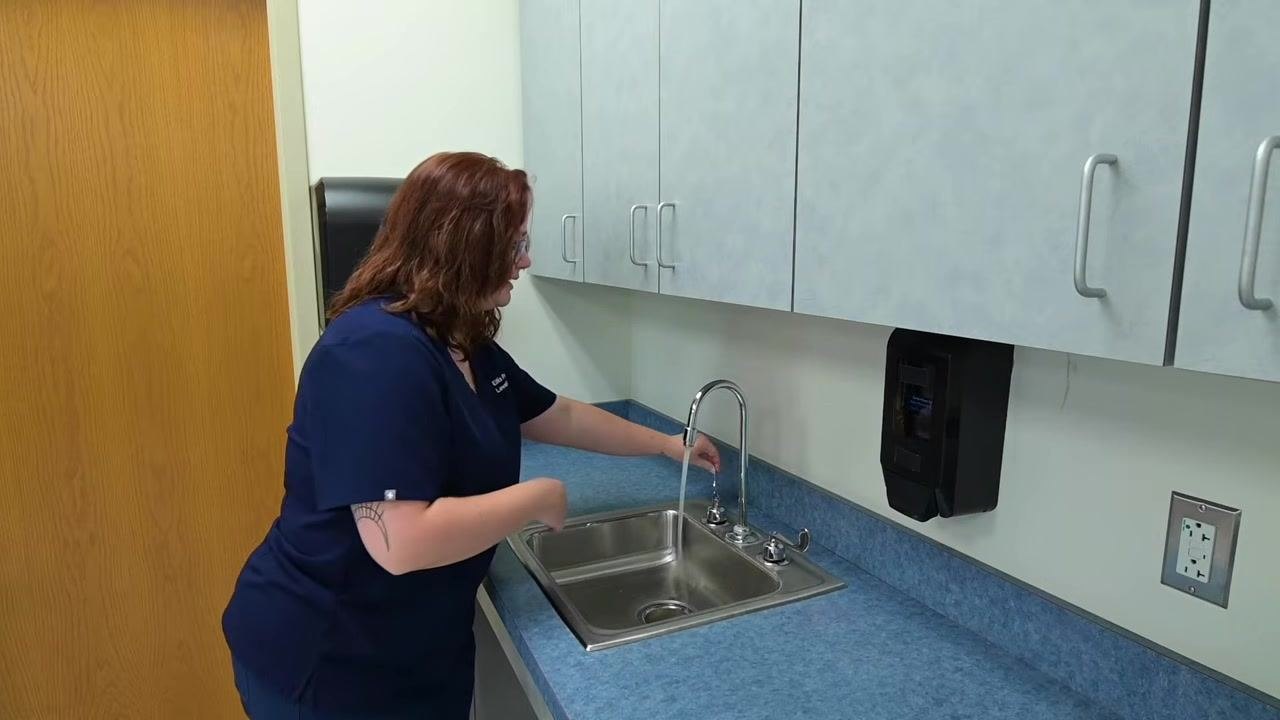
Turn on the water and wet your hands
- Turn on the water using the sink handles.
- Wet your hands thoroughly, keeping them pointed downward so water flows from your wrists toward your fingertips, not up your arms.
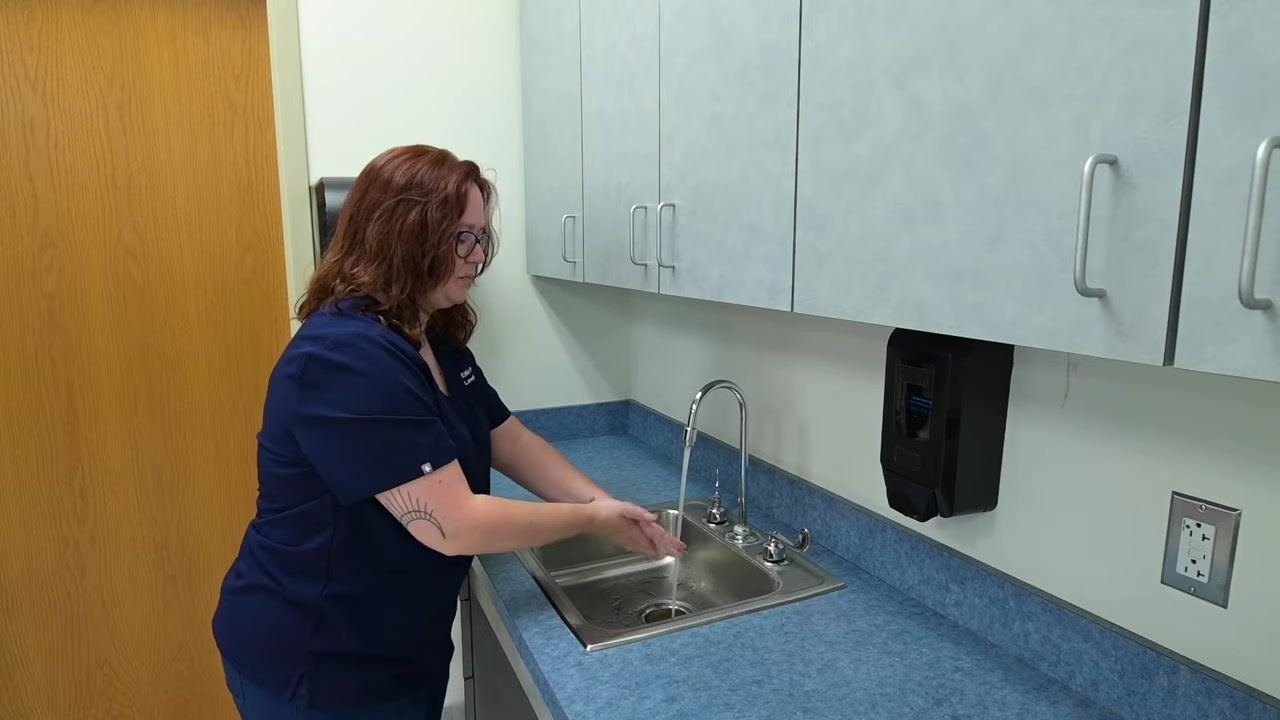
Apply soap and scrub your hands
- Dispense 3–5 milliliters of soap into your hands.
- Scrub all surfaces of your hands vigorously, including between your fingers, under your fingernails and around your nail beds, and around your thumbs and palms.
- Use your fingernails to gently scratch your palm to ensure thorough cleaning.
Continue scrubbing
- Continue scrubbing all areas of your hands, ensuring no surface is missed.
- Keep your hands pointed downward throughout the process to prevent water from running up your arms.
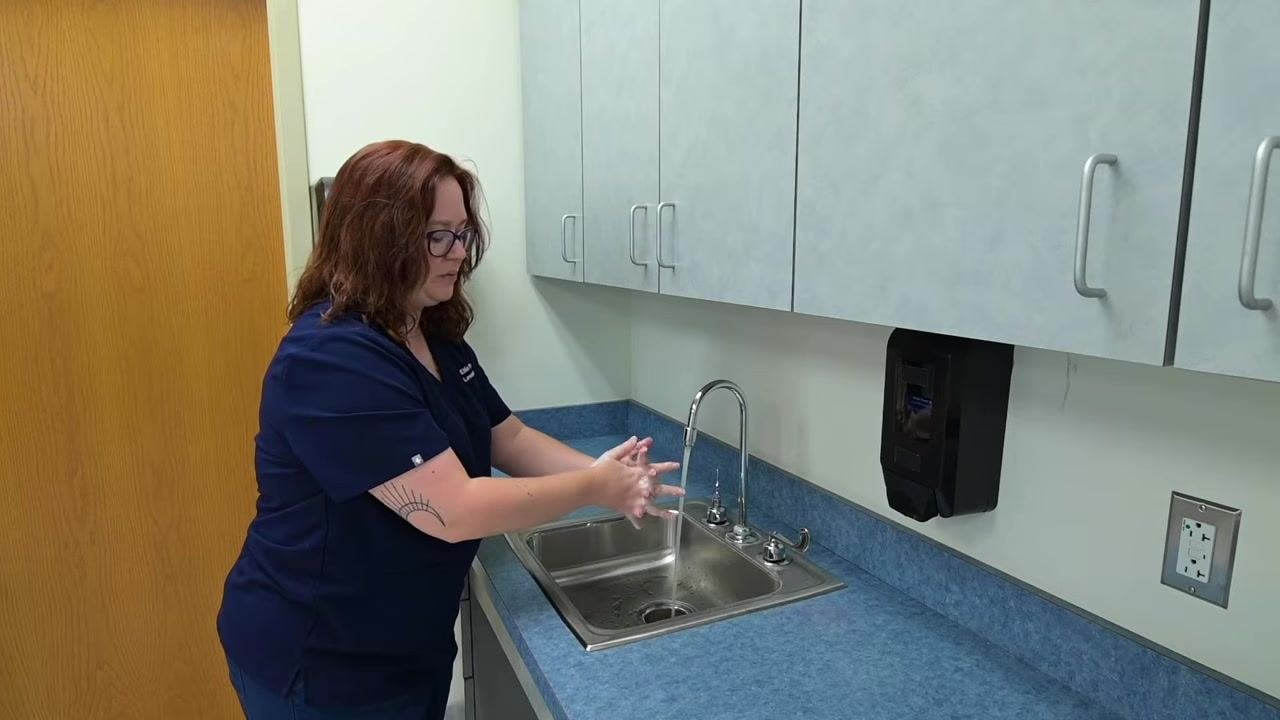
Prepare to rinse
- Once scrubbing is complete, prepare to rinse your hands while keeping them pointed downward.
- Rinse away all soap and debris, avoiding letting water run from your hands up your arms.
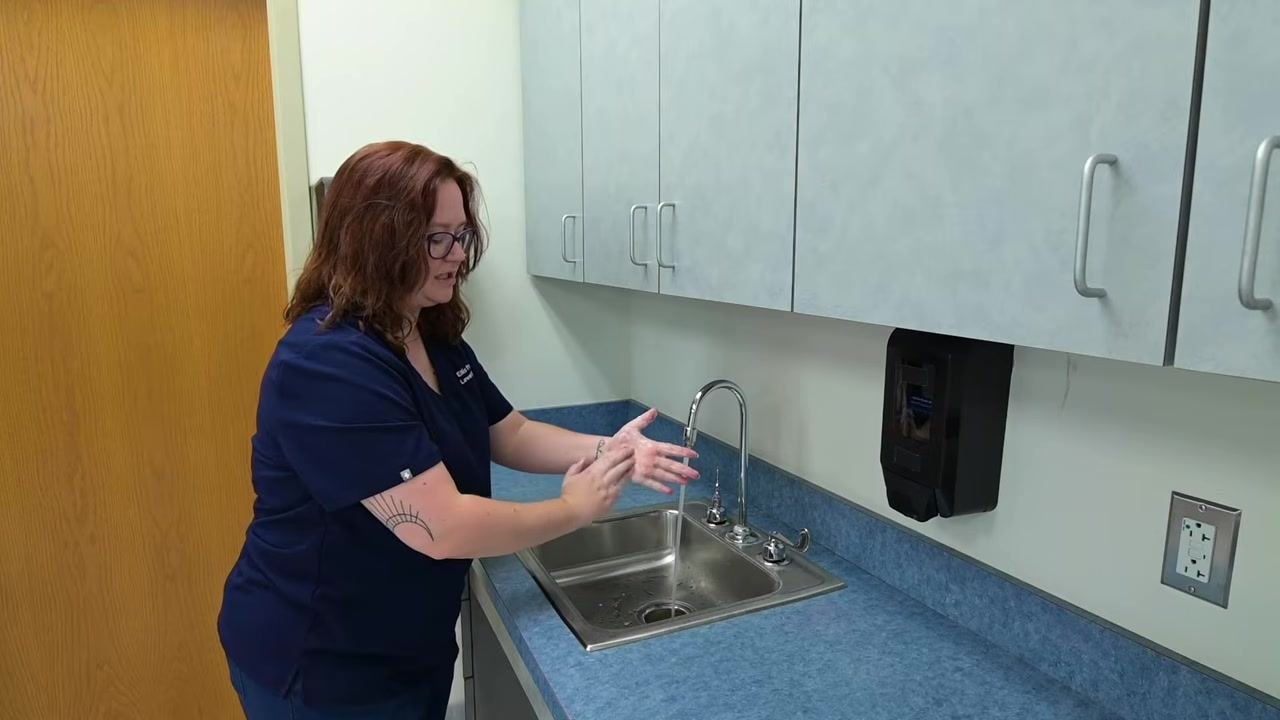
Rinse your hands thoroughly
- Keep your hands tilted downward while rinsing so water flows from wrists to fingertips.
- Avoid touching the sink basin at any point during rinsing to prevent contamination.
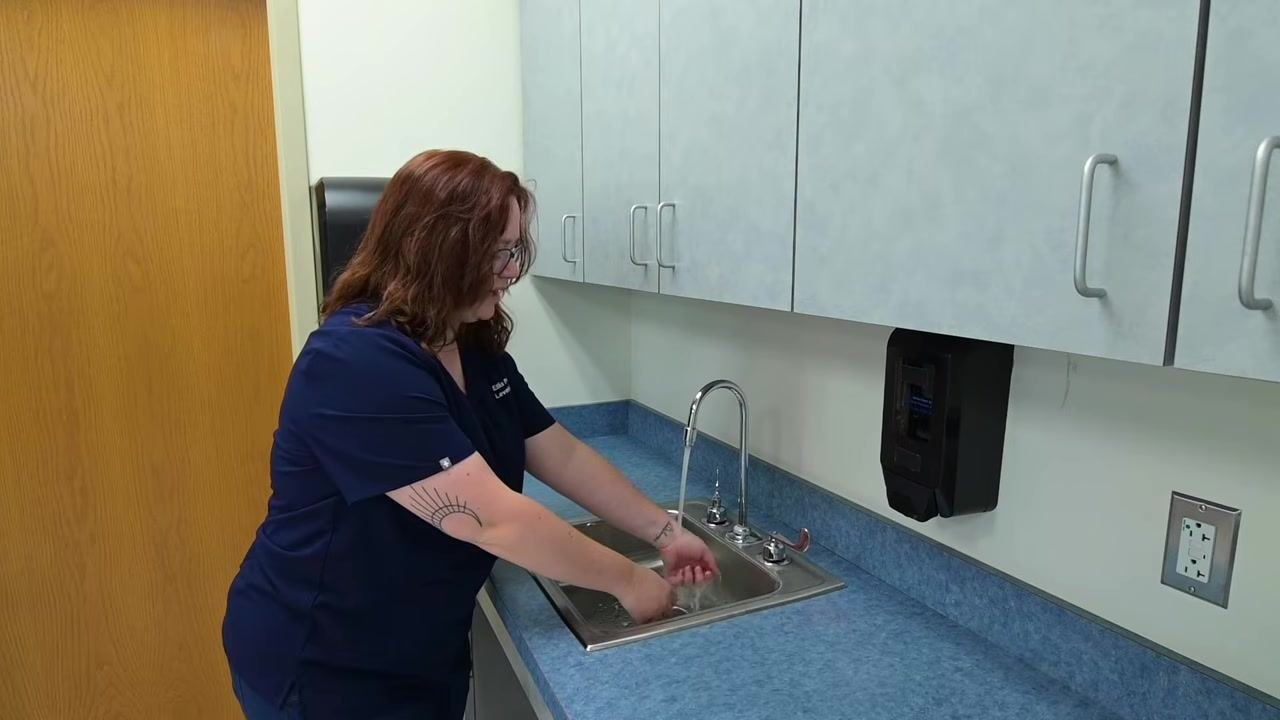
Dry your hands with a paper towel
- Retrieve a clean paper towel from the dispenser.
- Pat your hands dry, starting at your fingertips and moving upward toward your wrists.
- Ensure both hands are thoroughly dried using the towel.
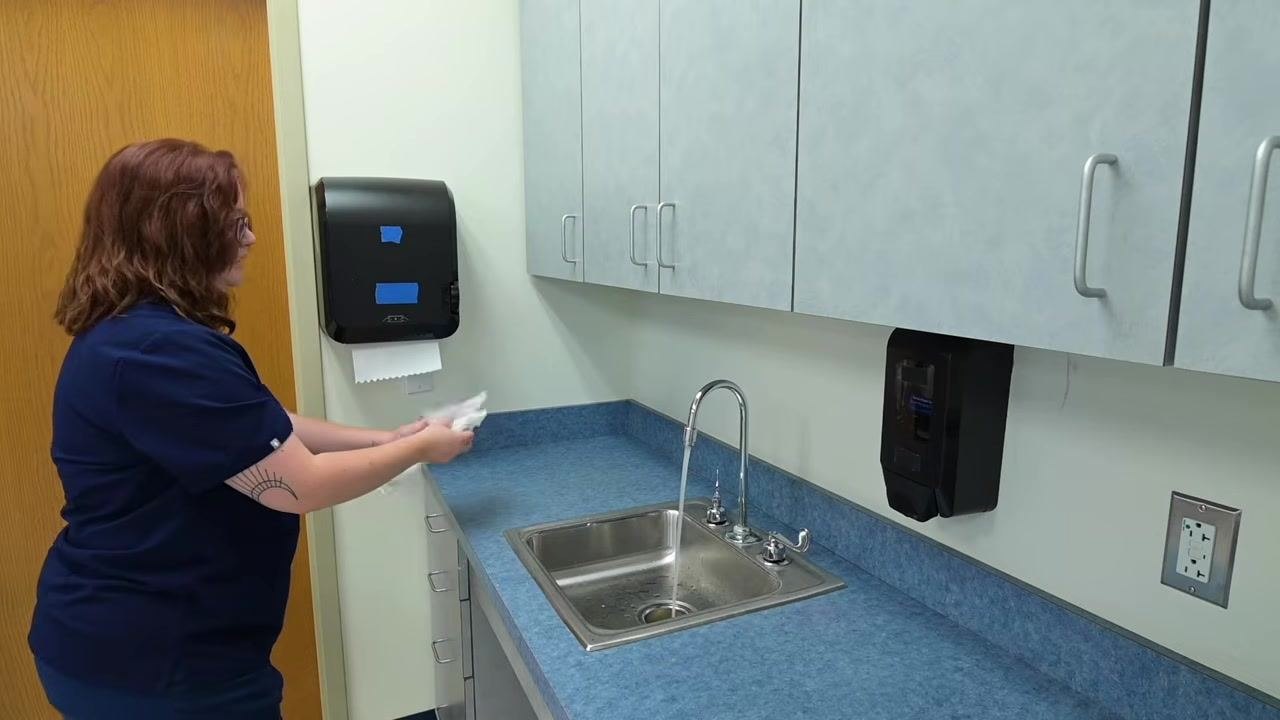
Pat hands dry completely
- Continue patting your hands dry, ensuring all moisture is removed.
- Maintain proper technique by drying from fingertips upward.
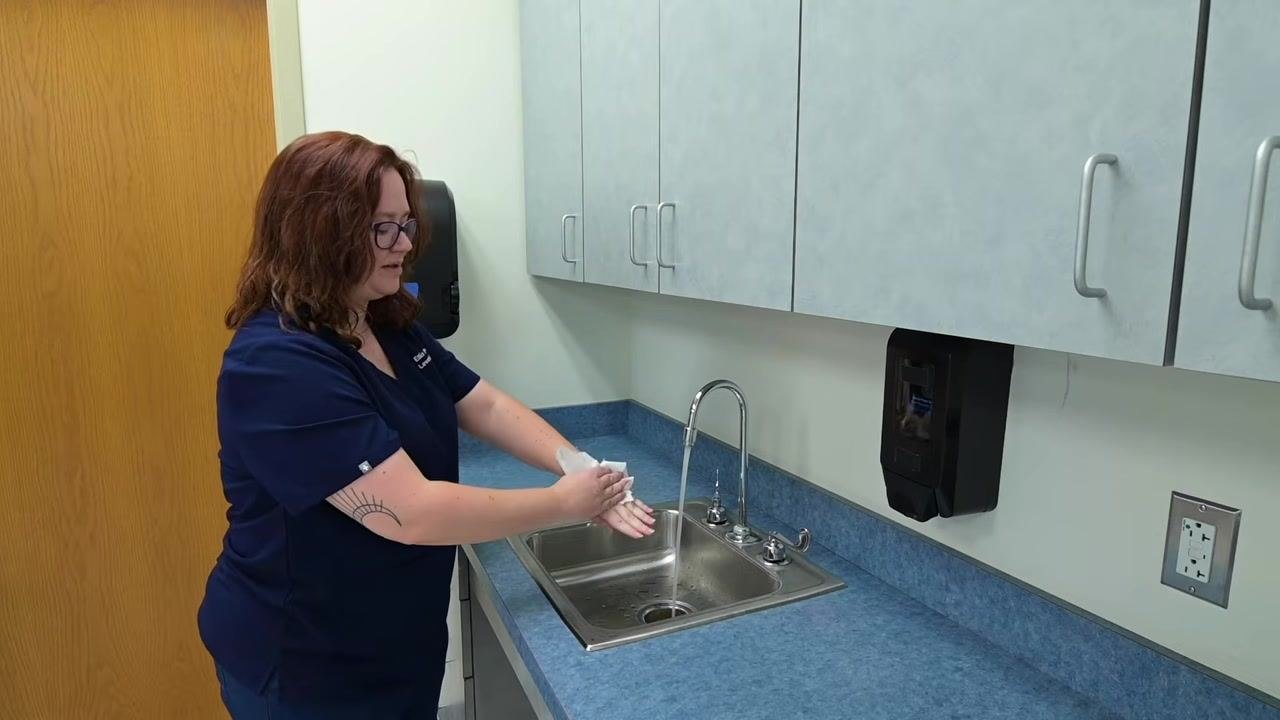
Turn off the faucet using a paper towel
- Use the paper towel, not your bare hands, to turn off the sink faucet.
- This step prevents recontaminating your clean hands by touching the dirty faucet handles.
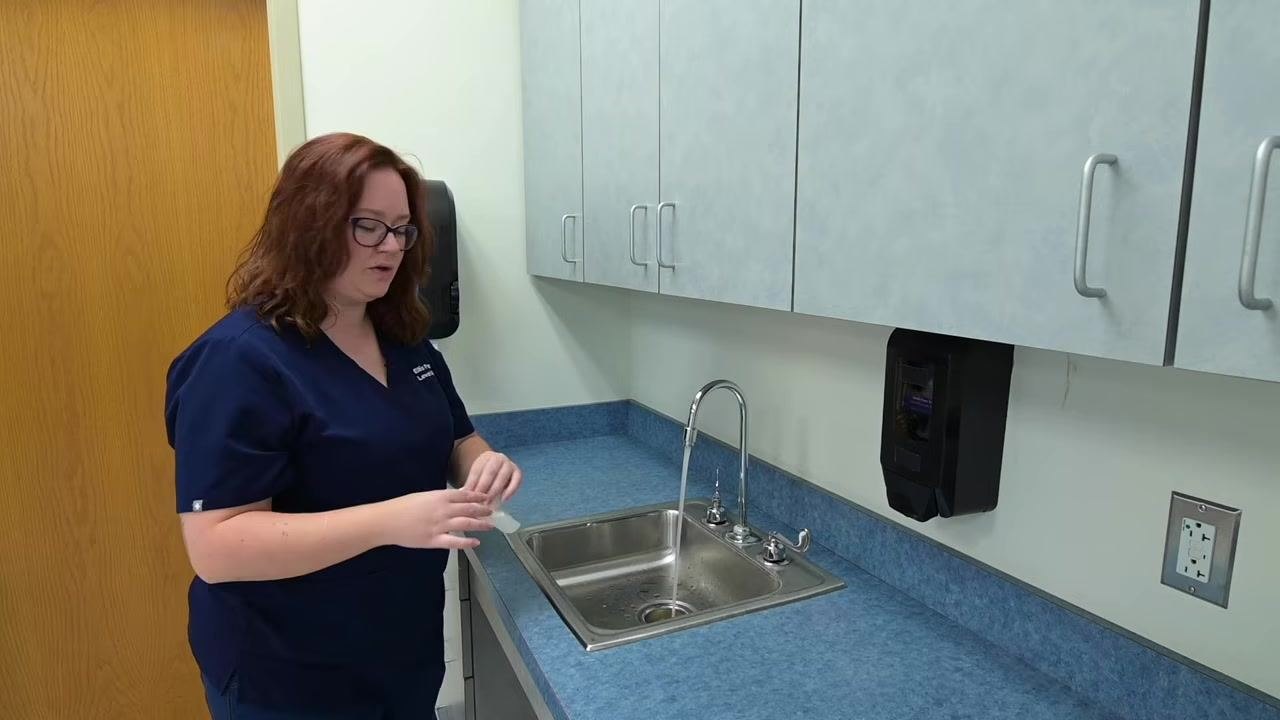
Dispose of the paper towel
- Discard the used paper towel in the appropriate waste receptacle.
- Confirm your hands are clean and dry before proceeding with patient care or other tasks.
The source material does not describe the 5 moments of hand hygiene framework, specific product selection between soap and alcohol-based hand rub (ABHR), or compliance monitoring methods. This section would normally cover those elements, but the demonstrated procedure uses soap and water at a sink as shown above.
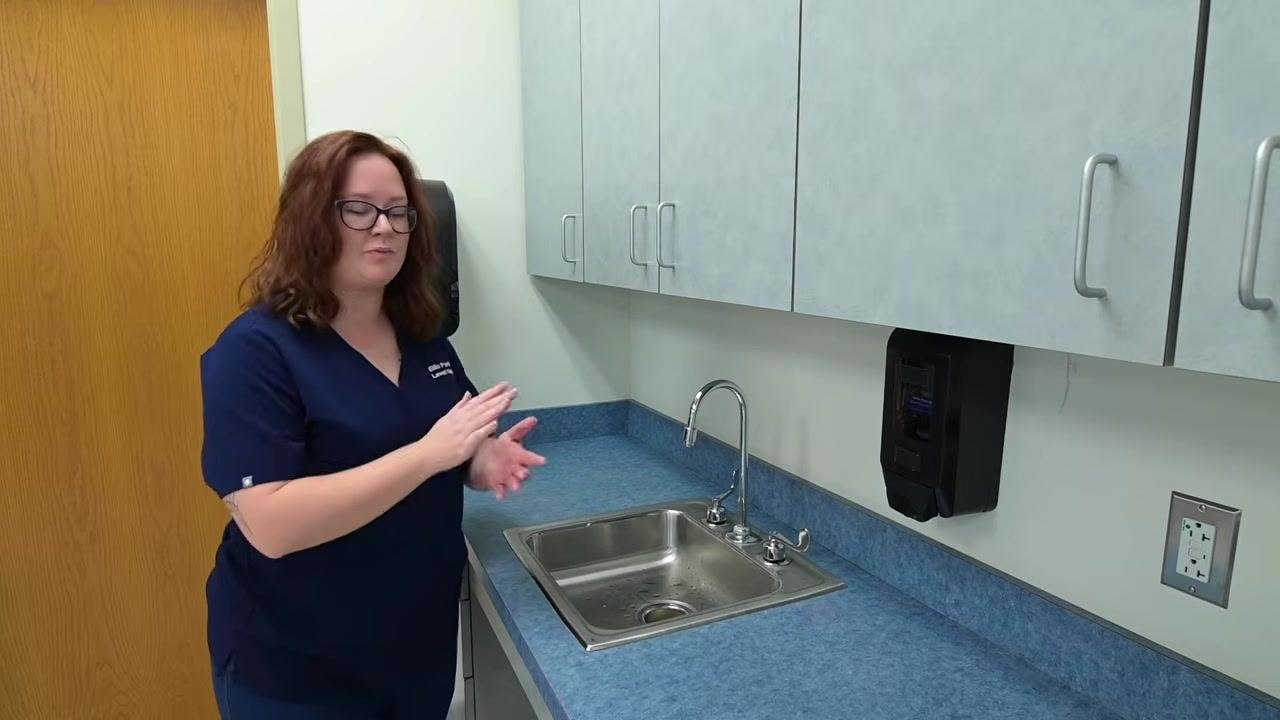
Environmental cleaning
Cleaning agents and concentrations, cleaning frequency, terminal cleaning procedures, shared equipment handling, and waste management are not addressed in this material. This section would typically describe how the environment surrounding the hand hygiene station is maintained and cleaned.
Surveillance & reporting
Active surveillance methods, outbreak thresholds, mandatory reporting requirements, and line listing templates are not covered in this material. This section would normally describe how hand hygiene compliance and related incidents are tracked and reported.
Staff education
Engage with available educational resources to reinforce proper hand hygiene technique.
- Review additional clinical skills content for ongoing learning.
- Share instructional resources with classmates and colleagues in nursing training.
- Use available flashcards and study aids, such as those from Level Up RN, to reinforce and master the material.
The source material does not specify formal training requirements, competency assessment procedures, or an annual refresher schedule. This section would normally define those elements as part of a complete staff education program.
By following these steps, you ensure effective hand hygiene technique and help minimize the risk of pathogen transmission in clinical environments.
Generation details: cost, quality tiers, downloads
Docsie billed 1,500 credits ($1.05) to analyze this 3-minute video at standard quality. The rewrite, template fill and Word/PDF exports were included. The same video at each quality tier:
| Quality | Frames sampled | Credits | Approx. cost |
|---|---|---|---|
| Draft | every 16-30 s | 750 | $0.52 |
| Standard (this guide) | every 8-15 s | 1,500 | $1.05 |
| Detailed | every 4-7 s | 3,000 | $2.10 |
| Ultra | every 1-3 s | 6,000 | $4.20 |
Credits priced at $0.70 per 1,000; plans include a monthly allowance. Enterprise customers on on-premise or bring-your-own-model deployments run this on their own inference and pay no per-video credits.
Generated by Docsie Video-to-Docs on 2026-09-10 from a 2-minute video. It was generated straight into Docsie's Infection Control Protocol template, so every section of that template is filled from the video. Screenshots are frames from the source video and belong to their creator, Level Up RN, whose original is embedded above. If you own this video and want the guide removed or credited differently, contact us and we will act within one business day.