
How to Use an Emergency Eyewash Station
Eye injuries are one of the most common workplace incidents, with approximately 2,000 U.S. workers requiring medical treatment for job-related eye injuries every day. Ninety percent of these injuries could be prevented by wearing appropriate eye protection, and knowing how to use an emergency eyewash station correctly can prevent injury, reduce its severity, or even save your eyesight. This document explains when and how to use an emergency eyewash station if a hazardous substance or object contacts your eyes.
Video: How to Use an Emergency Eye Wash Station by Ally Safety (2023). All credit for the demonstration goes to the creator; watch the original on YouTube. The written guide below was generated from this video by Docsie. Creator? Request a change or removal.
Eye injuries are one of the most common workplace incidents, with approximately 2,000 U.S. workers requiring medical treatment for job-related eye injuries every day. Ninety percent of these injuries could be prevented by wearing appropriate eye protection, and knowing how to use an emergency eyewash station correctly can prevent injury, reduce its severity, or even save your eyesight. This document explains when and how to use an emergency eyewash station if a hazardous substance or object contacts your eyes.
Purpose
This procedure describes the correct steps for using an emergency eyewash station to flush your eyes after exposure to a contaminant, chemical, or foreign object, minimizing the risk of scratches, abrasions, irritation, or permanent injury.
Scope
This procedure applies to any worker who is exposed to potential eye hazards on the job and needs to respond to an eye contamination incident using a workplace emergency eyewash station.
Required equipment and PPE
- Appropriate eye protection selected for the specific hazards of your job, worn at all times when exposed to potential hazards
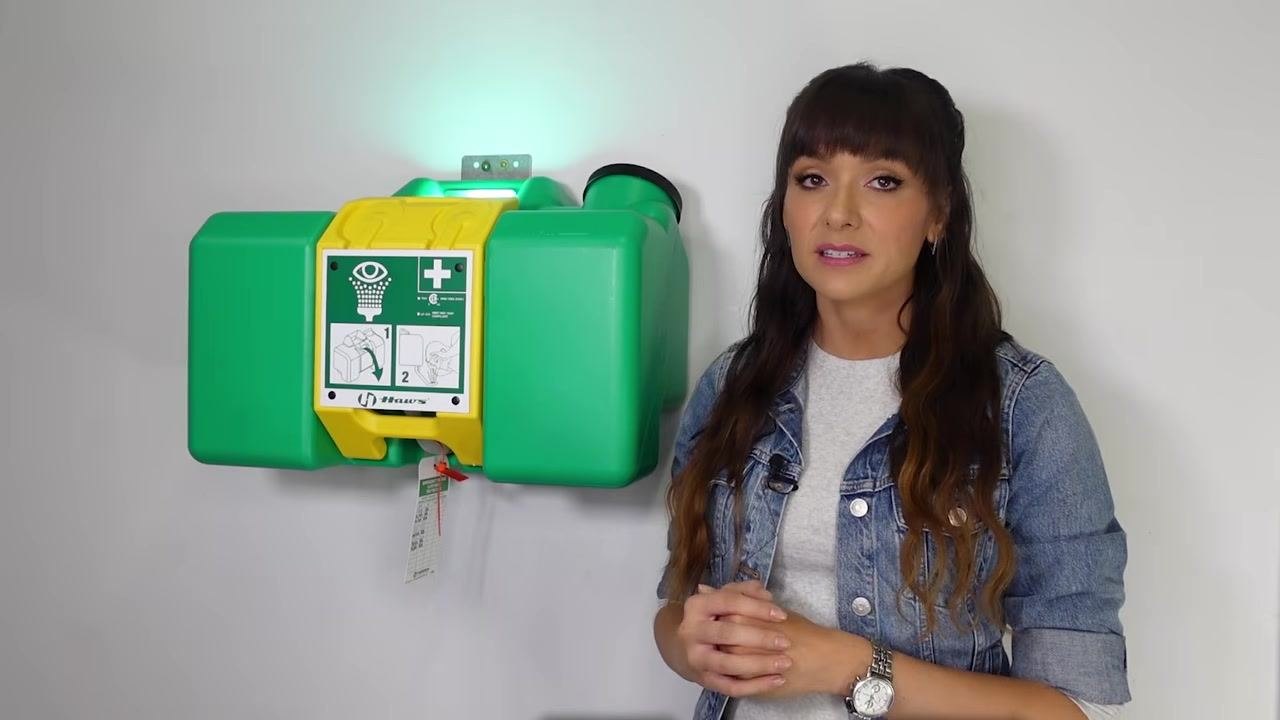
- A workplace emergency eyewash station (wall-mounted units may vary in model, but basic operating instructions are generally the same)
Recognize the need for immediate action
If you get something in your eye, proceed immediately to the nearest eyewash station. Do not delay treatment, even if the contaminant seems minor, such as a piece of sawdust. Immediate flushing can prevent scratches, abrasions, and irritation.
Locate the nearest eyewash station
Emergency eyewash stations are typically mounted on walls in accessible areas and clearly marked with signage. Familiarize yourself with the nearest station before an emergency occurs, since your vision may be impaired when you need to use it.
Identify the eyewash solution
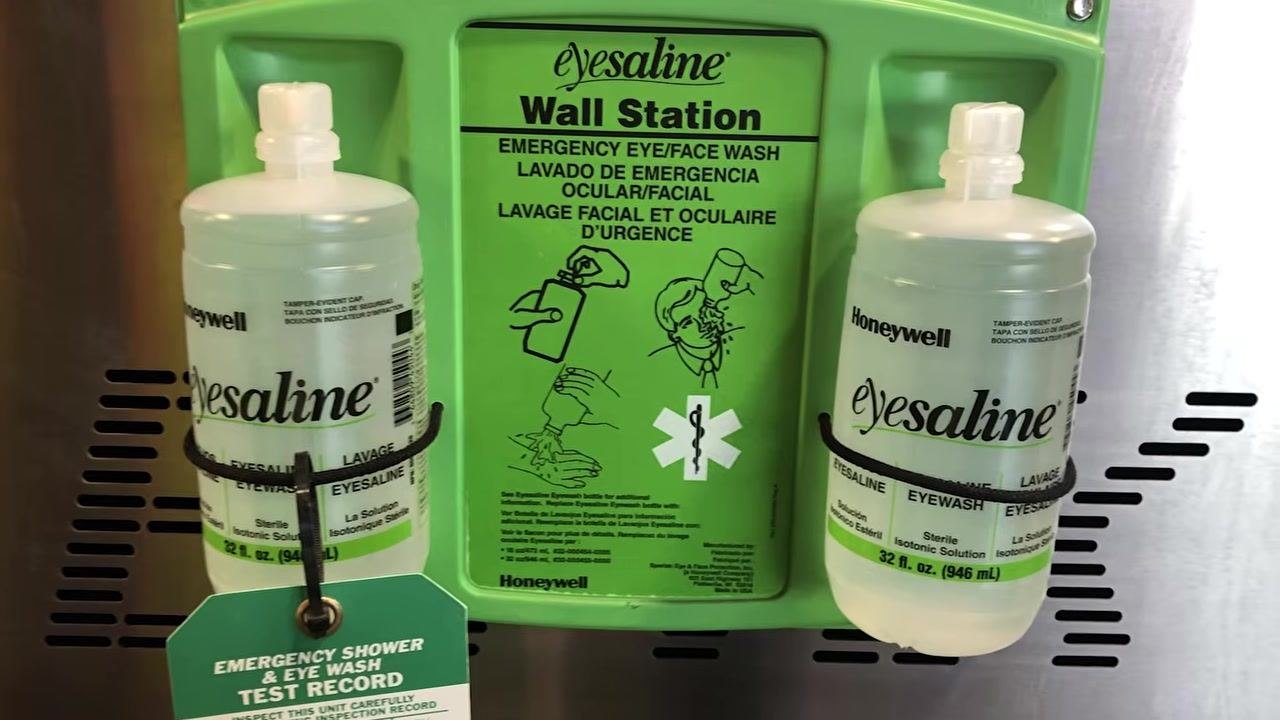
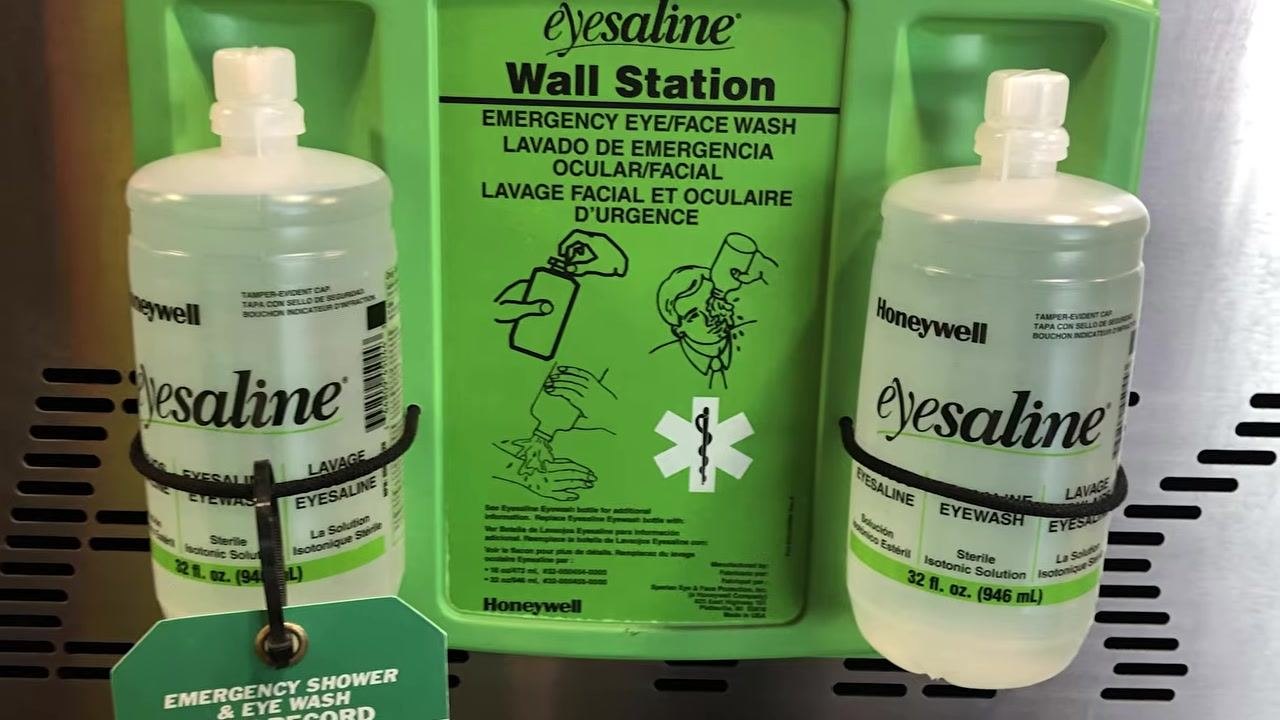
Some stations use bottles of sterile isotonic solution for emergency eye and face washing. These bottles are typically found in wall-mounted units and are clearly labeled for emergency use, with illustrated instructions on the station itself.
Aim the water stream correctly
If only one eye is affected, aim the stream of water directly onto your forehead or over the affected eye. If both eyes are affected, direct the stream onto the bridge of your nose so water flows into both eyes. Ensure the water is flowing before positioning your face over the stream.
Hold your eyelids open and flush thoroughly
Use your fingers to hold your eyelids open so water can reach all surfaces of the eye. Let the water flow freely, and roll your eyes in all directions to ensure the water washes all surfaces and gets under the eyelids.
Remove contact lenses if worn
If you wear contact lenses, wash your hands first if possible. Carefully remove the lenses during the flushing process to prevent contaminants from being trapped behind them, then continue flushing your eyes after removal.
Avoid rubbing your eyes
Do not rub your eyes or attempt to dislodge an object manually. Doing so can increase the risk of scratches or further injury.
Flush for the recommended duration
If you were exposed to a chemical, continue flushing your eyes for a full 15 minutes to ensure the pH is neutralized. Fifteen minutes may feel like a long time, but it is necessary for effective decontamination.
Seek medical attention if needed
After flushing, seek medical attention as soon as possible if irritation, pain, or vision problems persist.
Additional safety notes
-
Note the location of every eyewash station in your workplace ahead of time. Emergency vision impairment makes prior knowledge critical, and stations should include a visible test record tag confirming they are maintained and ready for use.
-
Always wear the proper eye protection for your job before beginning work.
- Use an emergency eyewash station immediately at the first sign of a chemical or substance in your eye to drastically reduce the risk of serious injury.
Verification and summary
Confirm that you have flushed both eyes for the appropriate duration, removed any contact lenses, avoided rubbing your eyes, and sought medical attention if irritation, pain, or vision problems persist. By following this procedure and wearing proper protective equipment, you help ensure you do not become one of the 2,000 people who suffer a workplace eye injury each day.
Generation details: cost, quality tiers
Docsie billed 2,000 credits ($1.40) to analyze this 4-minute video at standard quality. The rewrite, template fill and Word/PDF exports were included. The same video at each quality tier:
| Quality | Frames sampled | Credits | Approx. cost |
|---|---|---|---|
| Draft | every 16-30 s | 1,000 | $0.70 |
| Standard (this guide) | every 8-15 s | 2,000 | $1.40 |
| Detailed | every 4-7 s | 4,000 | $2.80 |
| Ultra | every 1-3 s | 8,000 | $5.60 |
Credits priced at $0.70 per 1,000; plans include a monthly allowance. Enterprise customers on on-premise or bring-your-own-model deployments run this on their own inference and pay no per-video credits.
Generated by Docsie Video-to-Docs on 2026-09-08 from a 3-minute video. Screenshots are frames from the source video and belong to their creator, Ally Safety, whose original is embedded above. If you own this video and want the guide removed or credited differently, contact us and we will act within one business day.