
How to Use an AED
This document explains how to use an AED (Automated External Defibrillator) on an adult experiencing cardiac arrest. Early use of an AED can help restore a normal heartbeat, and knowing how to use an AED correctly and quickly is critical to improving a person's chance of survival. For each minute that CPR and defibrillation are delayed, a person's chance of survival decreases by 7 to 10 percent.
Video: How to Use an AED on an Adult by American Red Cross (2024). All credit for the demonstration goes to the creator; watch the original on YouTube. The written guide below was generated from this video by Docsie. Creator? Request a change or removal.
Purpose
This document explains how to use an AED (Automated External Defibrillator) on an adult experiencing cardiac arrest. Early use of an AED can help restore a normal heartbeat, and knowing how to use an AED correctly and quickly is critical to improving a person's chance of survival. For each minute that CPR and defibrillation are delayed, a person's chance of survival decreases by 7 to 10 percent.
Scope
This procedure applies to trained responders providing emergency care to any person older than 8 years of age and/or weighing more than 55 pounds (25 kilograms). It covers retrieving the AED, preparing the patient, attaching the pads, operating the device, and continuing care until professional help arrives.
Required equipment
- An AED unit with adult pads (typically stored in a red case labeled "AED Trainer" or similar)
- Gloves
- A pad connector cable (may already be connected to the AED)
Procedure
Step 1: Retrieve the AED
Retrieve the AED as soon as it is available. If you are the only trained responder on the scene, immediately turn on the AED and follow the voice prompts.
Step 2: Prepare the scene and the patient
Remove all clothing covering the chest so the AED pads can be placed correctly. Wipe the chest dry if necessary to ensure the pads adhere properly.
Step 3: Power on the AED
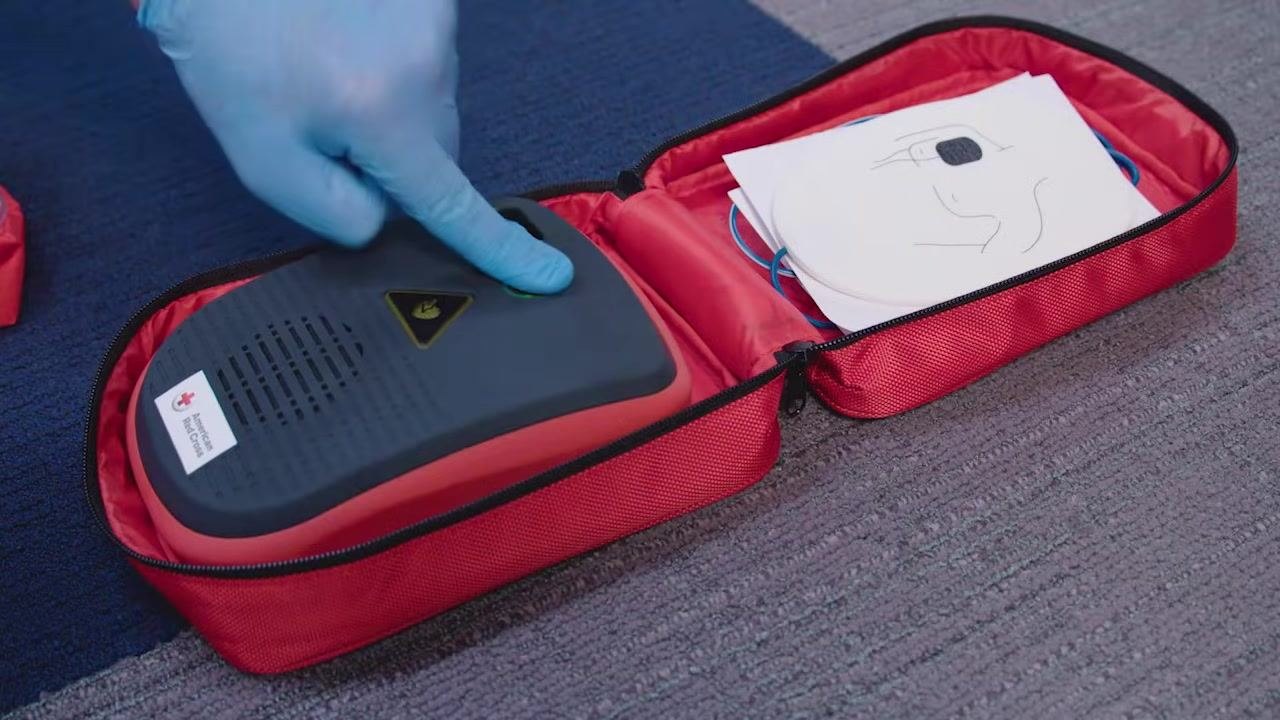
Open the AED case and power on the device by pressing the green power button.
Step 4: Confirm you are using adult pads
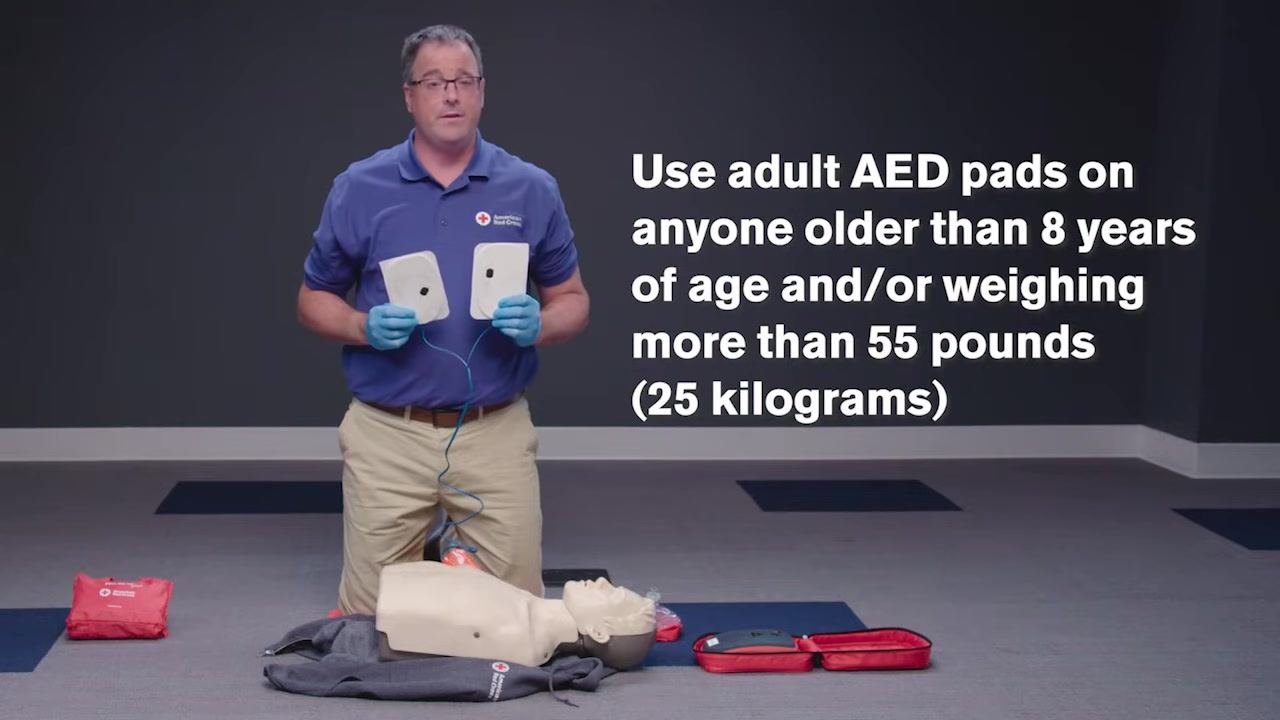
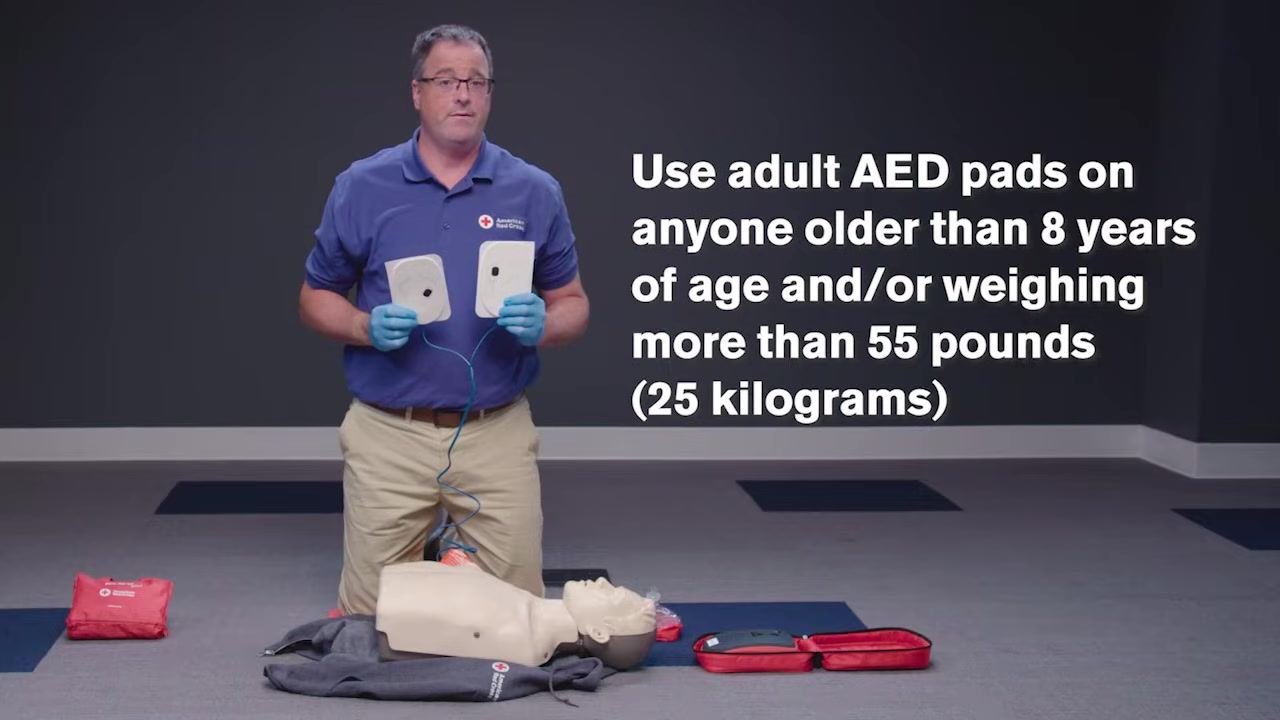
Always use adult AED pads on anyone older than 8 years of age and/or weighing more than 55 pounds (25 kilograms). Do not use pediatric AED pads for adults, as the shock delivered will not be sufficient.
Step 5: Attach the AED pads
Attach the AED pads firmly to the person's bare chest:
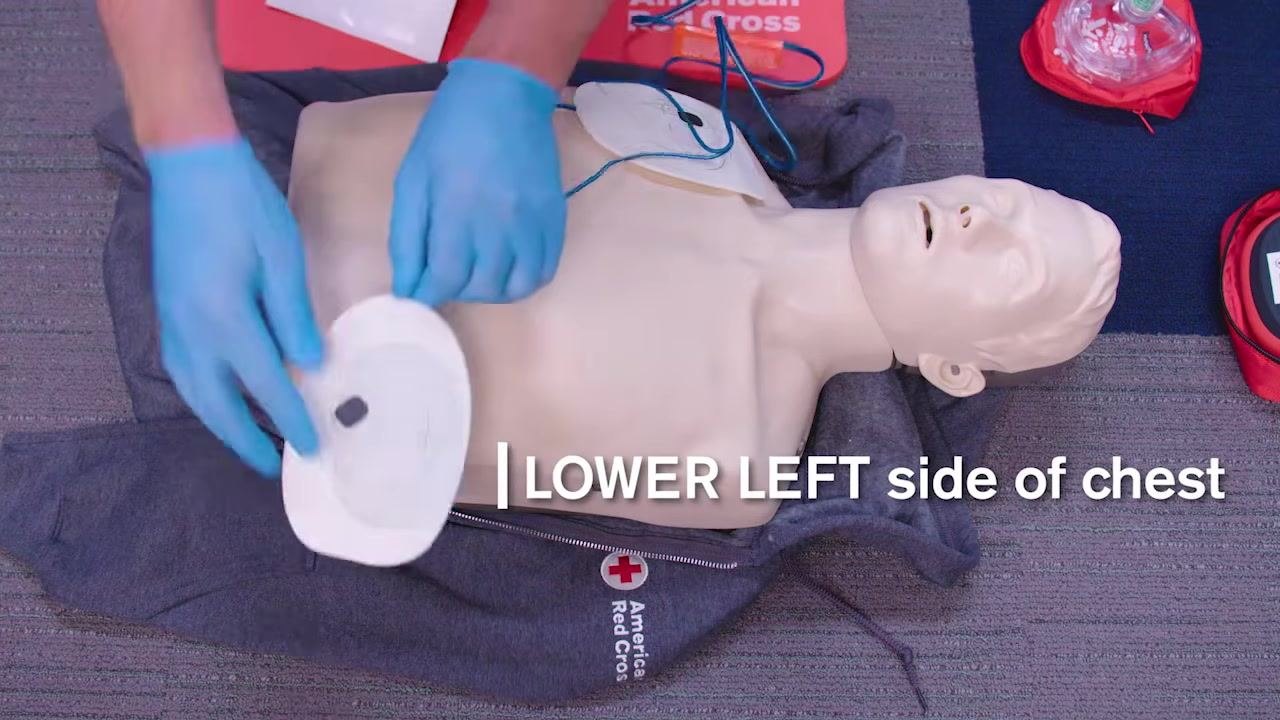
- Place one pad on the upper right side of the chest.
- Place the other pad on the lower left side of the chest, a few inches below the left armpit.
- Follow the diagrams and labeling printed on the pads for correct placement.
Note: If the AED pad includes a feedback device, follow the manufacturer's instructions for use. Feedback devices may be built into the pads and provide real-time guidance on compression quality.
Step 6: Connect the pad cable to the AED
Plug the pad connector cable into the AED if it is not already connected. Ensure the connector is securely attached; the AED may have a clearly marked port for this cable.
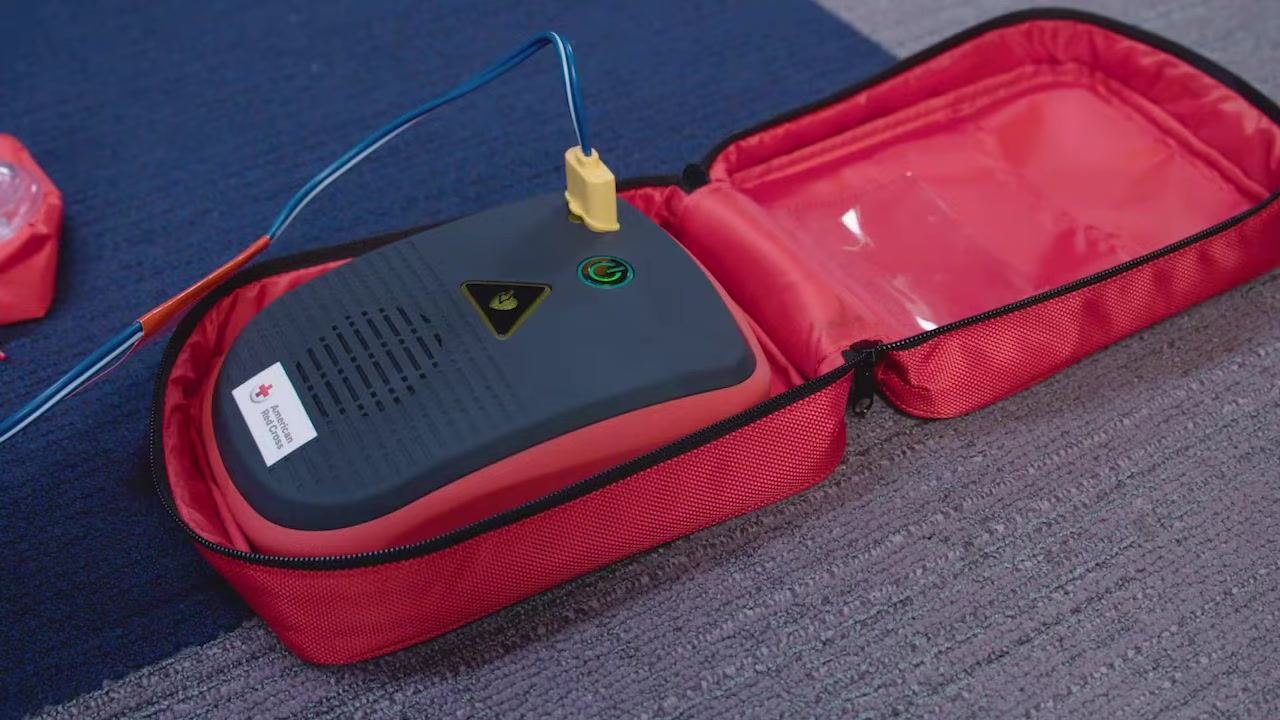
Step 7: Prepare for rhythm analysis
Before the AED analyzes the heart's rhythm, make sure no one, including yourself, is touching the person. Say "Clear!" in a loud, commanding voice to alert others to stand clear.
Safety note: Do not touch the person while the AED is analyzing. The device will announce or display "Analyzing" or a similar instruction. Ensure no one is touching the person during analysis and shock delivery.
Step 8: Deliver a shock if advised
If the AED determines a shock is needed, it will announce "Shock advised" and the shock button will flash. Again, confirm no one is touching the person and loudly say "Clear!" Then press the flashing shock button to deliver the shock.
Step 9: Resume CPR
Immediately resume CPR after the shock is delivered. Begin with chest compressions and follow the AED's prompts for timing and cycles.
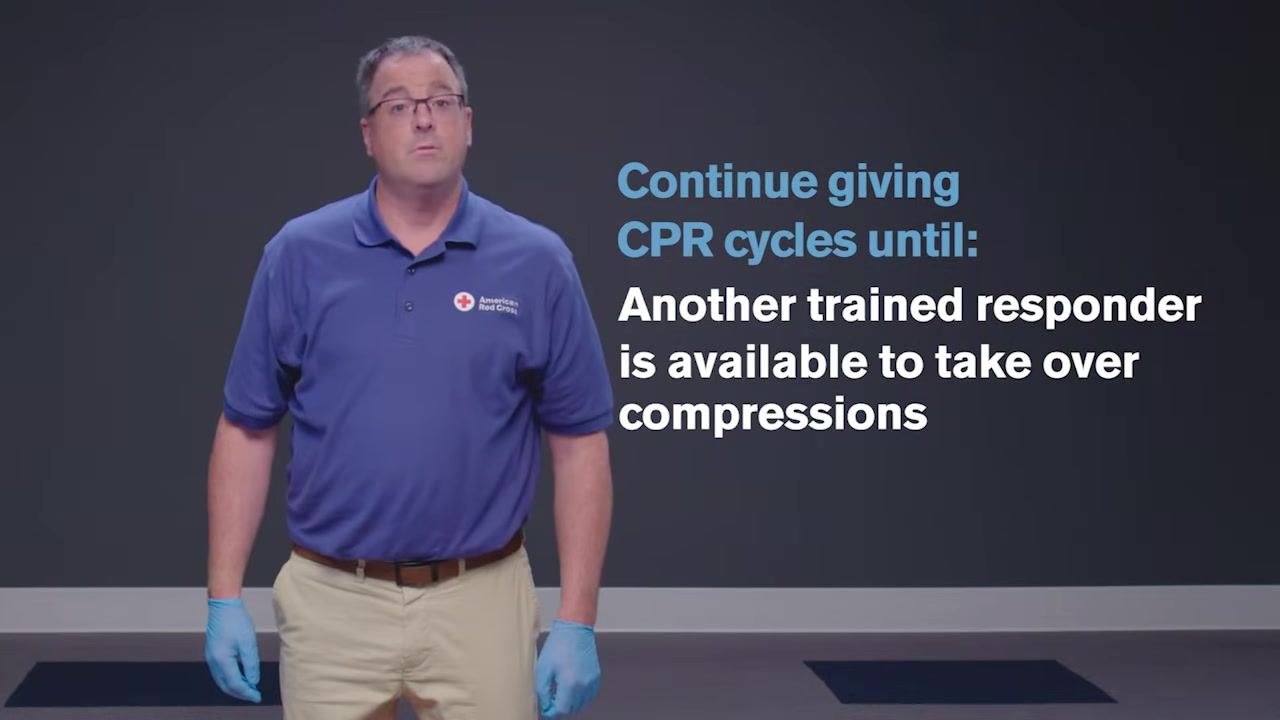
Step 10: Continue CPR cycles until one of the following occurs
- You notice an obvious sign of life, such as breathing.
- The AED prompts you to analyze the rhythm again.
-
Another trained responder is available to take over compressions.
-
EMS personnel arrive and begin their care of the person.
-
You are alone and too tired to continue.
- The scene becomes unsafe.
Verification and summary
Throughout this procedure, always follow the AED's voice prompts and on-screen instructions. Ensure your safety and the safety of others by confirming that no one is touching the person during rhythm analysis and shock delivery. Continue CPR and AED-guided care until an obvious sign of life appears, another trained responder takes over, EMS personnel arrive, you become too exhausted to continue, or the scene becomes unsafe. This is how to use an AED for an adult in cardiac arrest, from retrieval through continued care.
Generation details: cost, quality tiers
Docsie billed 1,500 credits ($1.05) to analyze this 3-minute video at standard quality. The rewrite, template fill and Word/PDF exports were included. The same video at each quality tier:
| Quality | Frames sampled | Credits | Approx. cost |
|---|---|---|---|
| Draft | every 16-30 s | 750 | $0.52 |
| Standard (this guide) | every 8-15 s | 1,500 | $1.05 |
| Detailed | every 4-7 s | 3,000 | $2.10 |
| Ultra | every 1-3 s | 6,000 | $4.20 |
Credits priced at $0.70 per 1,000; plans include a monthly allowance. Enterprise customers on on-premise or bring-your-own-model deployments run this on their own inference and pay no per-video credits.
Generated by Docsie Video-to-Docs on 2026-09-08 from a 2-minute video. Screenshots are frames from the source video and belong to their creator, American Red Cross, whose original is embedded above. If you own this video and want the guide removed or credited differently, contact us and we will act within one business day.