
How to Use a First Aid Kit
This guide explains how to use a first aid kit by walking through its essential contents and the purpose of each item. Understanding what belongs in your kit — and how to use every item correctly — helps you respond quickly and effectively when an emergency happens.
Video: How to Use your First Aid Kit & Contents - First Aid Training - St John Ambulance by St John Ambulance (2015). All credit for the demonstration goes to the creator; watch the original on YouTube. The written guide below was generated from this video by Docsie. Creator? Request a change or removal.
This guide explains how to use a first aid kit by walking through its essential contents and the purpose of each item. Understanding what belongs in your kit — and how to use every item correctly — helps you respond quickly and effectively when an emergency happens.
Purpose
The purpose of this document is to help you recognize the standard items found in a first aid kit and understand how each one is used to treat injuries. Knowing how to use a first aid kit properly means you can act with confidence in situations ranging from minor cuts to more serious emergencies.
Scope
This guide applies to first aid kits kept in any of the following locations:
- Workplaces
- Leisure centres
- Homes
- Cars
Required equipment
A complete first aid kit should contain the following categories of items, which are covered in detail in the steps below:
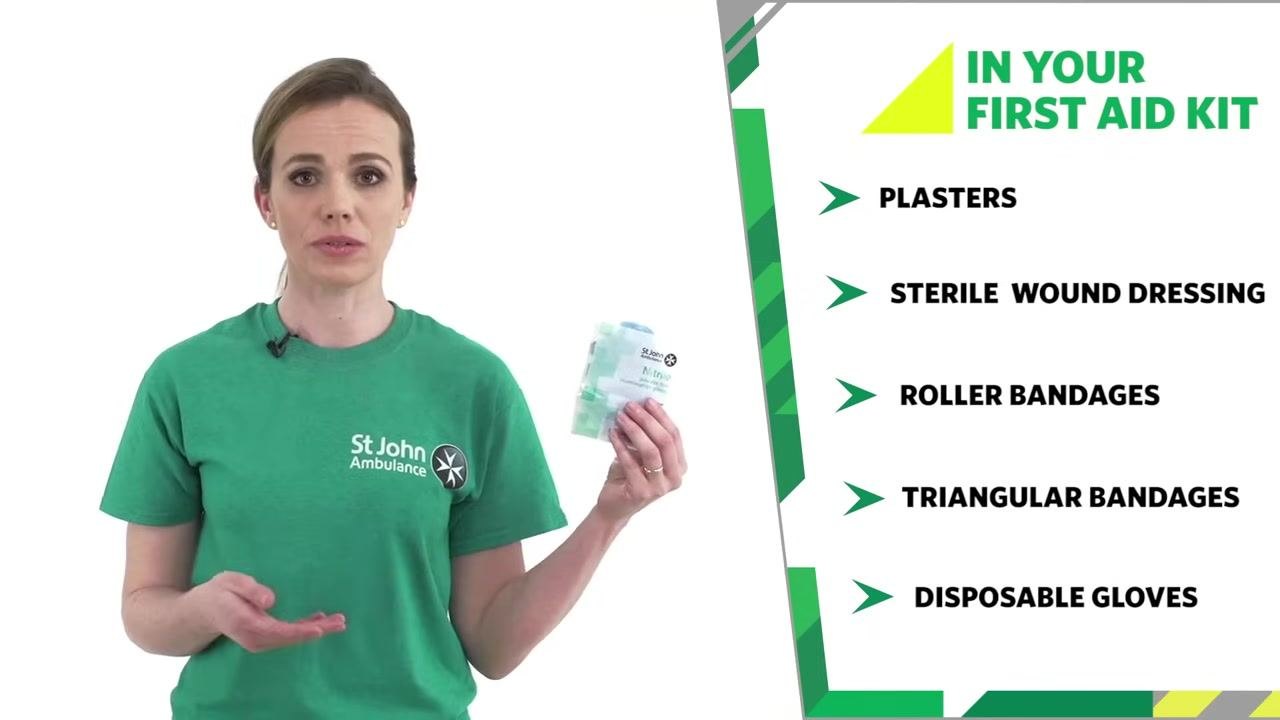
- Basic wound care supplies (plasters, dressings, bandages)
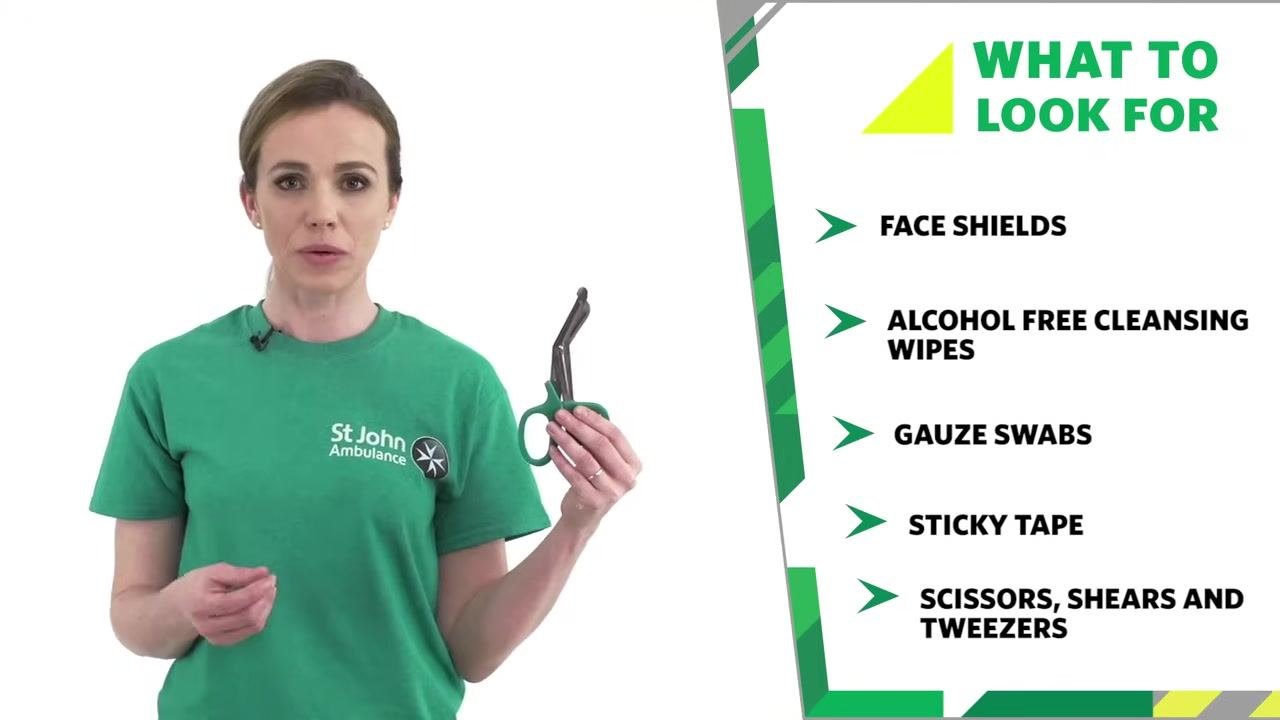
- Protective and cleaning items (gloves, face shields, wipes)
- Cutting and handling tools (scissors, shears, tweezers)
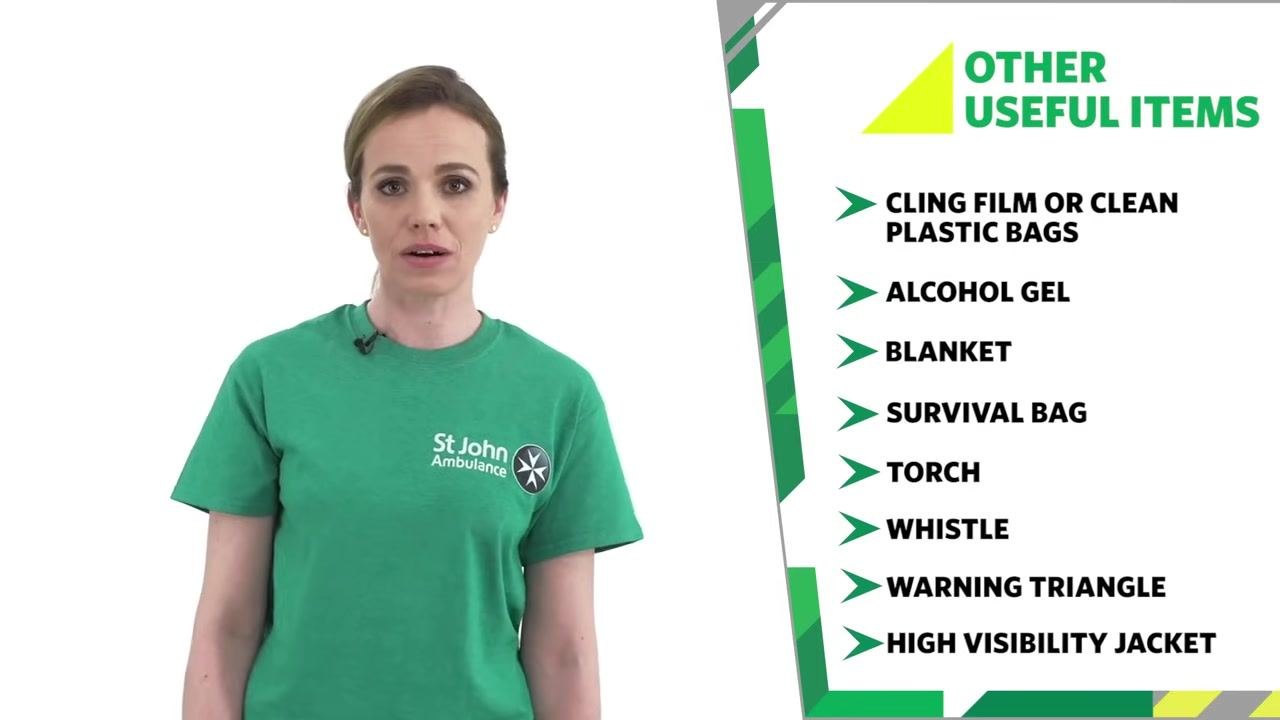
- General-purpose supplies (cling film, alcohol gel, blankets)
- Outdoor and vehicle emergency items (torch, whistle, warning triangle, high visibility jacket)
Familiarize yourself with your kit
Before an emergency occurs, take time to learn what each item in your first aid kit is used for and how it applies to different types of injuries. Make sure a fully stocked kit is available and accessible in your workplace, leisure centre, home, and car at all times.
Identify the basic items in your kit
Learn the core wound care items included in a standard first aid kit:
- Plasters: Use for small cuts and grazes.
- Sterile wound dressing: Use for larger cuts to apply pressure and stop bleeding. These are sterile pads attached to bandages, making them quick and easy to apply in an emergency.
- Roller bandages: Use to hold dressings in place, apply pressure to stop bleeding, or secure ice packs to reduce swelling.
- Triangular bandages: Use as a bandage, or as a dressing if sterile, to cover large wounds or burns.
- Disposable gloves: Always wear these when dressing wounds or handling bodily fluids or waste to reduce the risk of infection.
Safety note: Wear disposable gloves whenever you are dressing a wound or come into contact with bodily fluids.
Identify additional protective and cleaning items
Beyond the basic supplies, a well-stocked kit includes items for protection and wound cleaning:
- Face shields or pocket masks: Use to reduce infection risk when giving rescue breaths.
- Alcohol-free cleansing wipes: Use to clean the skin around a wound.
- Gauze swabs: Use as dressings, padding, or to clean around wounds.
- Sticky or adhesive tape: Use to hold dressings in place or secure loose ends of bandages.
Identify cutting and handling tools
Check that your kit includes tools for cutting and handling materials during treatment:
- Scissors: Use to cut clothing for wound access or to cut tape to the required length.
- Shears and tweezers: Use these to assist with other first aid tasks as needed.
Identify other useful items
Include these additional supplies to handle a wider range of situations:
- Cling film or clean plastic bags: Use for dressing burns and scalds.
- Alcohol gel: Use to clean your hands when water is not available.
- Blanket: Use to keep the casualty warm.
- Survival bag: Use for warmth and protection, particularly outdoors.
Add items for outdoor and car emergencies
Extend your kit with the following items if you plan to help in outdoor settings or road accidents:
- Torch: Add for visibility in low-light situations.
- Whistle: Pack to attract attention in an emergency.
- Warning triangle: Keep in your car to alert other drivers during road accidents.
- High visibility jacket: Store in your car so you are seen by others when assisting at roadside incidents.
Safety note: These outdoor and vehicle items are especially useful when helping people outdoors or during road accidents.
Commit to learning first aid
Knowing how to use a first aid kit is only part of being prepared. Take a first aid course to build your confidence and ability to help in an emergency.
Verification and summary
Before considering your first aid kit complete, confirm the following:
- Your kit is available in your home, workplace, leisure centre, and car.
- You know how to use every item in your kit effectively.
- You regularly check your kit and replace any used or expired items.
By ensuring your first aid kit contains these items and knowing how to use each one, you will be better prepared to act quickly and effectively in an emergency situation.
What's next
For more information, resources, and training on first aid, visit sja.org.uk. This guide is based on recommendations from St John Ambulance.
Generation details: cost, quality tiers
Docsie billed 1,500 credits ($1.05) to analyze this 3-minute video at standard quality. The rewrite, template fill and Word/PDF exports were included. The same video at each quality tier:
| Quality | Frames sampled | Credits | Approx. cost |
|---|---|---|---|
| Draft | every 16-30 s | 750 | $0.52 |
| Standard (this guide) | every 8-15 s | 1,500 | $1.05 |
| Detailed | every 4-7 s | 3,000 | $2.10 |
| Ultra | every 1-3 s | 6,000 | $4.20 |
Credits priced at $0.70 per 1,000; plans include a monthly allowance. Enterprise customers on on-premise or bring-your-own-model deployments run this on their own inference and pay no per-video credits.
Generated by Docsie Video-to-Docs on 2026-09-09 from a 2-minute video. Screenshots are frames from the source video and belong to their creator, St John Ambulance, whose original is embedded above. If you own this video and want the guide removed or credited differently, contact us and we will act within one business day.