
How to Read a Safety Data Sheet
This procedure explains how to read a Safety Data Sheet (SDS) so you can safely identify, handle, store, and dispose of laboratory chemicals. Using isopropyl alcohol as a working example, this guide walks through every major SDS section so you know exactly what information to look for and how to apply it before working with any chemical.
Video: Safety Data Sheet (SDS) - Video 2 by American Chemical Society (2019). All credit for the demonstration goes to the creator; watch the original on YouTube. The written guide below was generated from this video by Docsie. Creator? Request a change or removal.
Purpose
This procedure explains how to read a Safety Data Sheet (SDS) so you can safely identify, handle, store, and dispose of laboratory chemicals. Using isopropyl alcohol as a working example, this guide walks through every major SDS section so you know exactly what information to look for and how to apply it before working with any chemical.
Scope
This procedure applies to any chemical you plan to use in the laboratory. All Safety Data Sheets follow the same standardized 16-section format, so the steps below can be applied to any SDS, regardless of the specific chemical involved.
Required equipment and PPE
Before handling the chemical described on the SDS, gather the following:
- The Safety Data Sheet matching the exact chemical name on your container
- Protective gloves
- Protective clothing
- Eye protection
- Access to a fume hood or well-ventilated area
Procedure
Confirm you have the correct SDS
Always consult the Safety Data Sheet before working with any chemical. Locate the SDS for the specific substance you are using — for example, isopropyl alcohol, a common household chemical found in first aid kits for treating minor scrapes and wounds. Confirm that the chemical name on the SDS matches the name printed on your container.
Identify the chemical and manufacturer (Section 1)
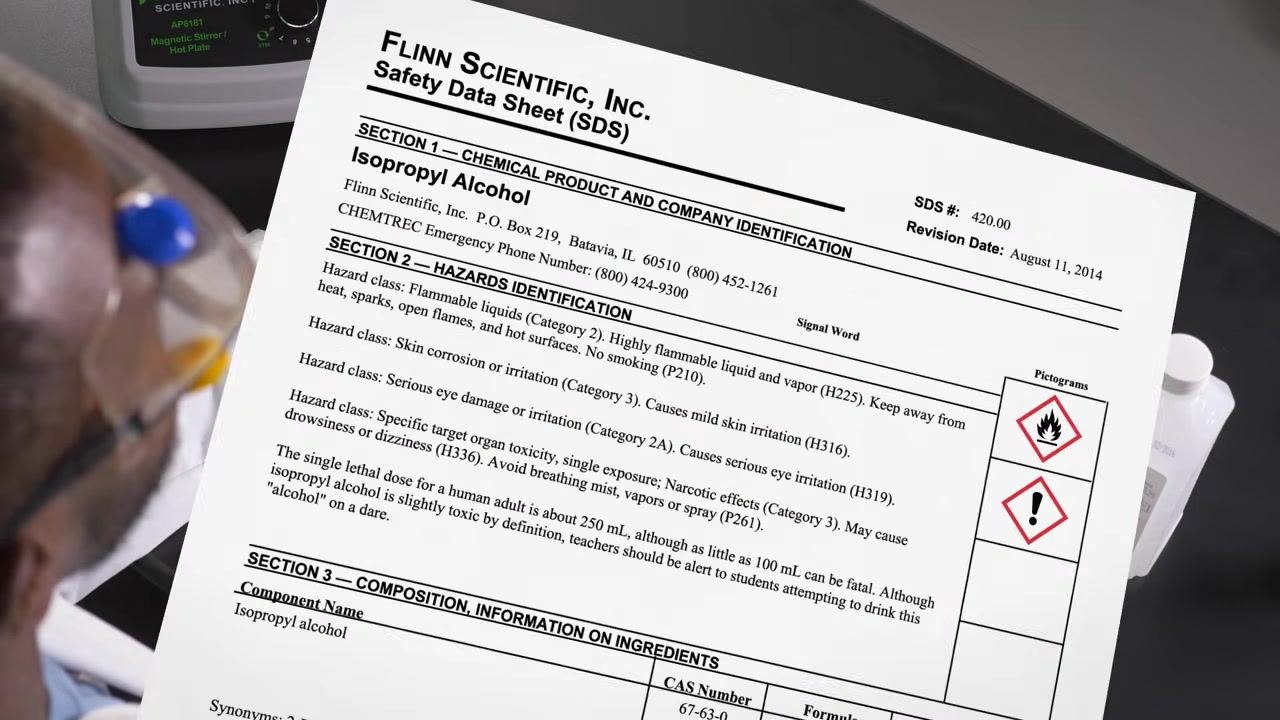
Check that the SDS opens with chemical identification details, including the chemical name, manufacturer name and address, and an emergency phone number. For isopropyl alcohol, this section lists the chemical name as Isopropyl Alcohol, the manufacturer as Flinn Scientific, Inc., P.O. Box 219, Batavia, IL 60510, and an emergency phone number of (800) 424-9300.
Review the hazard identification section (Section 2)
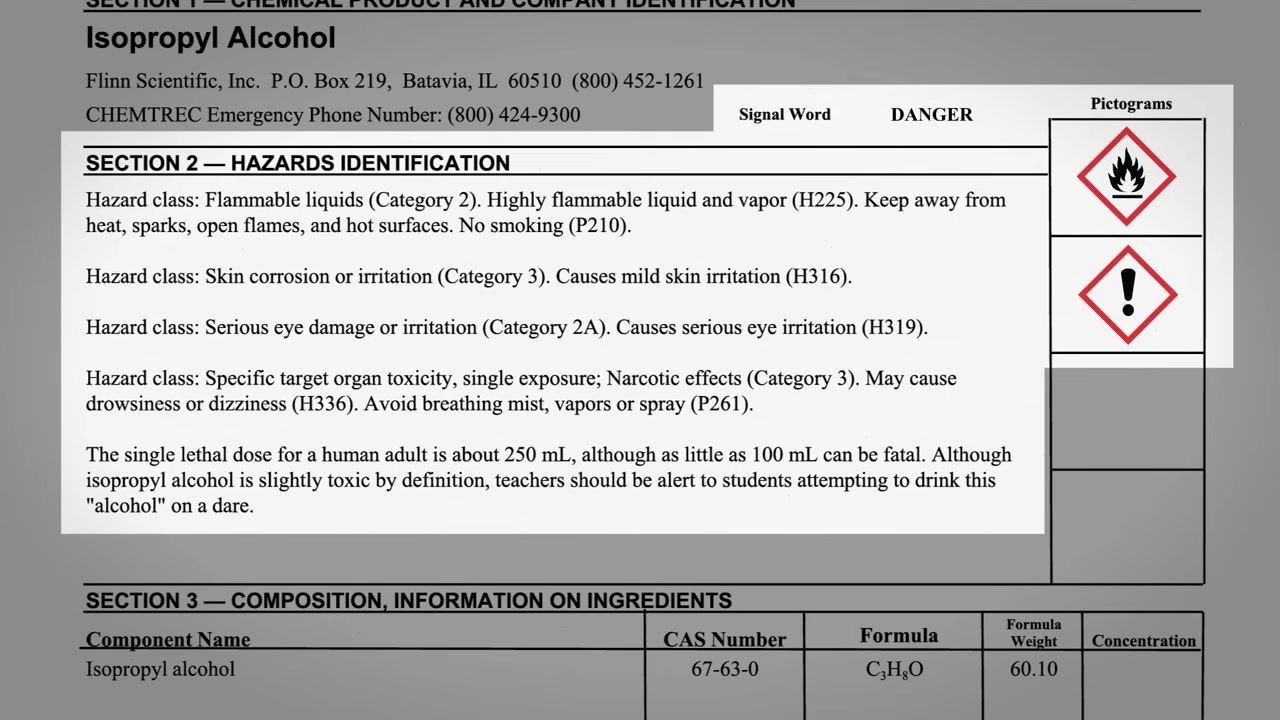
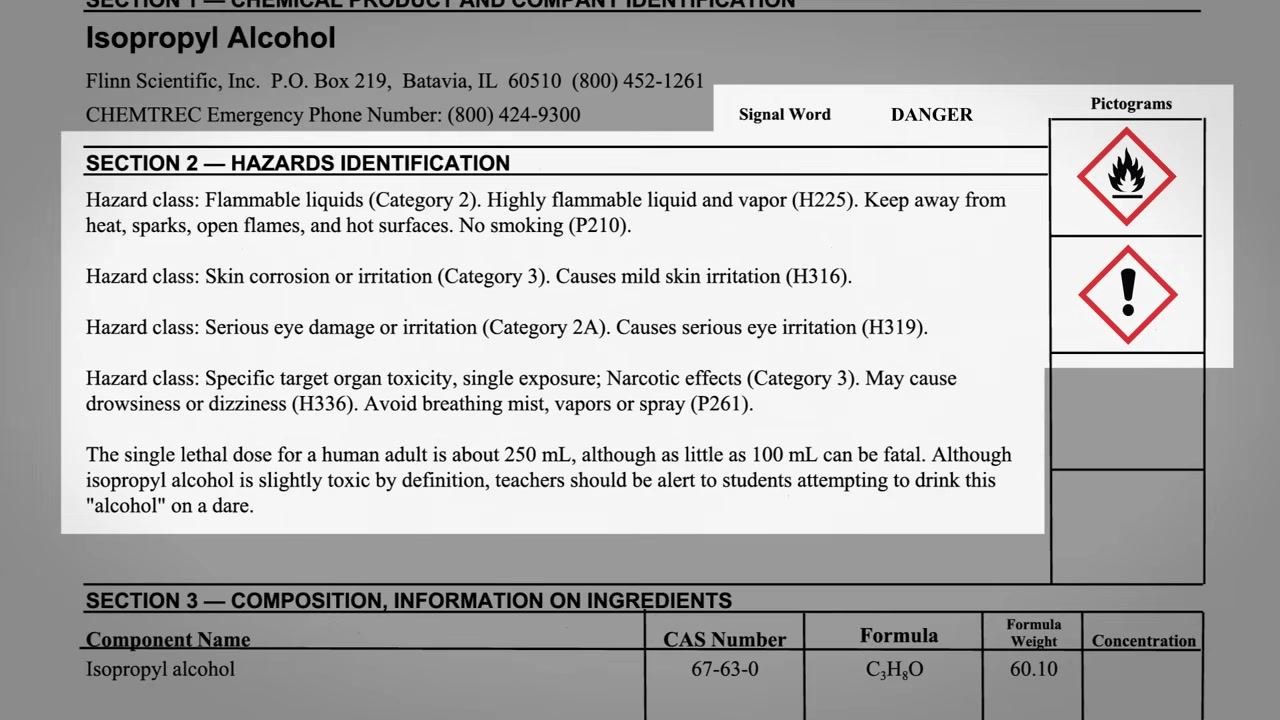
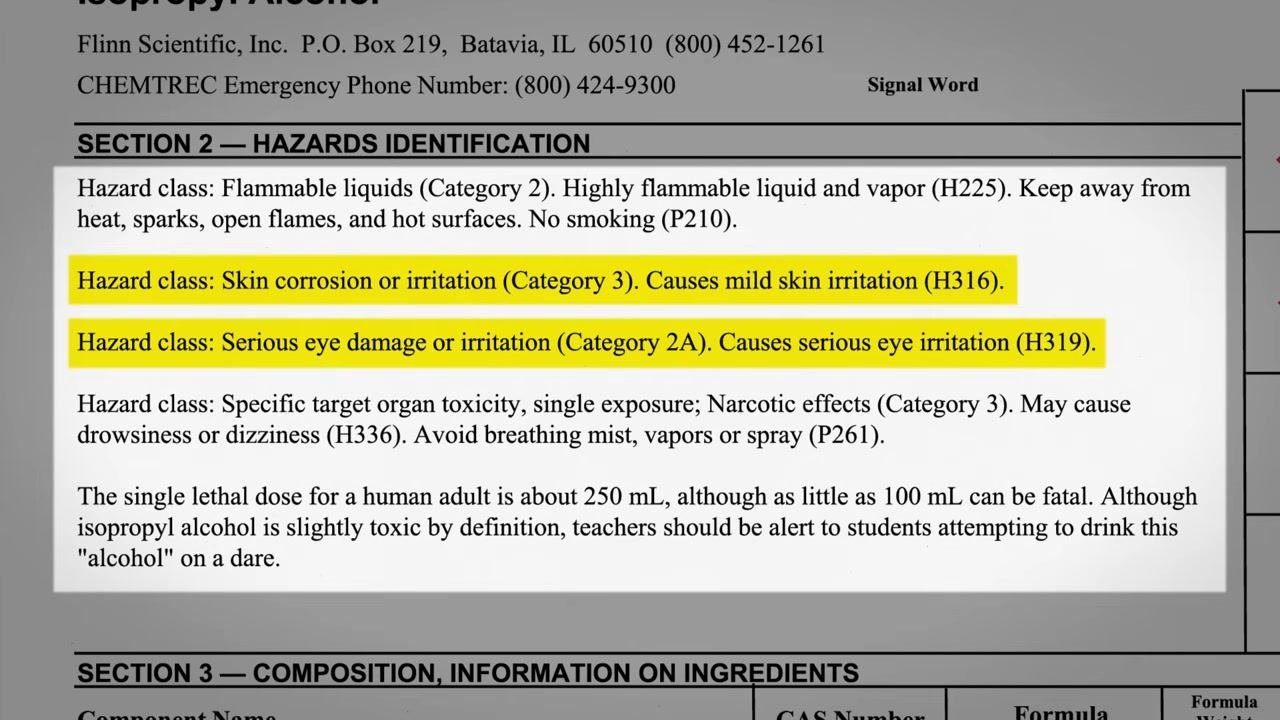
Locate Section 2, which details the hazards associated with the chemical. Hazards are identified in three ways: a signal word, pictograms, and hazard classes with statements. For isopropyl alcohol, this includes the signal word "DANGER," flame and exclamation mark pictograms, and statements such as highly flammable liquid and vapor (H225), causes mild skin irritation (H316), causes serious eye irritation (H319), and may cause drowsiness or dizziness (H336).
Safety note: Precautionary statements accompanying these hazards include avoiding breathing mist, vapors, or spray (P261) and prohibiting smoking near the chemical (P210).
Interpret the signal word
Identify the signal word on the SDS to gauge the level of hazard. "DANGER" indicates a highly hazardous chemical, while "WARNING" indicates a less hazardous one. Non-hazardous chemicals may carry no signal word at all.
Recognize the pictograms
Learn to identify the pictograms shown on the SDS, as each one represents a specific type of hazard. For isopropyl alcohol, the flame pictogram indicates flammability and the exclamation mark indicates irritation or other hazards.
Reference the full set of standard pictograms
There are nine standard pictograms used across all SDS documents to describe possible chemical hazards. Review the full set to build broader chemical safety awareness, even though only some pictograms apply to any given chemical.
Match pictograms to specific hazard text
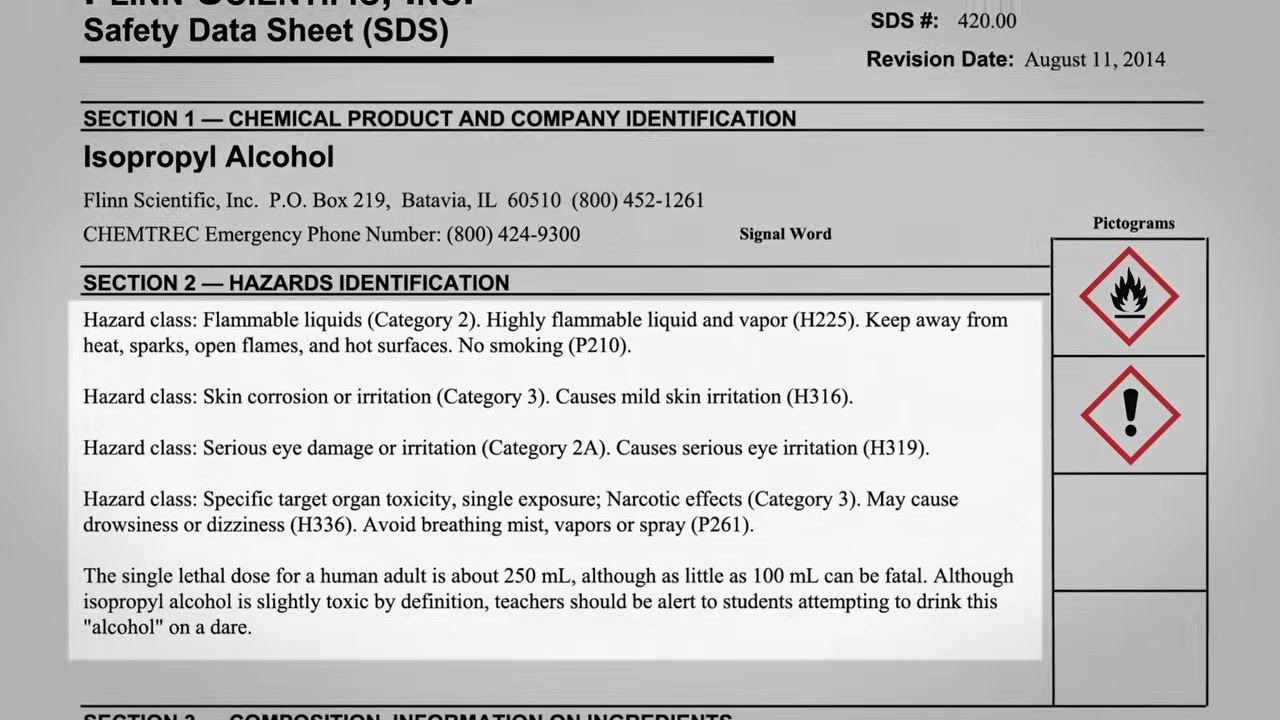
Confirm what each pictogram means by reading the accompanying hazard text. For isopropyl alcohol, the flame pictogram is paired with the statement "Isopropyl alcohol will burn," and the exclamation mark pictogram is paired with "Other potential hazards."
Review the principal hazards in detail
Read through each hazard statement listed for the chemical. For isopropyl alcohol, this includes: highly flammable liquid and vapor (H225, keep away from heat, sparks, open flames, and hot surfaces, no smoking — P210); mild skin irritation (H316); serious eye irritation (H319); and drowsiness or dizziness (H336, avoid breathing mist, vapors, or spray — P261).
Safety note: Ingestion of isopropyl alcohol can be fatal. Do not confuse it with ethanol.
Check the hazard category ratings
Review the specific hazard categories assigned to the chemical. For isopropyl alcohol: Flammable Liquid Category 2; Skin Corrosion/Irritation Category 3 (mild irritation); Serious Eye Damage/Irritation Category 2A; and Specific Target Organ Toxicity (Single Exposure) Category 3 (drowsiness or dizziness). These categories may be highlighted on the SDS for emphasis.
Safety note: The single lethal dose for a human adult is approximately 250 mL, with as little as 100 mL potentially fatal. Isopropyl alcohol is classified as slightly toxic. Supervisors should remain alert to the risk of anyone attempting to drink it.
Locate composition information (Section 3)
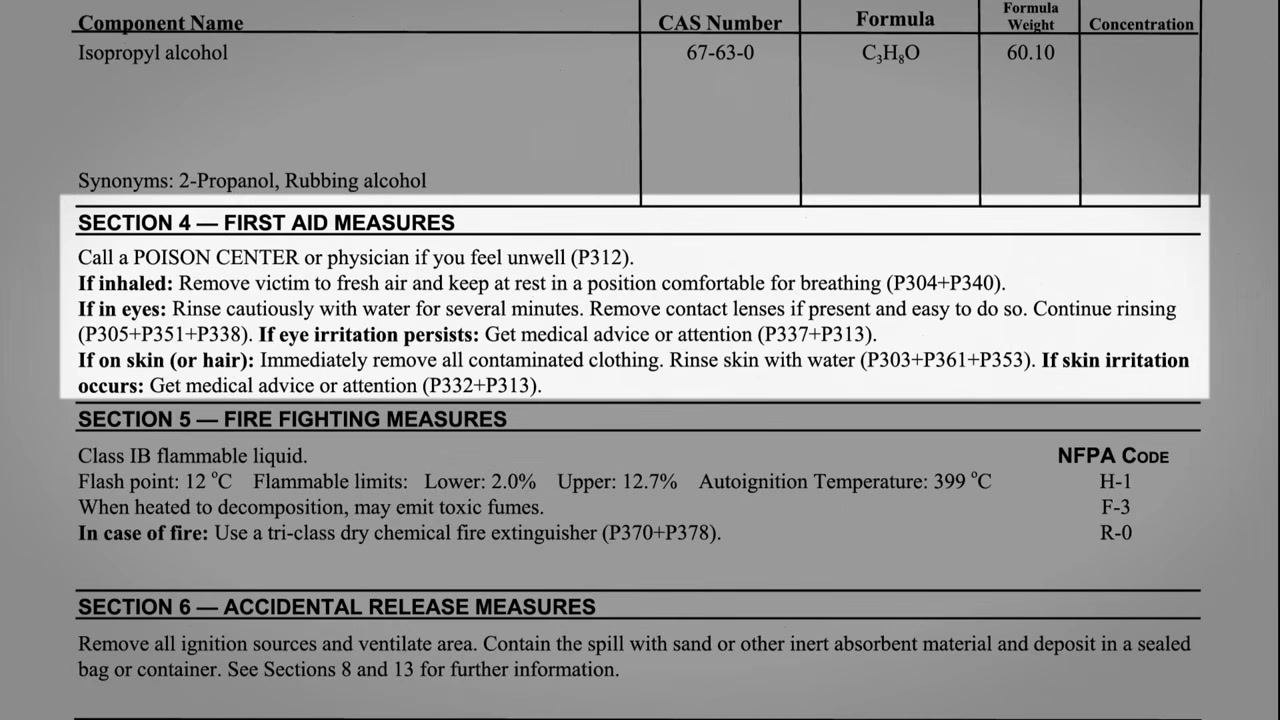
Check Section 3 for the chemical formula, CAS number, molecular weight, and synonyms. For isopropyl alcohol: Component Name — Isopropyl alcohol; CAS Number — 67-63-0; Formula — C₃H₈O; Formula Weight — 60.10; Synonyms — 2-Propanol, Rubbing alcohol.
Follow first aid measures (Section 4)
Locate the first aid instructions for each exposure route:
- If inhaled: Remove the person to fresh air and keep at rest in a comfortable position for breathing (P304+P340).
- If in eyes: Rinse cautiously with water for several minutes. Remove contact lenses if present and easy to do so, then continue rinsing. Seek medical advice if irritation persists (P305+P351+P338, P337+P313).
- If on skin or hair: Immediately remove contaminated clothing and rinse skin with water (P303+P361+P353). Seek medical advice if irritation occurs (P332+P313).
- If feeling unwell: Call a poison center or physician (P312).
Safety note: These first aid measures are written as standard precautionary statements and reinforce familiar laboratory safety practices, such as using an eye wash station or safety shower when needed.
Follow handling and storage guidance (Section 7)
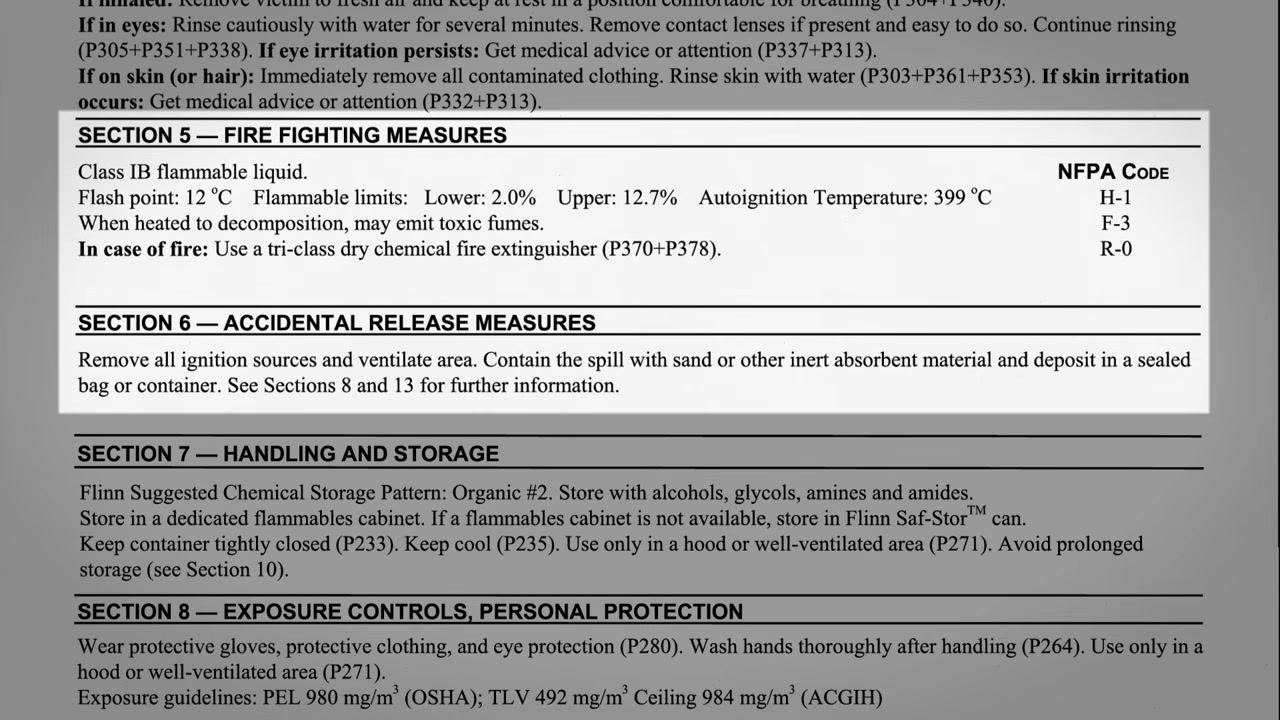
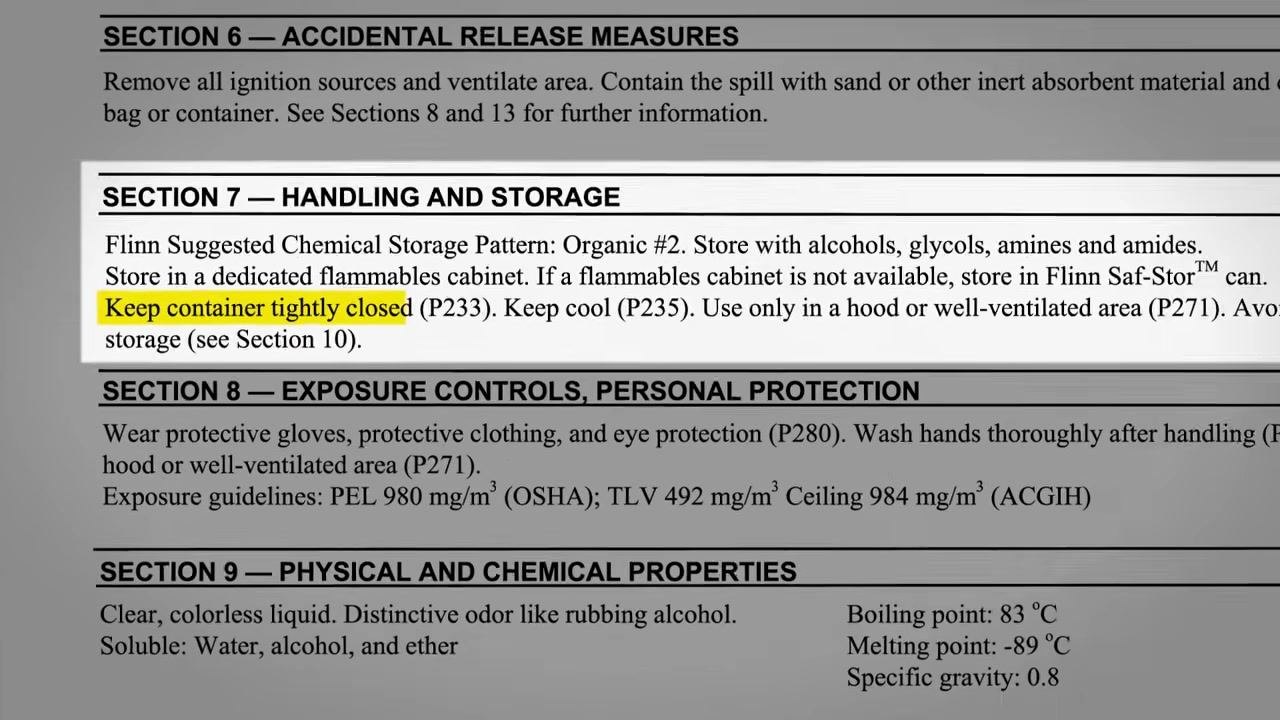
Locate Section 7 and store the chemical according to the guidance provided. For isopropyl alcohol: store following the Flinn Suggested Chemical Storage Pattern Organic #2, with compatible chemicals such as alcohols, glycols, amines, and amides. Place the container in a dedicated flammables cabinet, or use a Flinn Saf-Stor™ can if one is unavailable. Keep the container tightly closed (P233) and keep it cool (P235). Use only in a hood or well-ventilated area (P271), and avoid prolonged storage.
Apply exposure controls and PPE (Section 8)
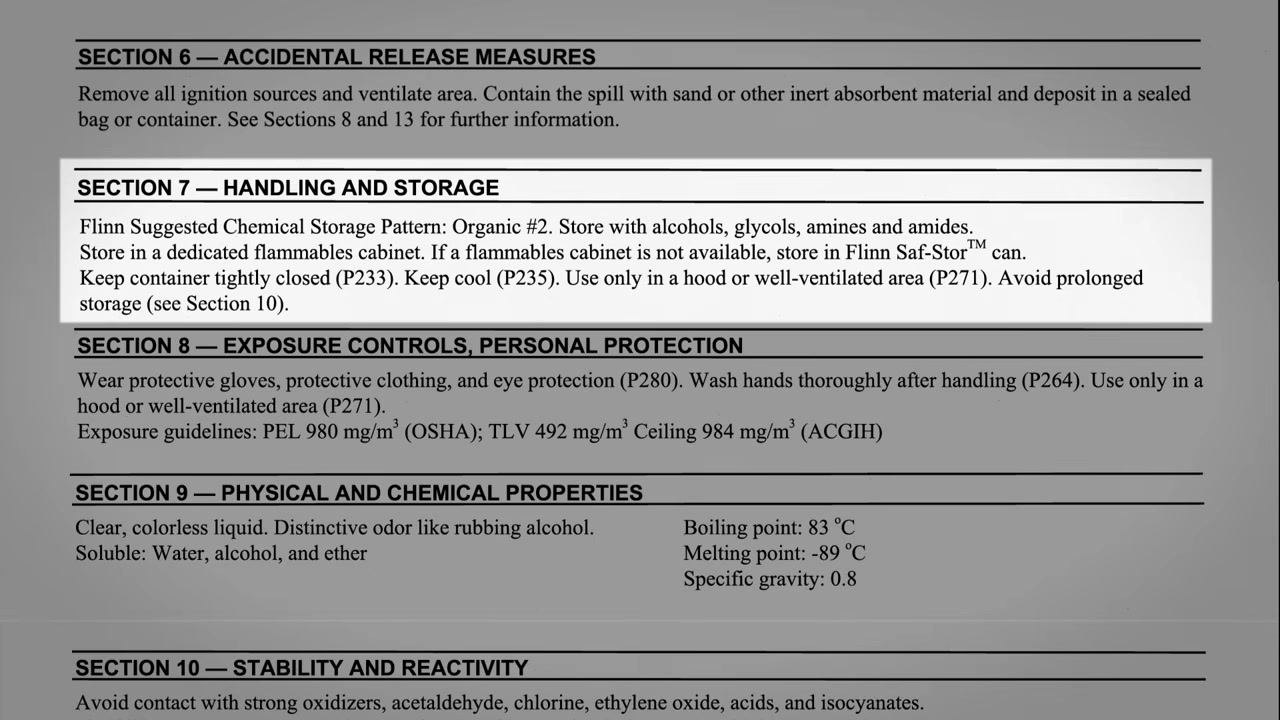
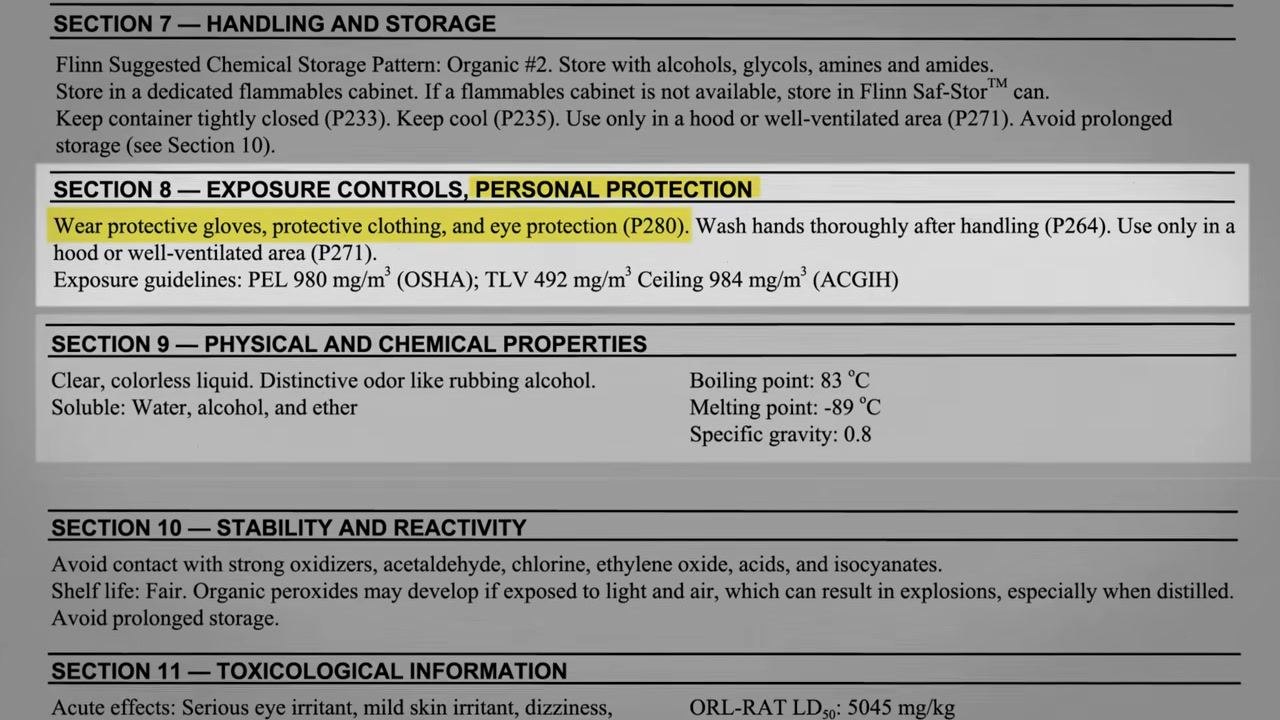
Locate Section 8 for personal protection requirements. Wear protective gloves, protective clothing, and eye protection (P280). Wash hands thoroughly after handling (P264), and use only in a hood or well-ventilated area (P271). For isopropyl alcohol, exposure limits are: PEL 980 mg/m³ (OSHA), TLV 492 mg/m³, and Ceiling 984 mg/m³ (ACGIH).
Reference physical and chemical properties (Section 9)
Check Section 9 for physical properties useful for lab reports or presentations. For isopropyl alcohol: appearance is a clear, colorless liquid; odor is distinctive, like rubbing alcohol; solubility is water, alcohol, and ether; boiling point is 83°C; melting point is -89°C; specific gravity is 0.8.
Review stability and reactivity information (Section 10)
Check Section 10 to identify incompatible substances. Avoid contact with strong oxidizers, acetaldehyde, chlorine, ethylene oxide, acids, and isocyanates. Note that shelf life is fair, and organic peroxides may develop if the chemical is exposed to light and air, which can result in explosions, particularly during distillation. Avoid prolonged storage.
Interpret toxicological information (Section 11)
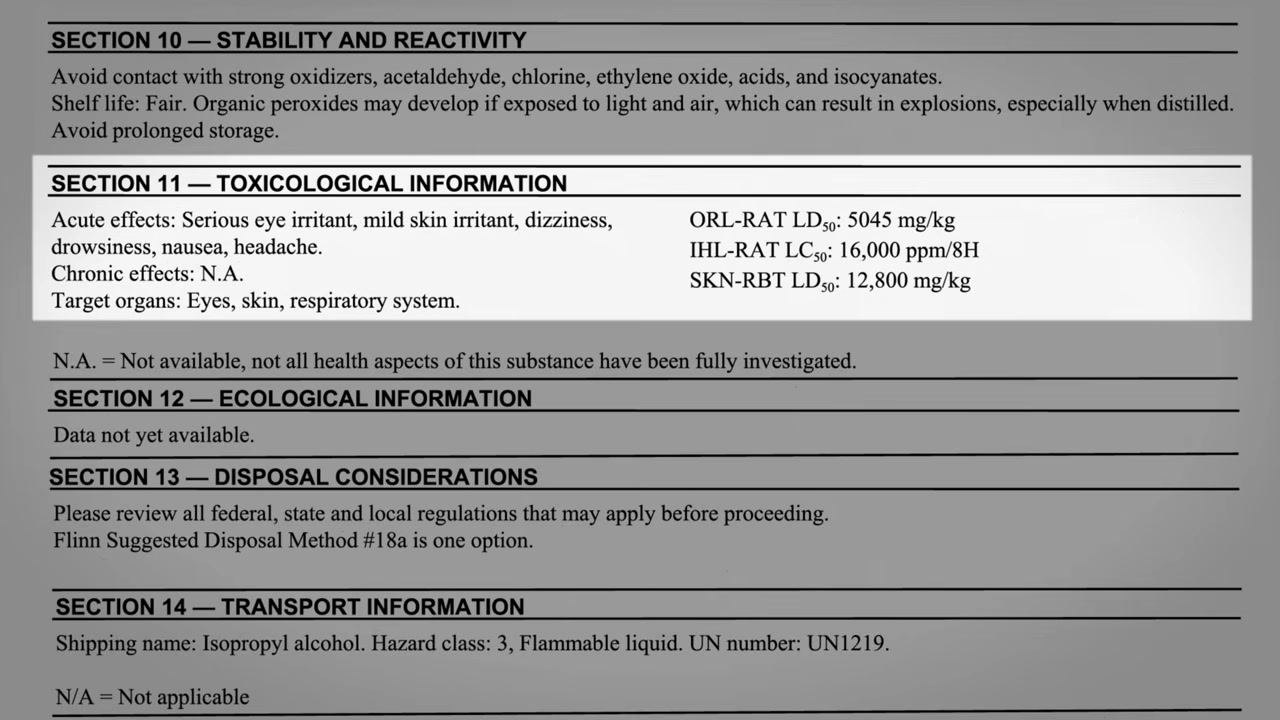
Check Section 11 for acute and chronic health effects. For isopropyl alcohol, acute effects include serious eye irritation, mild skin irritation, dizziness, drowsiness, nausea, and headache; chronic effects are listed as Not Available (N.A.). Target organs are the eyes, skin, and respiratory system. Key toxicity values include ORL-RAT LD₅₀ of 5045 mg/kg (oral, rat), IHL-RAT LC₅₀ of 16,000 ppm/8H (inhalation, rat), and SKN-RBT LD₅₀ of 12,800 mg/kg (skin, rabbit).
Safety note: N.A. means not all health aspects of the substance have been fully investigated — it does not mean the substance is safe.
Check ecological and disposal information (Sections 12–13)
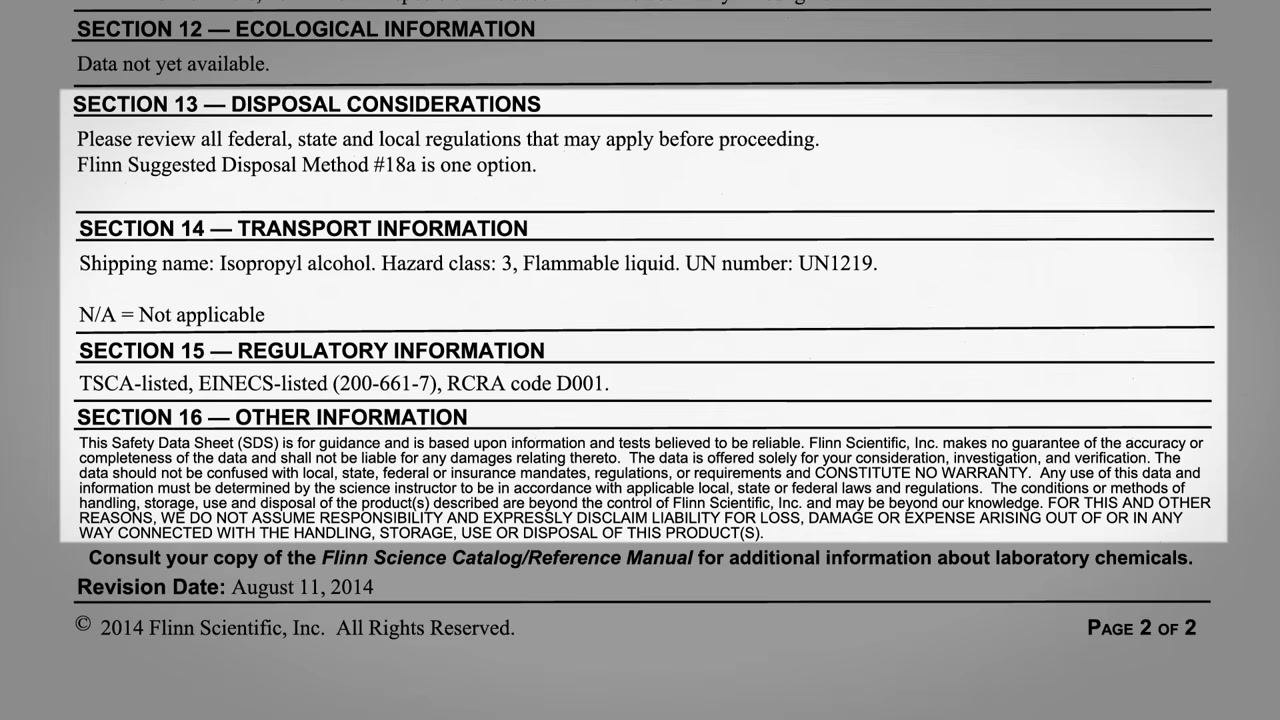
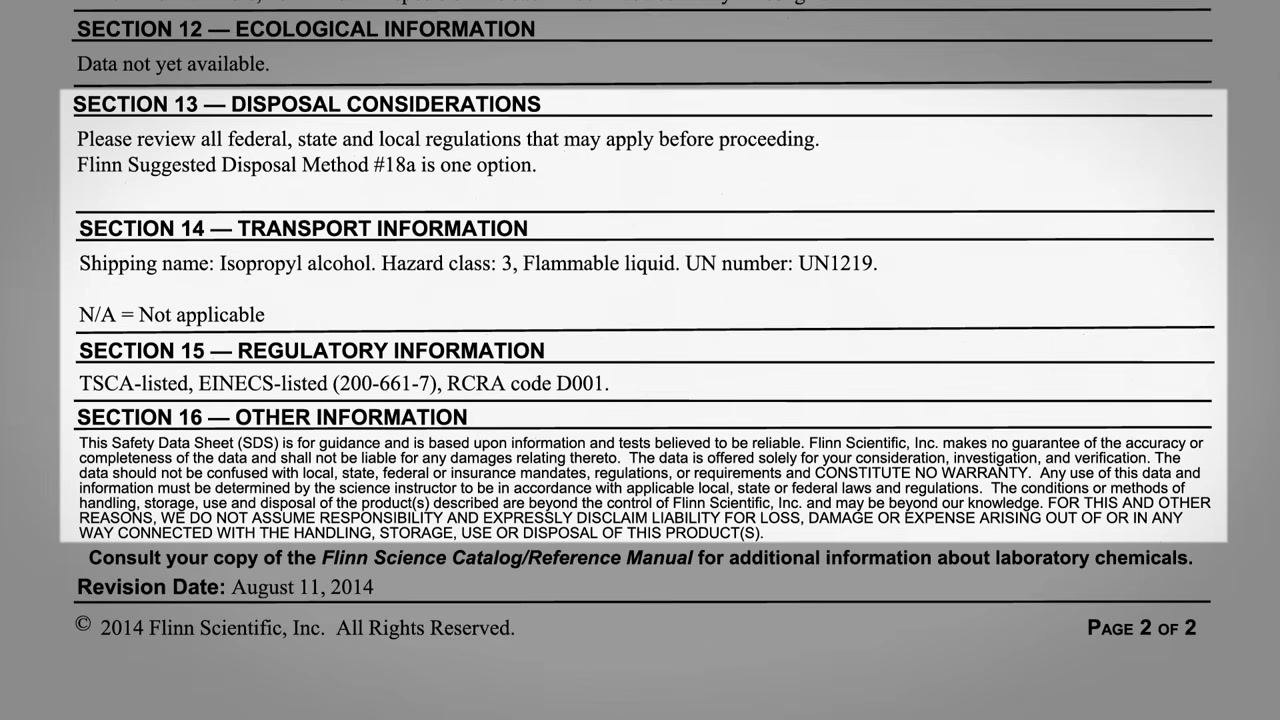
Review Section 12, Ecological Information — for isopropyl alcohol, environmental effects data is not yet available. Review Section 13, Disposal Considerations, and check all federal, state, and local regulations before disposal. Flinn Suggested Disposal Method #18a is one option for isopropyl alcohol.
Review transport and regulatory information (Sections 14–16)
Check Section 14, Transport Information, for the shipping name, hazard class, and UN number. For isopropyl alcohol: shipping name is Isopropyl alcohol; hazard class is 3 (Flammable liquid); UN number is UN1219. Check Section 15, Regulatory Information — isopropyl alcohol is TSCA-listed, EINECS-listed (200-661-7), with RCRA code D001. Check Section 16, Other Information, which notes that the SDS is for guidance and based on reliable information and tests, that the manufacturer does not guarantee accuracy or completeness, and lists the revision date (August 11, 2014 for this example).
Confirm required PPE and equipment before handling
Before starting work, confirm that lab coat, safety goggles, and other required PPE are in place, and that the relevant equipment for the task is ready. In a typical isopropyl alcohol setup, this includes an Erlenmeyer flask, a graduated cylinder, a bottle of 99% isopropyl alcohol, and a hot plate.
Safety note: The SDS is an important document and is crucial to your safety in the lab.
Confirm your understanding of the SDS's purpose
Before finishing your review, confirm that you understand what the SDS is telling you: the properties of the chemical, its hazards, and how to protect yourself from those hazards.
Confirm the three ways hazards are identified
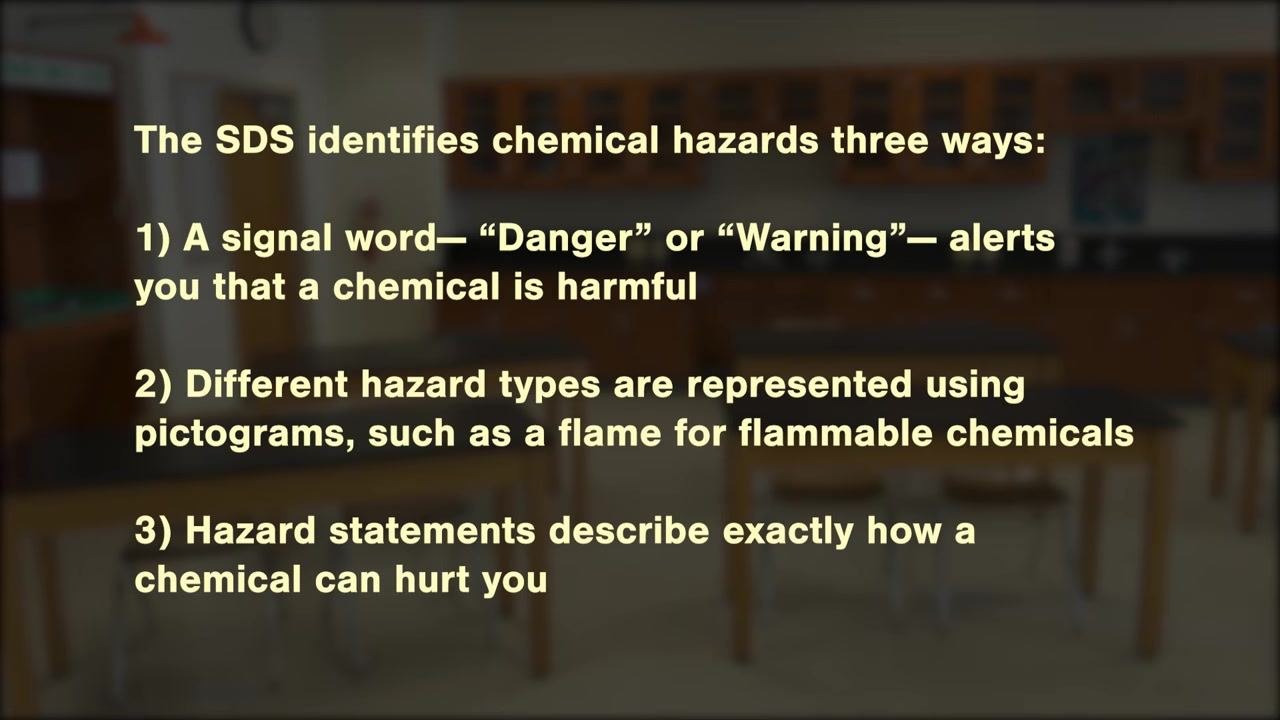
As a final check, confirm you can identify hazards using all three SDS methods: the signal word ("Danger" or "Warning") alerts you that a chemical is harmful; pictograms represent specific hazard types, such as a flame for flammable chemicals; and hazard statements describe exactly how the chemical can hurt you.
Verification and summary
Before working with any chemical, confirm that you have completed the following:
- Located the correct SDS matching the chemical name on your container
- Identified the manufacturer, emergency contact, signal word, pictograms, and hazard statements
- Reviewed the chemical composition, first aid measures, and toxicological information
- Applied the required PPE and handling, storage, and exposure control guidance
- Confirmed the transport, regulatory, and disposal requirements
Always consult the SDS before working with any chemical, and follow all disposal, transport, and regulatory guidelines as specified. Understanding how to read a Safety Data Sheet ensures you recognize chemical hazards and can protect yourself and others in the laboratory.



Generation details: cost, quality tiers
Docsie billed 3,500 credits ($2.45) to analyze this 7-minute video at standard quality. The rewrite, template fill and Word/PDF exports were included. The same video at each quality tier:
| Quality | Frames sampled | Credits | Approx. cost |
|---|---|---|---|
| Draft | every 16-30 s | 1,750 | $1.22 |
| Standard (this guide) | every 8-15 s | 3,500 | $2.45 |
| Detailed | every 4-7 s | 7,000 | $4.90 |
| Ultra | every 1-3 s | 14,000 | $9.80 |
Credits priced at $0.70 per 1,000; plans include a monthly allowance. Enterprise customers on on-premise or bring-your-own-model deployments run this on their own inference and pay no per-video credits.
Generated by Docsie Video-to-Docs on 2026-09-09 from a 6-minute video. Screenshots are frames from the source video and belong to their creator, American Chemical Society, whose original is embedded above. If you own this video and want the guide removed or credited differently, contact us and we will act within one business day.