
How to Perform a Lockout Tagout Procedure
This document describes the six-step lockout tagout (LOTO) process used to safely de-energize, isolate, and re-energize machinery or equipment before servicing or maintenance. Following these steps ensures that hazardous energy sources — electrical, gravitational, mechanical, or stored — are properly controlled to protect all personnel working on or near the equipment.
Video: The Six Steps of a Lockout Tagout Procedure by XO Safety (2019). All credit for the demonstration goes to the creator; watch the original on YouTube. The written guide below was generated from this video by Docsie. Creator? Request a change or removal.
Purpose
This document describes the six-step lockout tagout (LOTO) process used to safely de-energize, isolate, and re-energize machinery or equipment before servicing or maintenance. Following these steps ensures that hazardous energy sources — electrical, gravitational, mechanical, or stored — are properly controlled to protect all personnel working on or near the equipment.
Scope
This procedure applies to any machine or piece of equipment that must be shut down, isolated, and locked out before service or maintenance work begins. While specific equipment and hazards may vary, every LOTO operation follows the same six essential steps, from initial preparation through final re-energization.
Required equipment and PPE
Based on the equipment and personnel shown throughout this procedure, the following items are typically involved:
- Safety gear (as required for the specific work area)
- Hard hat
- Gloves
- Safety glasses
- Lab coat or apron (where applicable)
- Lockout devices and padlocks
- Facility-specific LOTO documentation and equipment manuals
- Clipboard for inspection records
Step-by-step procedure
Step 1: Preparation for shutdown
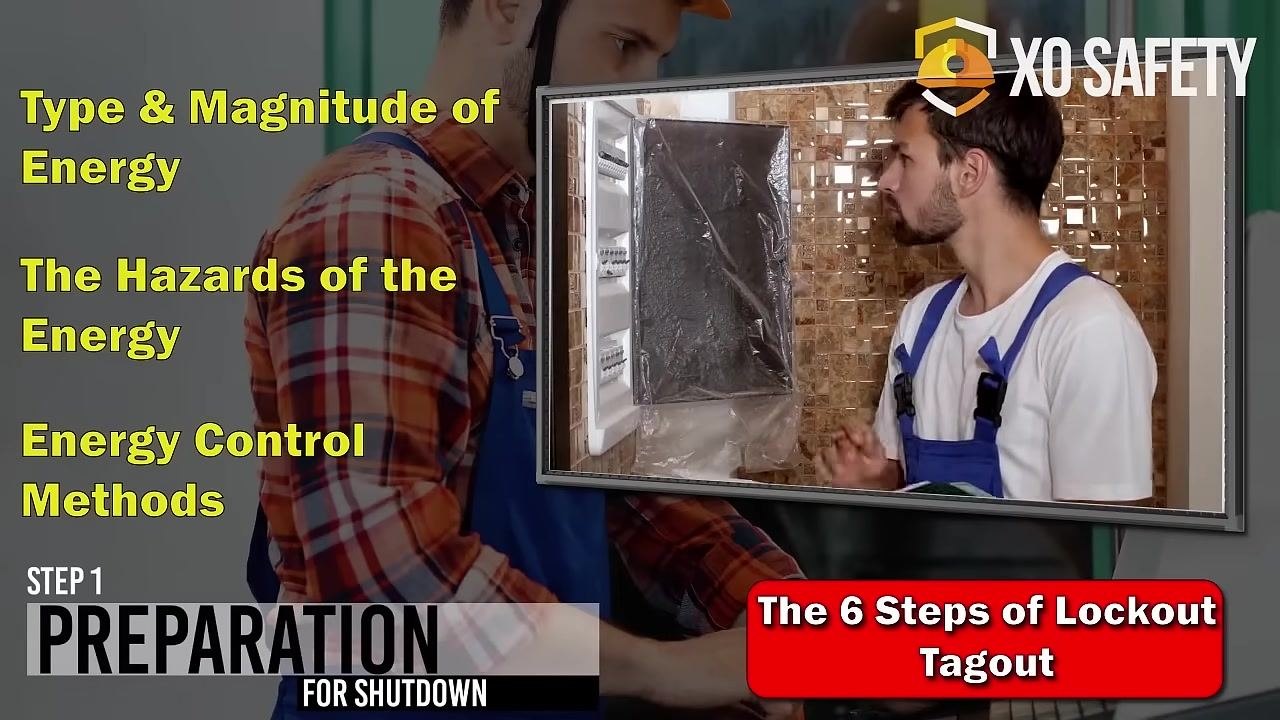
- Gather information on the machine or equipment.
- Identify the specific machine or equipment to be serviced.
- Collect all relevant documentation, such as manuals or procedures.
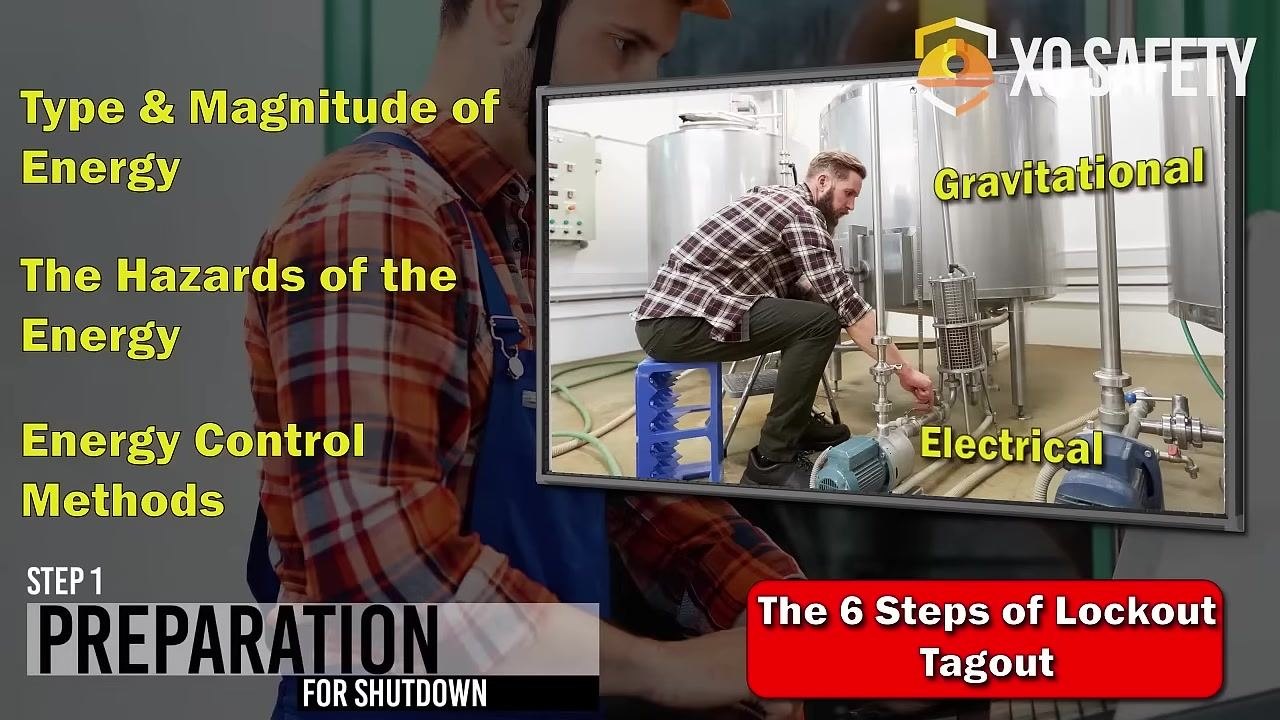
- Determine the type and magnitude of hazardous energy present (for example, electrical or gravitational energy).
- Example: For a pump motor, identify electrical energy and gravitational energy from stored fluid in a fermenting tank.
-
Assess energy hazards and control methods.
- Identify the type and magnitude of energy involved (electrical, gravitational, etc.).
- Identify the hazards associated with each energy type.
- Identify the methods available for controlling each energy source.
-
Locate and evaluate energy sources.
- Physically inspect the equipment to confirm all energy sources, such as electrical panels and fluid tanks.
- Example: Identify both gravitational and electrical hazards in a pump system.
Step 2: Shutdown of equipment
- Shut down the equipment according to procedure.
- Follow the manufacturer's or facility's shutdown procedure for the specific equipment.
- Ensure the shutdown is orderly and controlled to prevent additional hazards.
Step 3: Isolation of equipment
- Isolate all hazardous energy sources.
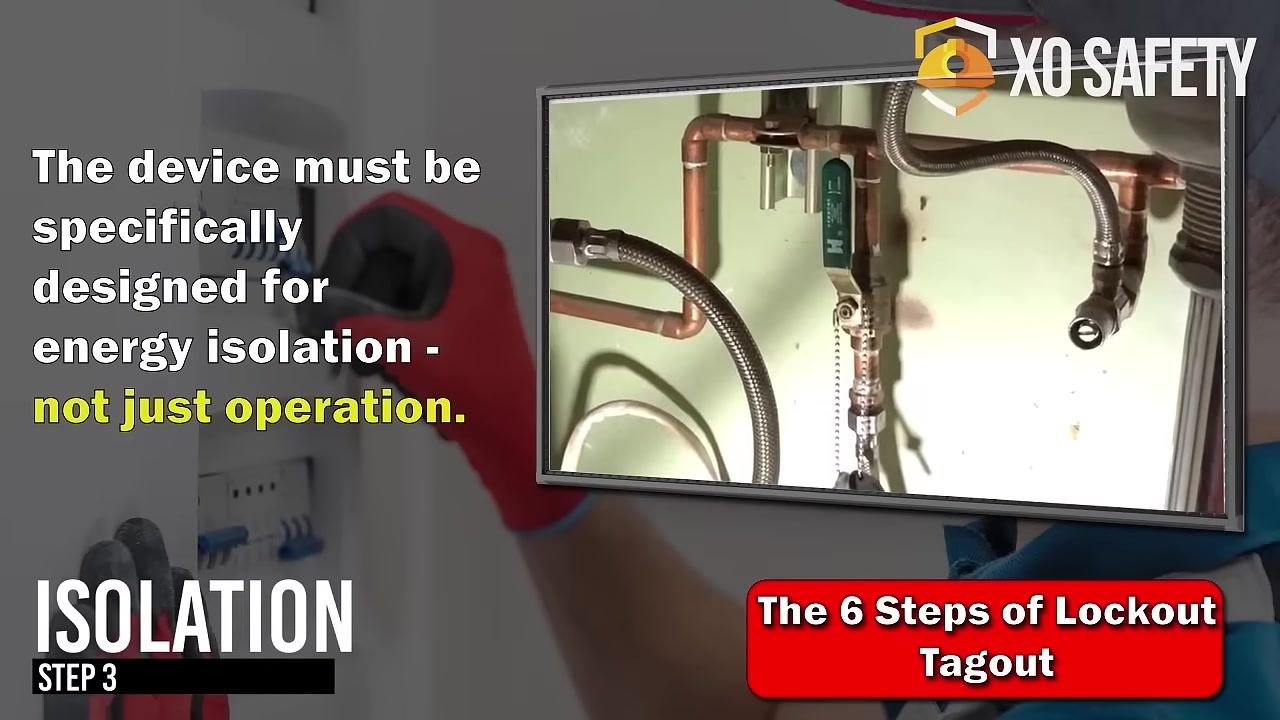
- Operate energy isolating devices, such as circuit breakers or valves, to eliminate hazardous energy.
- Confirm that the device used is specifically designed for energy isolation, not merely for normal operation.
Step 4: Application of lockout tagout devices
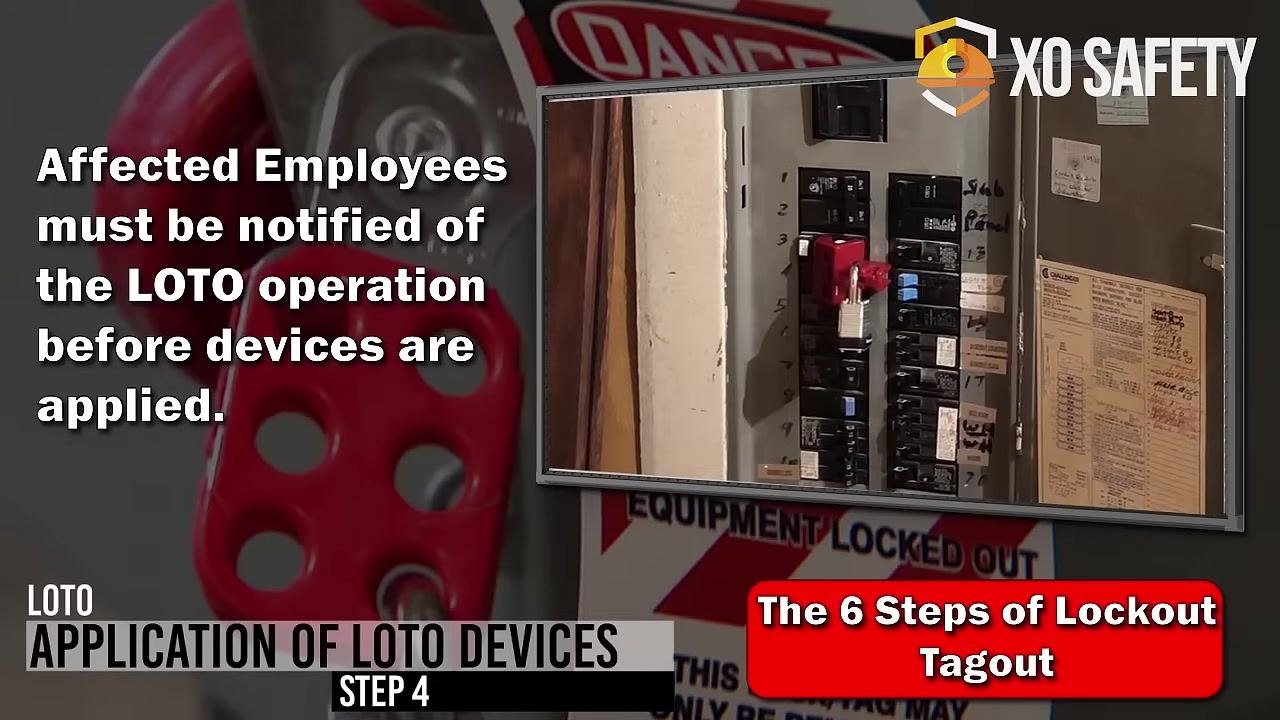
- Notify affected employees.
- Inform all affected employees that LOTO devices will be applied to the equipment.
- Notification must occur before the devices are applied.
- Apply lockout tagout devices.
- Attach lockout devices to energy isolating devices to hold them in the safe or off position.
- Ensure devices are secure and cannot be removed without proper authorization.
Step 5: Removal of stored energy
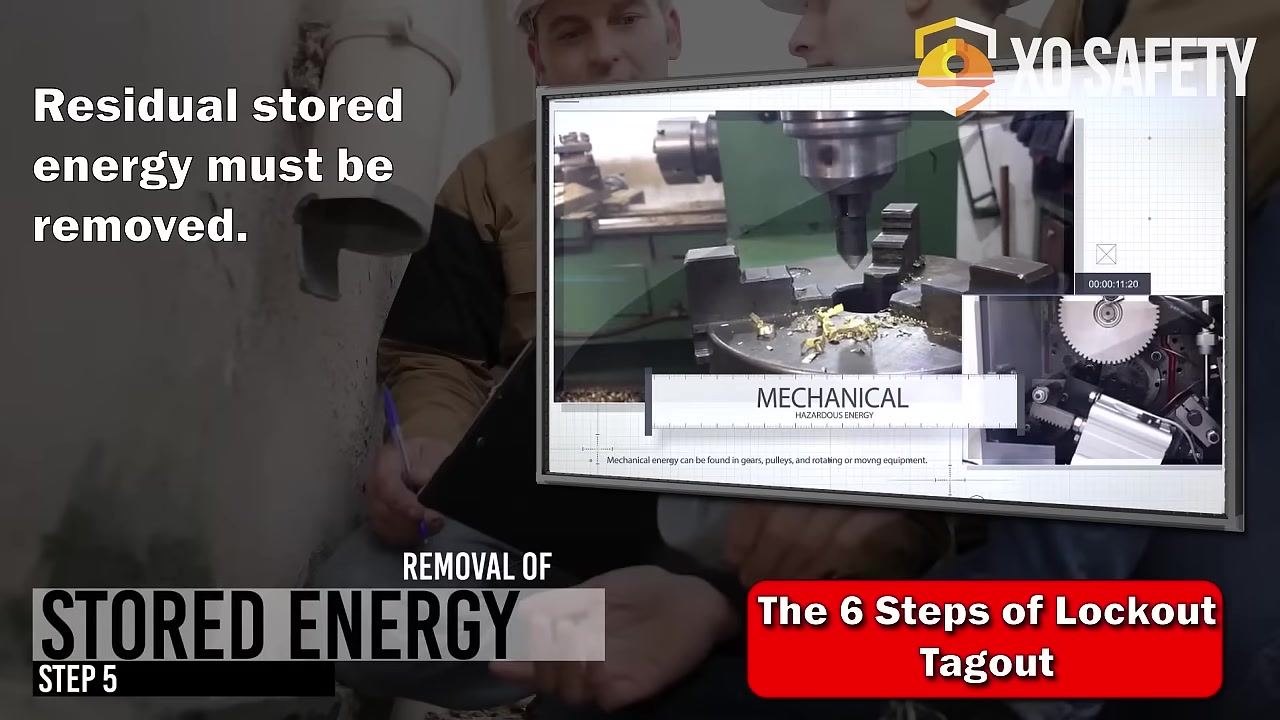
- Remove residual or stored energy.
- After isolation and application of LOTO devices, eliminate any residual or stored energy in the system.
- Common sources include capacitors, batteries, coils, hydraulic accumulators, and fluid piping systems.
- Mechanical energy sources, such as gears, pulleys, and rotating equipment, must also be addressed.
- Identify stored energy in the system.
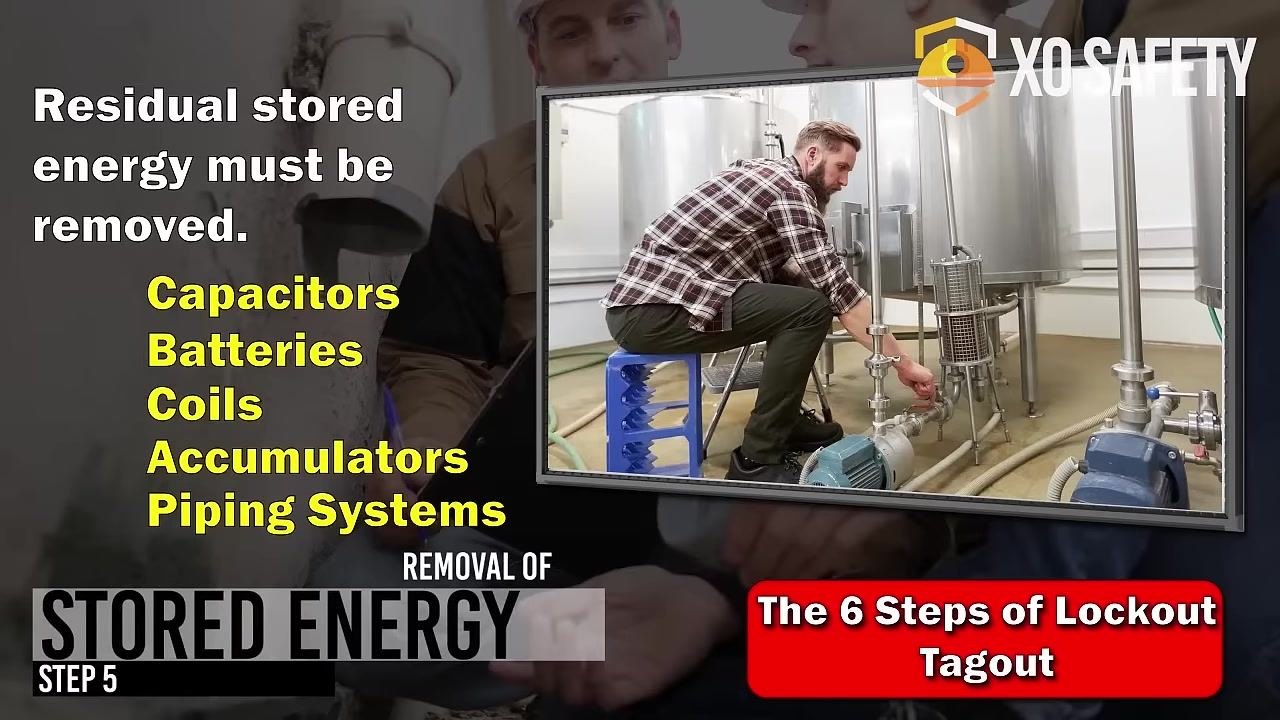
- Recognize that fluid in the piping downstream of the isolation valve may contain hazardous stored energy.
- Common sources of stored energy include capacitors, batteries, coils, accumulators, and piping systems.
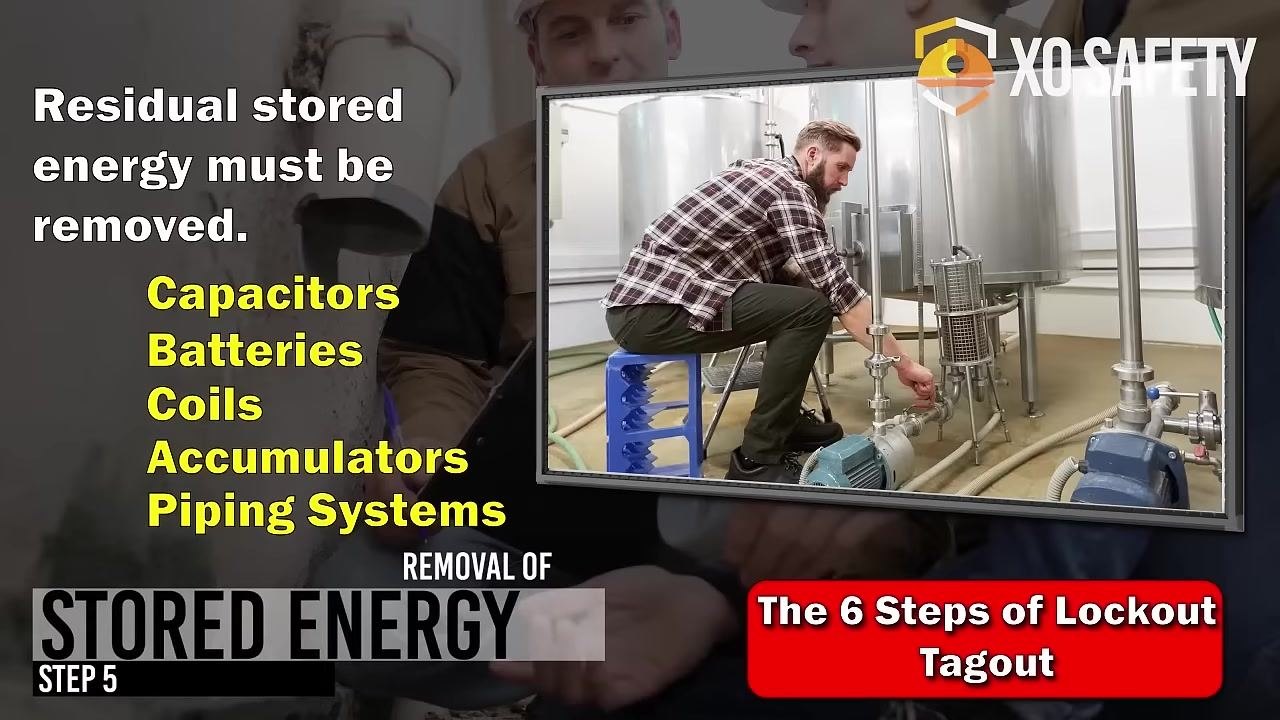
- Eliminate stored energy.
- Open a downstream valve to drain the piping system and safely release any residual energy.
- Ensure all stored energy is fully removed before proceeding.
- Verify complete drainage.
- Visually confirm that the piping system has been drained by checking the appropriate drain or sump.
Step 6: Verification of isolation
-
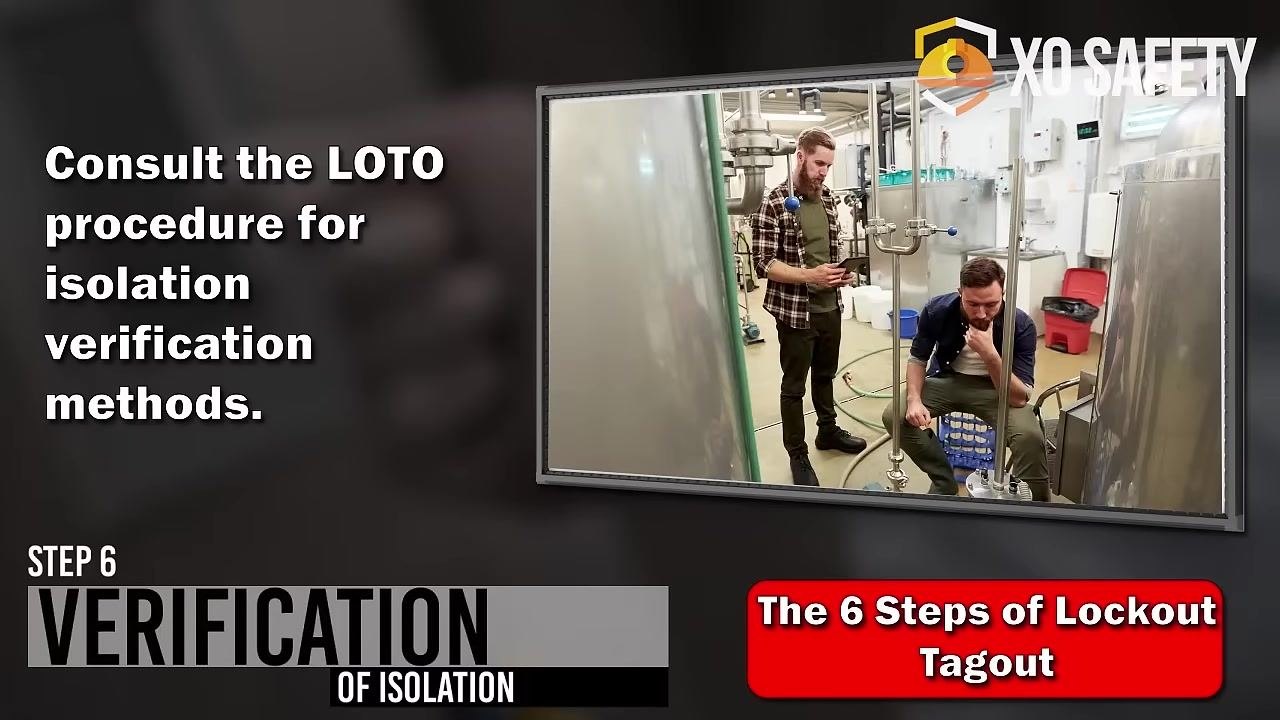
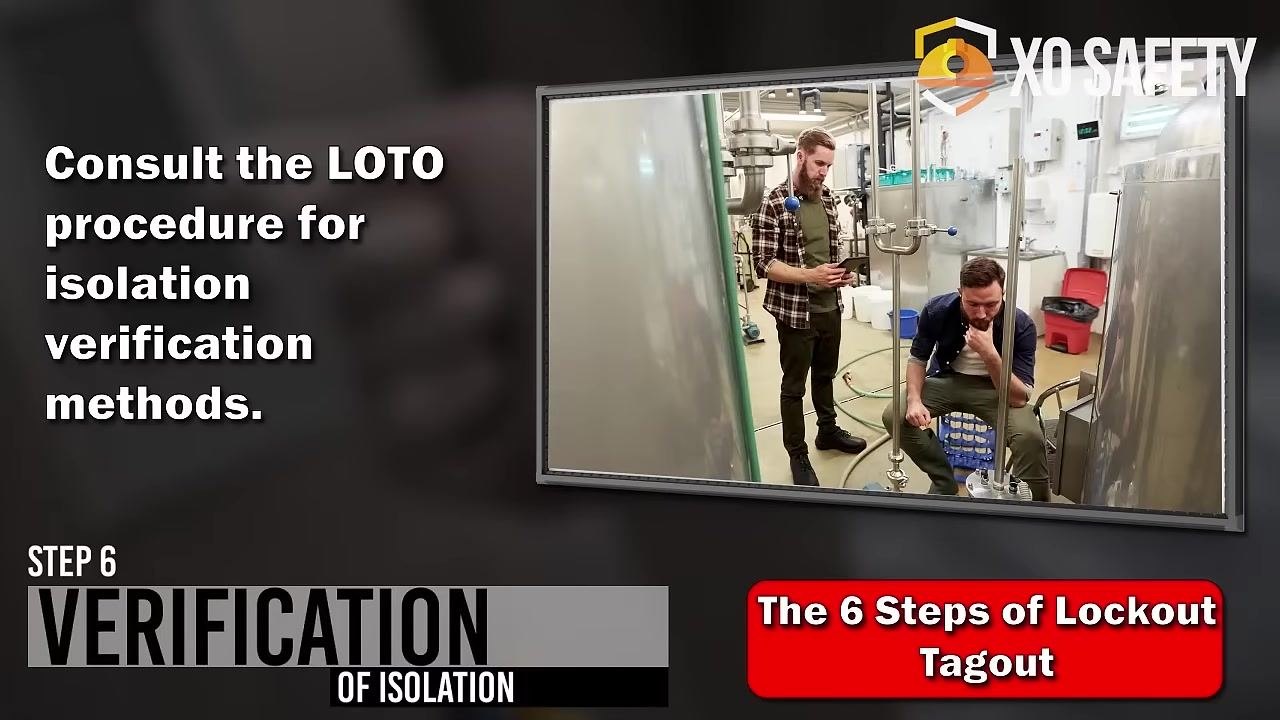
Verify isolation before starting work.
- The authorized employee must confirm that all hazardous energy sources are isolated before beginning maintenance or service.
- The most common verification method is attempting to start the equipment using the normal control switch.
- In some cases, verification may require electrical readings or more complex analysis.
-
Use multiple verification methods if needed.
- Attempt to start the pump at the control switch.
- Check the system pressure gauge to ensure no pressure remains.
- Consult your facility's LOTO procedure for the specific verification methods required for your equipment.
Step 7: Release from lockout tagout
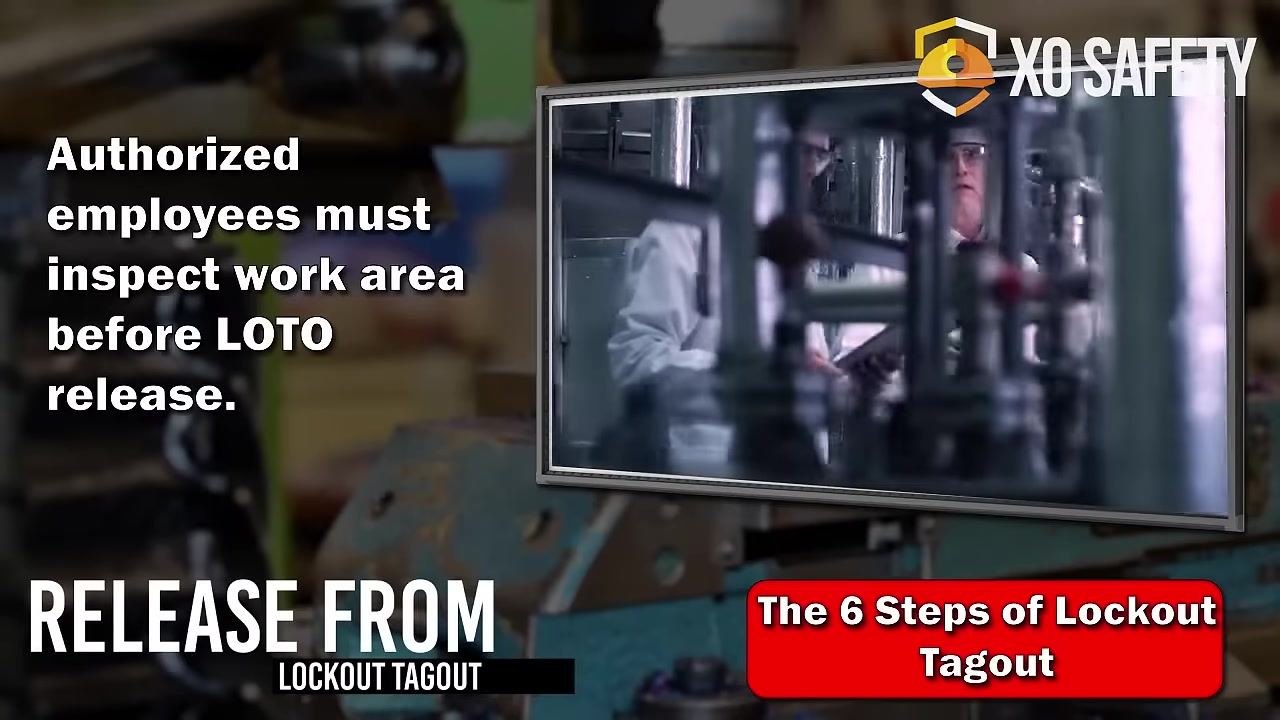
- Inspect the work area before release.
- When work is complete, inspect the work area to ensure all non-essential items have been removed and equipment components are intact.
- Only authorized employees should perform this inspection.
-
Ensure employee safety during release.
- Confirm that all employees are safely positioned or removed from the area before releasing lockout/tagout devices and re-energizing the equipment.
-
Notify affected employees of LOTO release.
- Before removing lockout or tagout devices and re-energizing equipment, notify all affected employees that the release is about to occur.
Re-energization
- Prepare for re-energization.
- Confirm that all previous steps have been completed:
- All tools and non-essential items have been removed from the work area.
- All equipment components are intact and properly reassembled.
- All employees are safely positioned or have left the area.
- All affected employees have been notified that re-energization will occur.

-
Remove lockout/tagout devices.
- Only authorized employees may remove lockout/tagout devices.
- Follow your facility's specific procedures for device removal.
-
Restore energy to the equipment.
- Use the appropriate controls or switches to restore power, pressure, or other energy sources to the equipment.
- Monitor the equipment for proper startup and operation.
-
Confirm safe operation.
- Observe the equipment to ensure it is functioning correctly and safely after re-energization.
- Be prepared to respond immediately to any abnormal conditions.
Verification and summary
By following these steps — removing stored energy, verifying isolation, inspecting the work area, notifying employees, and safely re-energizing equipment — you ensure a safe and compliant lockout tagout (LOTO) process before servicing or maintaining equipment. Always consult your facility's specific LOTO procedures for additional requirements, and prioritize safety by confirming the area is clear, all employees are informed, and equipment is monitored throughout startup.
Generation details: cost, quality tiers
Docsie billed 2,000 credits ($1.40) to analyze this 4-minute video at standard quality. The rewrite, template fill and Word/PDF exports were included. The same video at each quality tier:
| Quality | Frames sampled | Credits | Approx. cost |
|---|---|---|---|
| Draft | every 16-30 s | 1,000 | $0.70 |
| Standard (this guide) | every 8-15 s | 2,000 | $1.40 |
| Detailed | every 4-7 s | 4,000 | $2.80 |
| Ultra | every 1-3 s | 8,000 | $5.60 |
Credits priced at $0.70 per 1,000; plans include a monthly allowance. Enterprise customers on on-premise or bring-your-own-model deployments run this on their own inference and pay no per-video credits.
Generated by Docsie Video-to-Docs on 2026-09-08 from a 3-minute video. Screenshots are frames from the source video and belong to their creator, XO Safety, whose original is embedded above. If you own this video and want the guide removed or credited differently, contact us and we will act within one business day.