
How to Use a Pulse Oximeter
This standard operating procedure explains how to use a pulse oximeter to monitor your blood oxygen level and heart rate at home. Your health professional may give you a pulse oximeter, along with a paper diary or smartphone app, to help track your recovery from COVID-19. For most people, COVID-19 is a mild illness, but it can become serious quickly, so close monitoring matters. Following these steps correctly ensures your readings are accurate and helps your health professional respond quickly if your condition changes.
Video: How to use a pulse oximeter at home l NHS by NHS (2021). All credit for the demonstration goes to the creator; watch the original on YouTube. The written guide below was generated from this video by Docsie. Creator? Request a change or removal.
This standard operating procedure explains how to use a pulse oximeter to monitor your blood oxygen level and heart rate at home. Your health professional may give you a pulse oximeter, along with a paper diary or smartphone app, to help track your recovery from COVID-19. For most people, COVID-19 is a mild illness, but it can become serious quickly, so close monitoring matters. Following these steps correctly ensures your readings are accurate and helps your health professional respond quickly if your condition changes.
Purpose
This procedure describes how to take accurate pulse oximeter readings, record them correctly, and recognize when to seek medical help based on those readings.
Scope
This procedure applies to individuals recovering from COVID-19 at home, or to carers taking readings on behalf of someone else, who have been provided with a pulse oximeter by a health professional.
Required equipment
- A pulse oximeter provided by your health professional
- A paper diary or smartphone app for recording readings (instructions provided with your device)
- A thermometer, if available, for recording temperature
- An alarm clock or reminder tool to help you take readings on schedule

Why accurate monitoring matters
Low oxygen levels can cause shortness of breath, a rapid breathing rate, and confusion. In COVID-19, however, some people do not show these symptoms even when their oxygen level drops, making it hard to notice changes without a pulse oximeter. If your oxygen level drops, you can become unwell very quickly. When the pulse oximeter shows a significant change, your health professional can review your situation quickly and adjust your care as needed.

Pulse oximeters may look slightly different depending on the model, but all of them provide the same two readings: your oxygen level and your heart rate. Always follow the instructions provided with your specific device.
Prepare your hand before measuring
Remove any nail polish or false nails from the finger you plan to use, since these can affect the reading. If your hands are cold, warm them first to help ensure an accurate result.
Rest before taking a reading
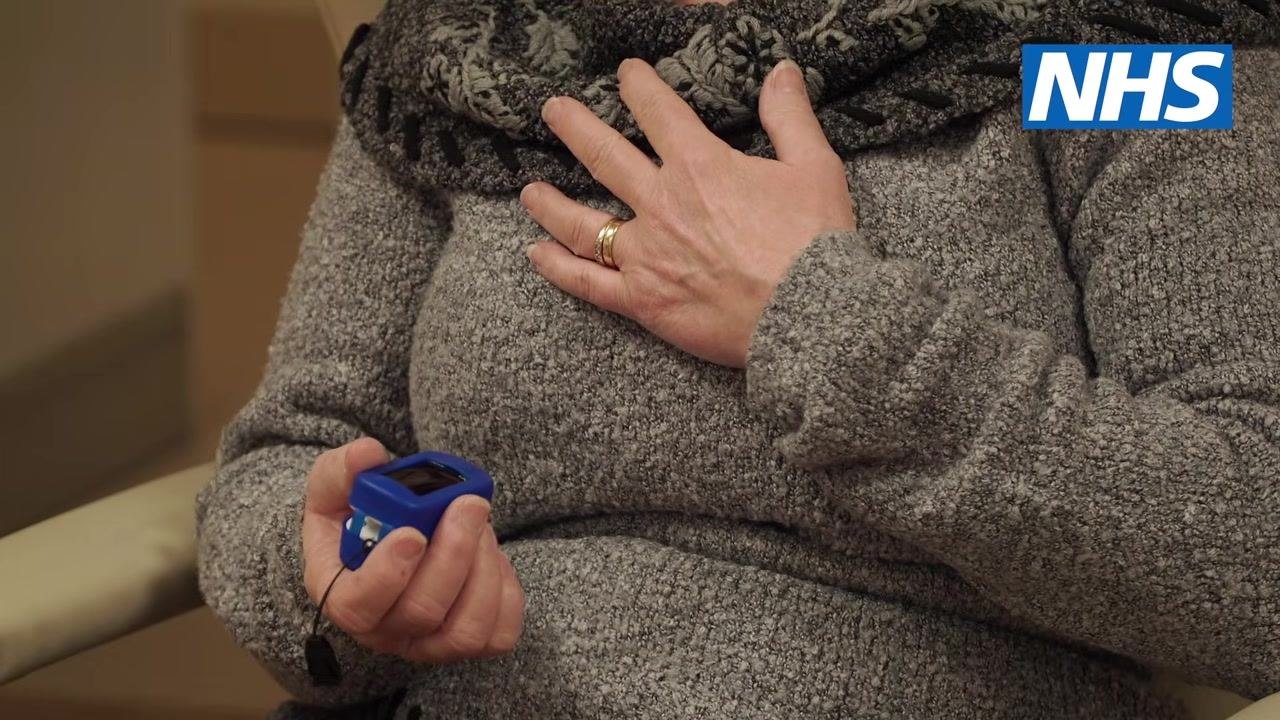
Make sure you have been resting for at least 5 minutes before you take your measurement. This allows your body to settle so the reading reflects your normal condition.
Position yourself and attach the device
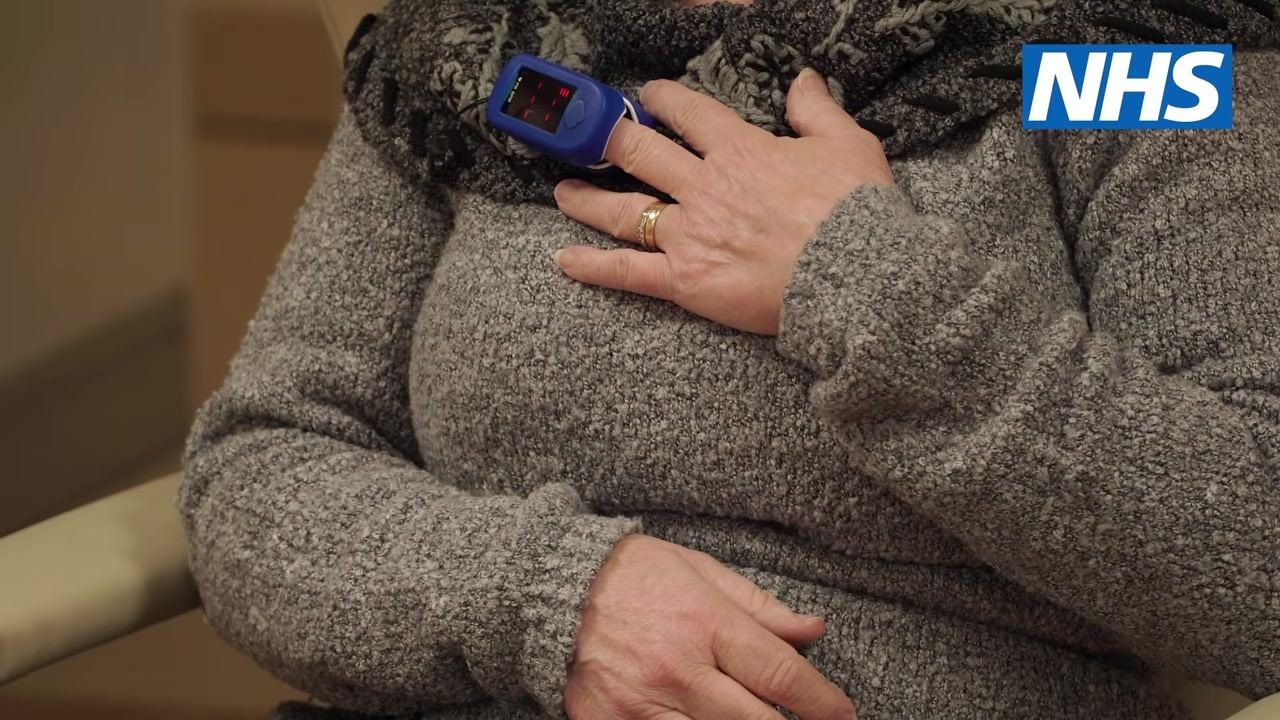
Sit down and rest your hand on your chest at heart level, then hold still during the measurement. Switch the pulse oximeter on and place it on your middle or index finger of either hand. Do not use the device on your ear.
Read the two displayed values
You will see two readings on the screen: one for your oxygen level (SpO2) and one for your heart rate (pulse). Take care to identify which value is which before recording anything.
Wait for the reading to steady
The oxygen reading may take a moment to stabilize. Keep the pulse oximeter in place for at least one minute, and longer if the number keeps changing. Note any reading that stays the same for at least five seconds, and record the highest of these stable five-second readings.
Remove the pulse oximeter
Once you have recorded the highest stable reading, remove the device from your finger. Wait until the reading is steady before removing it to avoid capturing an inaccurate value.
Log your results
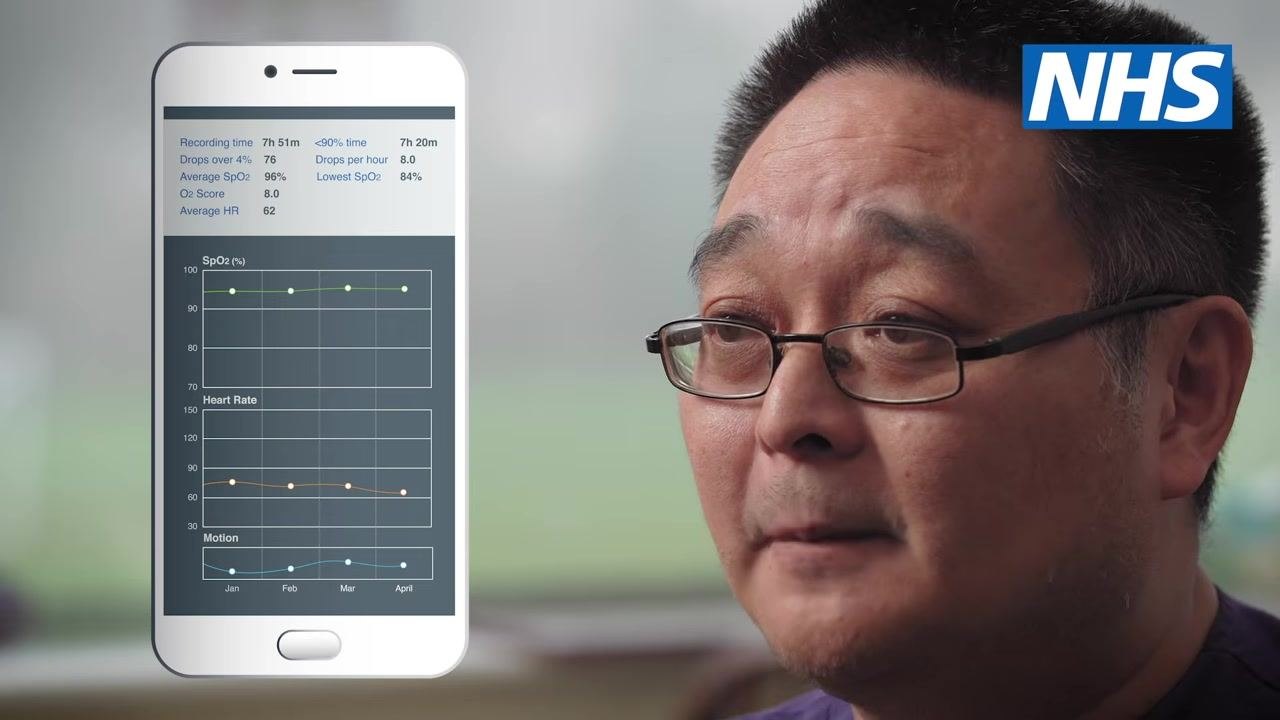
Record your results in the smartphone app or paper diary provided with your pulse oximeter, following the instructions included with your device. If you need assistance recording your results, contact your health professional.
Take readings on a consistent schedule
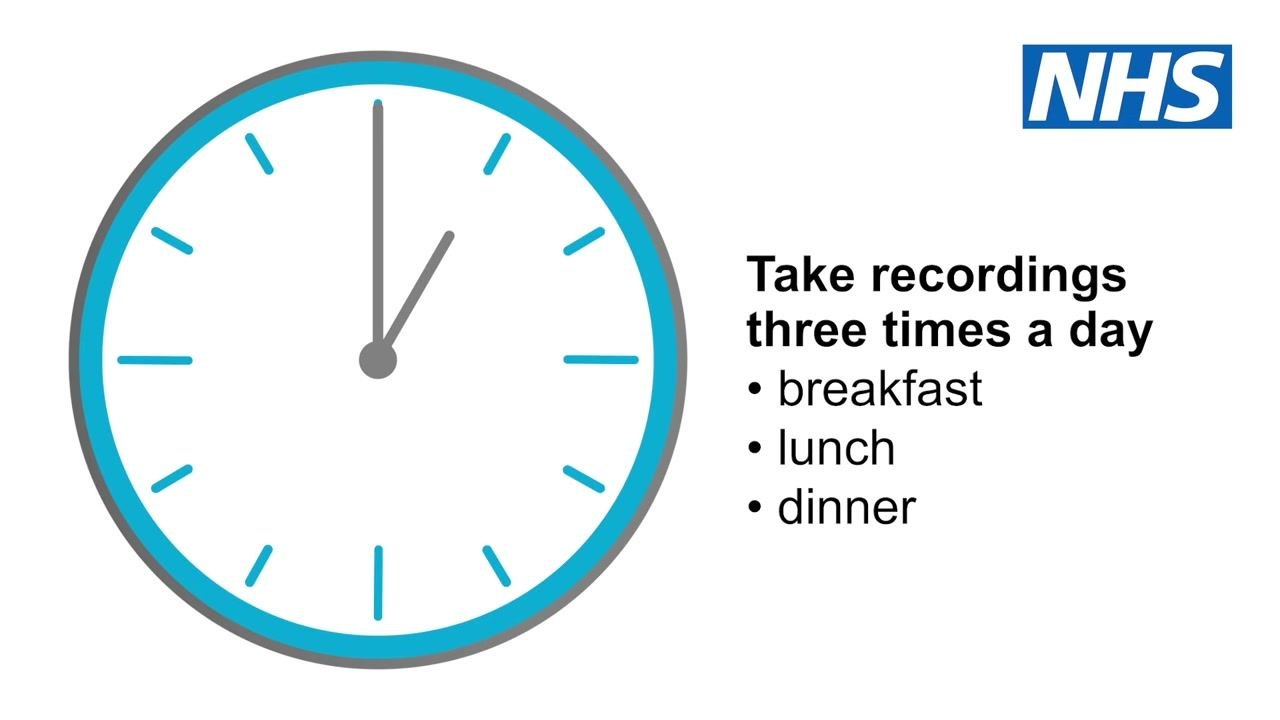
Take recordings three times a day at the same times each day, such as breakfast, lunch, and dinner. Set an alarm or reminder to help you remember. Take extra measurements at any time you feel there has been a change in your health.
Record all required information each time
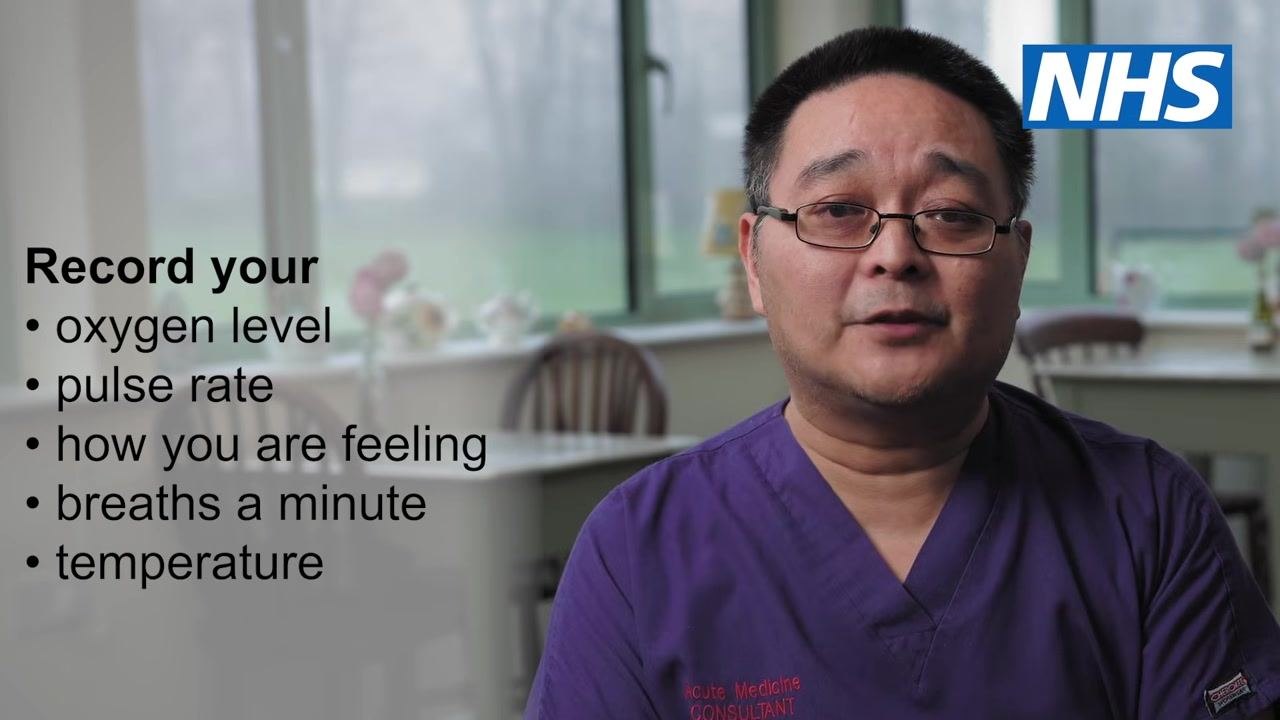
Each time you take a reading, record the following:
- Your oxygen level (SpO2)
- Your pulse rate (heart rate)
- How you are feeling
- Number of breaths per minute, if someone can count this for you
- Your temperature, if you have a thermometer
An ideal heart rate falls between 50 and 90 beats per minute.
Know when to contact a health professional
Contact NHS 111, your GP, or the COVID virtual ward as soon as possible if your blood oxygen level is 93% or 94%, or if it continues to be lower than your usual reading. Note that patients are not always placed on a virtual ward.
Safety note: Recognize serious symptoms
Take it seriously if you feel breathless or have difficulty breathing, especially when standing up or moving. Also watch for severe muscle aches or tiredness, shakes or shivers, and a general sense that something is wrong, such as unusual weakness. Additional warning signs include severe tiredness, loss of appetite, and urinating much less than normal.
Safety note: Emergency action
Go to your nearest Accident & Emergency (A&E) department or call 999 immediately if your blood oxygen level, as measured by your pulse oximeter, is 92% or less. Check your blood oxygen reading right away if you feel unwell.

Call 999 or attend A&E immediately if you develop any of the following general signs of serious illness:
- Coughing up blood
- Feeling cold and sweaty with pale or blotchy skin
- A rash that does not fade when you roll a glass over it
- Collapsing or fainting
- Becoming agitated, confused, or very drowsy
- Hardly passing any urine
Return your equipment when instructed
After 14 days, you may be asked to return the pulse oximeter to your GP as instructed.
Verification and summary
Confirm you have completed each part of the procedure correctly:
- You removed nail polish or false nails and warmed your hands before measuring.
- You rested for at least 5 minutes before taking a reading.
- You positioned the device on your middle or index finger, not your ear, with your hand at chest height.
- You waited for the reading to steady and recorded the highest value that held for five seconds.
- You logged SpO2, pulse rate, how you feel, breaths per minute, and temperature three times daily at consistent times.
- You know to contact your health professional if your oxygen level is 93–94% or lower than your usual reading, and to call 999 or go to A&E if it is 92% or below or if serious symptoms appear.
If you have been advised by a healthcare professional to start using a pulse oximeter, begin using it today. Do not delay starting your monitoring, since early detection of low blood oxygen is important for your safety. Follow all instructions provided with your device for accurate readings.
What's next
For more detailed guidance on using a pulse oximeter at home, or for additional health advice, visit www.nhs.uk/health-at-home. This website provides comprehensive resources on monitoring your health at home, including step-by-step instructions and frequently asked questions.
Generation details: cost, quality tiers
Docsie billed 3,500 credits ($2.45) to analyze this 7-minute video at standard quality. The rewrite, template fill and Word/PDF exports were included. The same video at each quality tier:
| Quality | Frames sampled | Credits | Approx. cost |
|---|---|---|---|
| Draft | every 16-30 s | 1,750 | $1.22 |
| Standard (this guide) | every 8-15 s | 3,500 | $2.45 |
| Detailed | every 4-7 s | 7,000 | $4.90 |
| Ultra | every 1-3 s | 14,000 | $9.80 |
Credits priced at $0.70 per 1,000; plans include a monthly allowance. Enterprise customers on on-premise or bring-your-own-model deployments run this on their own inference and pay no per-video credits.
Generated by Docsie Video-to-Docs on 2026-09-09 from a 6-minute video. Screenshots are frames from the source video and belong to their creator, NHS, whose original is embedded above. If you own this video and want the guide removed or credited differently, contact us and we will act within one business day.