
How to Transfer a Patient from Bed to Wheelchair
This procedure describes how to transfer a patient from bed to wheelchair safely using a transfer (gait) belt. It covers preparation of the client and environment, the standing transfer itself, and the final safety checks needed to protect both the client and the caregiver throughout the process.
Video: Transfers From Bed To Wheelchair Using Transfer Belt by whatcomcc (2017). All credit for the demonstration goes to the creator; watch the original on YouTube. The written guide below was generated from this video by Docsie. Creator? Request a change or removal.
This procedure describes how to transfer a patient from bed to wheelchair safely using a transfer (gait) belt. It covers preparation of the client and environment, the standing transfer itself, and the final safety checks needed to protect both the client and the caregiver throughout the process.
Purpose
The purpose of this procedure is to provide a standardized, safe method for moving a client from a lying or seated position in bed into a wheelchair. Following these steps helps prevent falls, protects client dignity, and ensures the client is comfortable and secure once seated.
Scope
This procedure applies to caregivers assisting a client who is able to bear some weight and cooperate with a standing transfer using a transfer (gait) belt. It covers the full transfer sequence from initial privacy setup through final documentation of task completion.
Required equipment
- Transfer (gait) belt
- Wheelchair with functioning wheel locks and footrests
- Appropriate footwear (shoes or non-slip socks)
- Privacy curtain, screen, or door
- Signaling device (call light)
Procedure
Step 1: Ensure privacy for the client
Provide privacy using a curtain, screen, or door before beginning any transfer procedures. This protects the client's dignity throughout the transfer.
Step 2: Explain the procedure
Communicate with the client to explain the upcoming transfer. Confirm the client understands what will happen and is prepared to cooperate.
Step 3: Assist the client into a sitting position
Help the client move from lying down to a sitting position on the edge of the bed. Ensure the client's feet are flat on the floor and confirm they are stable and comfortable in this position.

Step 4: Ensure the client is wearing shoes
Before assisting the client to stand, confirm they are wearing appropriate footwear, such as shoes or non-slip socks, to prevent slipping during the transfer.

Step 5: Position the wheelchair correctly
Place the wheelchair along the side of the bed, positioned either at the head of the bed facing the foot, or at the foot of the bed facing the head. Ensure it is close enough to allow a safe transfer.
Step 6: Prepare the wheelchair
Fold up or remove the footrests to prevent tripping during the transfer. Lock the wheelchair wheels to ensure stability before proceeding.
Safety note: Locked wheels on both the bed and wheelchair are essential to prevent movement during the transfer.
Step 7: Apply the transfer (gait) belt
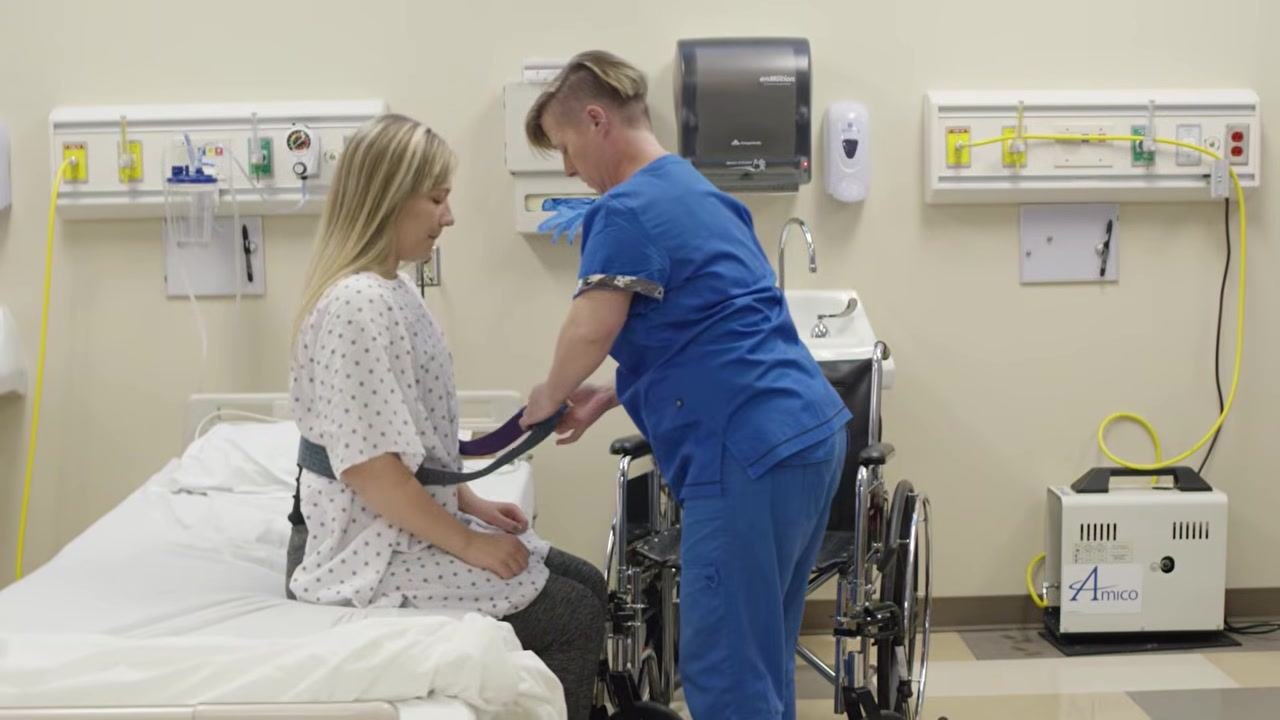
Place the transfer belt securely around the client's waist, over their clothing or gown, and fasten it snugly. Check the fit by slipping three or four fingers under the belt — it should be snug but allow this amount of space.
Step 8: Double-check all safety measures
Before assisting the client to stand, verify the following:
- Bed wheels are locked
- Wheelchair wheels are locked
- Client's feet are flat on the floor and shoes are on
- Transfer belt is properly secured and snug
Step 9: Prepare for the transfer
Stand in front of the client, ready to assist with the transfer using the gait belt.
Step 10: Instruct the client to stand on the count of three
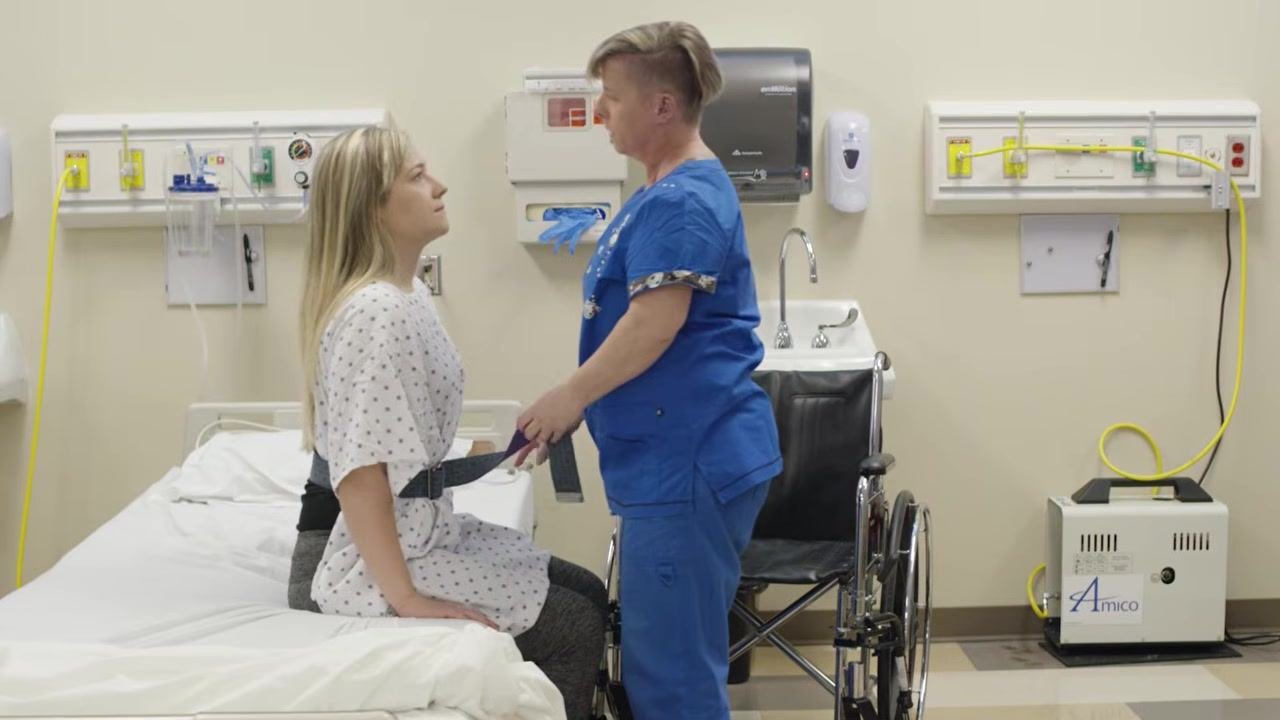
Stand directly in front of the client, holding the transfer belt securely. Clearly communicate: "On the count of three, I want you to push up with your hands, and we're going to stand." Count aloud, "One, two, three," and assist the client to stand, ensuring they push up with their hands as instructed.
Step 11: Turn and position the client in front of the wheelchair
Guide the client to turn so that the back of their legs touch the seat of the wheelchair. Ensure the client is stable and standing directly in front of the wheelchair, and maintain a secure grip on the transfer belt throughout this maneuver.

Step 12: Lower the client safely into the wheelchair
Instruct the client to reach back for the wheelchair armrests if able. Slowly and safely lower the client into the wheelchair, ensuring their hips touch the back of the seat. Confirm verbally, "Are your hips back far enough?" and wait for the client's response, adjusting their position as needed for proper alignment and comfort.
Step 13: Remove the transfer (gait) belt
Once the client is safely seated with their hips against the back of the wheelchair, unfasten and remove the transfer belt. Ensure the client remains stable and comfortable during this process.
Step 14: Position the client's feet on the footrests
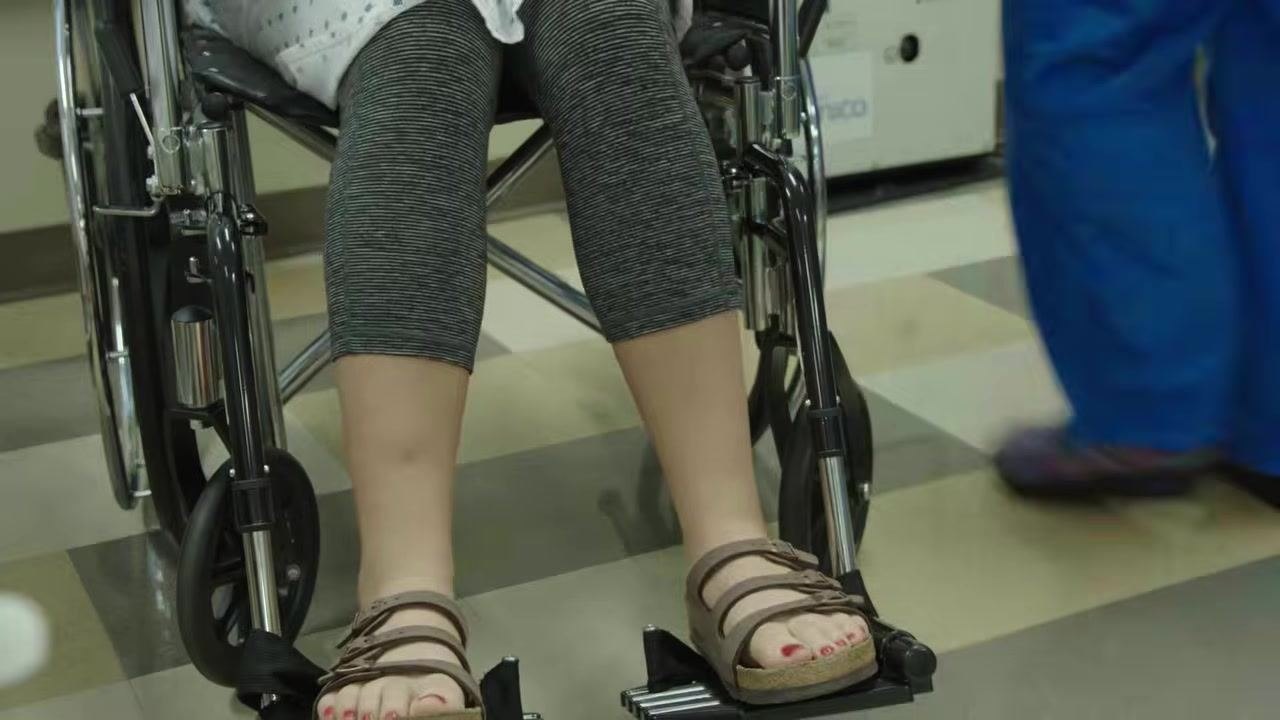
Place both of the client's feet securely on the wheelchair footrests, ensuring they are flat and comfortably supported to prevent injury or discomfort.
Step 15: Ensure the signaling device is within reach
Place the signaling device (call light) in the client's hand or within easy reach, and confirm with the client that they can access it if they need assistance.
Step 16: Restore privacy and complete the procedure
Open or remove the privacy curtain to restore the client's privacy and dignity. Inform the client that the procedure is complete and ask if they need anything else. Perform hand hygiene to complete the task.
Verification and completion
Stand back and visually confirm that the client is safe, comfortable, and has access to the call light. This confirms the transfer procedure is complete.
By following these steps, you ensure a safe, respectful, and effective transfer of a client from bed to wheelchair using a transfer belt, maintaining both client safety and dignity throughout the process.
Generation details: cost, quality tiers
Docsie billed 1,500 credits ($1.05) to analyze this 3-minute video at standard quality. The rewrite, template fill and Word/PDF exports were included. The same video at each quality tier:
| Quality | Frames sampled | Credits | Approx. cost |
|---|---|---|---|
| Draft | every 16-30 s | 750 | $0.52 |
| Standard (this guide) | every 8-15 s | 1,500 | $1.05 |
| Detailed | every 4-7 s | 3,000 | $2.10 |
| Ultra | every 1-3 s | 6,000 | $4.20 |
Credits priced at $0.70 per 1,000; plans include a monthly allowance. Enterprise customers on on-premise or bring-your-own-model deployments run this on their own inference and pay no per-video credits.
Generated by Docsie Video-to-Docs on 2026-09-09 from a 2-minute video. Screenshots are frames from the source video and belong to their creator, whatcomcc, whose original is embedded above. If you own this video and want the guide removed or credited differently, contact us and we will act within one business day.