
How to Measure Oxygen Saturation
Oxygen saturation describes the amount of oxygen carried in your blood and is also known as the blood oxygen level. This guide explains how to measure oxygen saturation using a pulse oximeter, a small device that provides a quick and accurate reading. Following these steps helps ensure the reading is reliable and helps you recognize when a level requires further attention.
Video: How to measure someone's oxygen levels by NHS England Workforce, Training and Education (2021). All credit for the demonstration goes to the creator; watch the original on YouTube. The written guide below was generated from this video by Docsie. Creator? Request a change or removal.
Oxygen saturation describes the amount of oxygen carried in your blood and is also known as the blood oxygen level. This guide explains how to measure oxygen saturation using a pulse oximeter, a small device that provides a quick and accurate reading. Following these steps helps ensure the reading is reliable and helps you recognize when a level requires further attention.
Purpose
This procedure explains how to take an accurate oxygen saturation reading using a pulse oximeter, how to interpret the result against normal ranges, and how to recognize situations that require professional advice.
Scope
This procedure applies to anyone responsible for checking a person's oxygen levels, including healthcare workers, support workers, home carers, and family carers or friends who have been asked to take a reading.
Required equipment
- A pulse oximeter that is clean and in working order
- A flat surface or the person's chest for resting the hand
- The person's bare finger (free of nail varnish or false nails)
Understand the pulse oximeter and what it measures
A pulse oximeter is a small device with a display screen. It is typically clipped onto the end of a person's finger and shows the oxygen level as a percentage, labeled SpO2. Pulse oximetry is useful because it quickly shows whether blood oxygen levels are low.
Prepare the person and the device
Before you begin, confirm the pulse oximeter is clean and working. Explain the procedure to the person and obtain their consent, and make sure they are comfortable and understand what you are about to do.
Safety note: For an accurate reading, the person should have been sitting quietly for 5 to 10 minutes before you take the measurement.

Attach the pulse oximeter
Ask the person to stick out a finger; the second finger is usually the easiest to use. Place the pulse oximeter clip onto the selected finger, then ask the person to rest their hand on a flat surface or on their chest. Allow the device to take a reading; it may flash briefly before displaying the numbers.

Read and record the result
Observe the display for two numbers. One should be in the 90s and may be shown with a percentage sign (%) next to the label SpO2. Write down the numbers exactly as they appear on the display.
Interpret the reading against normal ranges
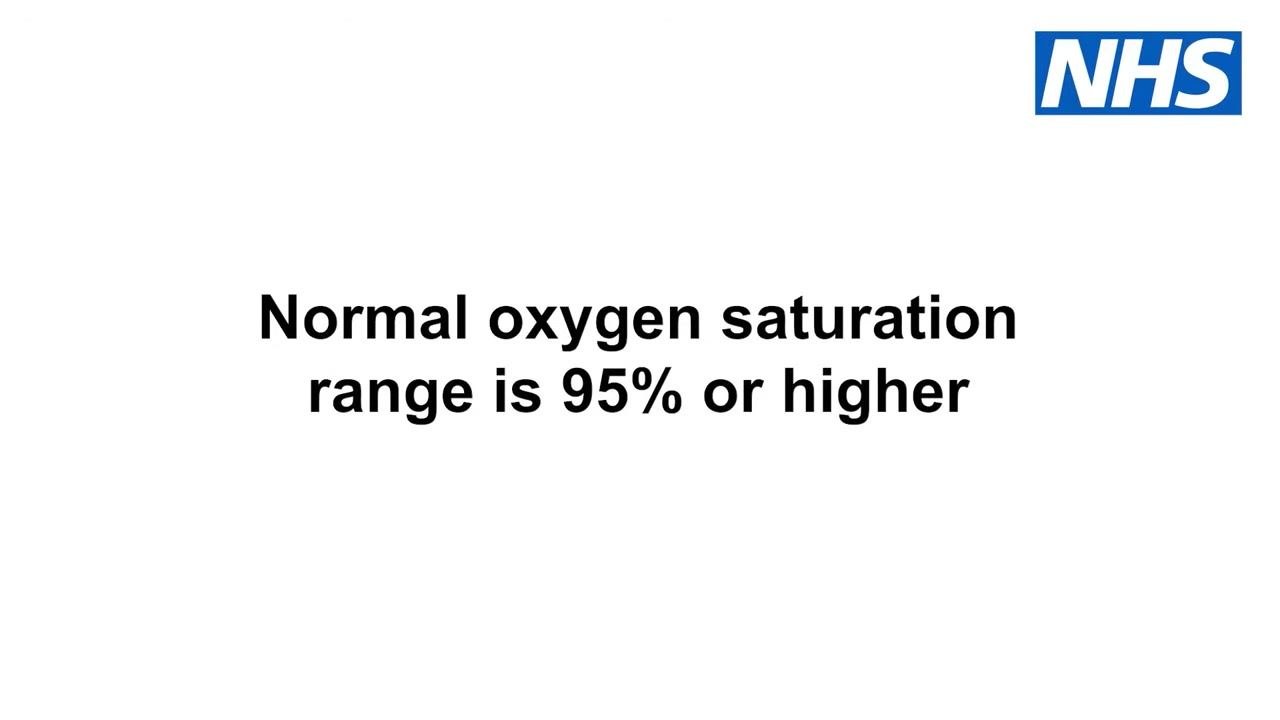
A normal oxygen saturation range is 95% or higher. Lower levels might indicate illness, but be aware that some people with existing lung problems may have lower readings than this most of the time as their normal baseline.
Limitations and troubleshooting
Certain conditions can affect the accuracy of a pulse oximeter reading. Check the following before and during use:
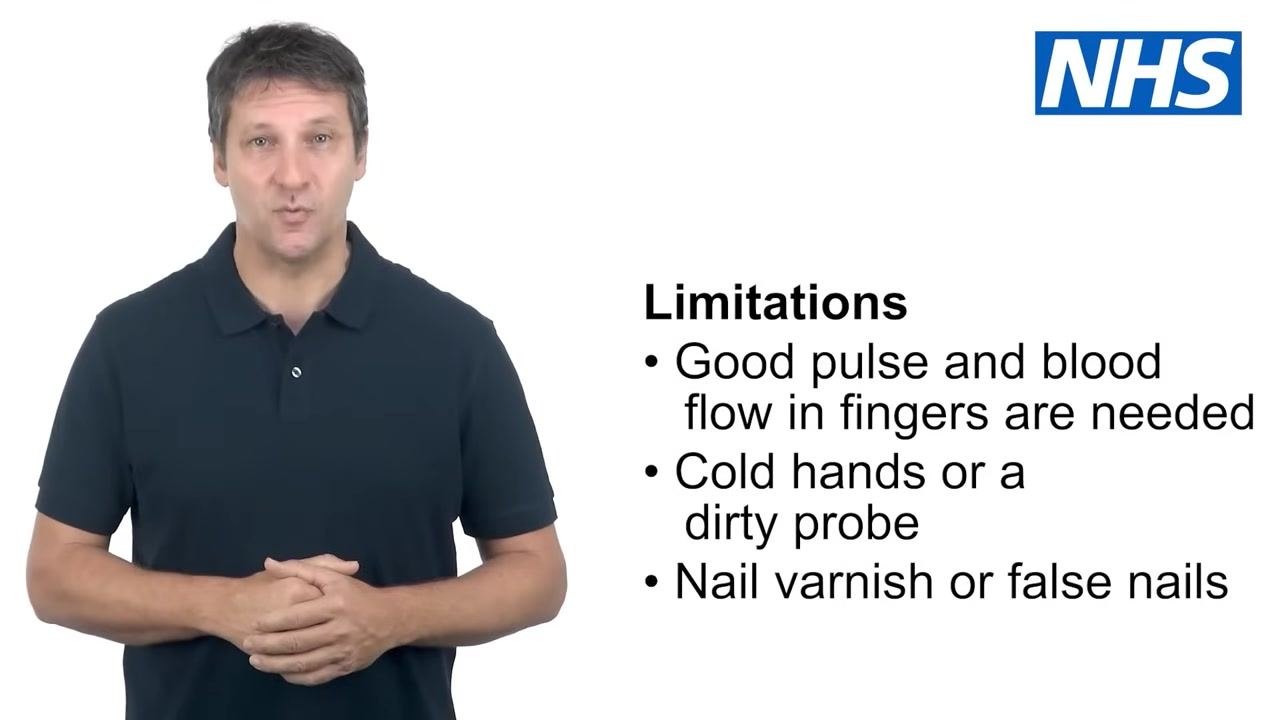
- Ensure the person has a good pulse and adequate blood flow in their fingers; this is essential for an accurate reading.
- Check that the person's hands are warm, since cold hands can reduce blood flow and make it difficult for the oximeter to detect a pulse.
- Inspect the pulse oximeter probe to confirm it is clean, as a dirty probe can interfere with the sensor.
- Remove any nail varnish or false nails from the finger being used, as these can block the sensor and cause an incorrect reading.
Safety note: If you encounter any issues getting a reading, or you are unsure about the result, seek advice from a healthcare professional.
When to seek advice
If you have been asked to check someone's oxygen levels and still have questions, ask a nurse, GP, or another healthcare provider for advice.
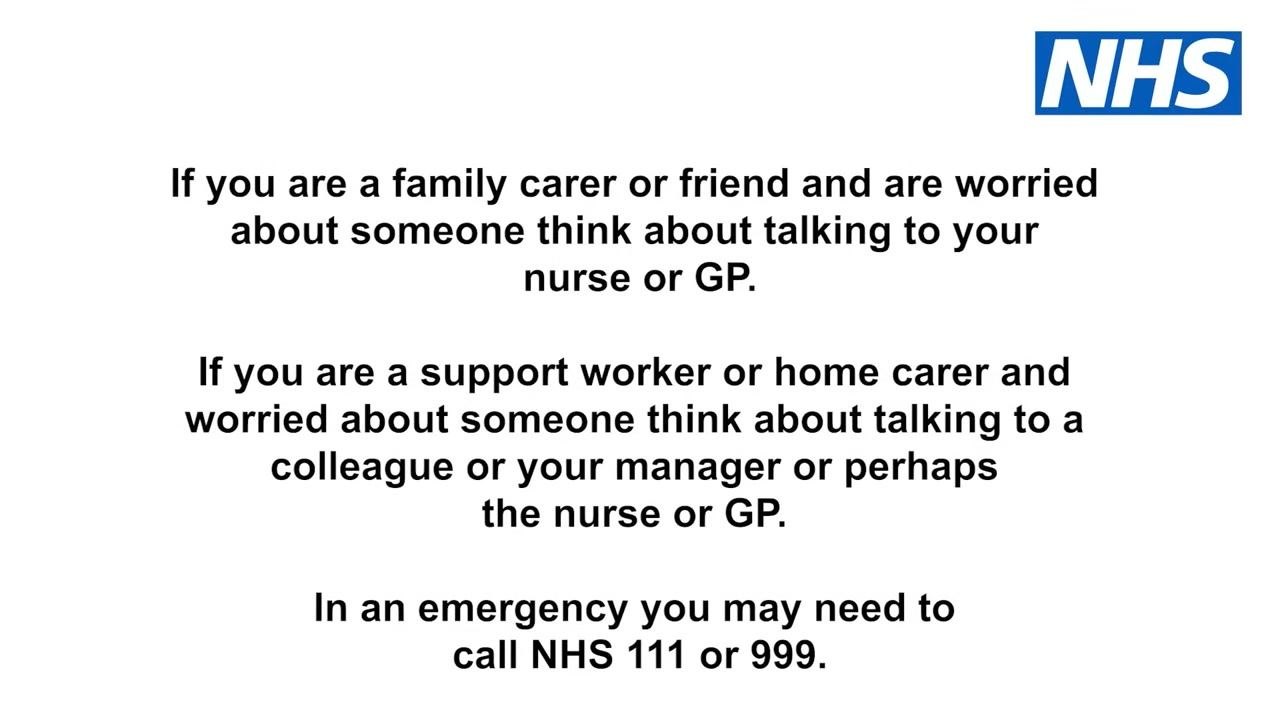
- If you are a family carer or friend worried about someone, consider talking to your nurse or GP.
- If you are a support worker or home carer concerned about someone, discuss it with a colleague, your manager, or a healthcare professional.
- In an emergency, call NHS 111 or 999 for immediate assistance.
Summary
By following these steps, you can accurately measure and interpret oxygen saturation using a pulse oximeter: prepare the person and device, attach the clip correctly, read and record the SpO2 percentage, and compare it against the normal range of 95% or higher. Always account for factors such as cold hands, a dirty probe, or nail varnish that may affect accuracy, and seek professional advice whenever you are unsure about a result or need emergency assistance.
Generation details: cost, quality tiers
Docsie billed 1,500 credits ($1.05) to analyze this 3-minute video at standard quality. The rewrite, template fill and Word/PDF exports were included. The same video at each quality tier:
| Quality | Frames sampled | Credits | Approx. cost |
|---|---|---|---|
| Draft | every 16-30 s | 750 | $0.52 |
| Standard (this guide) | every 8-15 s | 1,500 | $1.05 |
| Detailed | every 4-7 s | 3,000 | $2.10 |
| Ultra | every 1-3 s | 6,000 | $4.20 |
Credits priced at $0.70 per 1,000; plans include a monthly allowance. Enterprise customers on on-premise or bring-your-own-model deployments run this on their own inference and pay no per-video credits.
Generated by Docsie Video-to-Docs on 2026-09-09 from a 2-minute video. Screenshots are frames from the source video and belong to their creator, NHS England Workforce, Training and Education, whose original is embedded above. If you own this video and want the guide removed or credited differently, contact us and we will act within one business day.