
How to Irrigate a Foley Catheter
This procedure describes how to irrigate a Foley catheter safely when drainage slows or stops, and outlines the assessment, technique, and aftercare required to protect the patient from infection and injury. It is intended for use by nursing and allied health staff caring for patients with an indwelling Foley catheter in the ward, home care, or outpatient setting. Always follow your healthcare provider's specific protocols in addition to the general steps below.
Video: How to Flush a Foley Catheter | Medical Monks by Medical Monks Education (2023). All credit for the demonstration goes to the creator; watch the original on YouTube. The written guide below was generated from this video by Docsie. Creator? Request a change or removal.
This procedure describes how to irrigate a Foley catheter safely when drainage slows or stops, and outlines the assessment, technique, and aftercare required to protect the patient from infection and injury. It is intended for use by nursing and allied health staff caring for patients with an indwelling Foley catheter in the ward, home care, or outpatient setting. Always follow your healthcare provider's specific protocols in addition to the general steps below.
Purpose & Scope
A Foley catheter is a flexible tube inserted through the urethra to drain urine directly from the bladder. Unlike intermittent catheters, it remains in place after insertion and is secured with a balloon filled with sterile water so it does not slip out.


Foley catheters are typically used on a temporary basis: after surgery, for monitoring urine output or the urinary tract, or for patients with urinary retention, nerve damage, or other conditions affecting urination.
The balloon is inflated with sterile water to hold the catheter securely inside the bladder once it is inserted.
Some patients wear a leg bag connected to the catheter tubing for urine collection during daily activities, in addition to the standard bedside drainage bag.
Patient Assessment
Before irrigating, assess the catheter and drainage system for signs that flushing is needed.
- Observe for slower-than-normal drainage or a total cutoff of the urine stream.
- Recognize that a blocked catheter can cause urine to back up into the kidneys, which is a serious complication requiring prompt action.
- Confirm that irrigation is indicated only when urine is not draining freely from the bladder into the collection bag.
| Assessment Point | What to Check |
|---|---|
| Drainage rate | Slowed flow or complete cessation of urine into the bag |
| Bag volume | Collected urine level against graduated markings |
| Tubing | Kinks, clots, or debris visible in the tube |
| Patient symptoms | Abdominal discomfort or signs of urine retention |
If blockage is suspected, prepare to flush the catheter by injecting normal saline solution into the tube until urine drains freely again.
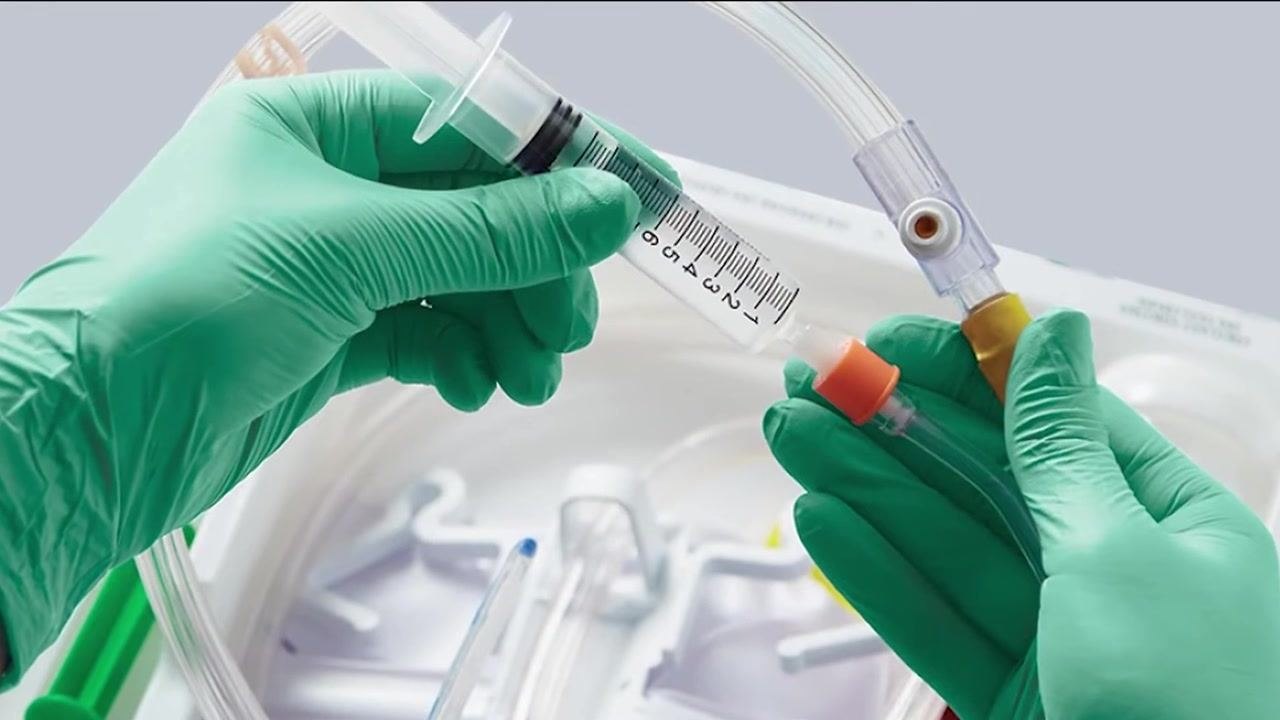
This SOP does not cover routine vital sign frequency, a standardized pain assessment tool, or neurovascular checks; these should be added according to your facility's general catheter care and monitoring policy.
Care Protocol
Preparation phase
- Gather all required supplies. Obtain an irrigation kit, which typically includes:
- A 60 mL catheter syringe
- A collection container
- A drainage tray
- A plug
- A drape
- Alcohol pads for cleansing
- Normal saline (NS) irrigation solution at room temperature
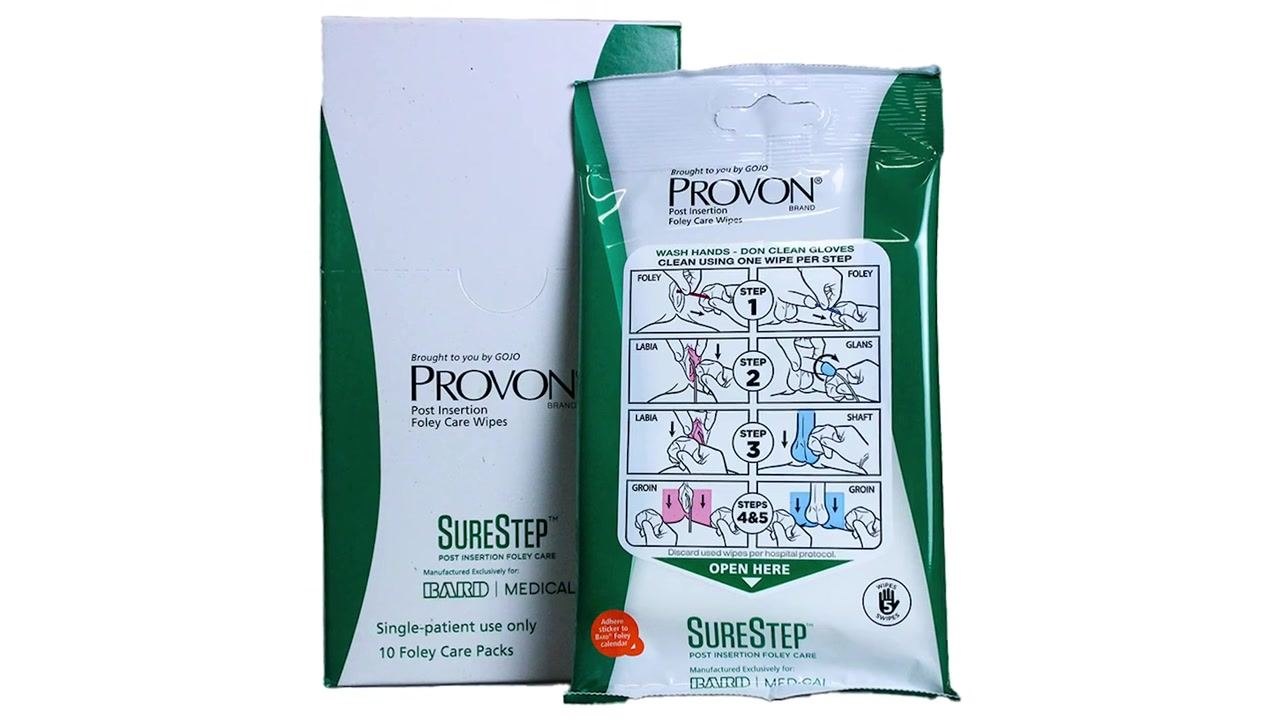
Only use the included NS solution to flush a Foley catheter. Never use tap water, distilled water, filtered water, or sterile water for this procedure. Additional helpful items include medical gloves, body wash or body wipes, and Foley-specific wipes such as SureStep.

-
Prepare for the procedure. Wash your hands thoroughly with soap and water, dry them completely, and put on a pair of medical gloves.
-
Clean the patient's genital area. Use body wash, body wipes, or Foley-specific wipes such as SureStep, following the instructions on the wipe packaging for proper technique.
-
Repeat hand hygiene immediately before flushing. Wash your hands with soap and water, dry them thoroughly, and put on a new pair of gloves if needed.
-
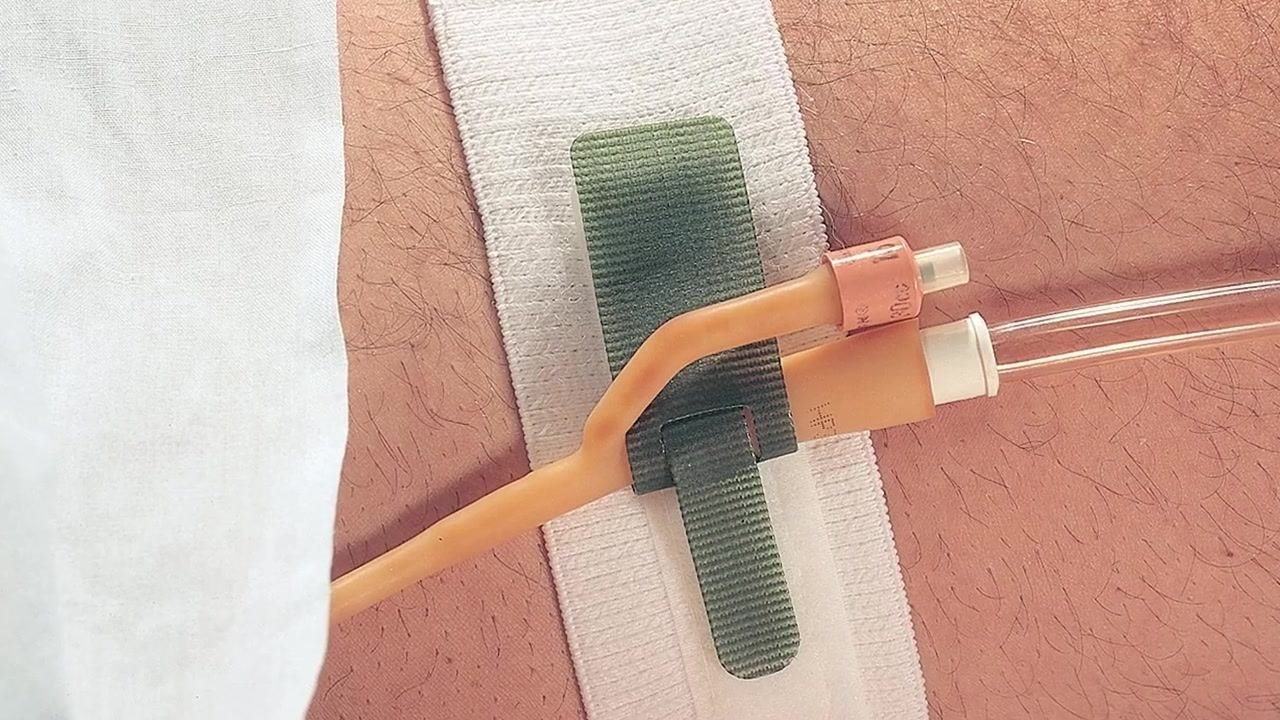
Remove and prepare the tubing. Remove any securement device holding the catheter tubing in place, then detach the tubing from the drainage bag. Avoid any sharp or forceful motions that could cause injury or accidental disconnection.
-
Set up the flushing area. Place the drape under the point where the catheter tube meets the drainage bag to catch any spills.
-
Prepare the saline solution. Pour the normal saline solution into the collection container and confirm it is at room temperature.

- Draw saline into the syringe. Use the syringe to draw the required amount of saline from the collection container.

- Clean the connection point. Before disconnecting the tube, use an alcohol swab to clean the point where the catheter tube meets the drainage bag. Do not touch either connection point or the tip of the syringe, in order to maintain sterility.

Flushing phase: how to irrigate a Foley catheter step by step
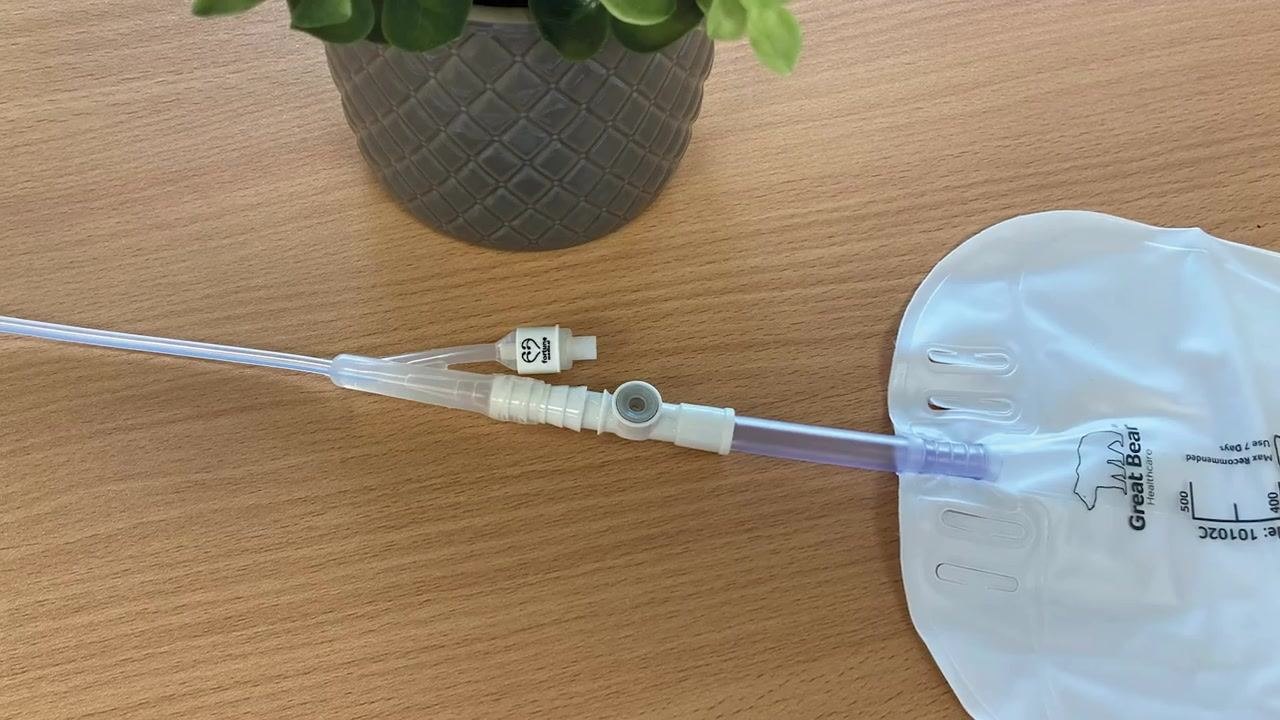
- Place the plug into the open end of the drainage bag. Insert the provided plug securely to prevent leakage while the bag is disconnected, and ensure it is fully seated before proceeding.
-
Insert the syringe into the catheter tube and flush. Attach the tip of the syringe, filled with normal saline, to the open end of the catheter tube. Gently push the plunger to release the saline into the bladder. If you encounter resistance, stop immediately, either pulling the plunger back gently or removing the syringe from the catheter, and seek medical attention if resistance persists.
-
Allow the solution to drain. Remove the syringe from the catheter tube and allow the saline to flow back from the bladder into the drainage tray by gravity. Wait until all fluid has drained completely.
-
Clean the catheter tube end. Use a new alcohol pad to thoroughly clean the end of the catheter tube and wait for the alcohol to dry completely before reconnecting any components.
-
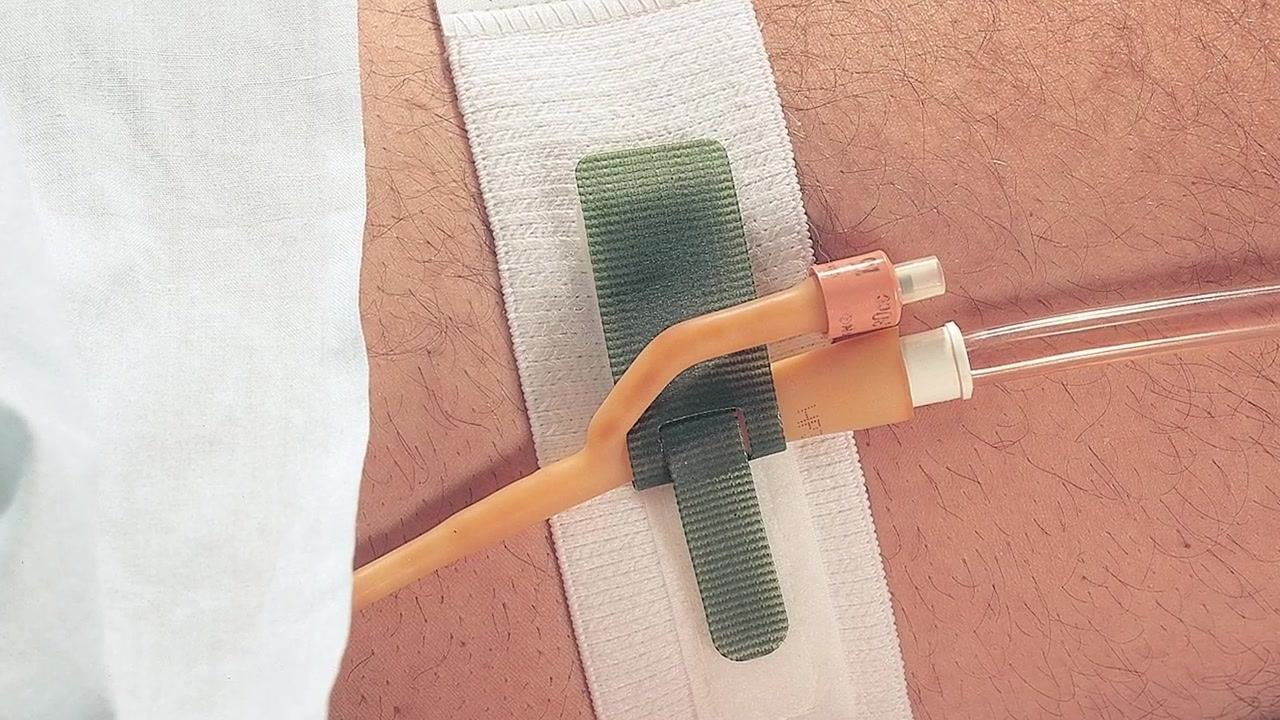
Reconnect the drainage bag and secure the tubing. Remove the plug from the drainage bag, reconnect the tubing to the catheter tube ensuring a secure fit, and reattach the tube to the securement device on the patient's leg or abdomen to prevent tugging or movement.
-
Dispose of used supplies and perform hand hygiene. Discard all used saline, syringes, alcohol pads, and other disposable supplies according to medical waste guidelines, then wash your hands thoroughly with soap and water.
-
Repeat as directed. Repeat this irrigation procedure as needed or as instructed by the healthcare provider; some patients may require irrigation up to every four hours during the day.
Pain Management
The source procedure does not include a medication table, pain score target, or escalation pathway for catheter irrigation; if pain management is required, document the specific drug, dose, route, frequency, and target pain score per your facility's analgesia protocol.
Mobility Milestones
The source procedure does not describe a progressive mobility timeline for patients undergoing Foley catheter irrigation; this section should be completed with facility-specific mobility goals if applicable to the patient's overall care plan.
Complication Monitoring
Monitor the catheter and drainage system continuously for signs of blockage or slowed drainage, since these may indicate a clog requiring irrigation.
- Watch for slower drainage or complete cutoff of the urine stream, which can cause urine to back up into the kidneys.
- During flushing, stop immediately if resistance is felt; pull the plunger back gently or remove the syringe, and seek medical attention if resistance persists.
- Escalate to the healthcare provider for any unresolved blockage, resistance during flushing, or ongoing drainage concerns.
Discharge Criteria
The source procedure does not specify measurable discharge criteria for patients with a Foley catheter; discharge readiness should be determined according to your facility's standard criteria for catheter care competency and resolution of the presenting condition.
Patient Education
Before the patient or caregiver manages catheter irrigation independently, review the following points:
- Only use normal saline solution for flushing; never use tap water, distilled water, filtered water, or sterile water.
- Wash and dry hands thoroughly, and wear gloves, before and after each irrigation.
- Repeat irrigation as instructed by the healthcare provider, which may be as often as every four hours during the day.
- Stay well-hydrated by drinking adequate fluids throughout the day.
- Monitor the flow and appearance of urine regularly and report any concerns to the healthcare provider promptly.
Always follow your healthcare provider's specific instructions and protocols for Foley catheter care, and seek medical attention if any issues arise during the procedure.
Generation details: cost, quality tiers, downloads
Docsie billed 2,500 credits ($1.75) to analyze this 5-minute video at standard quality. The rewrite, template fill and Word/PDF exports were included. The same video at each quality tier:
| Quality | Frames sampled | Credits | Approx. cost |
|---|---|---|---|
| Draft | every 16-30 s | 1,250 | $0.88 |
| Standard (this guide) | every 8-15 s | 2,500 | $1.75 |
| Detailed | every 4-7 s | 5,000 | $3.50 |
| Ultra | every 1-3 s | 10,000 | $7.00 |
Credits priced at $0.70 per 1,000; plans include a monthly allowance. Enterprise customers on on-premise or bring-your-own-model deployments run this on their own inference and pay no per-video credits.
Generated by Docsie Video-to-Docs on 2026-09-14 from a 4-minute video. It was generated straight into Docsie's Patient Care Procedure template, so every section of that template is filled from the video. Screenshots are frames from the source video and belong to their creator, Medical Monks Education, whose original is embedded above. If you own this video and want the guide removed or credited differently, contact us and we will act within one business day.