
How to Do a Tube Feeding
A nasogastric (NG) feeding tube is a special tube used to deliver oral nutrition supplements and medication directly into the stomach when a patient cannot take these by mouth. This procedure explains how to do a tube feeding safely at each stage, from preparing supplies to administering feeds and medication, and what to watch for afterward. It is intended for caregivers and nursing staff who feed a patient with an NG tube in place, typically following hospital discharge.
Video: All About Nasogastric Tube Feeding (English Subtitles) by Singapore General Hospital (2020). All credit for the demonstration goes to the creator; watch the original on YouTube. The written guide below was generated from this video by Docsie. Creator? Request a change or removal.
A nasogastric (NG) feeding tube is a special tube used to deliver oral nutrition supplements and medication directly into the stomach when a patient cannot take these by mouth. This procedure explains how to do a tube feeding safely at each stage, from preparing supplies to administering feeds and medication, and what to watch for afterward. It is intended for caregivers and nursing staff who feed a patient with an NG tube in place, typically following hospital discharge.
Purpose and scope
The NG tube passes from the nose, down the throat, and into the stomach, allowing oral nutrition supplements and medication to bypass the mouth and esophagus and reach the stomach directly and efficiently.
This guide covers what to prepare, the feeding steps (hand hygiene, patient positioning, and checking tube placement), and the general precautions caregivers must observe during every feed.
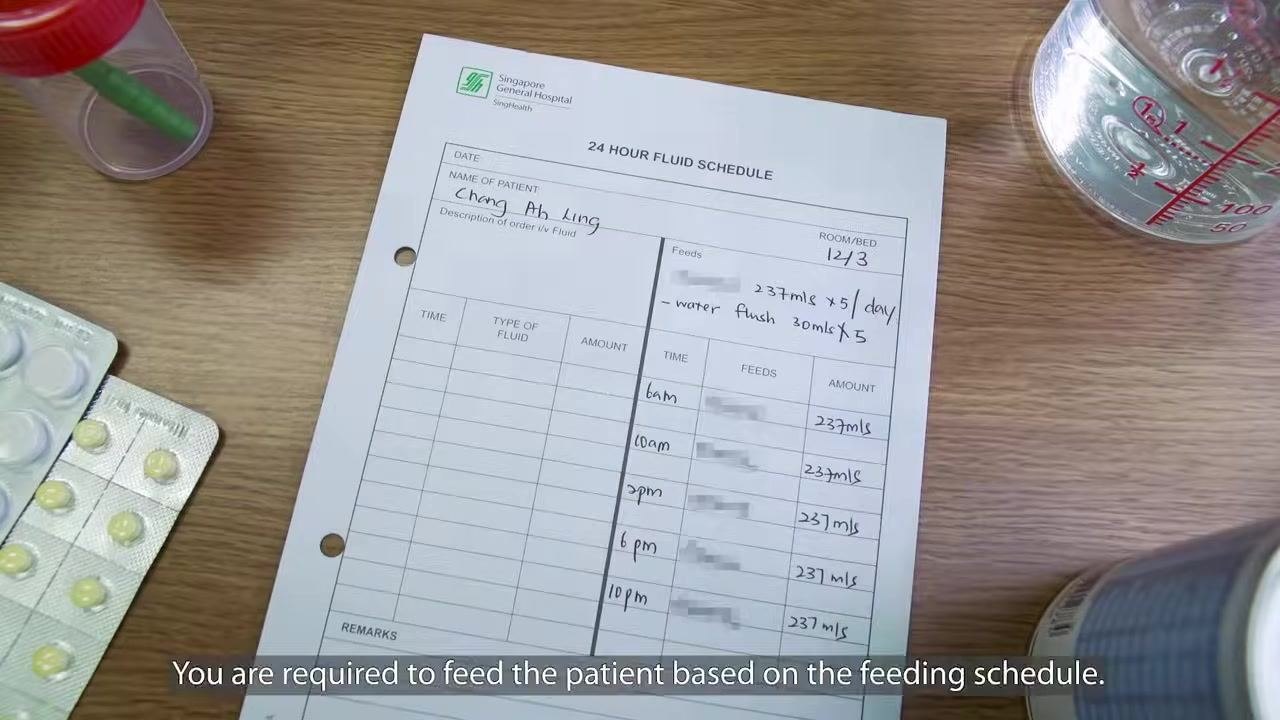
You are required to feed the patient according to a specific feeding schedule provided at discharge, which will be referenced throughout this procedure.
Patient assessment
Before every feed, complete the checks below to confirm the patient is correctly positioned and that the tube is safely and correctly placed in the stomach.
Pre-feed assessment checklist
| Check | What to do |
|---|---|
| Feeding schedule | Note the time, type of oral nutrition supplement, and amount required for each feed |
| Hand hygiene | Wash your hands thoroughly with soap and water before handling any feeding equipment |
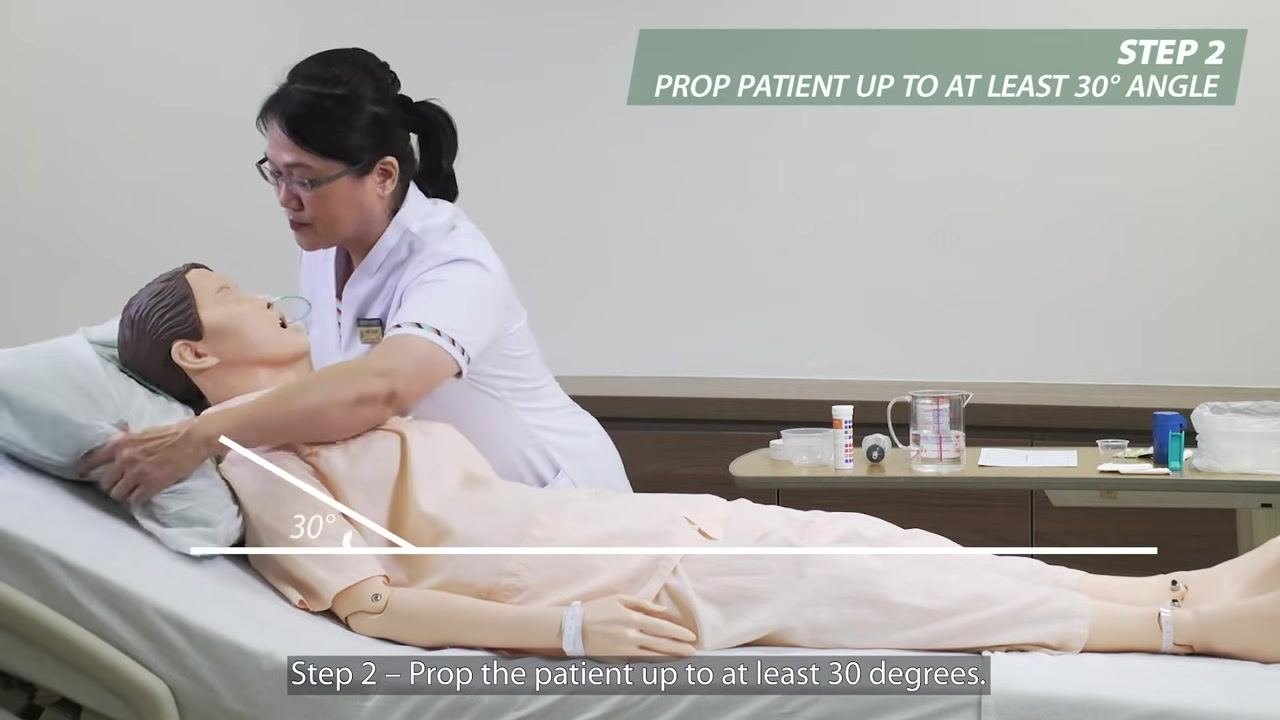
| Patient position | Prop the patient up to at least a 30-degree angle to reduce the risk of aspiration |
| Tube coiling | Ask the patient to open their mouth and check the back of the throat to ensure the tube is not coiled |
| External tube length | Measure the external length of the tube to confirm it matches the recommended length used consistently at each feed |
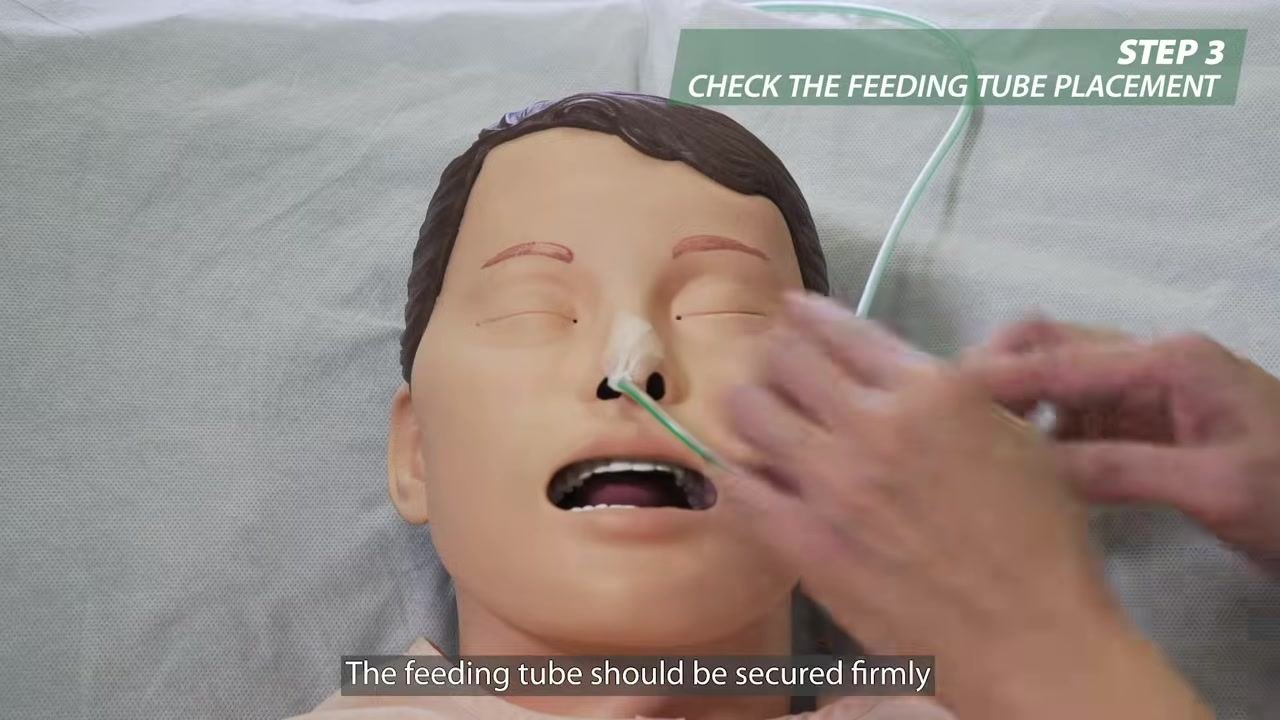
| Tube security | Confirm the tube is taped firmly to the nose and cheek |
| Gastric aspirate | Withdraw gastric content with a 50 ml syringe to confirm the tube is in the stomach |
| Gastric pH | Test aspirated content with a pH strip against the reference chart |
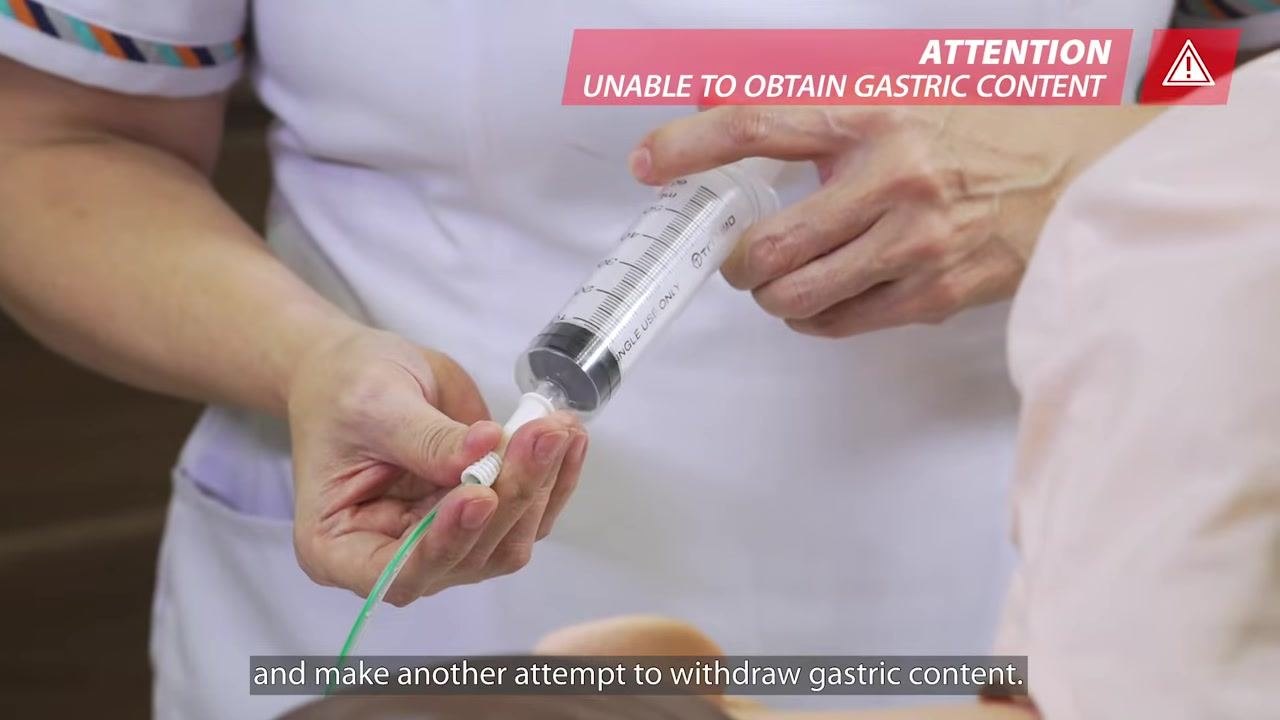
If you are unable to obtain gastric content, turn the patient onto their left side to facilitate collection.
If content is still not obtained, inject 10 to 20 ml of air into the tube with the syringe and attempt to withdraw content again.
If this is still unsuccessful, wait 15 to 30 minutes and try again. Contact your healthcare provider if you remain unable to obtain any gastric content.
Compare the pH strip color to the reference chart. A pH level of 5 or lower confirms the tube is in the stomach and feeding can proceed.
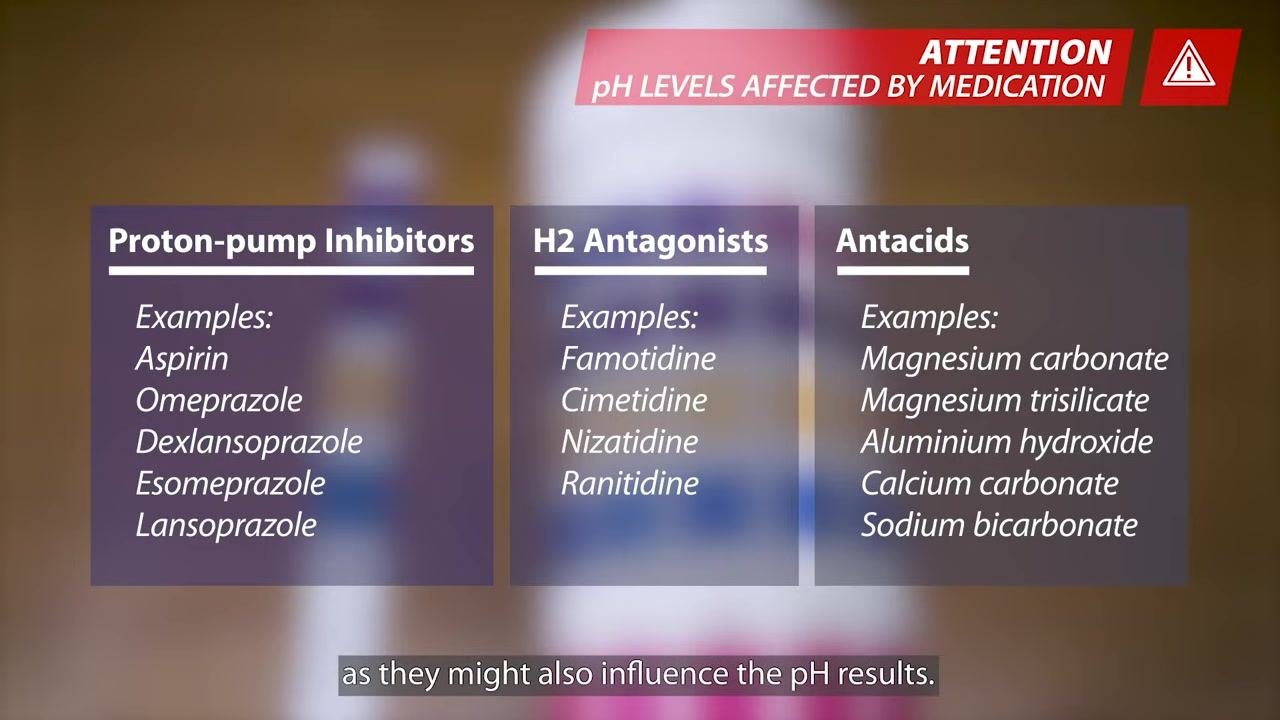
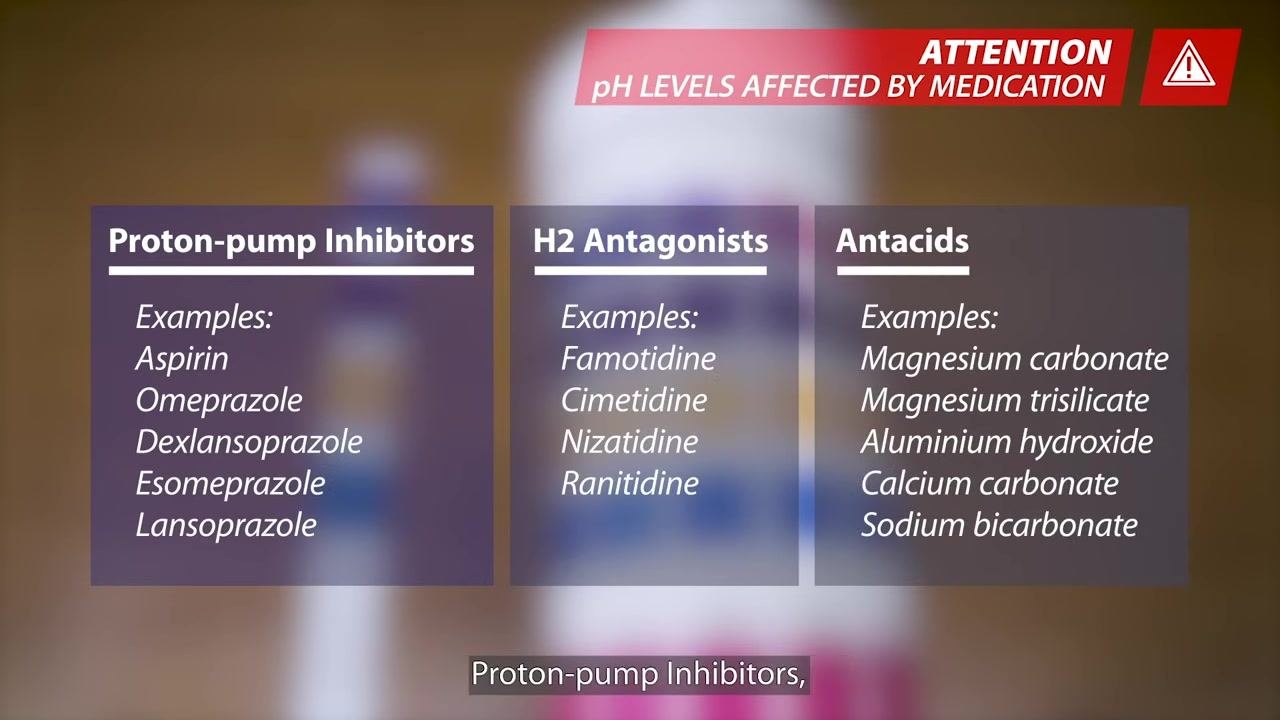
Note: Certain medications can affect gastric pH readings and should be discussed with your doctor or pharmacist.
| Medication class | Examples |
|---|---|
| Proton-pump inhibitors | Aspirin, Omeprazole, Dexlansoprazole, Esomeprazole, Lansoprazole |
| H2 antagonists | Famotidine, Cimetidine, Nizatidine, Ranitidine |
| Antacids | Magnesium carbonate, Magnesium trisilicate, Aluminium hydroxide, Calcium carbonate, Sodium bicarbonate |
Care protocol
Phase 1: Gather supplies
Prepare the following items before each feed:
- Oral nutrition supplement as prescribed
- 50 ml syringe
- Jug of water
- pH strips
- Small bowl
- Small cups
- Measuring tape
- Medication (if any)
- Feeding schedule
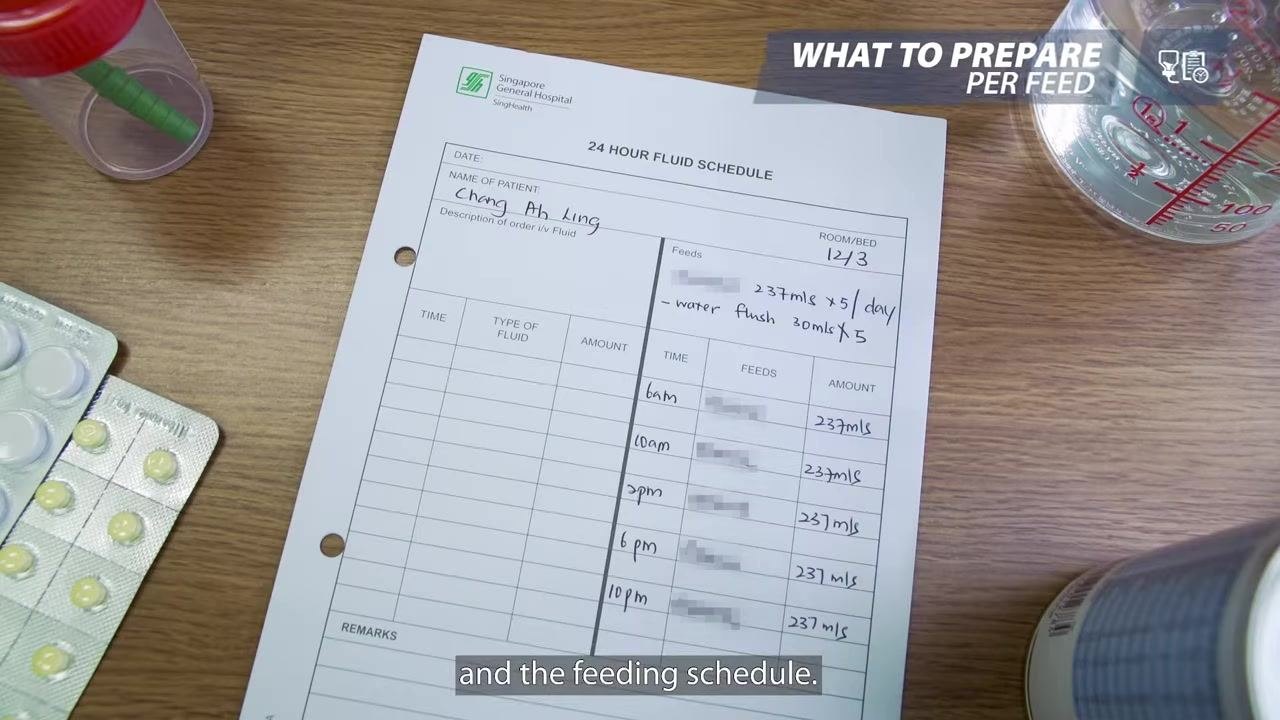
Ensure the syringe is clean and ready for use, and double-check the feeding schedule for the correct time, type, and amount.
Phase 2: Feed the oral nutrition supplement
If the supplement has been refrigerated, thaw it for 15 minutes before use. Kink the feeding tube before connecting the syringe to prevent air from entering the stomach.
Flush the tube with 20 ml of water, or as prescribed, before starting the feed.
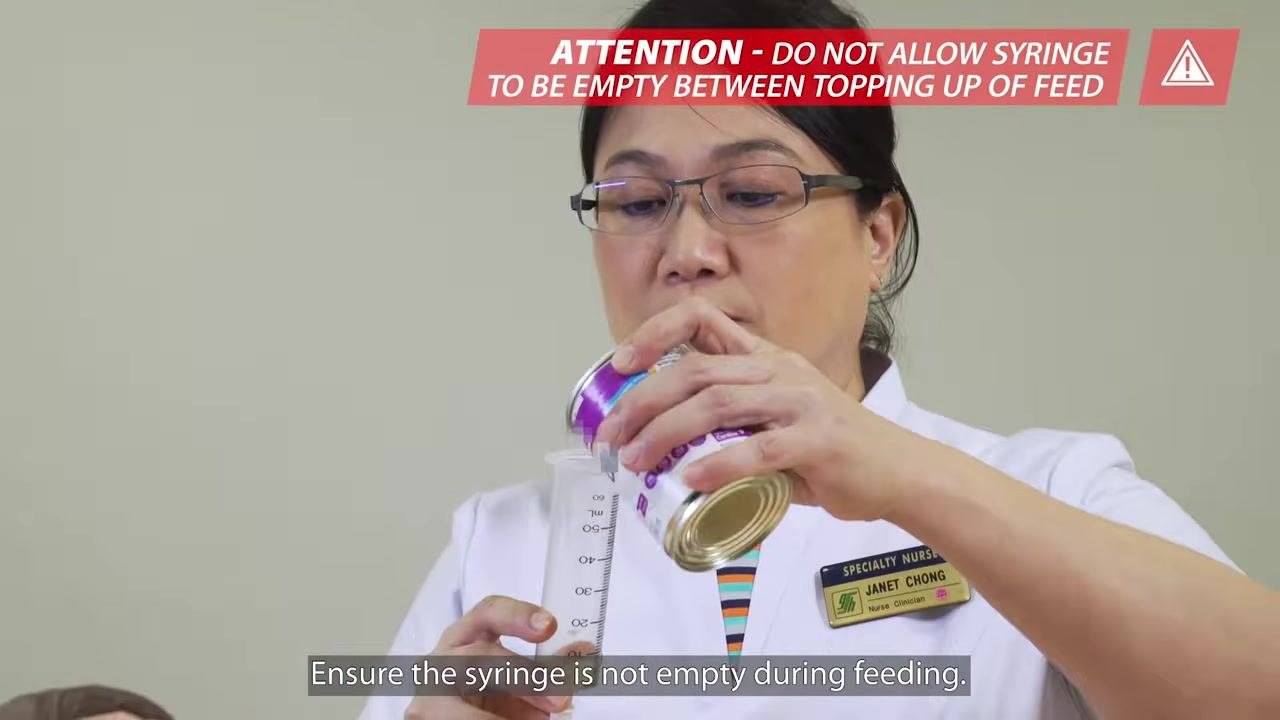
Position the syringe slightly above the patient's head and pour the oral nutrition supplement into the syringe, feeding at the correct time, type, and amount as prescribed.
Keep the syringe from running empty during feeding or while topping it up, to minimize stomach discomfort from excess air.
After feeding, flush the tube with 20 ml of water, or as prescribed, and close the feeding pot with a stopper.
Phase 3: Feed the medication
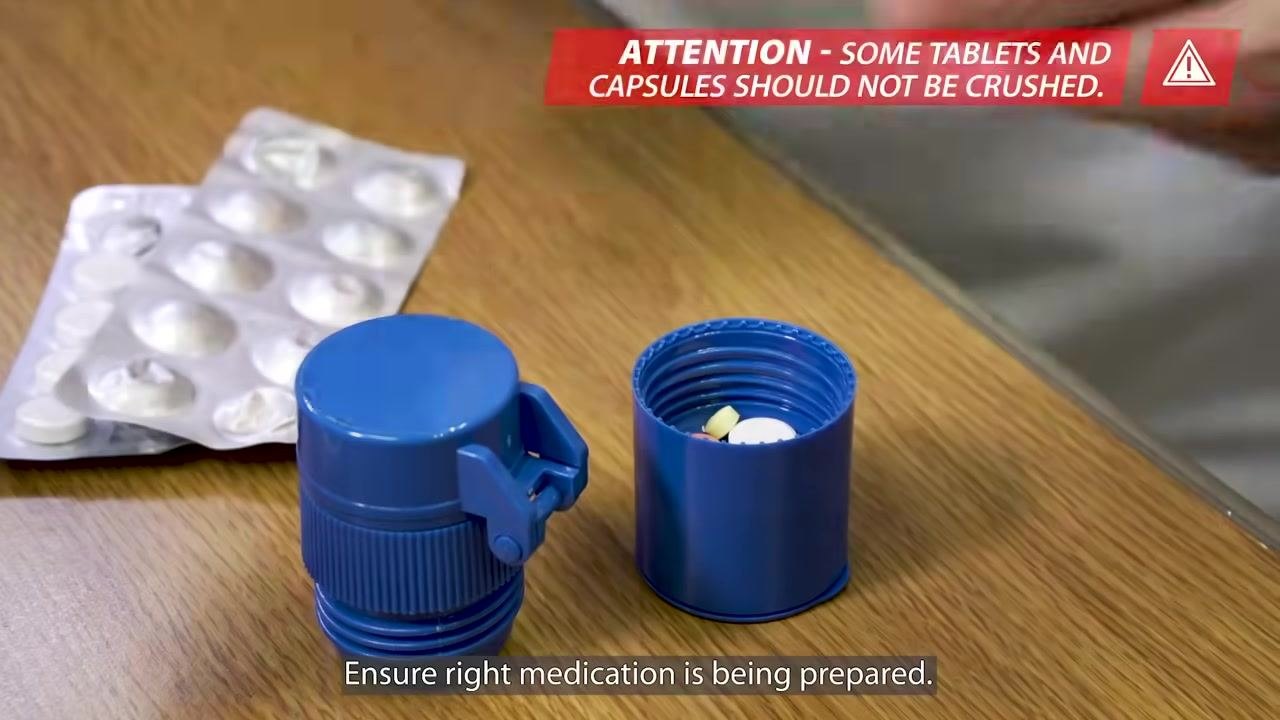
Confirm the correct medication is prepared. Crush tablets finely with a pill crusher, or dissolve them in lukewarm water. Some tablets and capsules should not be crushed — always check with a pharmacist or healthcare provider first.
Connect the syringe, without the plunger, to the kinked feeding tube and flush with 20 ml of water, or as prescribed, before giving medication.
Pour the prepared medication into the syringe and allow it to flow by gravity into the feeding tube. After administering the medication, flush the tube again with 20 ml of water, or as prescribed.
Phase-based procedure summary
| Phase | Key action |
|---|---|
| Preparation | Gather supplies, review feeding schedule, wash hands |
| Positioning | Prop patient to at least 30 degrees |
| Placement check | Verify tube coiling, external length, security, aspirate, and pH |
| Supplement feed | Flush, feed supplement without emptying syringe, flush again |
| Medication feed | Prepare, flush, administer medication, flush again |
| Post-feed | Keep patient seated for at least one hour |
Pain management
The source material for this procedure does not include a pain management protocol, medication dosing table, or pain score targets; this section would normally list any prescribed analgesia, dosing schedule, and escalation pathway for the patient.
Mobility milestones
The source material does not describe a mobility progression plan. It does specify two positioning requirements related to the feeding procedure: propping the patient up to at least a 30-degree angle before and during feeding, and keeping the patient seated for at least one hour after medication administration to prevent gastric reflux.
Complication monitoring
Observe the following precautions at all times:
- Do not mix medication with the oral nutrition supplement.
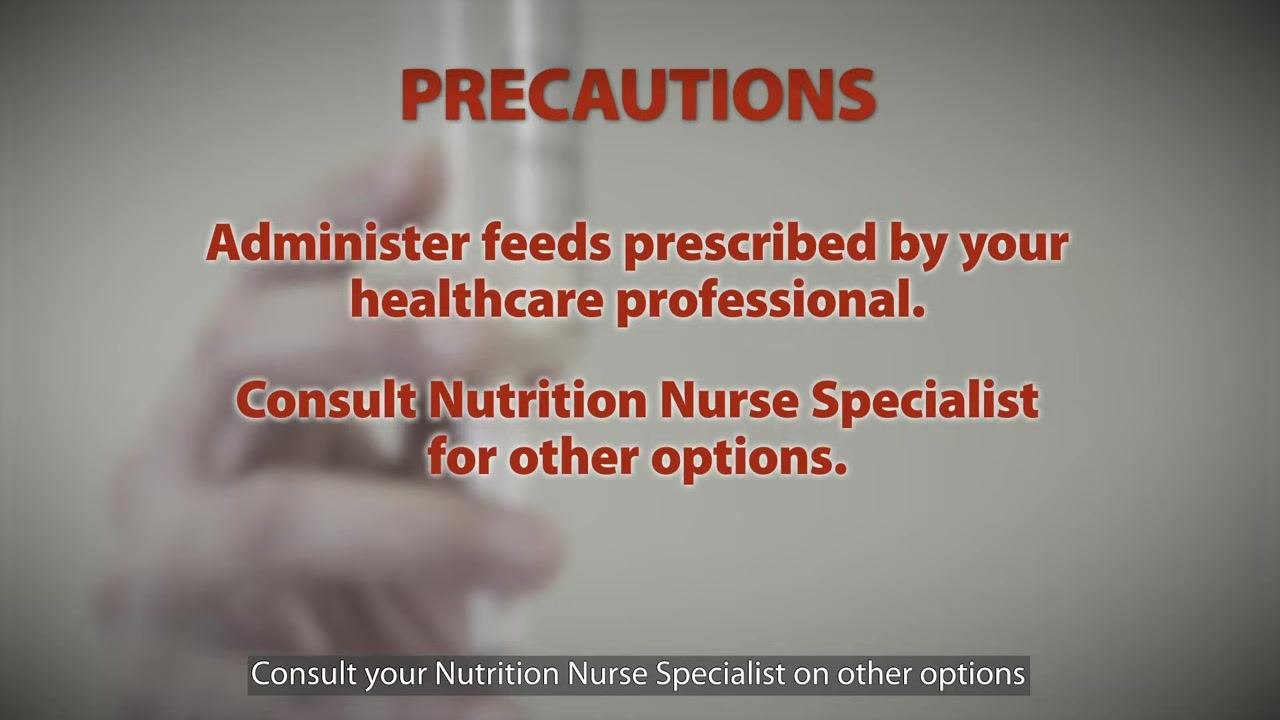
- Administer only feeds prescribed by your healthcare professional.
- Consult your Nutrition Nurse Specialist for alternative options if tube blockage occurs.
If the tube becomes blocked, fill the syringe with water, insert the plunger, and apply gentle pressure to flush and unblock the tube.
Seek immediate treatment or help if any of the following symptoms occur:
- Fever of 38°C and above
- Persistent diarrhoea
- Persistent constipation
- Persistent nausea/vomiting and inability to retain feeds
- Bloating
- Severe abdominal pain or cramping
If the feeding tube is accidentally removed, contact your healthcare provider during office hours. If any of the above symptoms occur outside office hours, go straight to Accident & Emergency.
Discharge criteria
The source material does not define discharge criteria for NG tube feeding, as this guidance is intended for caregivers already feeding a patient at home following discharge; measurable discharge criteria would be set separately by the healthcare team before the patient leaves the hospital.
Patient education
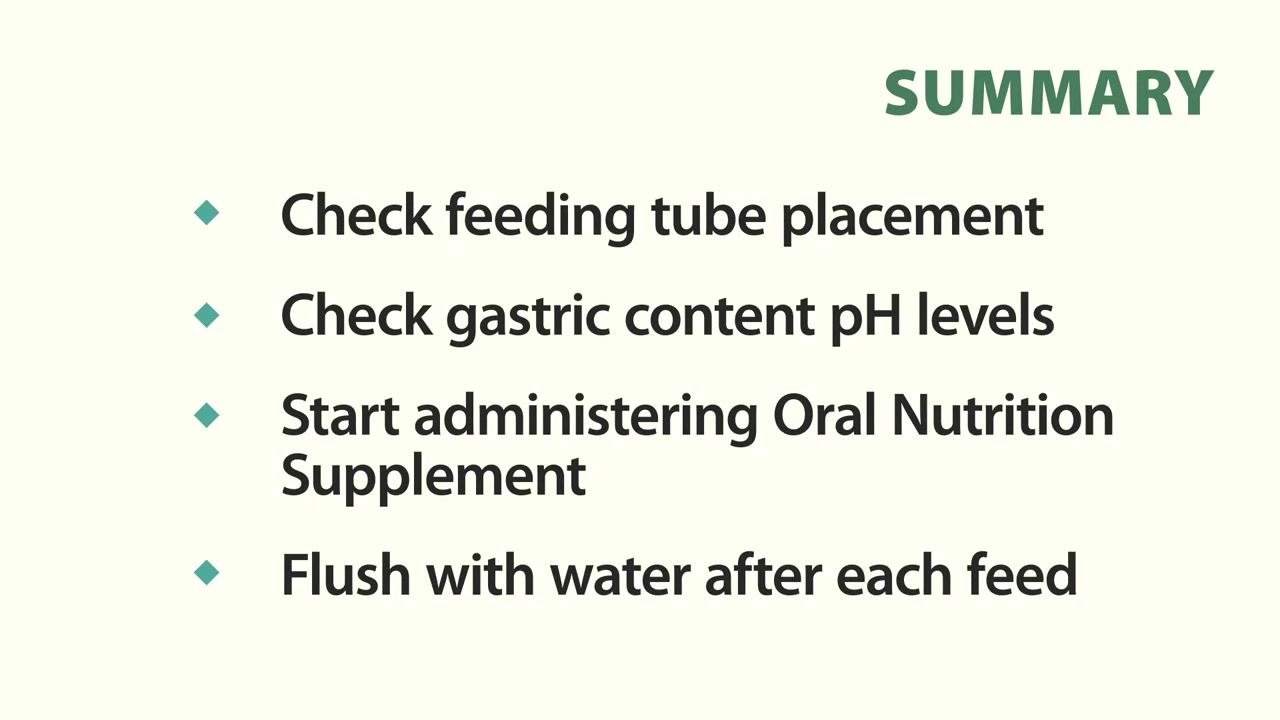
Before caregivers take over tube feeding, review these key steps together:
- Check feeding tube placement before every use.
- Check gastric content pH levels to confirm the tube is in the stomach.
- Start administering the oral nutrition supplement as prescribed.
-
Flush with water after each feed to maintain tube patency and prevent blockages.
-
Feed diluted medication with a syringe into the tube as instructed.
- Flush with water after feeding medication to clear the tube.
- Observe all precautions outlined in this procedure.
This guidance is based on a supplementary training resource for caregivers provided by the Singapore General Hospital Nursing Division. For further questions or support, contact your healthcare provider or the Nutrition Nurse Specialist.
Generation details: cost, quality tiers, downloads
Docsie billed 3,000 credits ($2.10) to analyze this 6-minute video at standard quality. The rewrite, template fill and Word/PDF exports were included. The same video at each quality tier:
| Quality | Frames sampled | Credits | Approx. cost |
|---|---|---|---|
| Draft | every 16-30 s | 1,500 | $1.05 |
| Standard (this guide) | every 8-15 s | 3,000 | $2.10 |
| Detailed | every 4-7 s | 6,000 | $4.20 |
| Ultra | every 1-3 s | 12,000 | $8.40 |
Credits priced at $0.70 per 1,000; plans include a monthly allowance. Enterprise customers on on-premise or bring-your-own-model deployments run this on their own inference and pay no per-video credits.
Generated by Docsie Video-to-Docs on 2026-09-14 from a 5-minute video. It was generated straight into Docsie's Patient Care Procedure template, so every section of that template is filled from the video. Screenshots are frames from the source video and belong to their creator, Singapore General Hospital, whose original is embedded above. If you own this video and want the guide removed or credited differently, contact us and we will act within one business day.