
How to Food Safety Audit Checklist
This procedure explains how to plan, execute, and follow up on a food safety audit using a structured food safety audit checklist. Food safety is essential to protect both consumers and your business, and compliance with food safety standards is critical for producing safe foods. A well-run audit gives you insight into your organization's food safety culture and practices and helps you identify areas for improvement.
Video: Food Safety Audits - Steps and Good Practices by Food Safety Training School (2022). All credit for the demonstration goes to the creator; watch the original on YouTube. The written guide below was generated from this video by Docsie. Creator? Request a change or removal.
Purpose
This procedure explains how to plan, execute, and follow up on a food safety audit using a structured food safety audit checklist. Food safety is essential to protect both consumers and your business, and compliance with food safety standards is critical for producing safe foods. A well-run audit gives you insight into your organization's food safety culture and practices and helps you identify areas for improvement.
Scope
This procedure applies to anyone responsible for planning or conducting internal, second-party, or third-party food safety audits. It covers key terminology, the four-stage audit process, audit evaluation, and good practices for maintaining consistent, compliant audits.
Prerequisites
- Familiarity with the International Standard ISO 19011, which provides guidelines for auditing management systems and outlines key items for performing internal or external audits effectively.
- Trained audit personnel. Only trained staff should perform audits to guarantee effectiveness and compliance.
- Access to your organization's Audit SOPs (Standard Operating Procedures) and audit checklists or questionnaires tailored to your specific requirements.
Understand key audit terminology
Before conducting an audit, review the core definitions your team will use throughout the process:
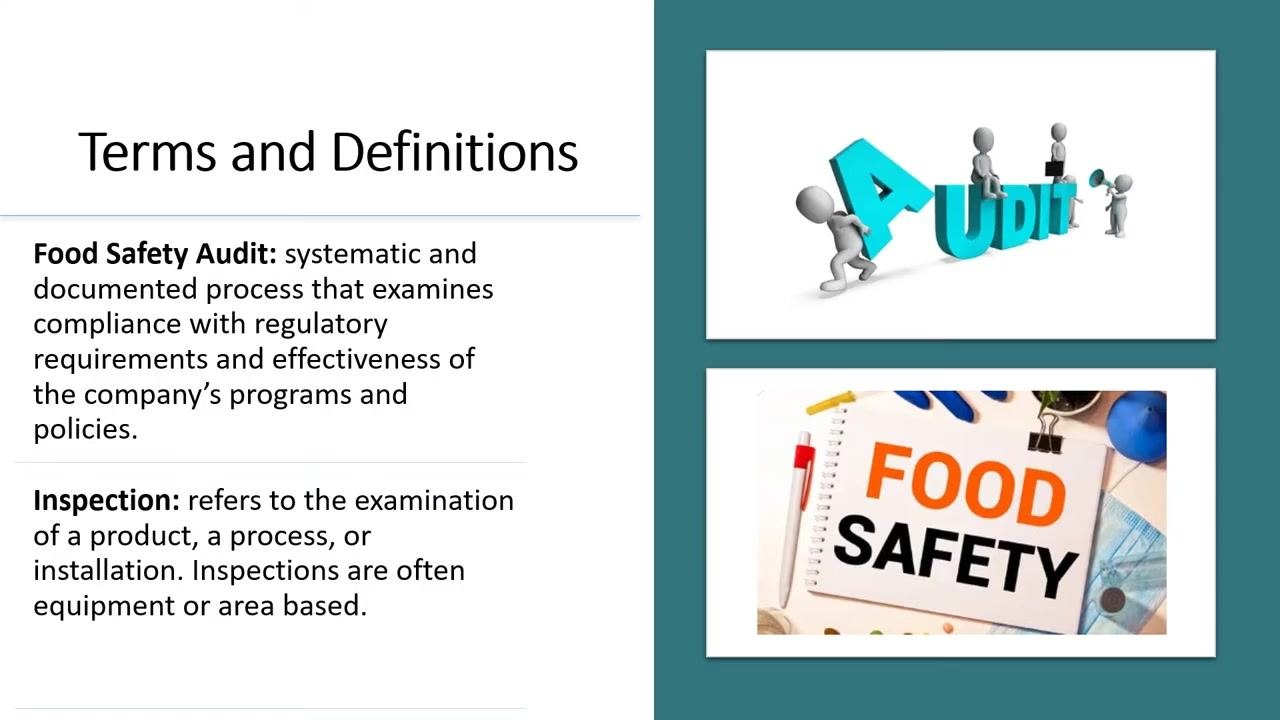
- Food Safety Audit: A systematic and documented process that examines compliance with regulatory requirements and evaluates the effectiveness of the company's programs and policies.
- Inspection: The examination of a product, process, or installation, typically equipment- or area-based.
The main difference between the two is duration and scope. Inspections are more frequent and less extensive — an inspection can take as little as 15 minutes during daily production — while an audit can take days to complete.
Identify audit roles and criteria
Learn the roles and reference terms used during an audit:
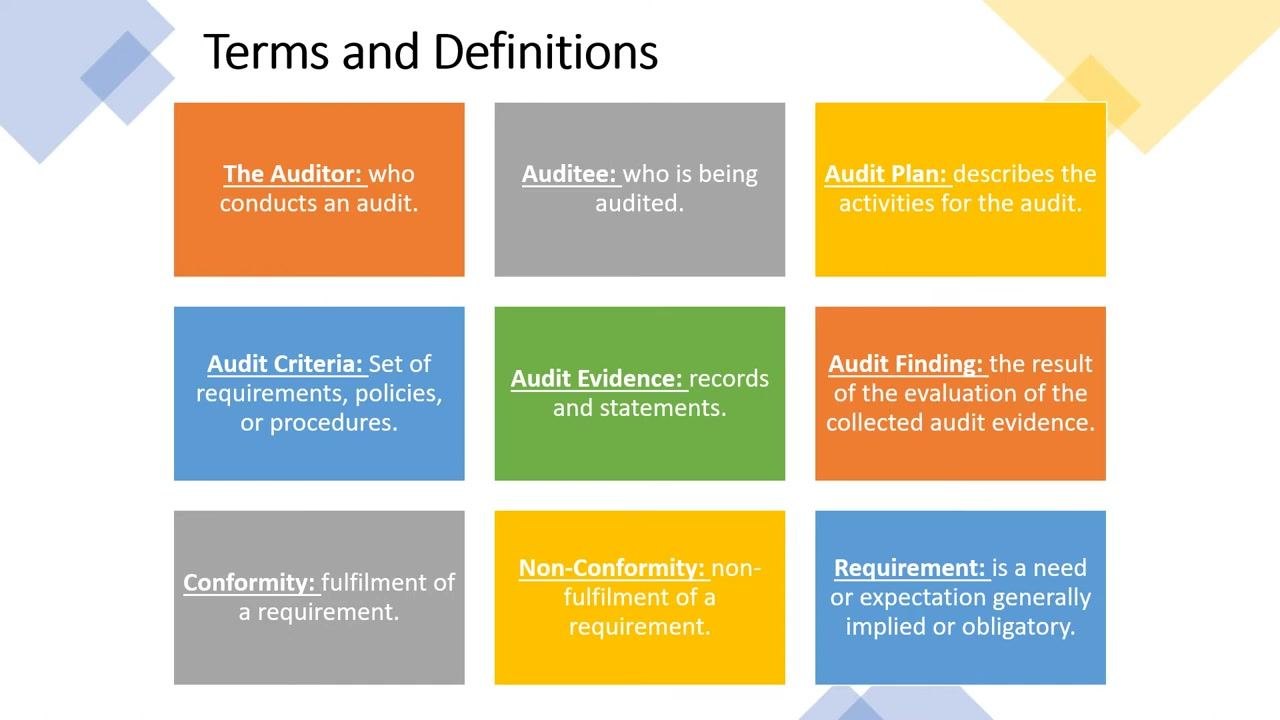
- Auditor: The person who conducts the audit.
- Auditee: The organization or areas being audited.
- Audit Plan: Describes the activities for the audit.
- Audit Criteria: The set of requirements, policies, or procedures used as a reference against which audit evidence is compared.
- Audit Evidence: The records and statements that serve as support during the audit process.
- Audit Finding: The result of evaluating collected audit evidence against the audit criteria.
- Conformity: The fulfillment of a requirement.
- Nonconformity: The nonfulfillment of a requirement.
- Requirement: A need or expectation that is generally implied or obligatory.
Determine the type of audit
Food safety audits are typically conducted to meet requirements mandated by food regulatory agencies. Identify which type applies to your situation:
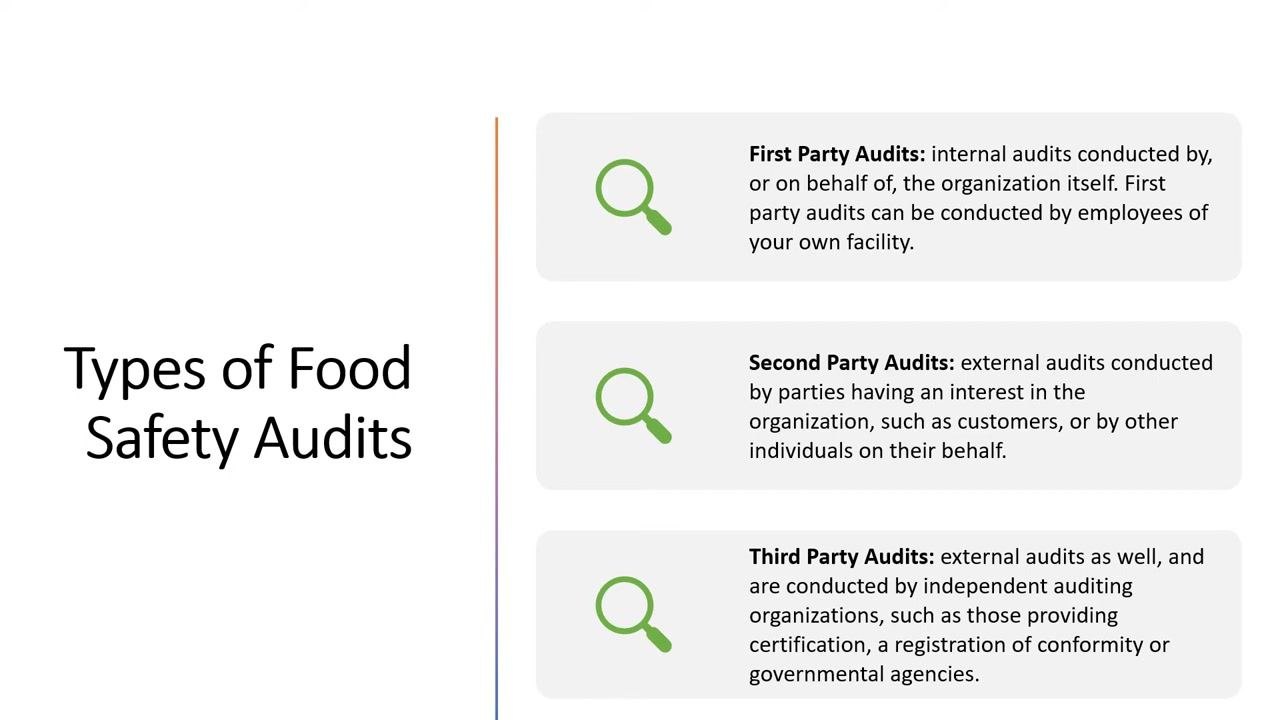
- Internal Audits (First-Party Audits): Conducted by, or on behalf of, the organization itself, often by employees of your own facility.
- Second-Party Audits: External audits conducted by parties with an interest in the organization, such as customers, or by individuals on their behalf.
- Third-Party Audits: External audits conducted by independent organizations, such as certification bodies, registrars, or governmental agencies.
Plan and prepare the audit
Identify the areas to be evaluated and prepare a written audit plan that includes:
- Scope: Define what will be covered in the audit.
- Complexity: Assess the level of detail and difficulty.
- Area / Location: Specify the physical or operational areas to be audited.
- Standards Audited: List the standards or regulations that will be referenced.
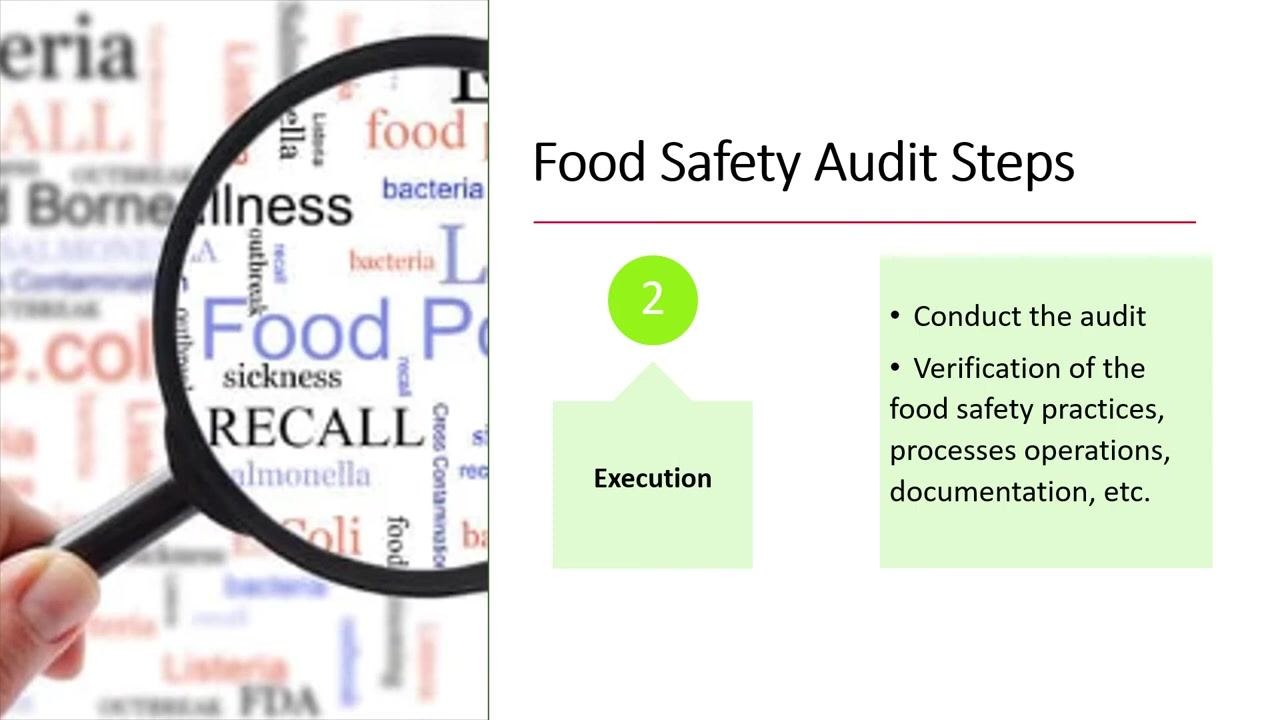
Execute the audit
Conduct the audit according to the prepared plan. During execution:
- Verify food safety practices, process operations, and documentation.
- Collect information through observation, photographs, employee interviews, and tests as needed.
- Verify the conformity of the food safety system against the specified criteria.
- Record all findings.
Address preventive and corrective actions
Evaluate how the organization prepares to address identified gaps and hazards. Ensure that proper preventive and corrective actions are planned and implemented to resolve any nonconformities or risks found during the audit.
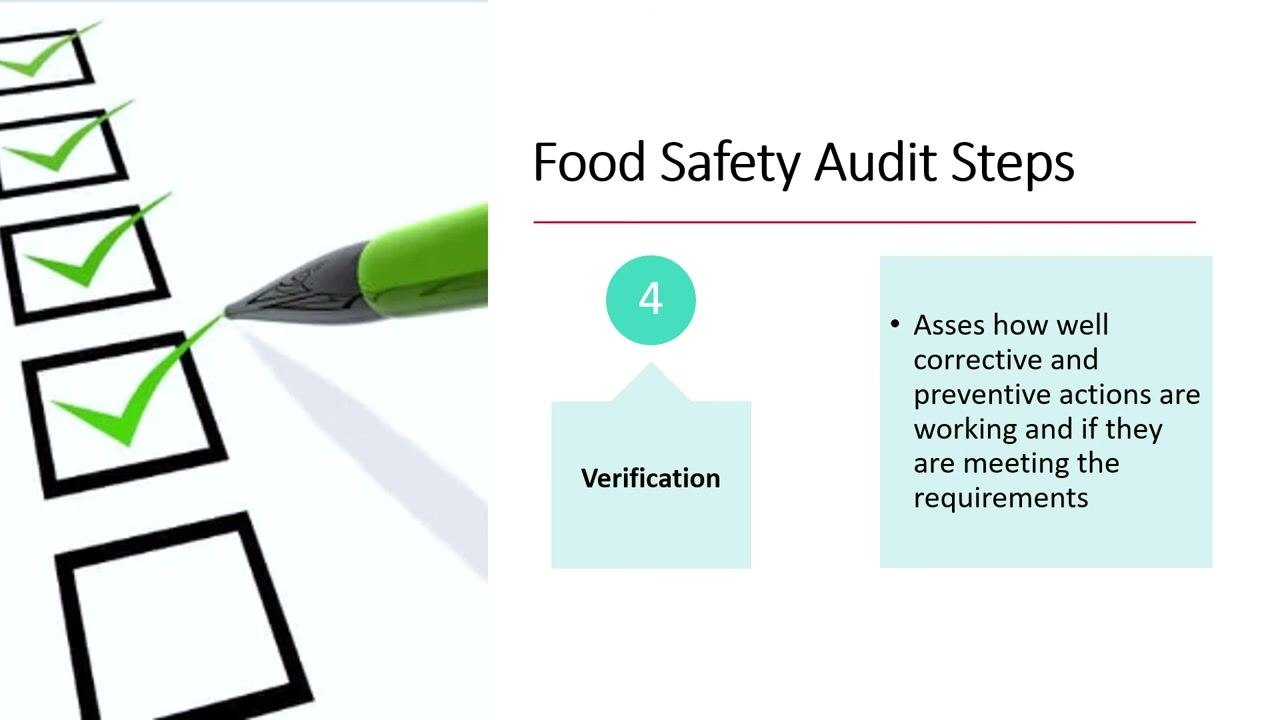
Verify the results
The audit does not end until after preventive and corrective actions have been implemented. Assess how well these actions are working and whether they meet requirements by reviewing records and verifying results.
Review all relevant documentation to confirm that actions taken have addressed the identified issues, and verify that corrective and preventive actions are effective and meet the required standards. Use checklists to systematically confirm compliance and completion of each required step, and document all verification activities for future reference and audit trails.
Evaluate audit progress
Conduct an audit evaluation to confirm that objectives are being met and that improvements are on track. Maintain consistency in your audit process for better results.
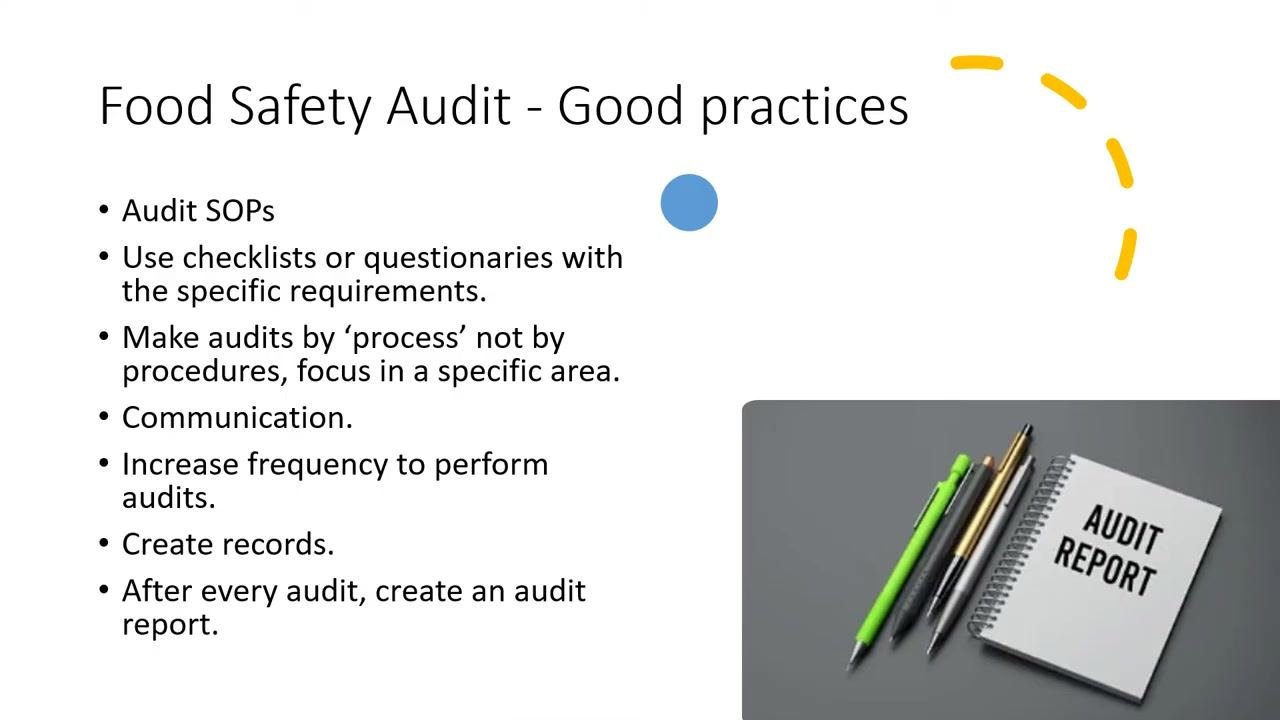
Apply good practices for food safety audits
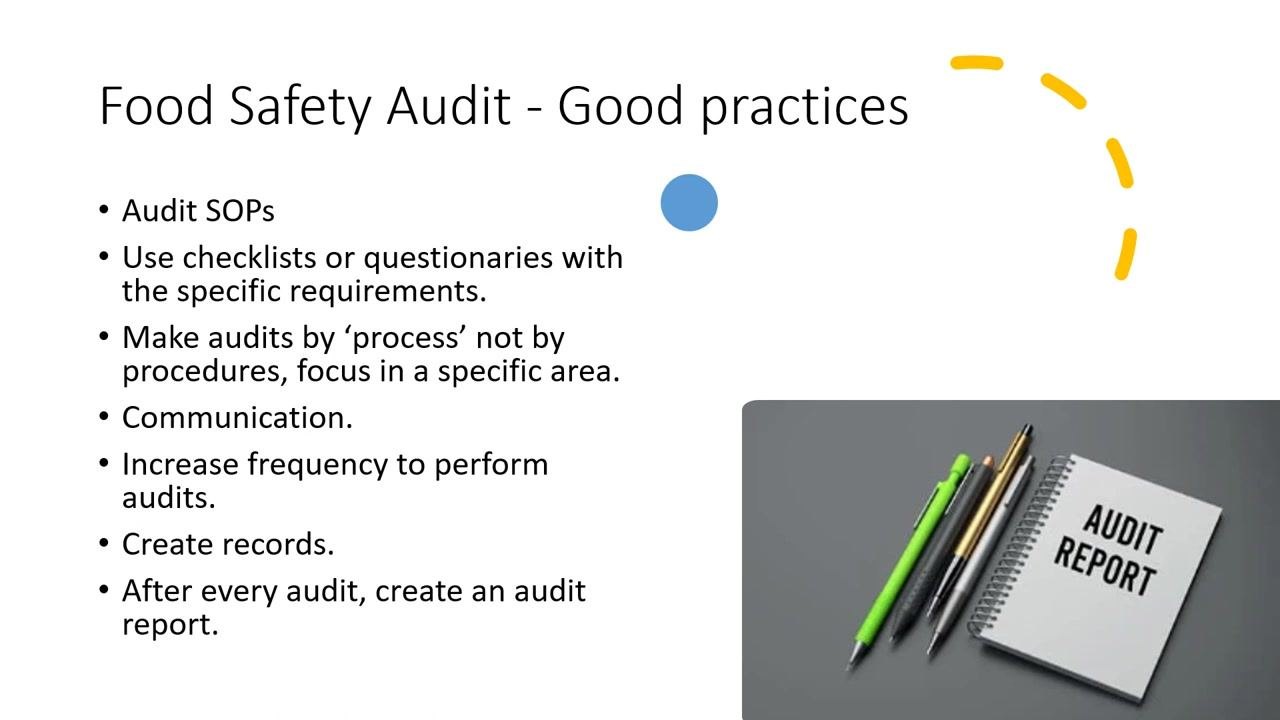
Strengthen your audit program with the following good practices:
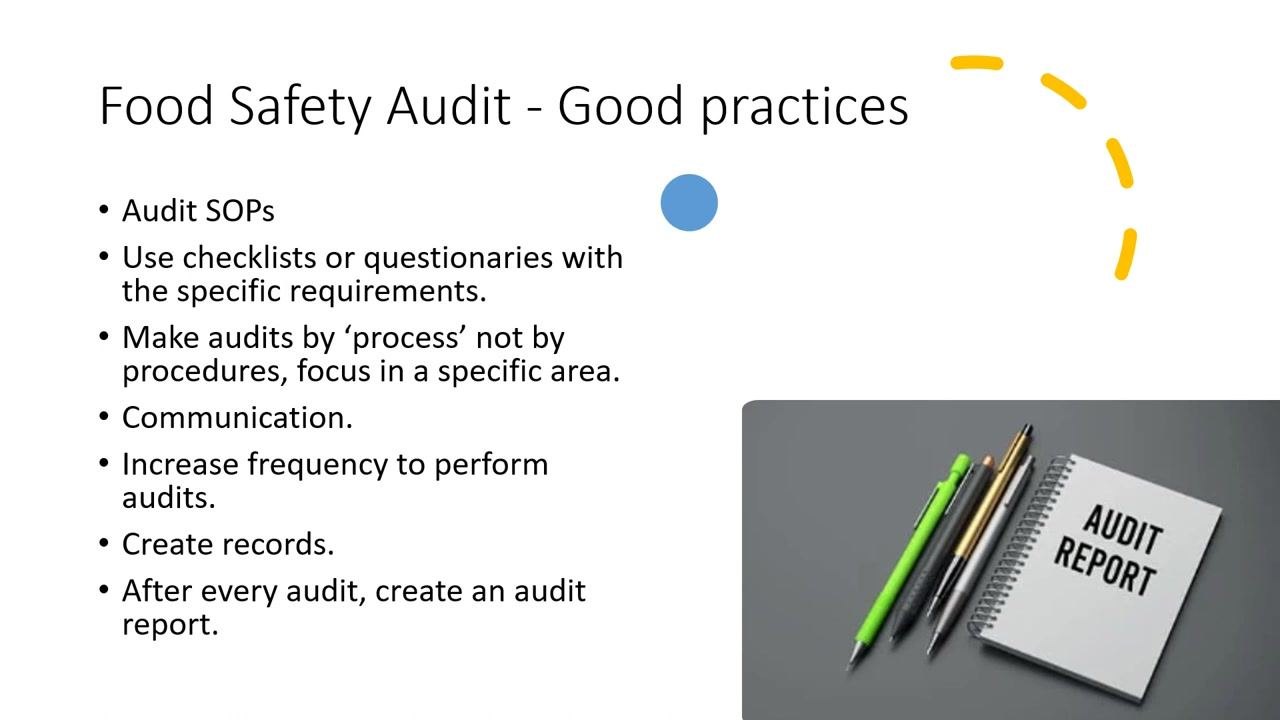
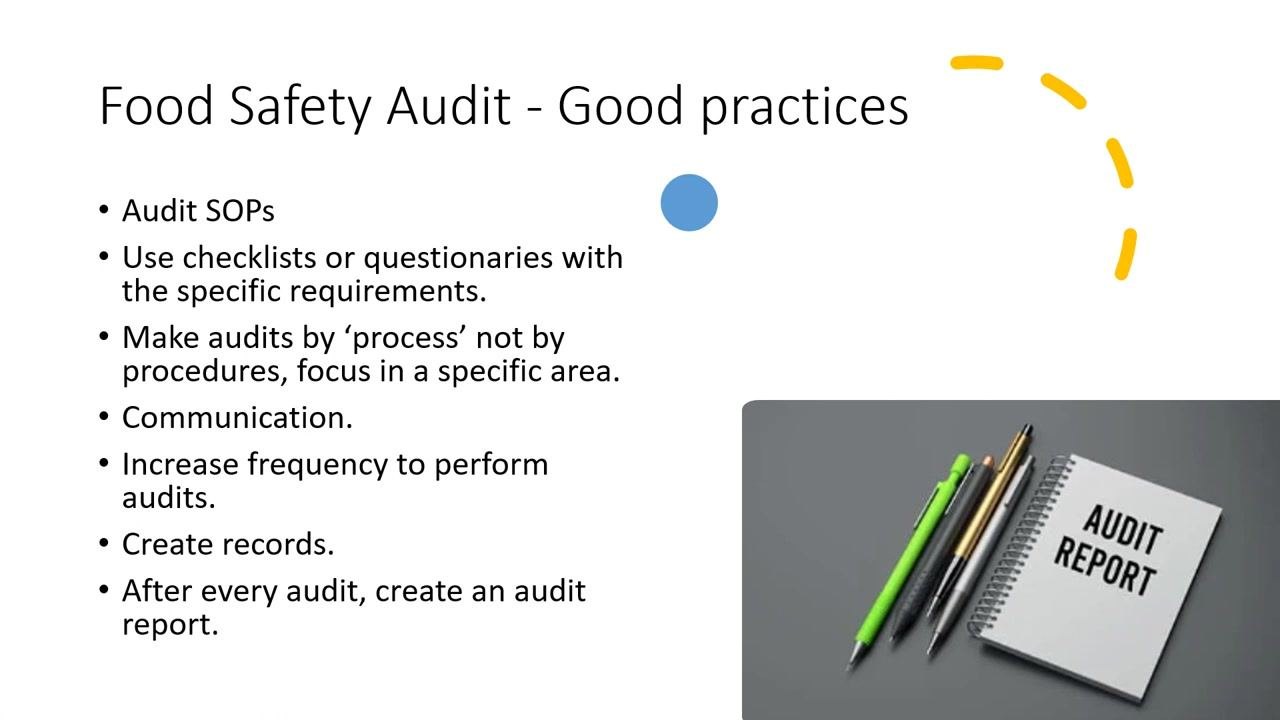
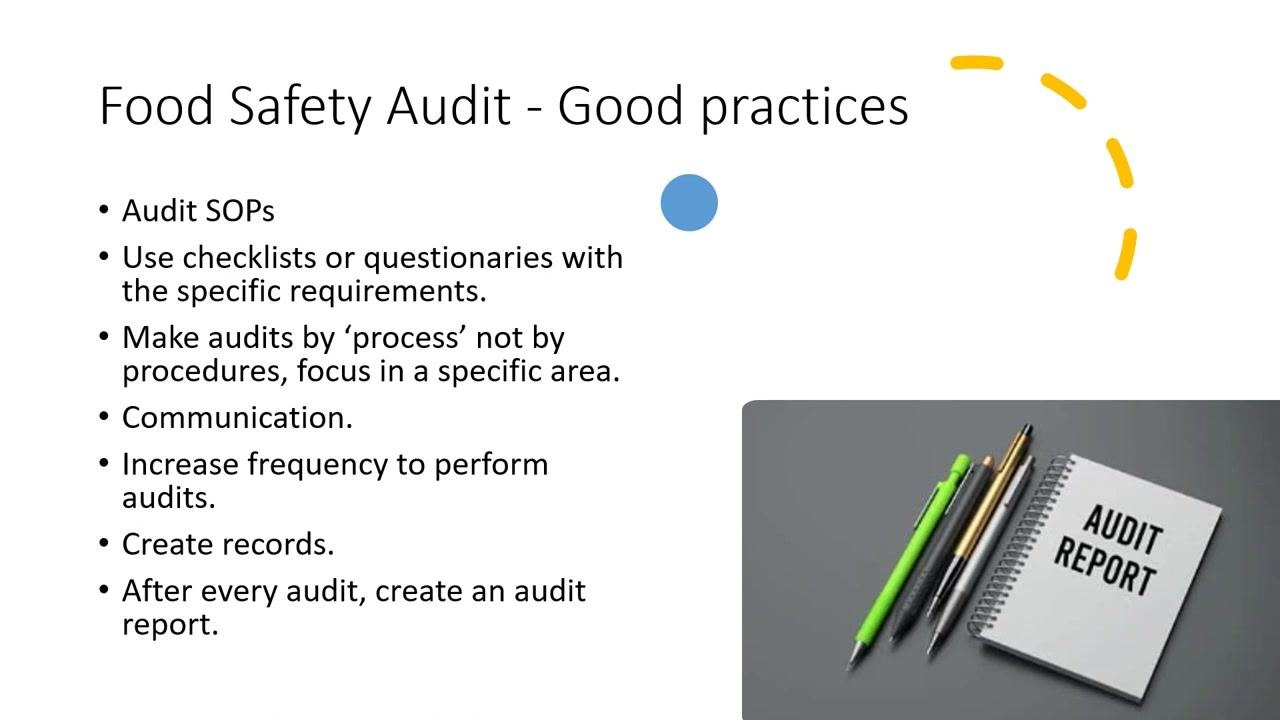
- Establish and follow Audit SOPs.
- Use checklists or questionnaires tailored to specific requirements.
- Conduct audits by process rather than by procedure, focusing on specific areas.
- Ensure effective communication throughout the audit process.
- Increase the frequency of audits to maintain high standards.
- Create and maintain accurate records of all audits.
- Generate a detailed audit report after every audit.
Create SOPs with detailed instructions for conducting food safety audits — they are essential for ensuring consistency in daily operations and for producing safe, quality products. Review and update SOPs regularly to reflect current best practices, and ensure all personnel involved in audits receive proper training on the use of SOPs, checklists, and audit processes.
Maintain communication throughout the audit
Ensure clear and effective communication throughout the audit process. Foster open dialogue between auditors, management, and staff to address findings and implement improvements.
Set the audit frequency
Perform audits at least annually as a baseline. Increase the frequency of audits in areas where more issues or non-conformances are identified, and adjust audit schedules based on risk assessment and previous audit results.
Create and maintain audit records
Document all audit activities to demonstrate implementation. Maintain records such as:
- Audit plans
- Non-conformance reports
- Corrective action reports
Ensure records are accurate, complete, and easily accessible for review.
Generate the audit report and schedule follow-ups
After every audit, create a detailed audit report summarizing findings, including all non-conformances and areas for improvement. Schedule follow-up actions to address non-conformances and verify corrective actions.
Assess the facility, processes, and distribution
Use audits to evaluate the overall condition of the facility, operational processes, and distribution systems. Identify strengths and areas needing improvement to enhance food safety.
Engage management and employees
Involve both management and employees in the audit process. Build a culture of food safety and continuous improvement through active participation and feedback.
Confirm regulatory and industry compliance
Use audit findings to verify compliance with all relevant regulatory and industry standards. Implement corrective actions promptly to address any gaps or deficiencies.
Conclude the audit process
At the end of the audit, thank all participants for their cooperation and contributions, and encourage ongoing commitment to food safety and continuous improvement.
Verification and summary
Confirm the following before closing out the audit:
- The audit plan was followed, covering the defined scope, complexity, area, and standards.
- All findings were recorded and evaluated against the audit criteria.
- Preventive and corrective actions were implemented and verified as effective.
- An audit evaluation confirmed that objectives were met and improvements are on track.
- A detailed audit report was generated, including non-conformances and follow-up actions.
- Audit records (plans, non-conformance reports, corrective action reports) are complete and accessible.
By following this food safety audit checklist — planning and preparation, execution, corrective and preventive actions, verification, and evaluation — combined with good practices such as regular SOPs, trained personnel, effective communication, increased audit frequency, and thorough documentation, you ensure a thorough, consistent, and compliant food safety audit process that supports continuous improvement across your organization.
Generation details: cost, quality tiers
Docsie billed 4,500 credits ($3.15) to analyze this 9-minute video at standard quality. The rewrite, template fill and Word/PDF exports were included. The same video at each quality tier:
| Quality | Frames sampled | Credits | Approx. cost |
|---|---|---|---|
| Draft | every 16-30 s | 2,250 | $1.57 |
| Standard (this guide) | every 8-15 s | 4,500 | $3.15 |
| Detailed | every 4-7 s | 9,000 | $6.30 |
| Ultra | every 1-3 s | 18,000 | $12.60 |
Credits priced at $0.70 per 1,000; plans include a monthly allowance. Enterprise customers on on-premise or bring-your-own-model deployments run this on their own inference and pay no per-video credits.
Generated by Docsie Video-to-Docs on 2026-09-10 from a 8-minute video. Screenshots are frames from the source video and belong to their creator, Food Safety Training School, whose original is embedded above. If you own this video and want the guide removed or credited differently, contact us and we will act within one business day.