
How to Measure Intake and Output
Document ID: SOP-IO-CALC-001 | Version: 1.0 | Effective Date: Per facility implementation
Video: Intake and Output Nursing Calculation Practice Problems NCLEX Review (CNA, LPN, RN) I and O by RegisteredNurseRN (2018). All credit for the demonstration goes to the creator; watch the original on YouTube. The written guide below was generated from this video by Docsie. Creator? Request a change or removal.
Document ID: SOP-IO-CALC-001 | Version: 1.0 | Effective Date: Per facility implementation
This document explains how to measure intake and output (I&O) for fluid balance monitoring, presented in a structured protocol format for clinical education and procedural reference. It defines what counts as intake, what counts as output, how to convert and total measurements, and how to calculate true urine output in patients receiving continuous bladder irrigation. The content is intended for nursing students, clinical instructors, and bedside staff responsible for documenting fluid balance.
Study Synopsis
| Field | Description |
|---|---|
| Document Title | Procedure for Measuring Intake and Output (I&O) in Fluid Balance Monitoring |
| Document Type | Clinical calculation procedure / educational reference |
| Applicable Setting | Inpatient nursing care, clinical skills instruction |
| Target Population | Patients requiring fluid balance monitoring, including patients receiving tube feedings, IV therapy, or continuous bladder irrigation |
| Procedure Summary | Identify eligible intake and output items, convert all volumes to milliliters, sum values per shift, and compare total intake to total output |
| Primary Objective | Accurately calculate total intake and total output, including adjusted urine output for patients with continuous bladder irrigation |
| Assessment Period | Typically one 12-hour nursing shift |
Background & Rationale
Intake and output (I&O) calculations are essential for monitoring a patient's fluid balance. Intake refers to all fluids taken into the body, while output refers to fluids expelled. Accurate calculation allows clinicians to identify early signs of fluid imbalance.
Insensible loss refers to fluid lost from the body that cannot be measured directly. This loss occurs through the skin (perspiration) and the lungs (respiration). According to Mosby's Medical Dictionary, average insensible loss is approximately 600 milliliters per day. Insensible loss is not included in I&O calculations, but it should be considered during overall patient assessment.

Comparing total intake to total output provides a basis for identifying fluid balance risk:
- If output is greater than intake, the patient is at risk for dehydration.
- If intake is greater than output, the patient is at risk for fluid overload.
This rationale underpins the need for a consistent, standardized method for measuring intake and output at the bedside.
Study Design
The procedure follows a sequential calculation approach applied across a defined assessment period, typically a 12-hour shift. The clinician first reviews a chart or log of intake and output items recorded by time, then applies inclusion and exclusion rules to each entry, converts all non-metric units to milliliters, and sums the eligible values to produce a total intake and a total output figure. Where continuous bladder irrigation is in use, an additional subtraction step is applied to isolate true urine output from total catheter drainage.
The design does not involve randomization or treatment arms; it is a deterministic calculation procedure applied consistently to any intake/output log for the duration of the designated shift.
Eligibility Criteria
The following numbered lists define which items are "eligible" (included) or "ineligible" (excluded) for intake and output calculations.

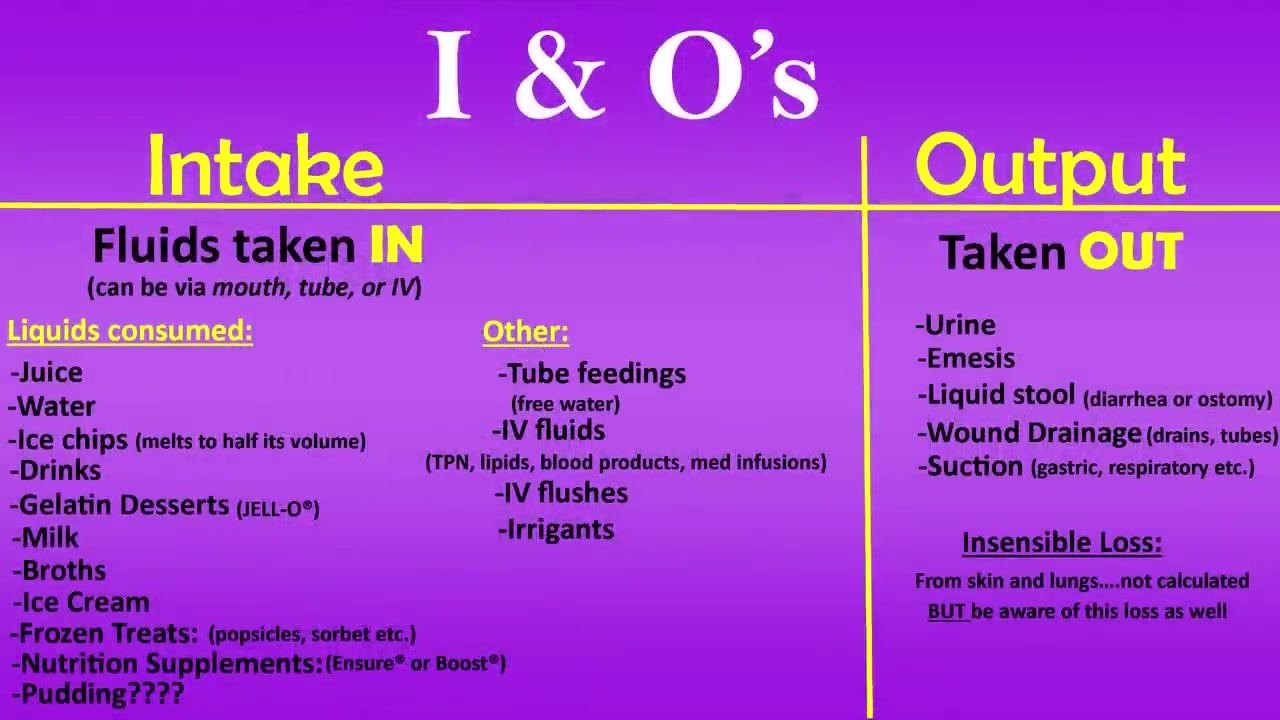
Inclusion criteria — Intake
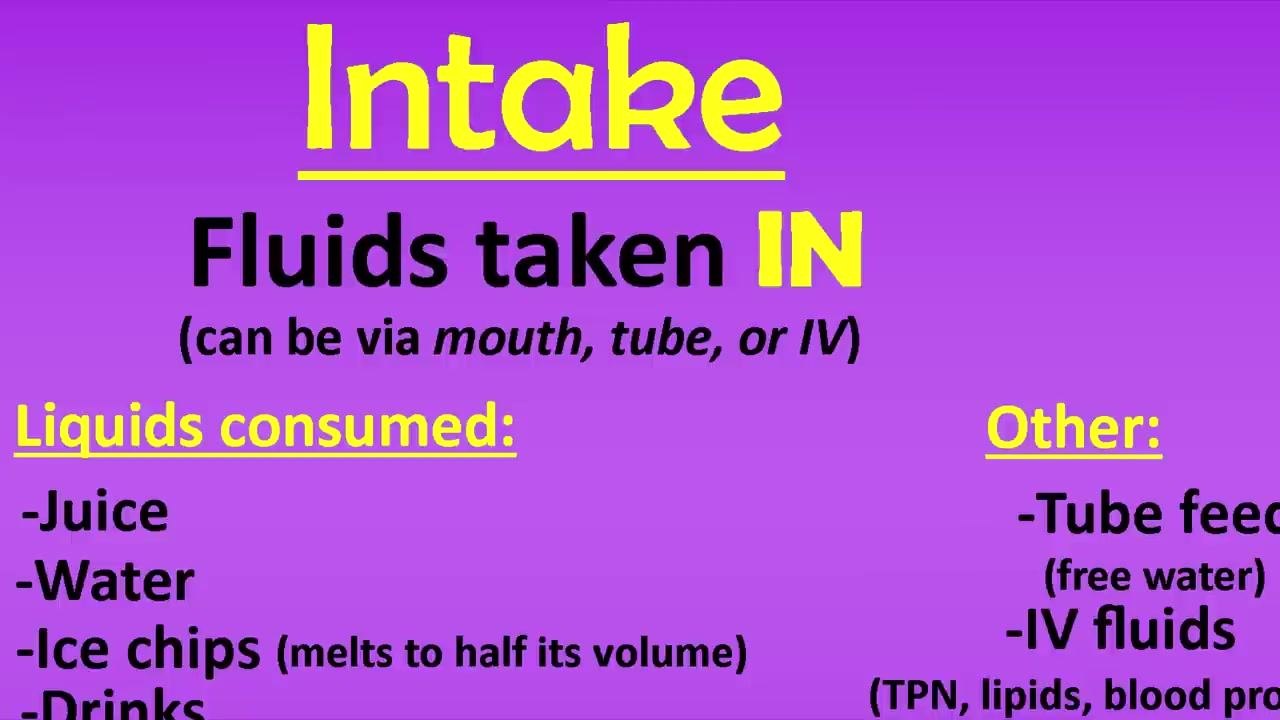
- Fluids taken in by mouth, tube, or intravenous (IV) route.
- Any substance that is liquid at room temperature.
- Juice.
- Water.
- Ice chips — recorded as half their original volume (e.g., 8 oz of ice chips = 4 oz intake).
- Drinks such as tea, coffee, and soda.
- Gelatin desserts (e.g., Jell-O).
- Milk.
- Broths.
- Ice cream.
- Frozen treats such as popsicles and sorbet.
- Nutrition supplements (e.g., Ensure, Boost).
- Tube feedings, including free water flushes given through the tube.
- IV fluids, including TPN, lipids, blood products, and medication infusions.
- IV flushes.
- Irrigants, if not withdrawn (such as continuous bladder irrigation).

Exclusion criteria — Intake
- Pudding is generally not included, as it is not universally considered a liquid at room temperature.
- Items that are not liquid at room temperature.
- Insensible losses are not applicable to intake (see Background & Rationale).
There is conflicting guidance regarding pudding specifically. One source, NCLEX-PN 2015-2016 Strategies, Practice, and Review with Practice Test (Irwin, Yock, & Burckhardt, 2015, p. 127), recommends not including pudding because it is considered a semi-liquid.

Another source, Lippincott's Textbook for Nursing Assistants (Carter, 2007, 2nd ed., p. 403), suggests including pudding in intake calculations.
Because guidance differs, always confirm with your facility's policy or instructor before an exam or clinical practice. For the purposes of this procedure, do not include pudding in intake calculations unless specifically instructed otherwise.

Inclusion criteria — Output
- Urine.
- Emesis (vomit).
- Liquid stool, such as diarrhea or output from an ostomy bag, especially ileostomies.
- Wound drainage from drains, tubes, wound bags, JP drains, and chest tubes.
- Suctioned fluids from gastric or respiratory systems.
Exclusion criteria — Output
- Insensible losses (fluid lost through skin and lungs) are not included in output calculations, as they cannot be measured.
Study Endpoints
- Primary endpoint: Total measured fluid intake (in mL) and total measured fluid output (in mL) for the assessment period, calculated according to the inclusion and exclusion criteria above.
- Secondary endpoint: Comparative fluid balance assessment — determination of whether output exceeds intake (dehydration risk) or intake exceeds output (fluid overload risk).
- Exploratory endpoint: Awareness of insensible loss as a contextual factor in overall patient assessment, without inclusion in the numeric I&O total.
- Special-population endpoint: True urinary output (UOP) in patients receiving continuous bladder irrigation, calculated by subtracting instilled irrigation volume from total Foley catheter drainage.

Schedule of Assessments
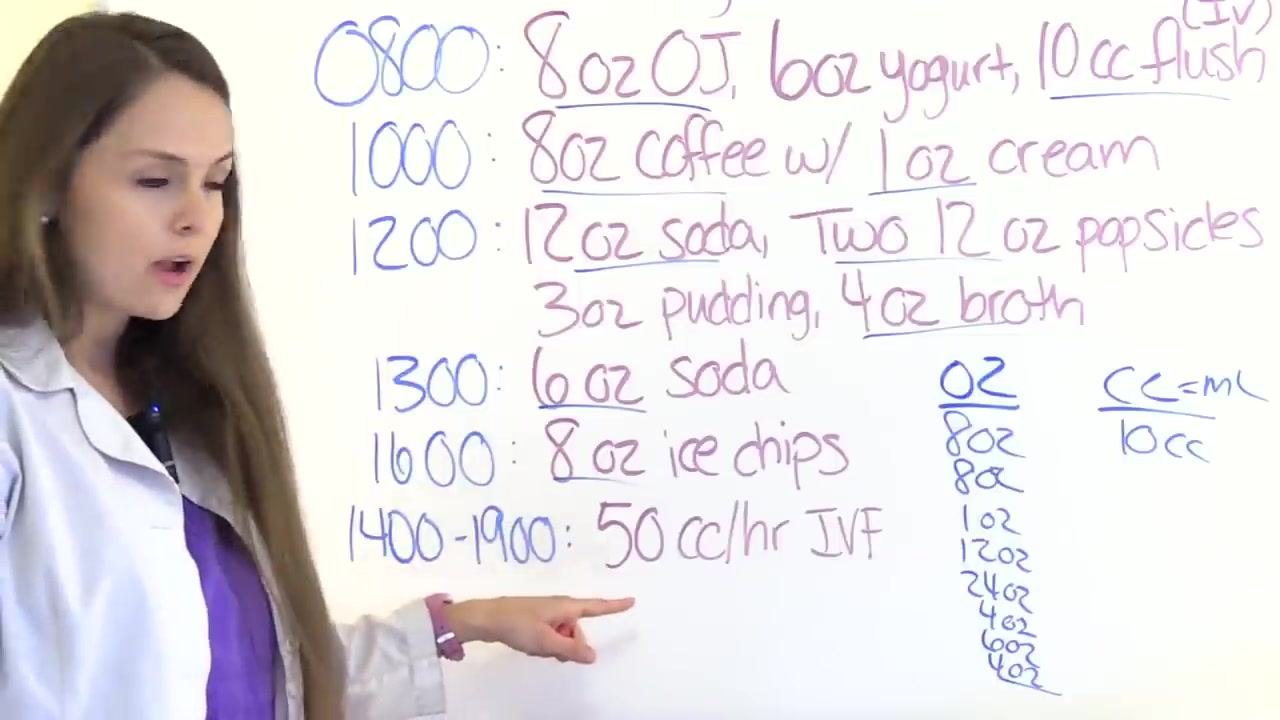
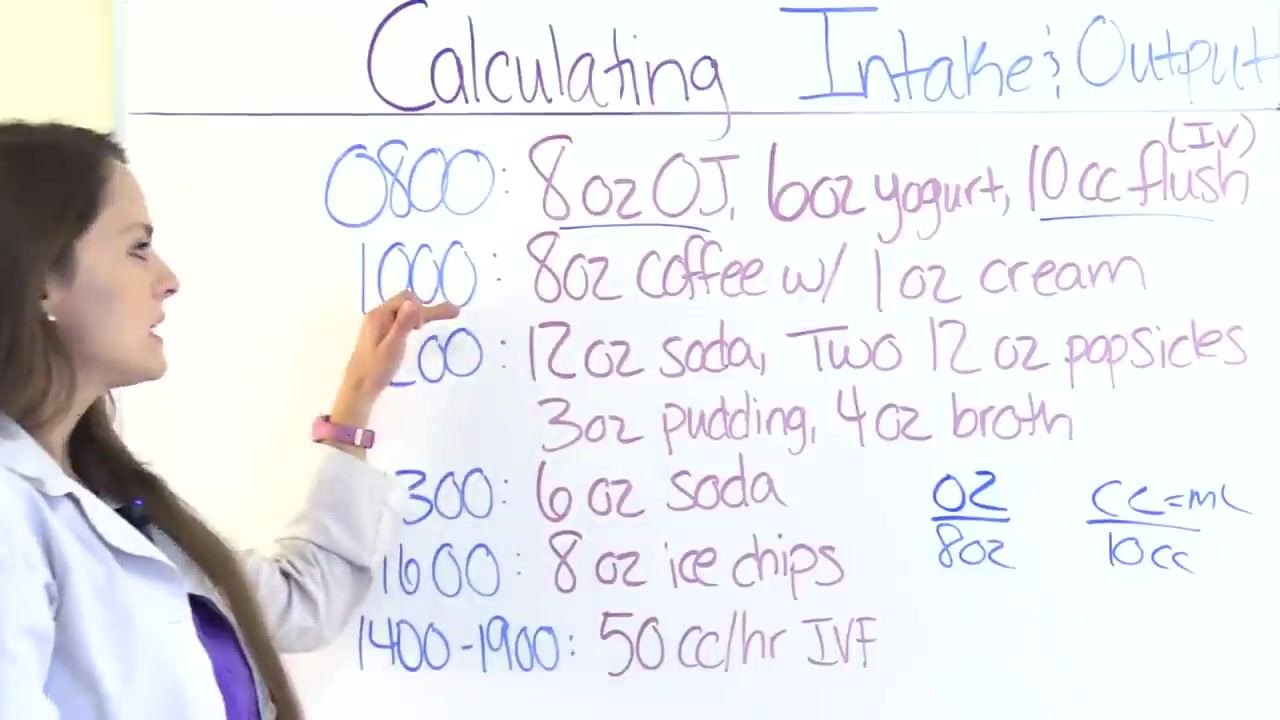
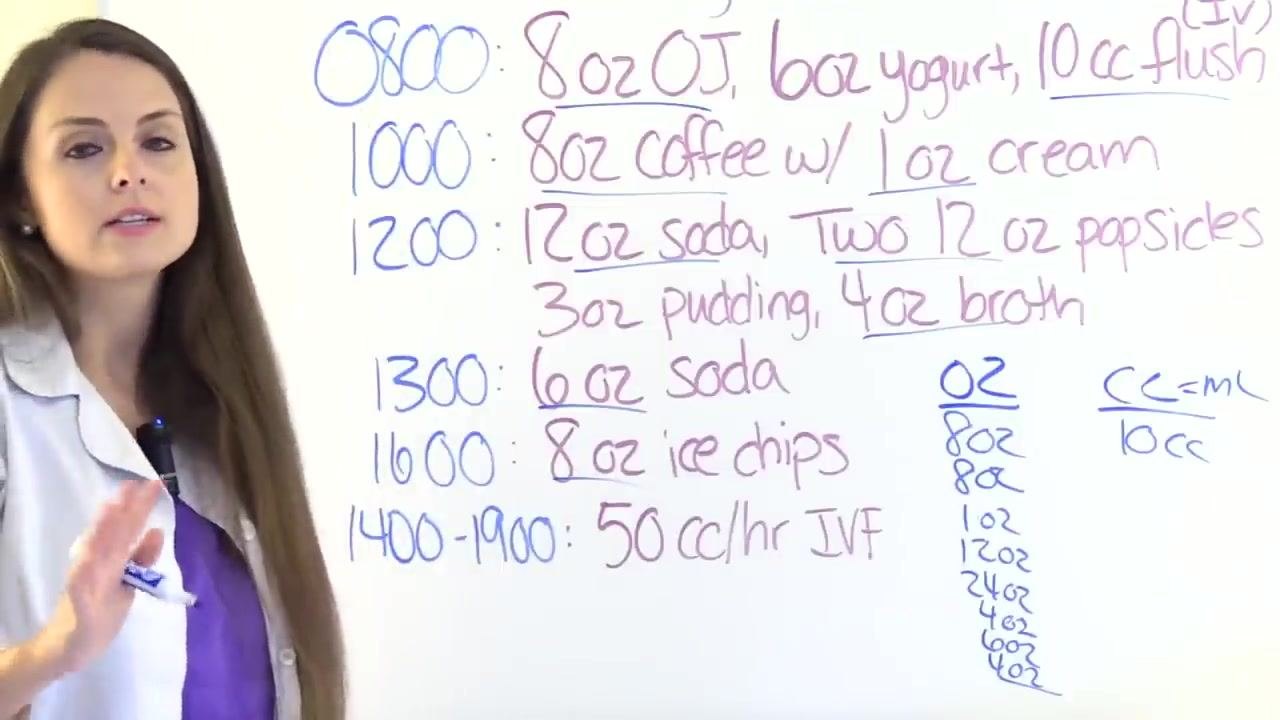
The table below reflects a representative 12-hour shift intake log used to demonstrate the calculation procedure.
| Time | Items Recorded | Included in Intake? | Converted Value |
|---|---|---|---|
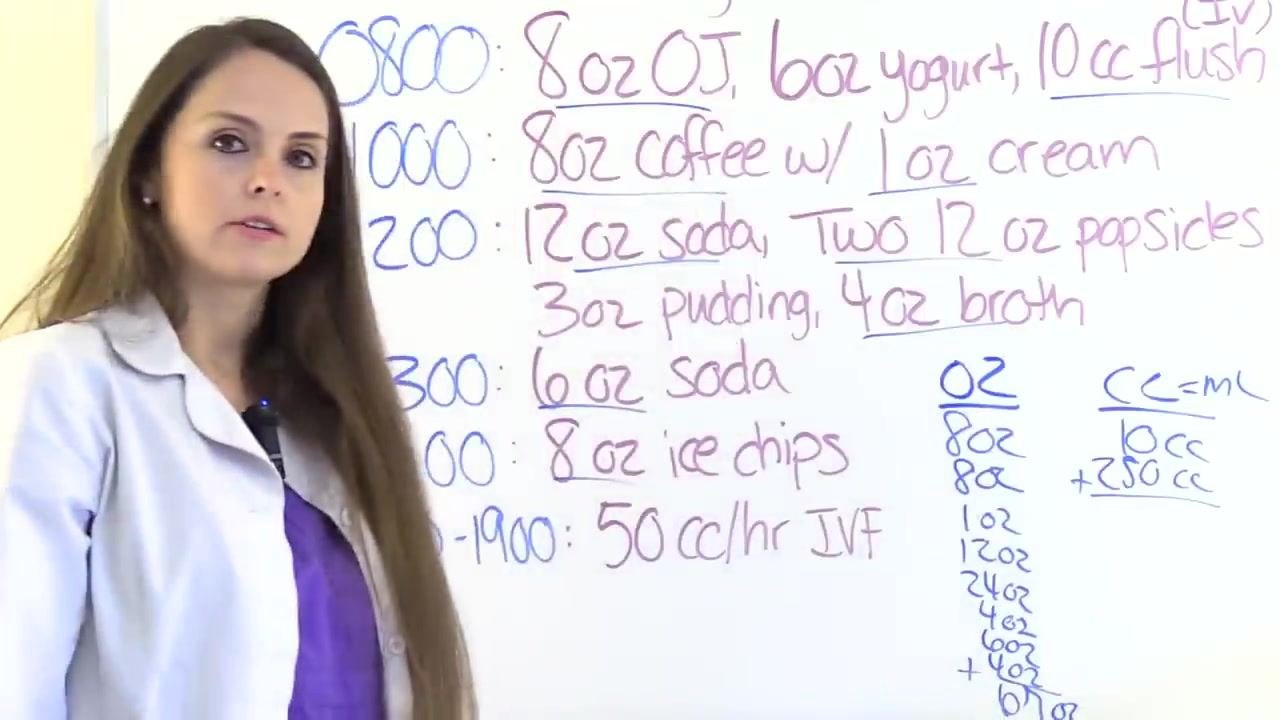
| 0800 | 8 oz OJ, 6 oz yogurt, 10 cc IV flush | OJ and flush yes; yogurt no | 8 oz + (10 cc ÷ 30) = 8.33 oz |
| 1000 | 8 oz coffee, 1 oz cream | Both yes | 8 oz + 1 oz = 9 oz |
| 1200 | 12 oz soda, two 12 oz popsicles | Yes; popsicles counted individually | 12 oz + 24 oz = 36 oz |
| 1300 | 3 oz pudding, 4 oz broth, 6 oz soda | Pudding excluded; broth and soda included | 4 oz + 6 oz = 10 oz |
| 1600 | 8 oz ice chips | Yes, at half volume | 4 oz |
| 1400–1900 | 50 cc/hr IV fluids | Yes | 50 cc × 5 hr = 250 cc |
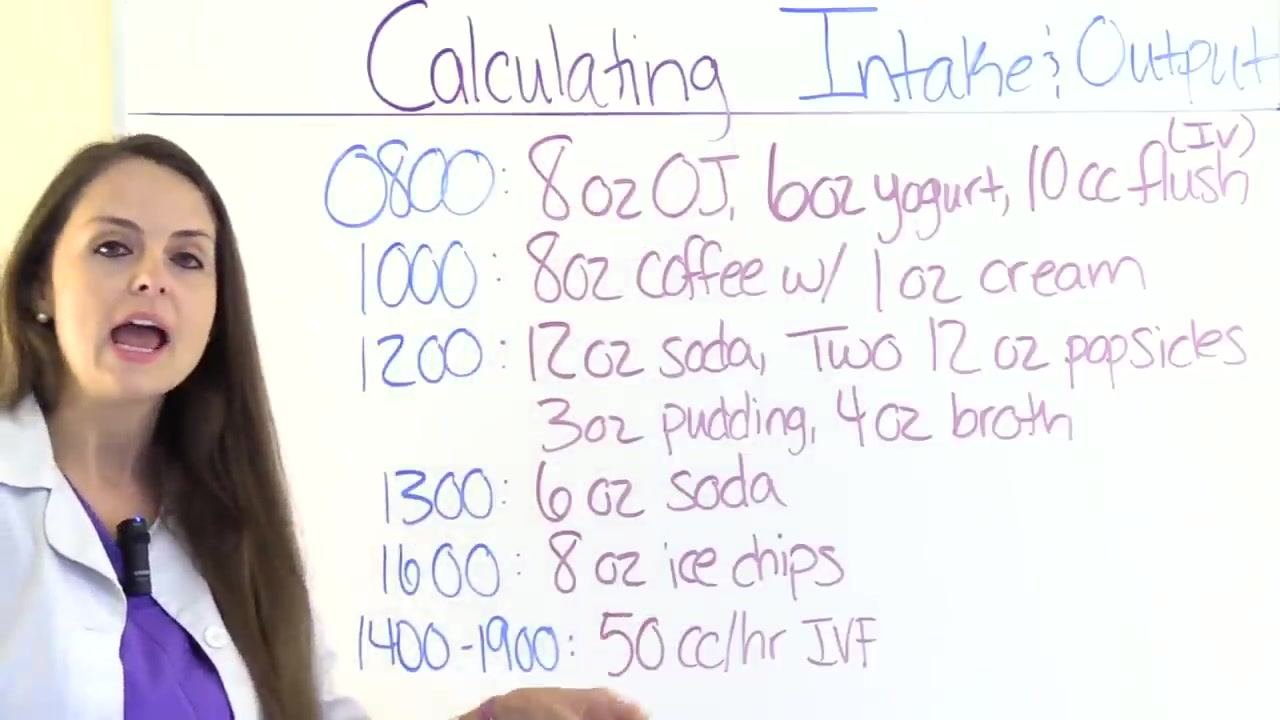
At 0800, orange juice is included, yogurt is excluded because it is not considered a fluid for I&O purposes, and the 10 cc IV flush is converted to ounces before being added to the total.
At 1200, both 12 oz popsicles must be counted individually rather than recorded as a single 12 oz serving, giving 24 oz from popsicles alone.
At 1300, the 3 oz pudding entry is excluded from the running total, while broth and soda remain included.
At 1600, the 8 oz of ice chips is recorded as 4 oz of fluid intake, consistent with the half-volume rule.
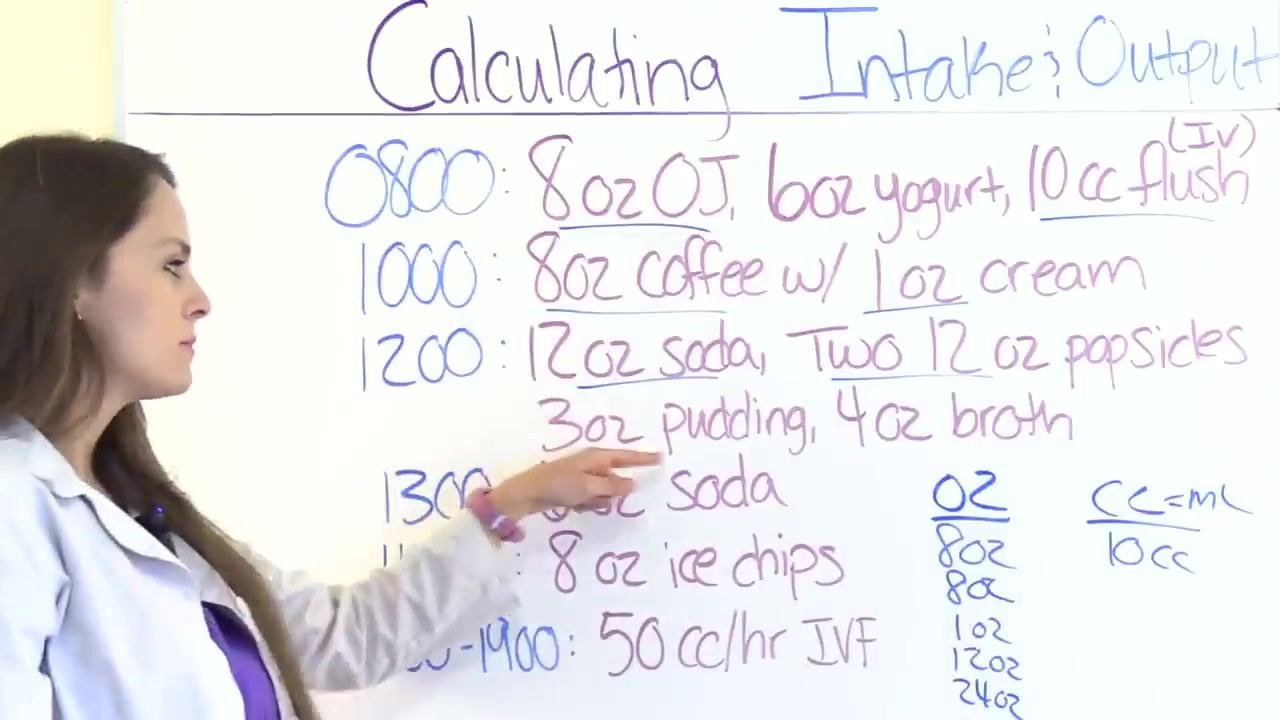
For the 1400–1900 window, IV fluids running at 50 cc/hr are multiplied by the 5-hour duration to yield 250 cc total.
Statistical Considerations
Calculation methodology — intake
- Do not combine values measured in cc directly with values measured in ounces without converting. Mixing units produces calculation errors.
- Use the conversion reference: 1 ounce (oz) = 30 cc (or mL).
- Sum all eligible ounce values for the shift first.
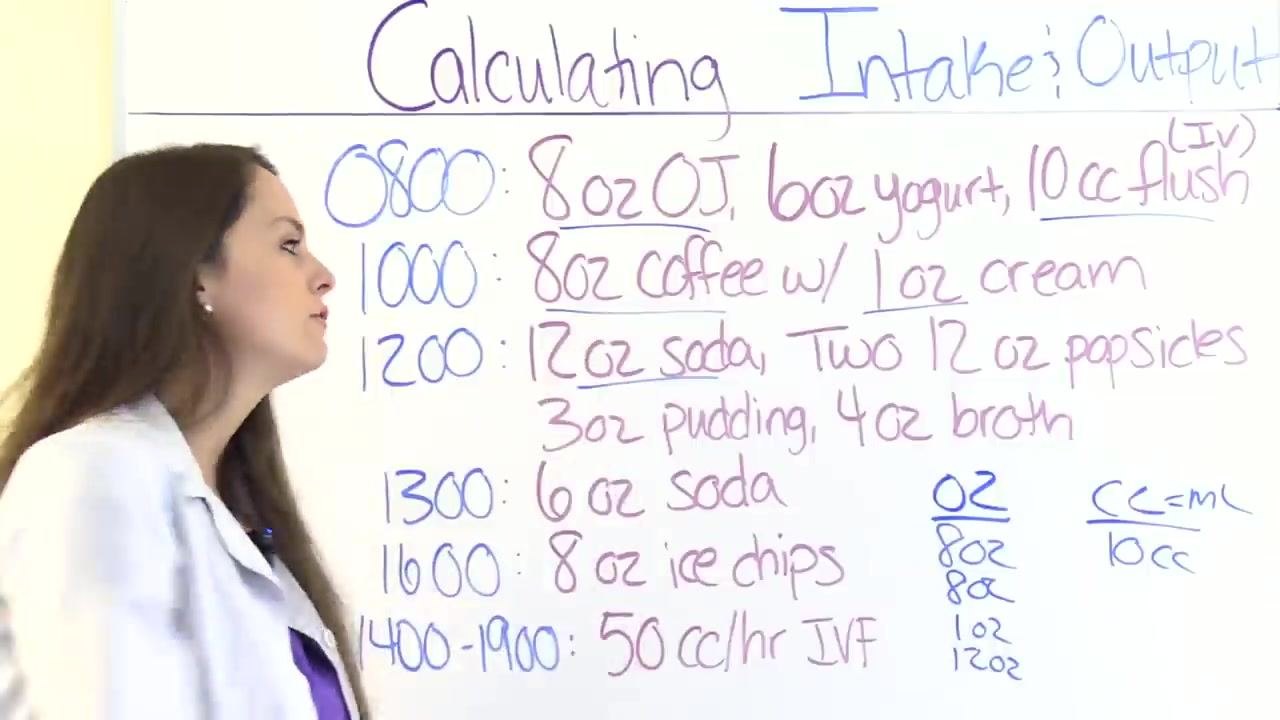
In the representative example, the eligible ounce values sum to a total of 67 oz.
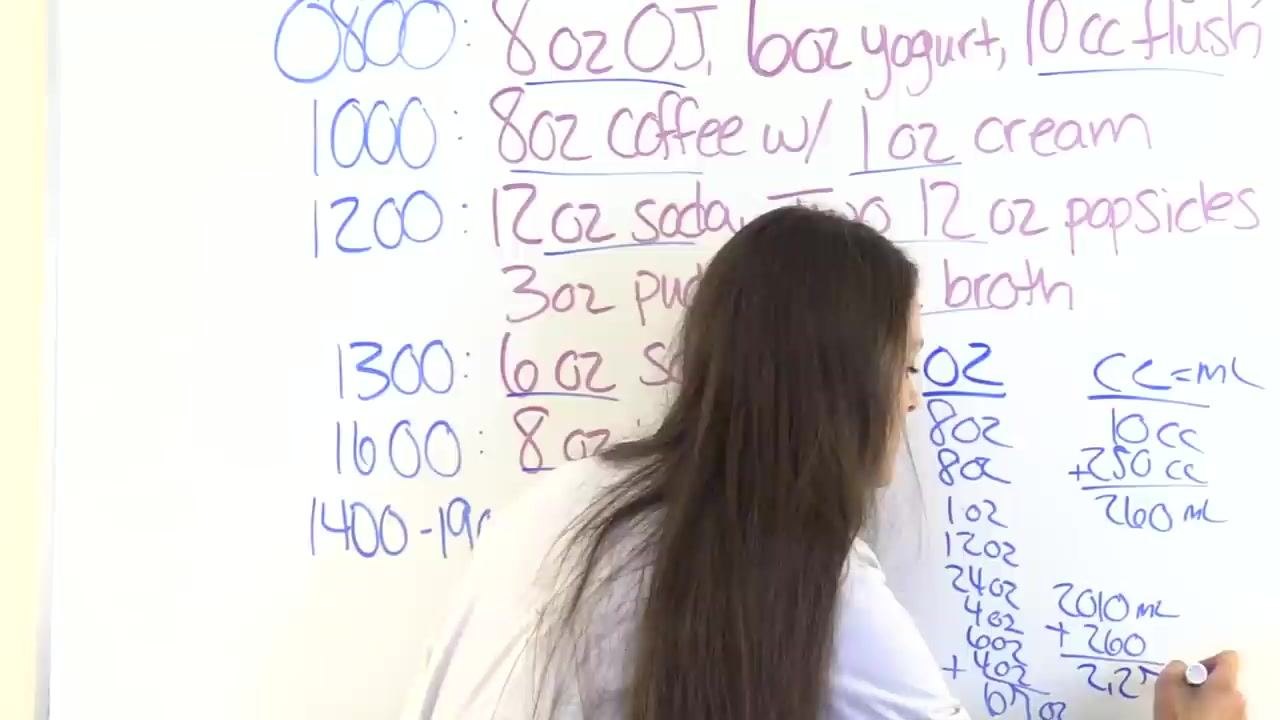
- Convert the total ounce figure to milliliters by multiplying by 30: 67 oz × 30 = 2,010 mL.
- Add any IV fluid volume (already in mL/cc) to the converted oral intake total: 2,010 mL (oral) + 250 mL (IV) = 2,260 mL total intake.
Primary analysis method — output with continuous bladder irrigation
When a patient is receiving continuous bladder irrigation, the total volume collected in the Foley bag includes both urine and instilled irrigation fluid. The analysis method requires subtracting the irrigation volume instilled from the total volume collected to isolate true urine output.
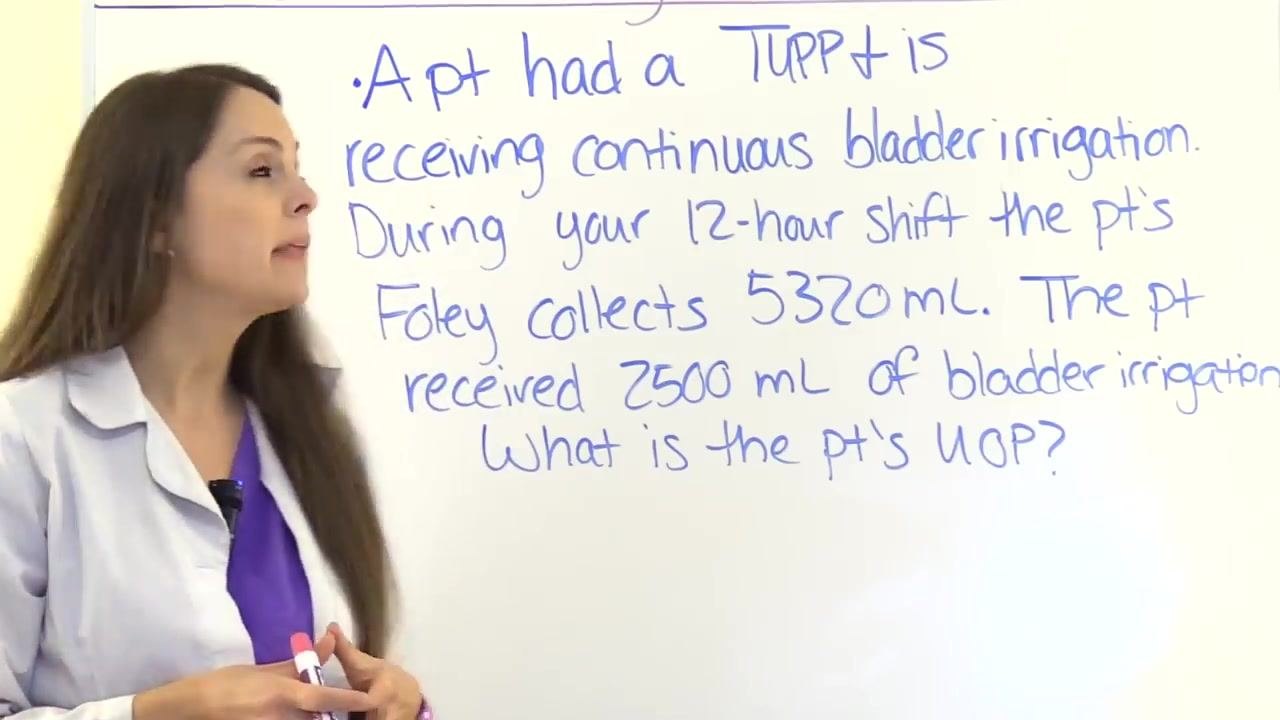
Example scenario: A patient had a TURP (Transurethral Resection of the Prostate) and is receiving continuous bladder irrigation. During a 12-hour shift, the Foley catheter collected 5,320 mL, and the patient received 2,500 mL of bladder irrigation fluid. The question posed is: what is the patient's urinary output?

Calculation steps:
- Record the total volume collected in the Foley bag: 5,320 mL.
- Record the volume of bladder irrigation instilled: 2,500 mL.
- Subtract the irrigation volume from the total collected: 5,320 mL − 2,500 mL = 2,820 mL.
The patient's true urinary output for the shift is 2,820 mL. This subtraction approach serves as the standard analysis method whenever continuous bladder irrigation is present, ensuring that irrigation fluid is not mistakenly counted as urine output.
Sample size / analysis population note: This procedure applies to individual patient-level calculations rather than aggregated study populations; no sample size calculation is applicable.
Safety Reporting
This document does not define formal adverse event grading scales, reporting timelines, or Data Safety Monitoring Board (DSMB) oversight procedures. In clinical practice, findings indicating a fluid balance risk — specifically output exceeding intake (dehydration risk) or intake exceeding output (fluid overload risk) — should be reported according to the facility's clinical escalation policy, and any ambiguous items (such as pudding) should be confirmed with institutional policy or clinical instructors before documentation.
What's Next
After calculating total intake and total output, compare the two figures to assess fluid balance risk as described in the Background & Rationale section. For patients with continuous bladder irrigation, always apply the subtraction method described under Statistical Considerations before documenting final urine output. Always verify ambiguous inclusion/exclusion items, such as pudding, against your facility's current policy.
Generation details: cost, quality tiers, downloads
Docsie billed 5,000 credits ($3.50) to analyze this 10-minute video at standard quality. The rewrite, template fill and Word/PDF exports were included. The same video at each quality tier:
| Quality | Frames sampled | Credits | Approx. cost |
|---|---|---|---|
| Draft | every 16-30 s | 2,500 | $1.75 |
| Standard (this guide) | every 8-15 s | 5,000 | $3.50 |
| Detailed | every 4-7 s | 10,000 | $7.00 |
| Ultra | every 1-3 s | 20,000 | $14.00 |
Credits priced at $0.70 per 1,000; plans include a monthly allowance. Enterprise customers on on-premise or bring-your-own-model deployments run this on their own inference and pay no per-video credits.
Generated by Docsie Video-to-Docs on 2026-10-02 from a 9-minute video. It was generated straight into Docsie's Clinical Protocol Document template, so every section of that template is filled from the video. Screenshots are frames from the source video and belong to their creator, RegisteredNurseRN, whose original is embedded above. If you own this video and want the guide removed or credited differently, contact us and we will act within one business day.