
How to Create a Haccp Plan
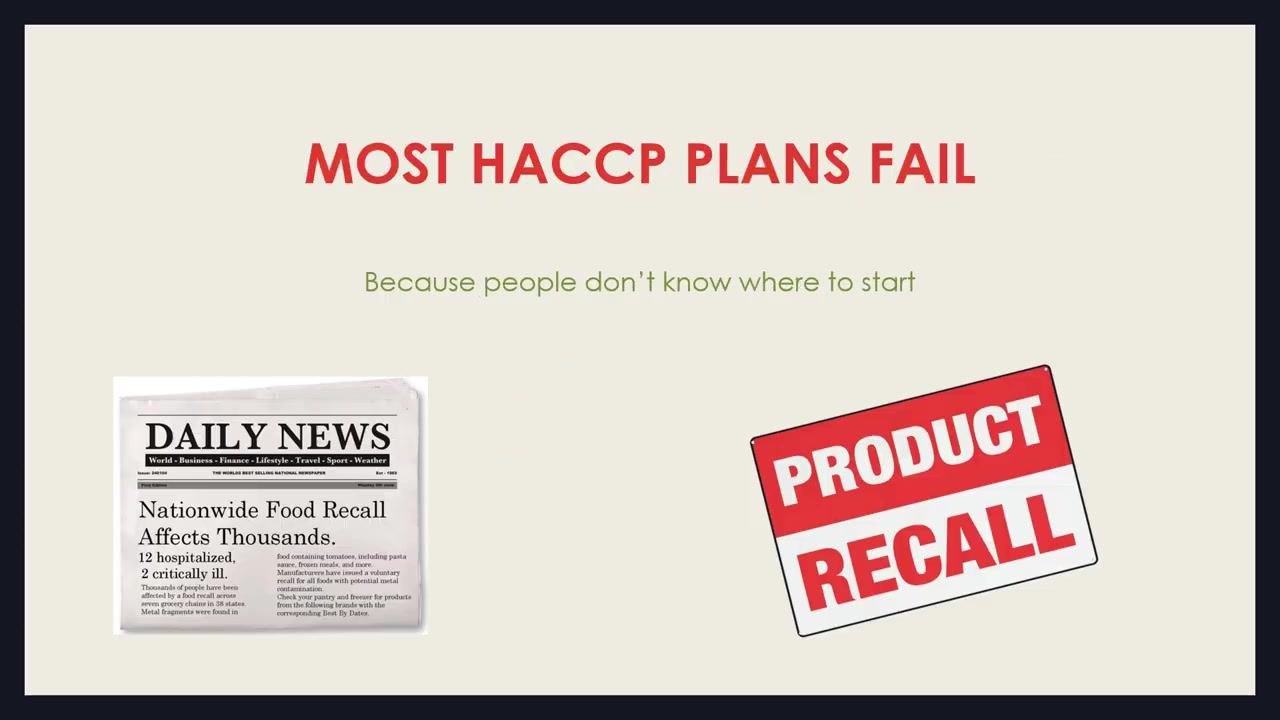
Learning how to create a HACCP plan starts with understanding that a strong plan is built from a realistic, process-specific example rather than generic definitions. This documentation walks through building a Hazard Analysis and Critical Control Point (HACCP) plan for those responsible for food safety, quality, or compliance, and explains what auditors and inspectors actually look for. Most HACCP plans fail because they are copied from another facility, written only to satisfy a requirement, or created without fully understanding the actual process. During audits, common problems include hazards listed without justification, Critical Control Points (CCPs) that do not need to be CCPs, and a documented process that does not match what happens on the production floor. A HACCP plan only works when it is process-specific, realistic, and maintained over time.
Video: How to Build a HACCP Plan Step by Step (Real Example Explained) by Food Safety Training School (2026). All credit for the demonstration goes to the creator; watch the original on YouTube. The written guide below was generated from this video by Docsie. Creator? Request a change or removal.
Learning how to create a HACCP plan starts with understanding that a strong plan is built from a realistic, process-specific example rather than generic definitions. This documentation walks through building a Hazard Analysis and Critical Control Point (HACCP) plan for those responsible for food safety, quality, or compliance, and explains what auditors and inspectors actually look for. Most HACCP plans fail because they are copied from another facility, written only to satisfy a requirement, or created without fully understanding the actual process. During audits, common problems include hazards listed without justification, Critical Control Points (CCPs) that do not need to be CCPs, and a documented process that does not match what happens on the production floor. A HACCP plan only works when it is process-specific, realistic, and maintained over time.
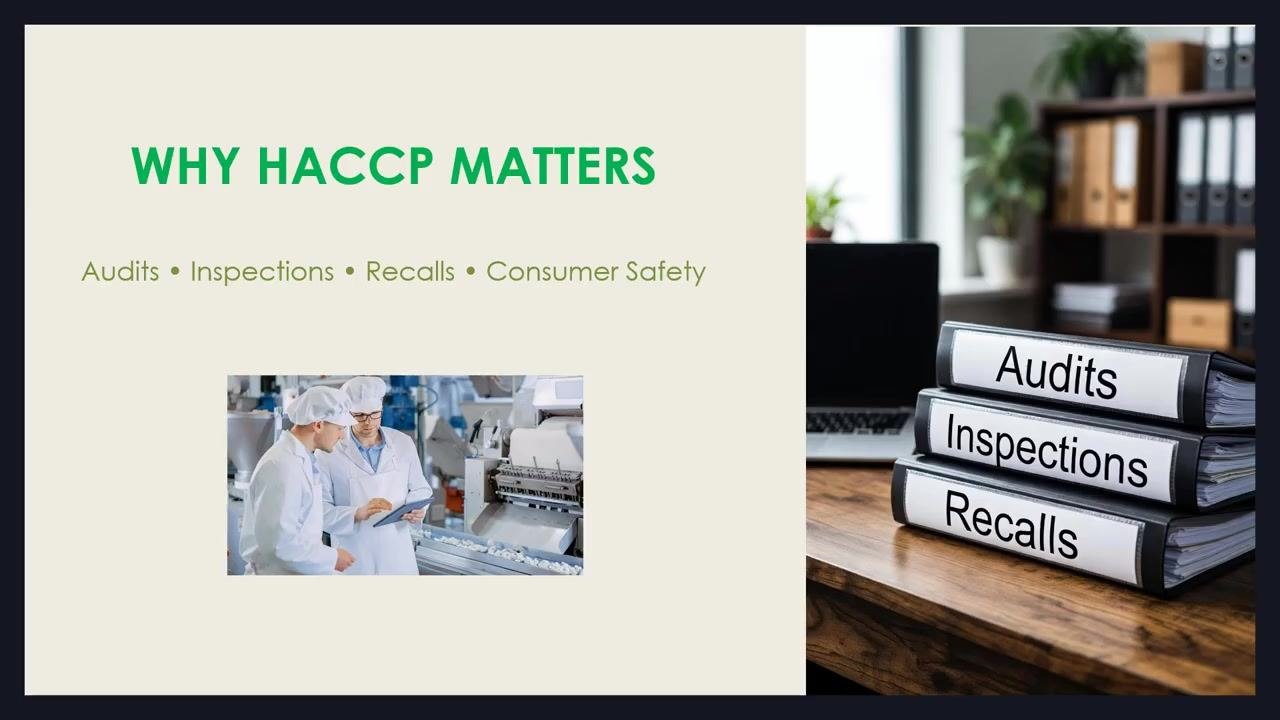
HACCP is a preventive food safety system. Instead of relying on finished-product testing, it identifies where hazards could reasonably occur and controls them before they become a problem. Testing alone cannot guarantee safety, since products may already be produced or distributed by the time results are available — HACCP shifts the focus from reaction to prevention. HACCP is required or expected under FDA regulations, GFSI-recognized schemes, and many customer or retailer requirements, and it is often one of the first documents reviewed during an inspection or audit.
Prerequisites
A weak HACCP plan often signals weaknesses in the overall food safety system. Before building your plan, confirm that the following prerequisite programs are in place and effective:
- Good Manufacturing Practices (GMPs)
- Sanitation programs
- Employee training
- Supplier approval
- Pest control
- Preventive maintenance
HACCP is not designed to control basic hygiene or housekeeping issues. If your prerequisite programs are weak, your HACCP plan becomes overloaded with unnecessary controls. Avoid the common mistake of trying to fix GMP problems by adding Critical Control Points — this is not the intended function of HACCP.
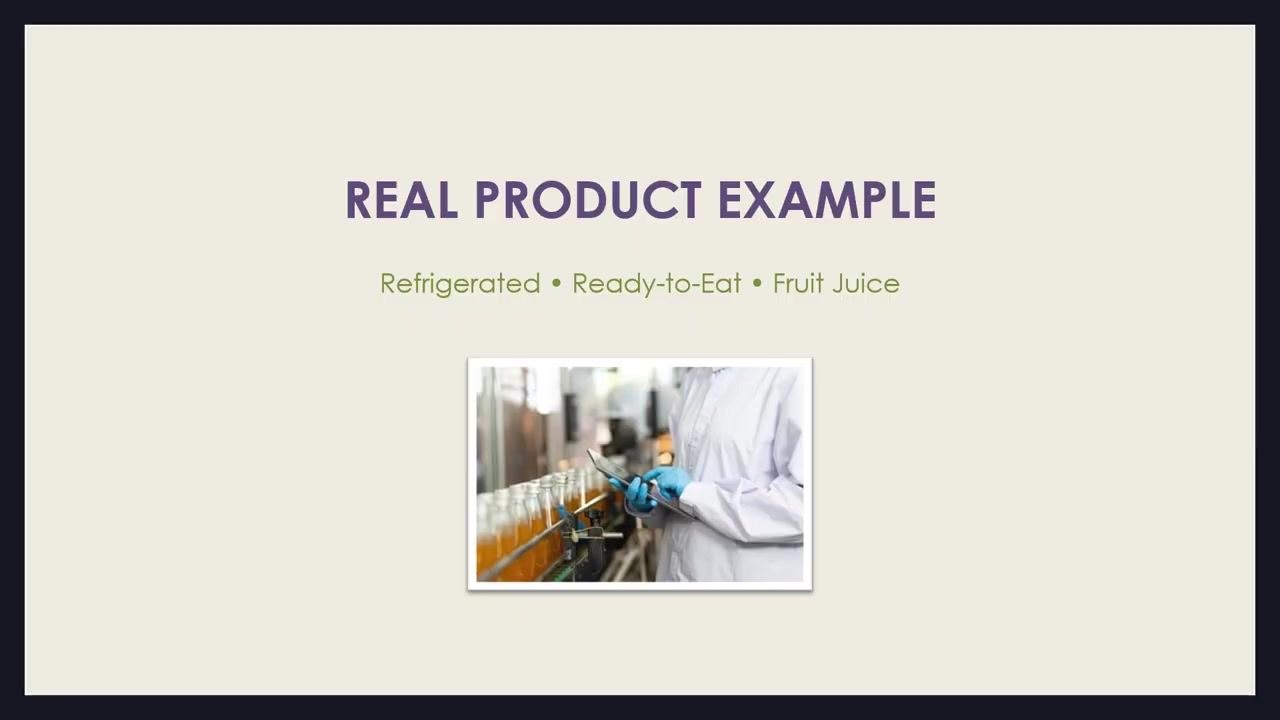
Throughout this documentation, a realistic example is used: a refrigerated, ready-to-eat fruit juice packaged in bottles, stored under refrigeration, and consumed without further processing. Ready-to-eat products carry a higher food safety risk, particularly for biological hazards, because the consumer applies no kill step before consumption — a factor that directly shapes hazard analysis and control decisions.
Process scope
Document a clear product description as the foundation for identifying realistic hazards. Include:
- Ingredients
- Formulation
- Packaging type
- Storage conditions
- Shelf life
- Distribution method
For the juice example, refrigeration is a critical factor because temperature abuse could allow microbial growth. This SOP does not specify a facility location; record your site's name and address in this field when documenting your own plan.
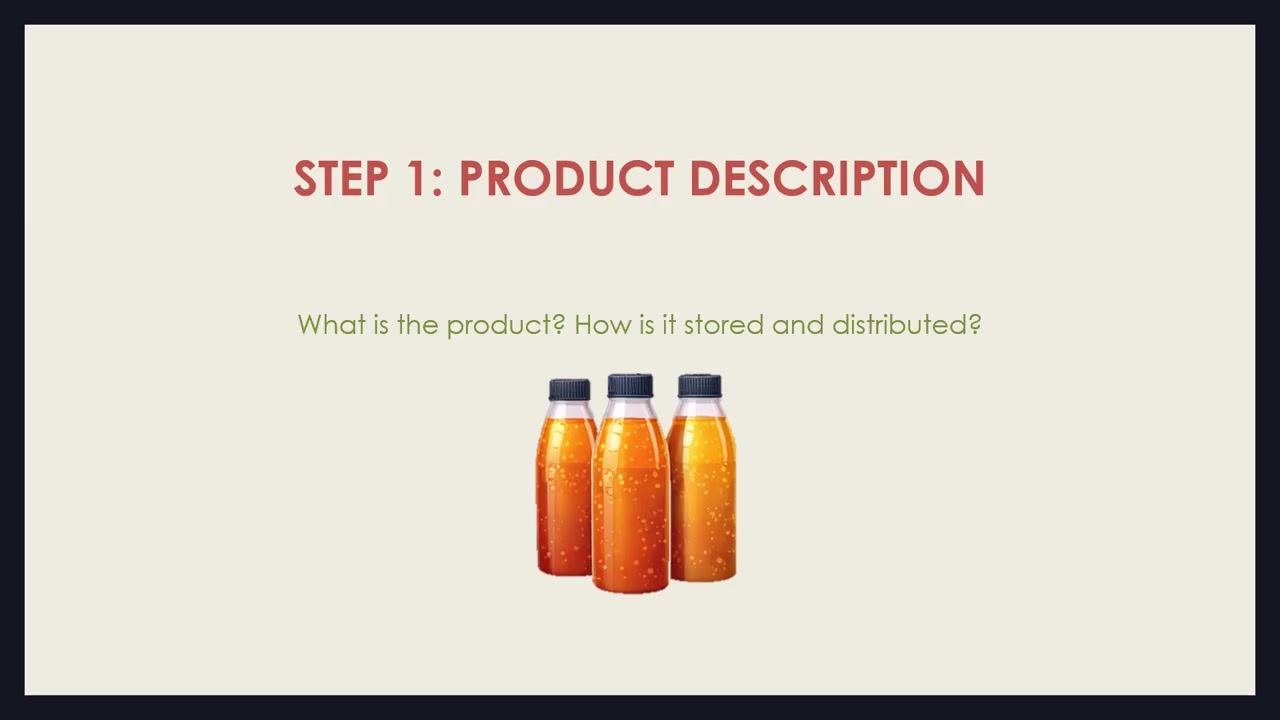
Step 1 — Product description: Answer clearly: What is the product? How is it stored and distributed?
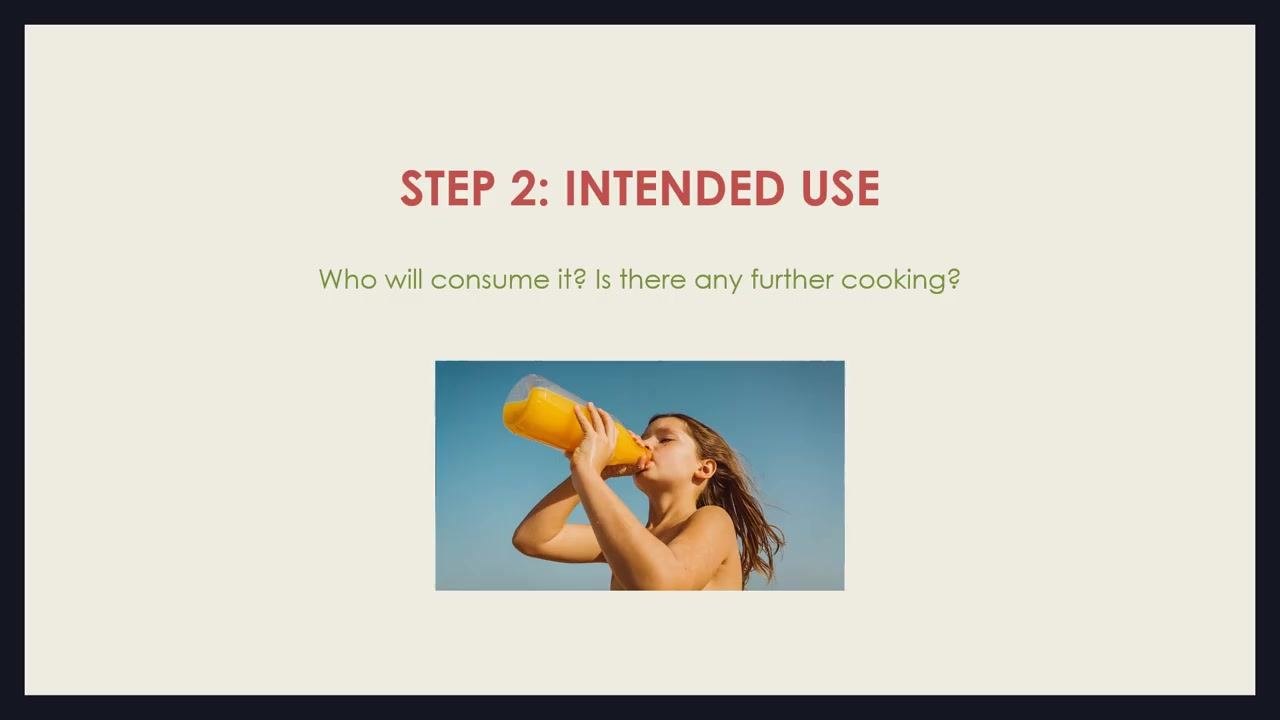
Step 2 — Intended use: Define how the product is expected to be consumed and by whom. For the juice example, the product is consumed directly by the general population, including potentially vulnerable individuals such as children, the elderly, or immunocompromised persons. There is no further cooking or processing by the consumer, so every hazard must be controlled during production. This increases the importance of hazard control, since consumers cannot eliminate risks themselves.
Example documentation: "Intended use: Ready-to-drink juice, consumed directly by all population groups, including vulnerable individuals. No further cooking or processing expected."
| Field | Detail (juice example) |
|---|---|
| Product | Refrigerated, ready-to-eat fruit juice |
| Packaging | Bottled |
| Storage | Under refrigeration |
| Distribution | Cold chain distribution |
| Intended consumers | General population, including vulnerable individuals |
| Preparation by consumer | None — no further cooking or processing |
Hazard analysis
Build a process flow diagram that reflects actual practices, not just written procedures. Include every step that occurs in practice, even if undocumented — for example, staging fruit at room temperature before processing. Auditors may verify accuracy by physically walking the process floor and comparing it to your documentation; an inaccurate flow diagram undermines the entire plan.
Example process flow for juice: Receiving → Washing → Juicing → Bottling → Cold Storage → Distribution
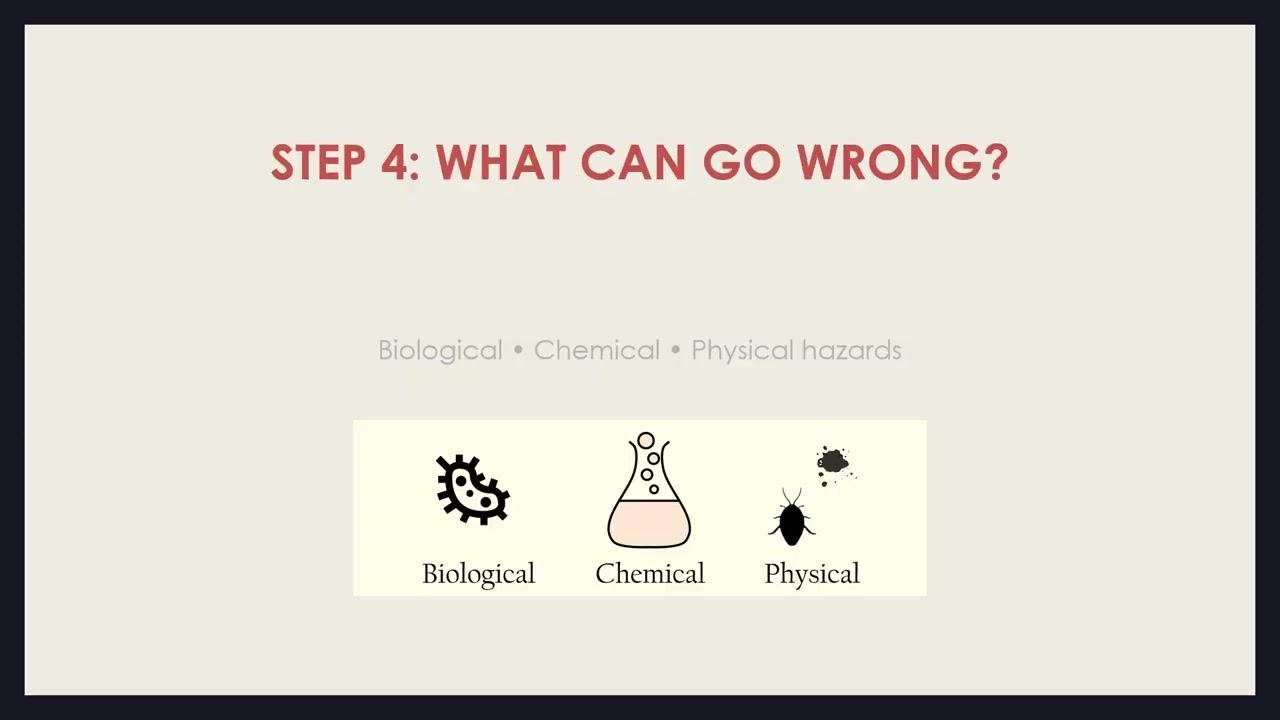
At every step, identify hazards that could reasonably occur, evaluate their severity and likelihood, and determine how each is controlled. Some hazards are already controlled by prerequisite programs (sanitation, supplier approval); not every hazard requires a CCP if it is already adequately controlled.
| Process step | Biological hazard | Chemical hazard | Physical hazard |
|---|---|---|---|
| Receiving | Controlled via supplier approval program | — | — |
| Washing | — | Residue from cleaning agents | — |
| Juicing | Pathogens (no kill step present) | — | — |
| Bottling | — | — | Foreign objects from equipment |
| Cold Storage | Microbial growth from temperature abuse | — | — |
| Distribution | Microbial growth from temperature abuse | — | — |
Critical control points
A Critical Control Point (CCP) is a step where control is essential to prevent, eliminate, or reduce a hazard to an acceptable level. Only designate a step as a CCP if it is the last or only point where a specific hazard can be controlled. If a process includes pasteurization, that step may be identified as a CCP for biological hazards.
When your process has no kill step, control the hazard through alternative methods:
- Supplier controls to ensure incoming materials are safe
- Strict sanitation procedures throughout the facility
- Refrigeration to keep products at safe temperatures
- Shelf-life validation to confirm safety over time
Justify and document the rationale for every CCP decision so it is traceable during review.
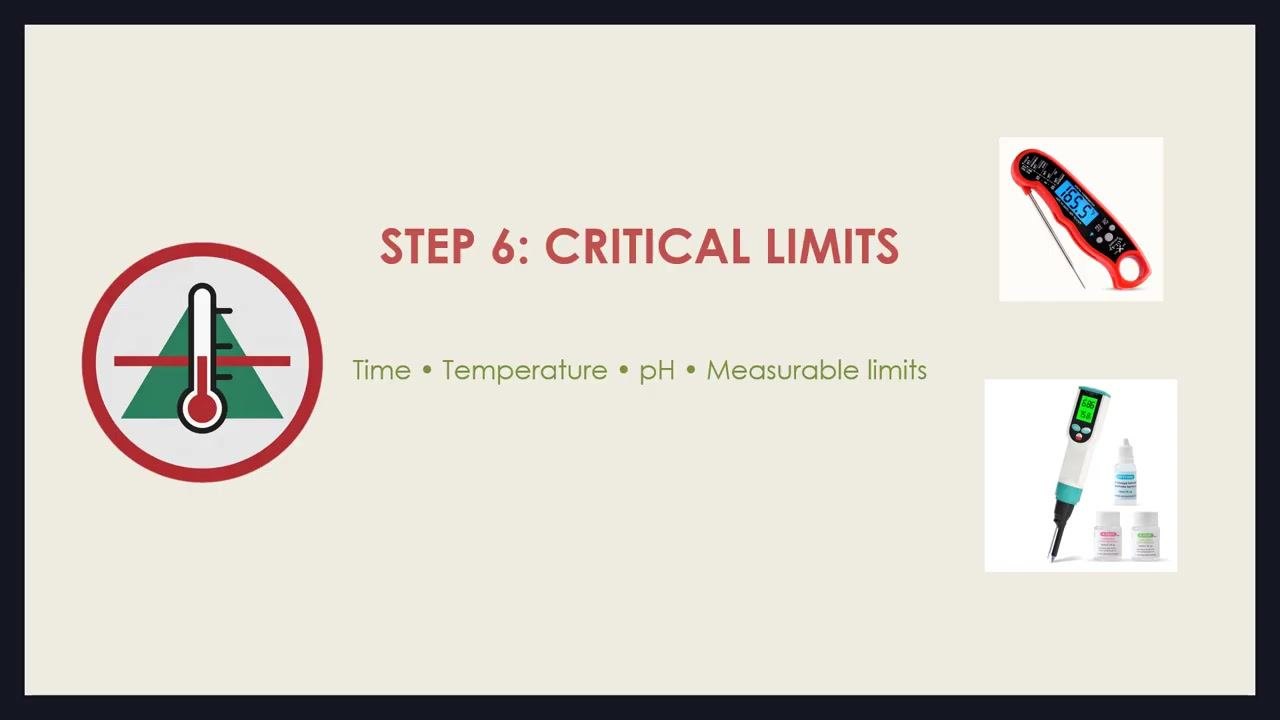
Establish critical limits for each CCP — measurable values such as time, temperature, or pH — supported by scientific or regulatory evidence.
| CCP | Critical limit | Responsible role | Required equipment |
|---|---|---|---|
| Pasteurization (if present in the process) | Minimum pasteurization temperature | Line operator / quality technician | Thermometer |
| Cold storage | Maximum storage temperature | Storage / warehouse personnel | Thermometer, refrigeration monitoring system |
| Shelf-life control | Validated shelf-life limit | Quality personnel | Shelf-life validation records |
Monitoring
Monitoring confirms each CCP stays within its critical limits. Define how, when, who, and how often monitoring occurs, and ensure the method is practical and consistently performed.
| What is checked | Frequency | Method | Record location |
|---|---|---|---|
| Critical limit parameter (e.g., temperature, pH) | Defined per facility risk assessment | Direct observation or instrument reading (thermometer, pH meter) | Monitoring log |
Corrective actions
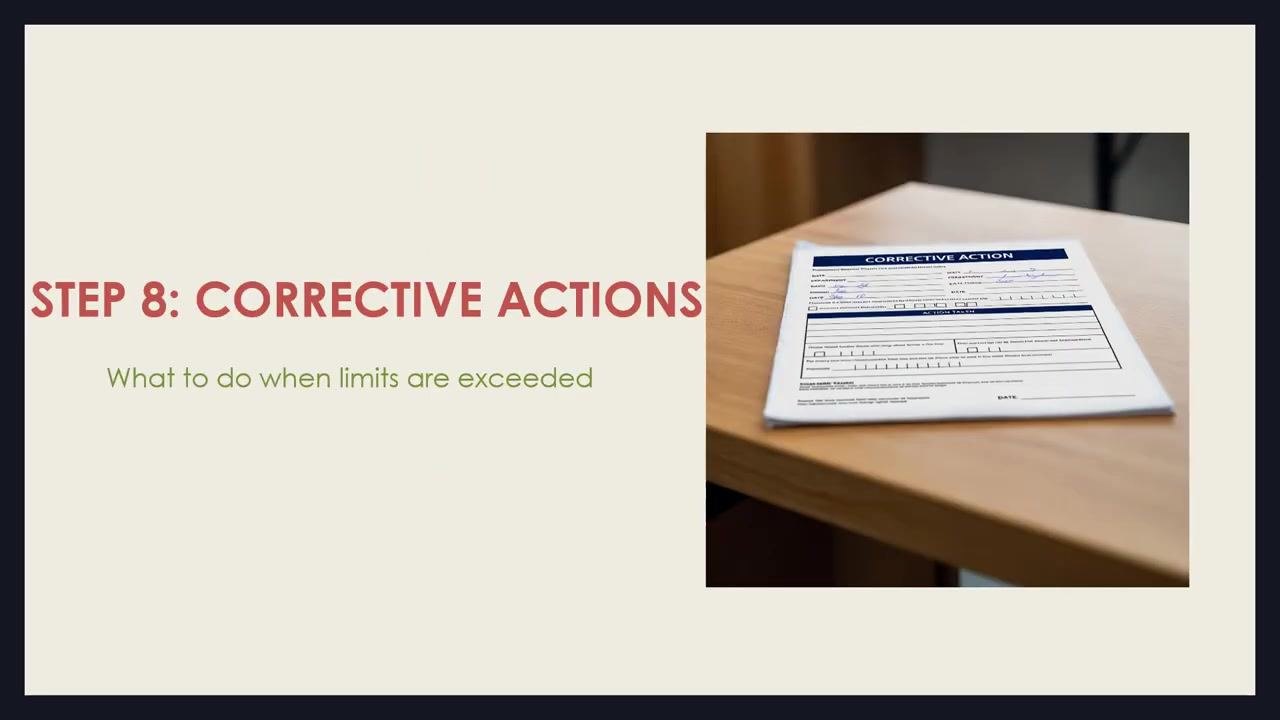
Define what to do when monitoring shows a limit has been exceeded. Corrective actions must be specific and realistic, not vague, so staff can act immediately and consistently.
| Trigger | Required action | Product disposition |
|---|---|---|
| Critical limit exceeded | Correct the process and document the deviation per facility procedure | To be assessed against risk before release, rework, or disposal, per facility procedure |
Verification
Verify that the HACCP plan actually works through record reviews, calibration of monitoring equipment, internal audits, and validation studies. Verification is typically carried out by supervisory or quality personnel, with the goal of catching gaps before they become serious issues.
| Activity | Performed by | Frequency |
|---|---|---|
| Record review | Supervisory or quality personnel | Per facility schedule |
| Equipment calibration | Quality personnel | Per facility schedule |
| Internal audit | Supervisory or quality personnel | Per facility schedule |
| Validation study | Quality personnel | Per facility schedule |
Records
Records provide evidence that controls were implemented as planned. Ensure all monitoring, corrective action, and verification activities are documented — if it isn't documented, it didn't happen.
| Log | Retention period | Accountable owner |
|---|---|---|
| Monitoring log | Defined per facility procedure | Assigned monitoring personnel |
| Corrective action record | Defined per facility procedure | Quality personnel |
| Verification record | Defined per facility procedure | Supervisory or quality personnel |
During audits, records are often reviewed in more detail than the HACCP plan itself, so keep all documentation organized and readily accessible.
What's next
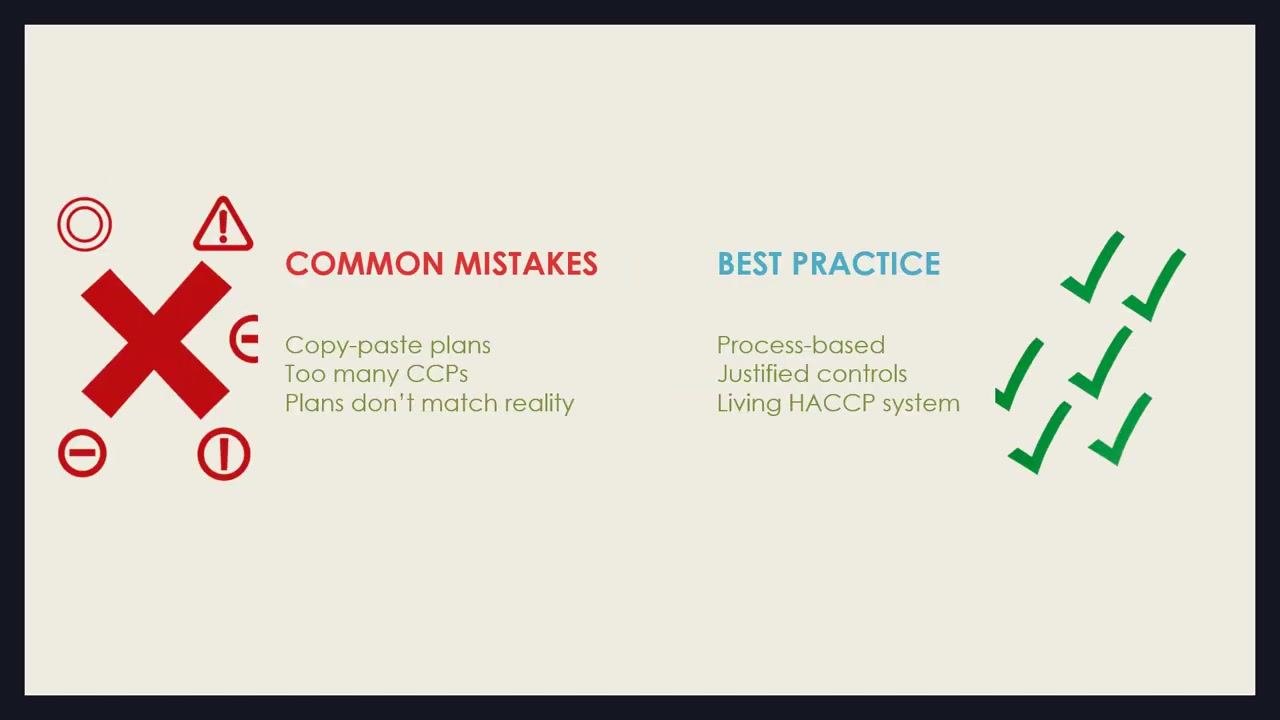
Compare your plan against common pitfalls and adopt best practice habits going forward:
| Common mistakes | Best practice |
|---|---|
| Copy-paste plans | Process-based plan |
| Too many CCPs | Justified controls only |
| Plans don't match reality | Living HACCP system |
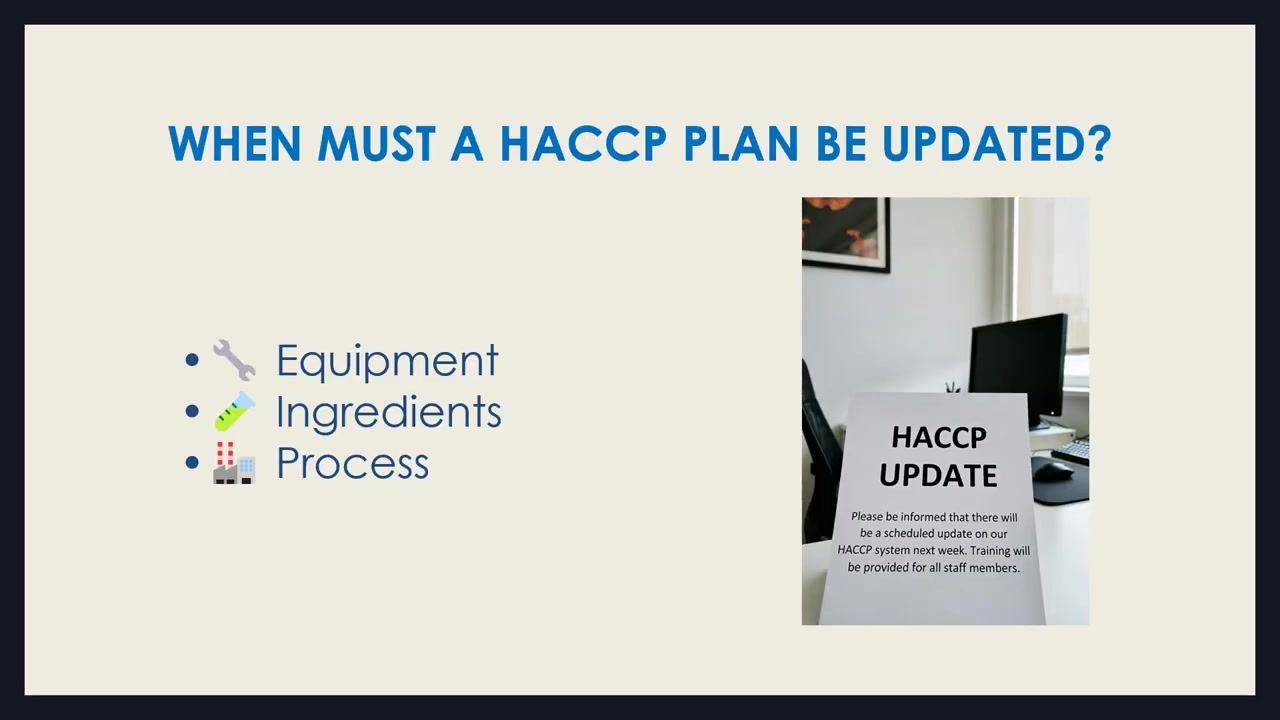
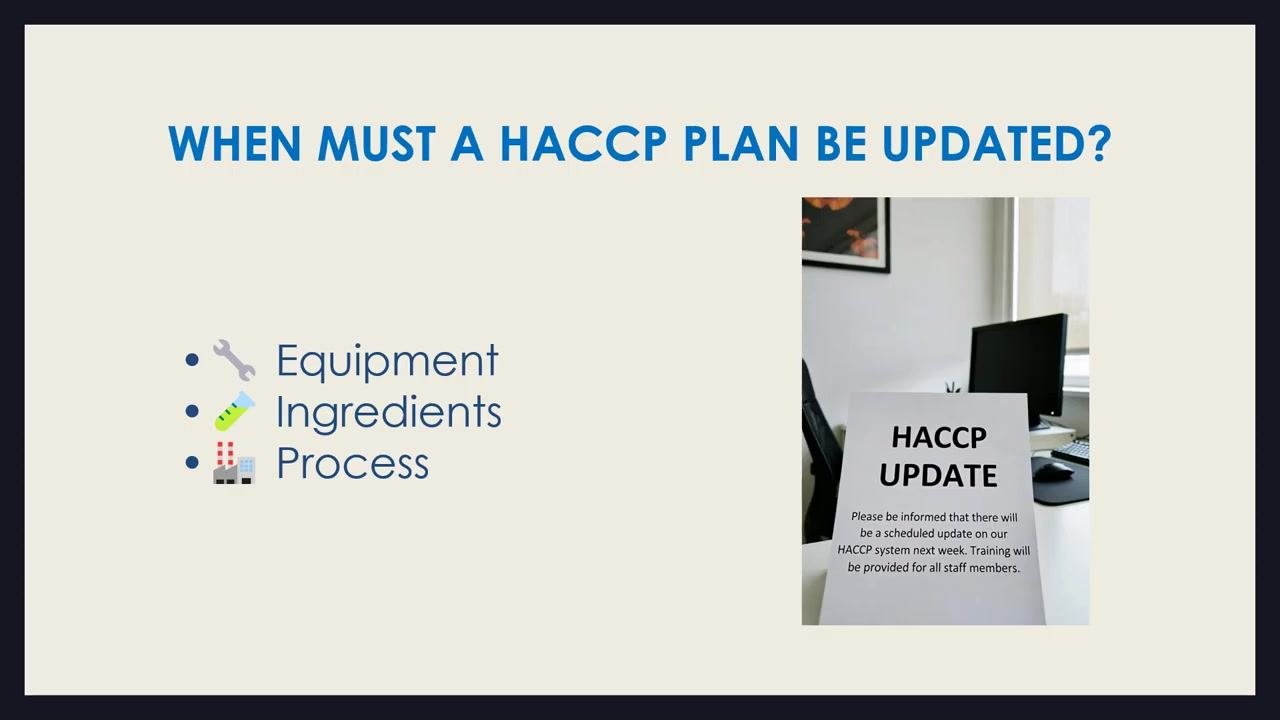
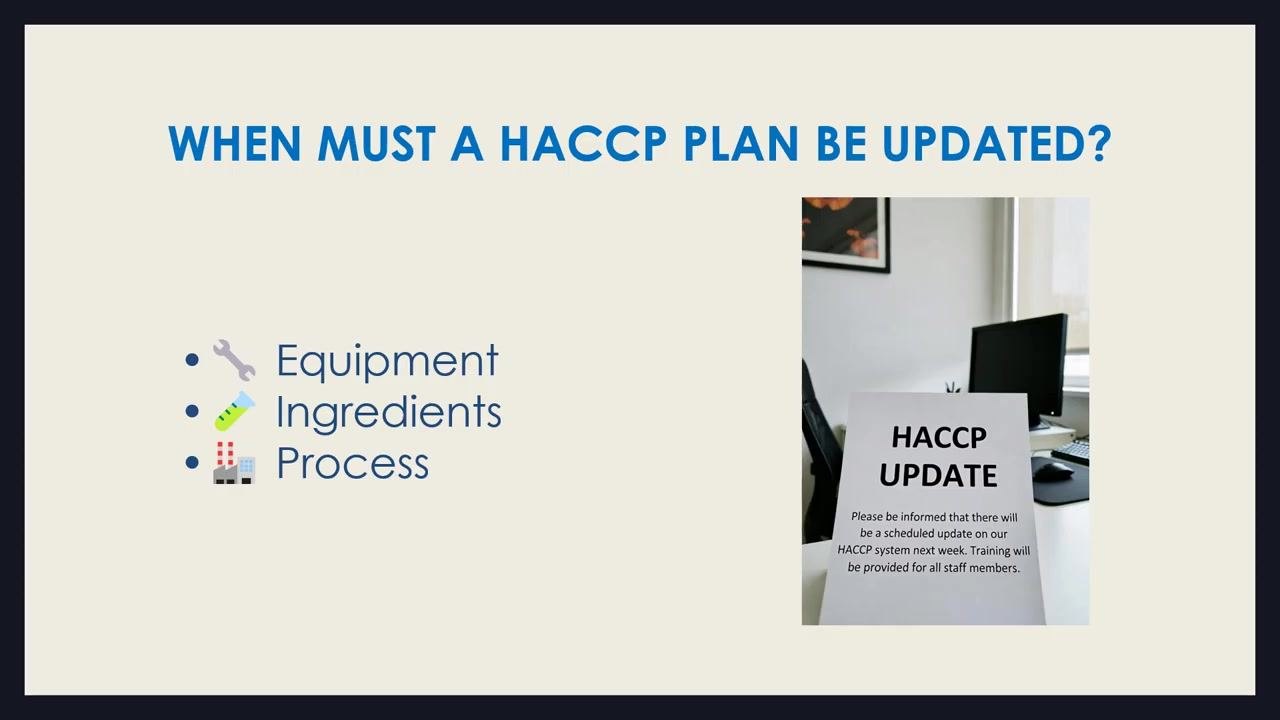
Treat your HACCP plan as a living document. Update it whenever there is a change to equipment, ingredients, or process — including switching suppliers, adding a new product line, changing cleaning chemicals, modifying processing times, or adjusting packaging or production volumes. If the process changes but the plan is not updated, this is commonly cited as a nonconformance during audits.
Remember that a HACCP plan is not just a regulatory requirement — its primary purpose is to protect consumers and ensure food safety. Confirm every control, monitoring step, and corrective action in your plan is relevant to your specific operation rather than relying solely on a generic template.
Templates can serve as a helpful starting point, but always tailor them to reflect your facility's actual procedures and hazards before finalizing your plan.
Generation details: cost, quality tiers, downloads
Docsie billed 4,500 credits ($3.15) to analyze this 9-minute video at standard quality. The rewrite, template fill and Word/PDF exports were included. The same video at each quality tier:
| Quality | Frames sampled | Credits | Approx. cost |
|---|---|---|---|
| Draft | every 16-30 s | 2,250 | $1.57 |
| Standard (this guide) | every 8-15 s | 4,500 | $3.15 |
| Detailed | every 4-7 s | 9,000 | $6.30 |
| Ultra | every 1-3 s | 18,000 | $12.60 |
Credits priced at $0.70 per 1,000; plans include a monthly allowance. Enterprise customers on on-premise or bring-your-own-model deployments run this on their own inference and pay no per-video credits.
Generated by Docsie Video-to-Docs on 2026-09-10 from a 8-minute video. It was generated straight into Docsie's Food Safety HACCP Plan template, so every section of that template is filled from the video. Screenshots are frames from the source video and belong to their creator, Food Safety Training School, whose original is embedded above. If you own this video and want the guide removed or credited differently, contact us and we will act within one business day.