
4.8
on G2
Ingest videos, PDFs, and internal knowledge. Run inference locally. Generate SOPs, branded presentations, AI avatar walkthroughs, and searchable knowledge — with no internet egress and no external AI APIs. Built and validated in enterprise air-gapped environments for regulated industrial use cases.

Join forward-thinking teams using Docsie





_Leader_Small-Business_Leader.svg)


In air-gapped, classified, and regulated environments, sending content to ChatGPT, Claude, or any external AI service is prohibited. Your teams still need to turn videos into documentation, search institutional knowledge, and produce training material — the question is whether that happens inside your boundary or not at all.
How It Works
Four steps, none of which touch the internet
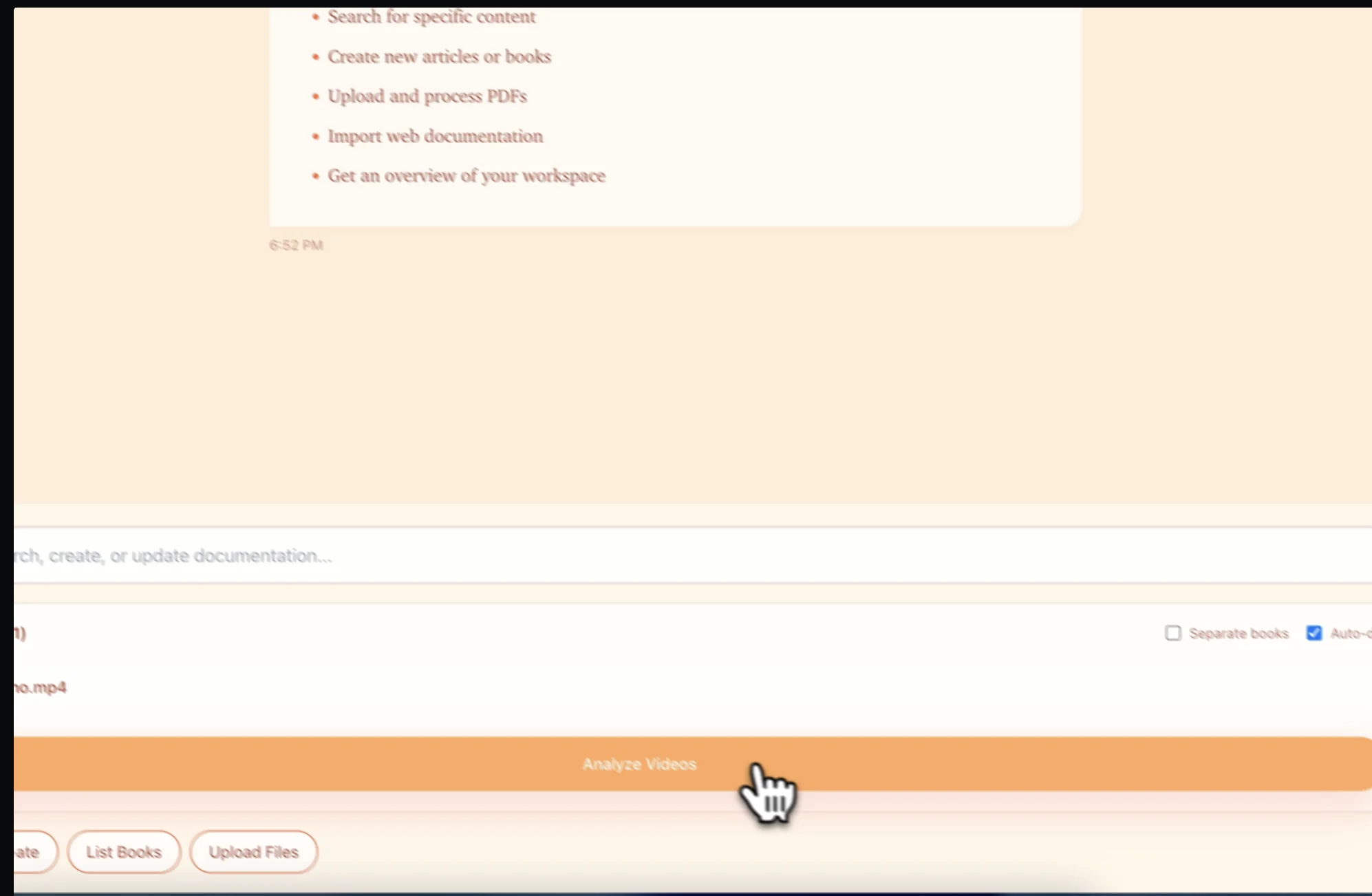
Install via Docker or Helm on your own servers, workstations, or isolated network — delivered through your approved transfer channels, no external calls during install or operation
Point Docsie at your own inference — Ollama, vLLM, or custom model endpoints running on your hardware. You choose the models; nothing is routed outside
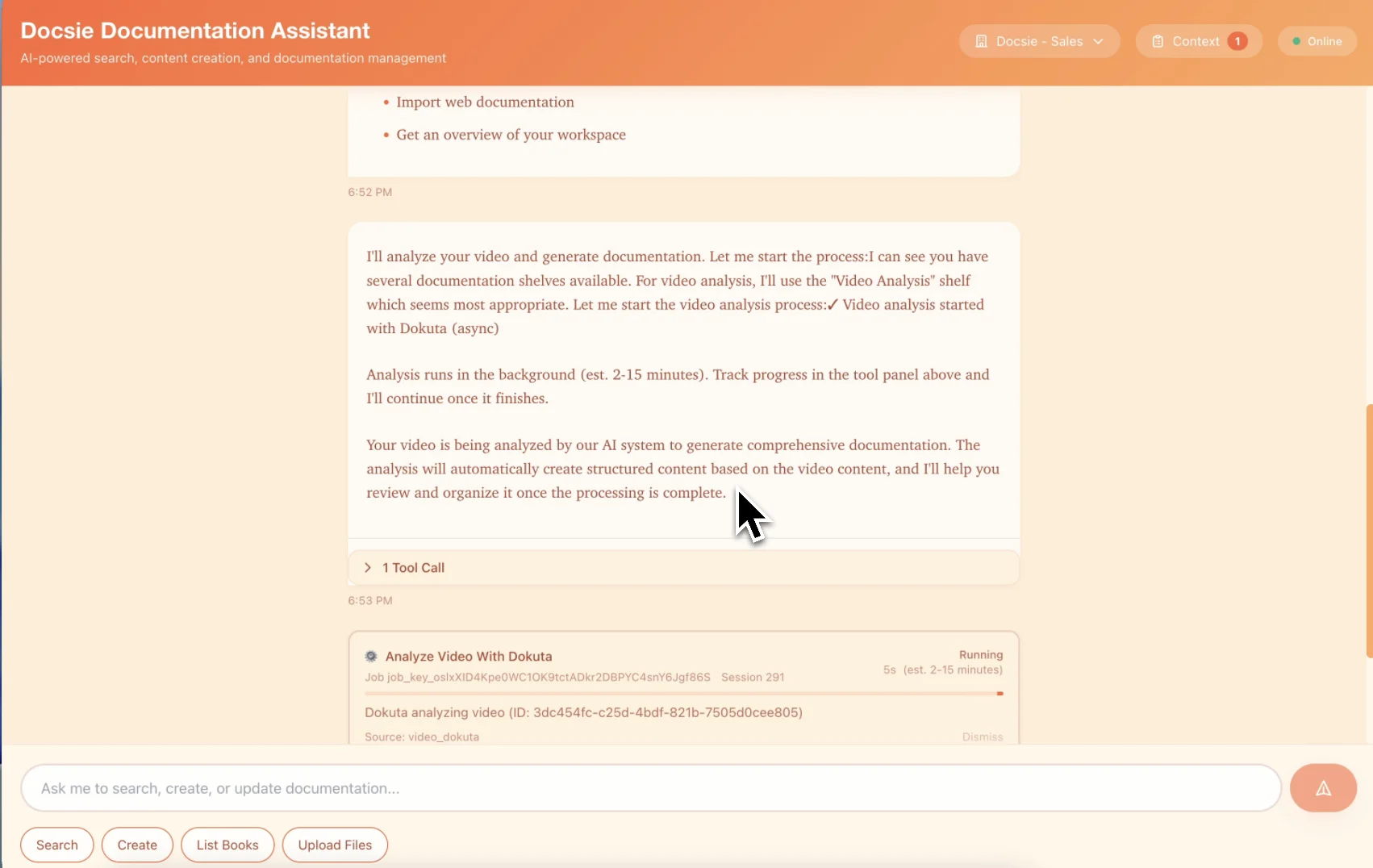
Bring in training videos, screen recordings, PDFs, DOCX files, and existing knowledge base content. Local AI extracts steps, screenshots, terminology, and structure
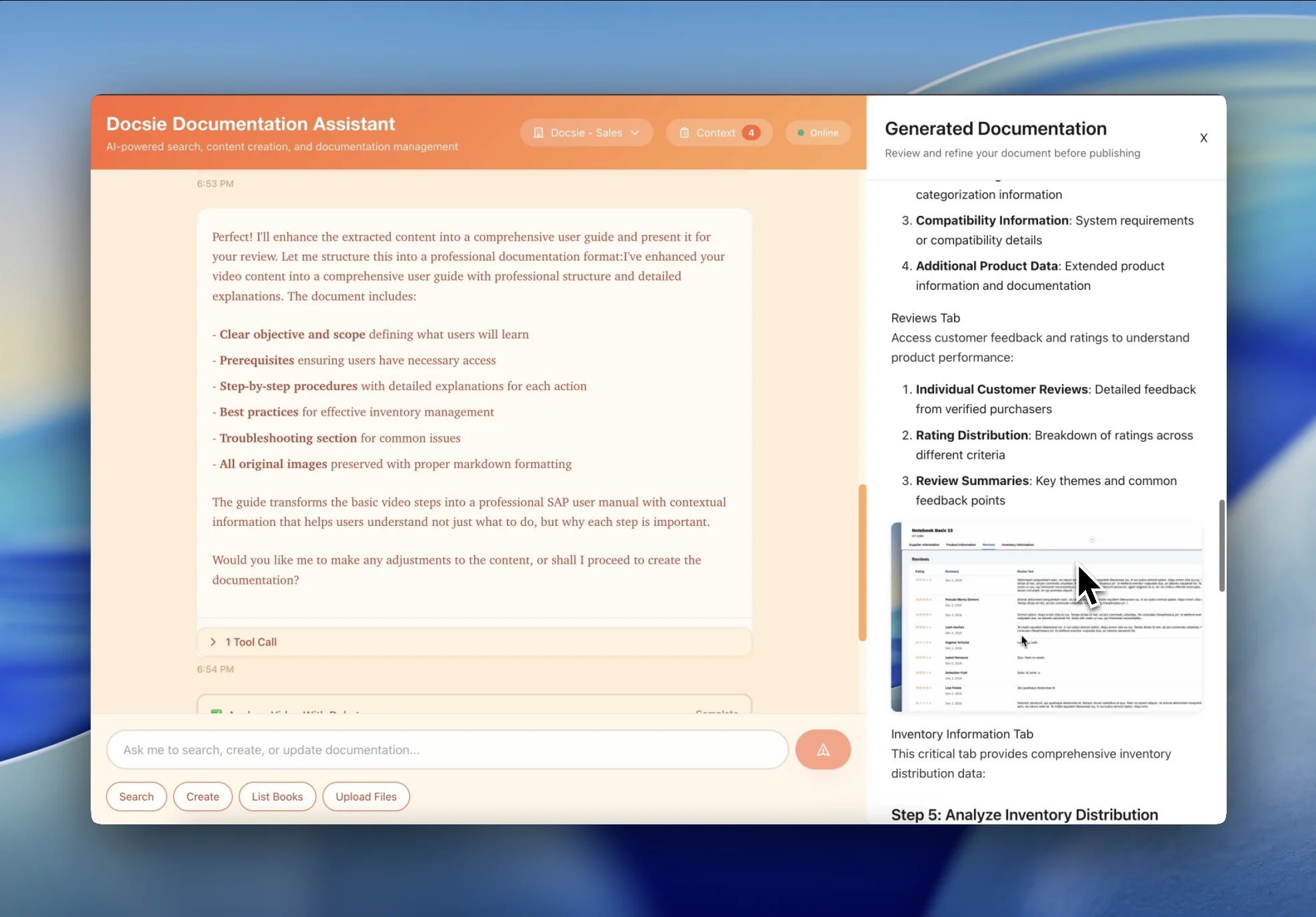
Produce SOPs and structured docs, ask questions in AI chat grounded in your content, generate branded PPTX decks, and create AI avatar presentations — all locally
Full Platform, Local Inference
Most 'private AI' tools are a RAG chatbot in a VPC. Docsie runs the complete generative knowledge workflow inside your boundary — validated in enterprise air-gapped deployments for regulated industrial use cases.
Convert training videos and screen recordings into step-by-step SOPs and guides with extracted screenshots and terminology. Runs locally — source video never leaves your environment.
Ask questions and get answers grounded in your exact internal knowledge, generated by models on your hardware. Runs locally — queries and answers stay inside the boundary.
Batch-import PDFs, DOCX files, and existing knowledge bases into one structured, versioned source of truth. Runs locally — parsing and indexing happen on your systems.
Turn documentation into branded PowerPoint decks for training and briefings, generated from your knowledge base. Runs locally — no design service, no external API.
Generate avatar-led walkthroughs that present your material — turning static docs and decks into training sessions. Runs locally — rendered inside your environment.
Schedule agents that maintain, transform, and act on your knowledge stack. Runs locally — all execution on infrastructure you control.
One platform, sized to the hardware your environment allows. As capability benchmarks are published, each profile gains documented models, throughput, and quality thresholds.
Evaluation and lighter workloads. Prove the full workflow — ingestion, chat, generation — on a single machine before committing infrastructure.
Local departmental deployment. A single GPU box runs day-to-day video conversion, knowledge chat, and document generation for a team.
Higher-quality local inference. Larger models improve extraction accuracy, procedural sequencing, and generation quality.
Larger models and higher throughput. Concurrent teams, bigger ingestion queues, and the strongest local model quality.
Docsie routes all AI features to inference you control. Air-gapped deployments use fully local backends: Ollama, vLLM, or your own custom model endpoints. Private-cloud (non-air-gapped) deployments can additionally use customer-controlled AWS or Azure inference services.
Run open models on workstations and single-GPU machines
High-throughput serving for departmental and multi-GPU deployments
Point Docsie at any OpenAI-compatible endpoint running inside your boundary
Encrypted keys, isolated configuration, zero external API calls
Environments where the sentence 'we cannot upload this to an external AI service' ends the conversation with every cloud tool.
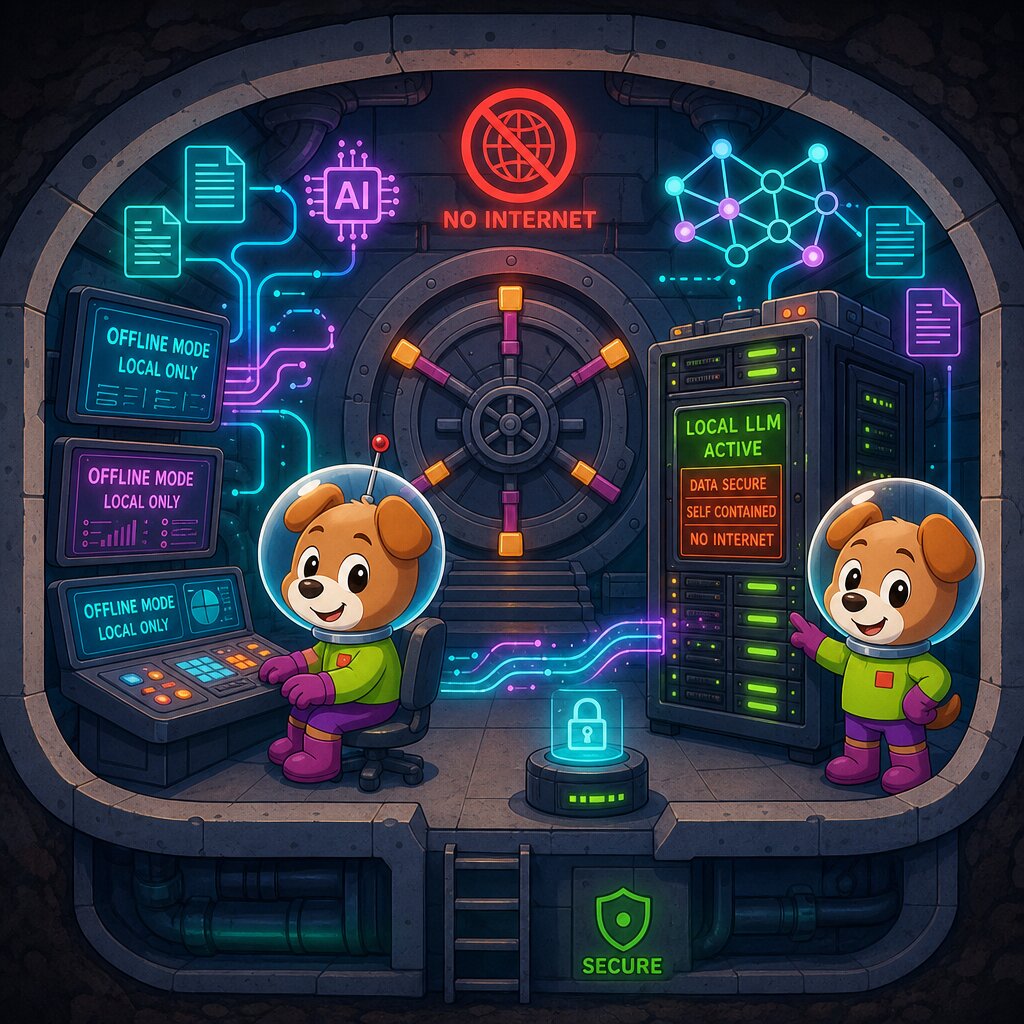
Defense contractors and restricted engineering programs hold decades of technical knowledge in videos, drawings, and documents that cannot touch external services. Docsie analyzes controlled technical knowledge without sending source material or inference requests outside the authorized environment — turning it into searchable, structured documentation your cleared teams can actually use.
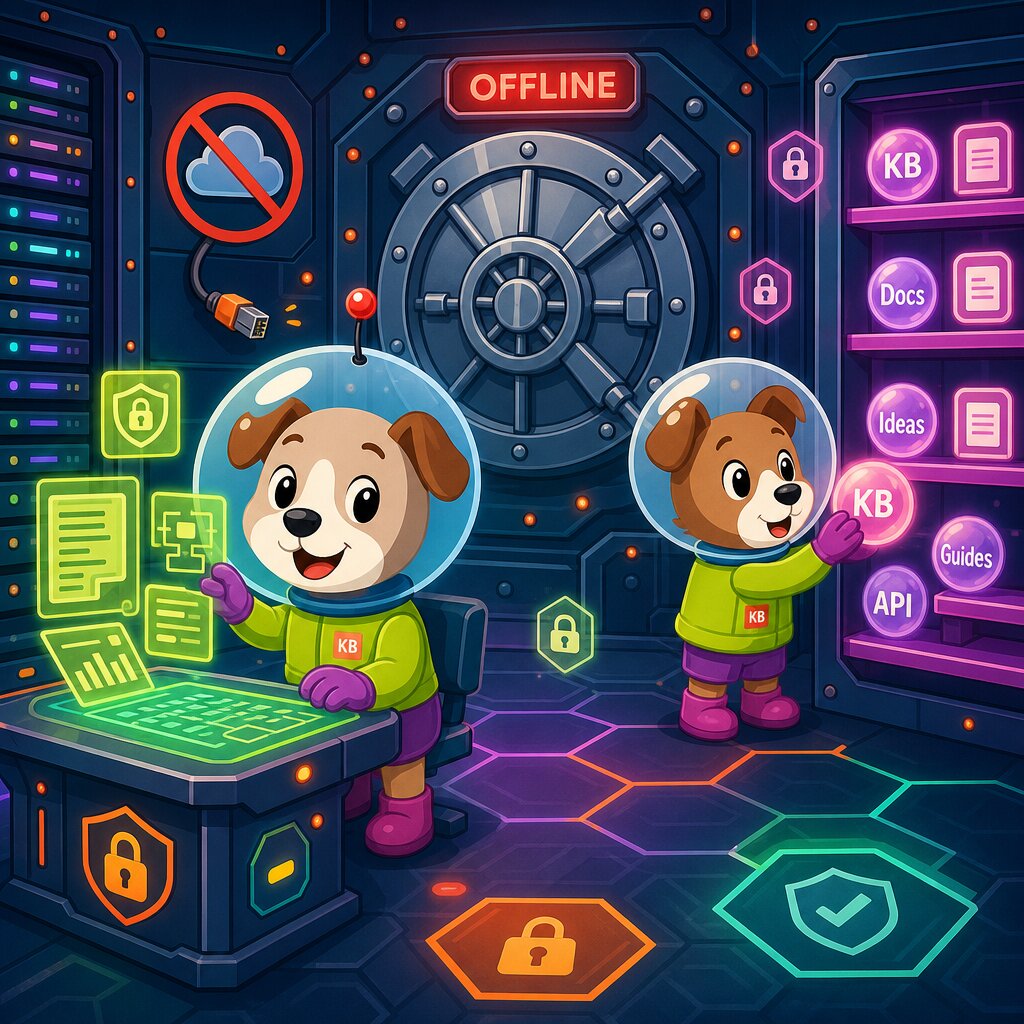
Industrial sites with strict no-cloud policies record tribal knowledge constantly — machine setups, changeovers, maintenance walkthroughs — and none of it becomes documentation because no approved AI tool exists on-site. Docsie converts that footage into work instructions and SOPs on local hardware, and lets operators query it through AI chat.
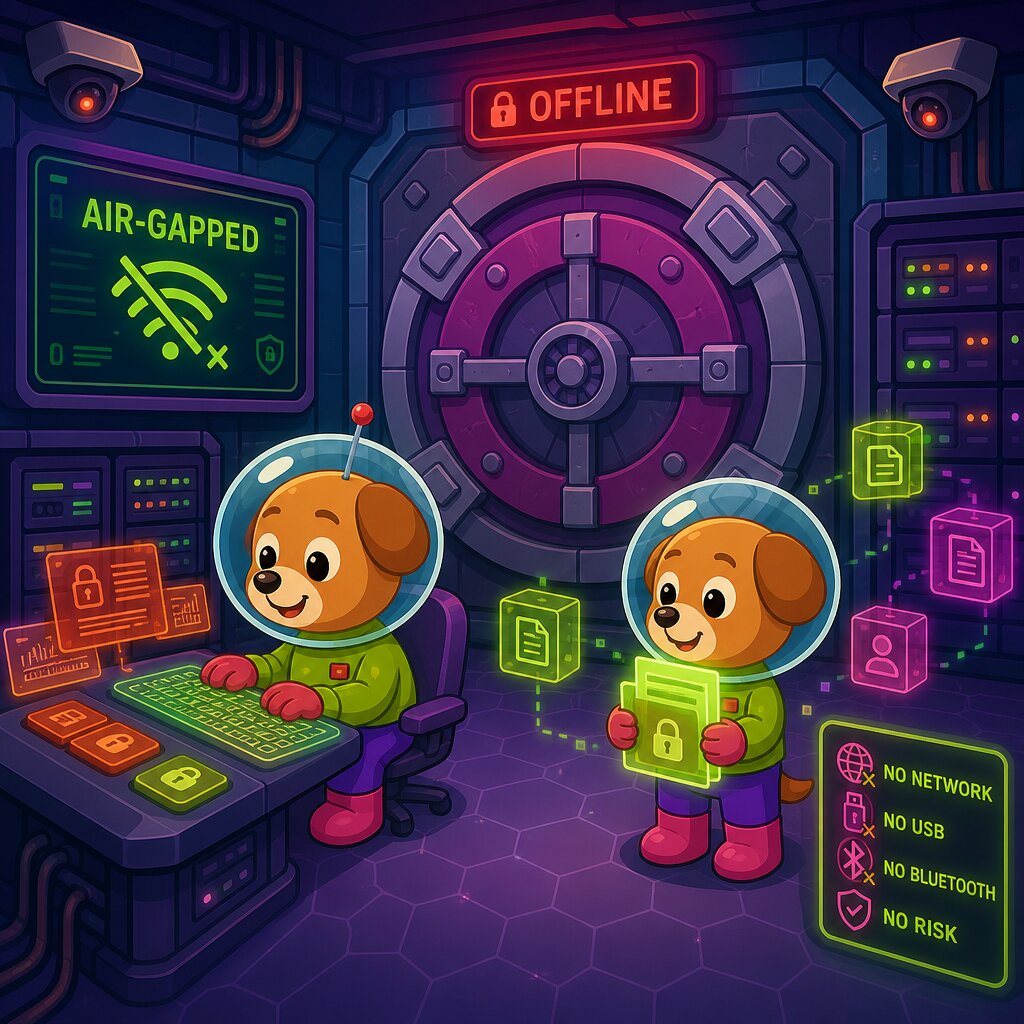
Agencies, pharmaceutical manufacturers, and regulated enterprises face data residency and sovereignty rules that block external AI processing. Docsie delivers the full generative workflow — ingestion, chat, document and presentation generation — inside customer-controlled infrastructure, so sovereignty requirements and AI productivity stop being a trade-off.
Common Questions
How air-gapped AI knowledge platforms work in practice.
Q: Is there a public installer we can look at before talking to sales?
A: Yes. The Helm charts, Kubernetes installer, Ollama configuration guide and release notes are public at github.com/LikaloLLC/docsie-self-hosted. Every image, core application and the Dokuta video-to-docs stack alike, is public on Docker Hub (AMD64 and ARM64) with no registry credentials. Free for a personal installation; a 30-day business evaluation covers up to 100 users. See docsie.io/self-hosted/ for the current status.
Q: Can an AI knowledge base really run without internet access?
A: Yes. Docsie's air-gapped deployment runs the entire platform — ingestion, local model inference, search, chat, and document generation — on hardware inside your environment, with no internet egress and no external AI APIs. Installation, operation, and updates all move through your approved transfer channels. This architecture has been built and validated in enterprise air-gapped environments for regulated industrial use cases.
Q: What hardware do I need to run AI documentation locally?
A: A single workstation or Mac Studio is enough to evaluate the full workflow. A single 24 GB GPU supports a departmental deployment; a 48 GB GPU improves model quality; multi-GPU servers support larger models and concurrent teams. Docsie is deployed via Docker or Helm and sized to the footprint your environment allows.
Q: Which local models does Docsie support?
A: Docsie routes all AI features to inference you control: Ollama, vLLM, or any OpenAI-compatible endpoint running inside your boundary. You choose the model catalog. Private-cloud deployments that are not fully air-gapped can additionally use customer-controlled AWS or Azure inference services.
Q: How do updates reach an air-gapped installation?
A: As versioned packages you move through your own secure channels — internal networks, removable media, or your established distribution process. You test and deploy on your schedule; nothing updates itself, and nothing phones home.
Q: Can Docsie be deployed in ITAR-controlled or FedRAMP-bound environments?
A: Docsie can run inside customer-controlled infrastructure with local inference and no internet egress. Whether a specific deployment satisfies ITAR, FedRAMP, or other regulatory requirements depends on the customer's architecture, controls, and authorization boundary — we work with your security team and provide documentation to support your accreditation process.
Q: Does output quality drop compared to cloud AI?
A: Local models are smaller than frontier cloud models, and Docsie's pipeline is tuned for that reality — structured extraction, screenshot capture, and procedural sequencing are engineered to work well within each hardware profile. Larger local footprints close the gap further, and we document capability thresholds per profile so you know what to expect before deploying.
Still have questions?
Book an Architecture ReviewWalk through your environment, hardware constraints, and model options with our team — and see the full workflow running without internet egress.
Evaluation packages available for transfer into your secure environment.


