
Manufacturing SOP Software: The Blueprint for Consistency and Efficiency
Why SOPs are the Backbone of Manufacturing Excellence
Imagine a production floor where every process is seamless, every product meets high standards, and every employee knows exactly what to do. This is the power of Standard Operating Procedures (SOPs) in manufacturing. These detailed instructions act as a roadmap, guiding workers through complex processes with precision and care.
⚠️ The Manufacturing Knowledge Crisis
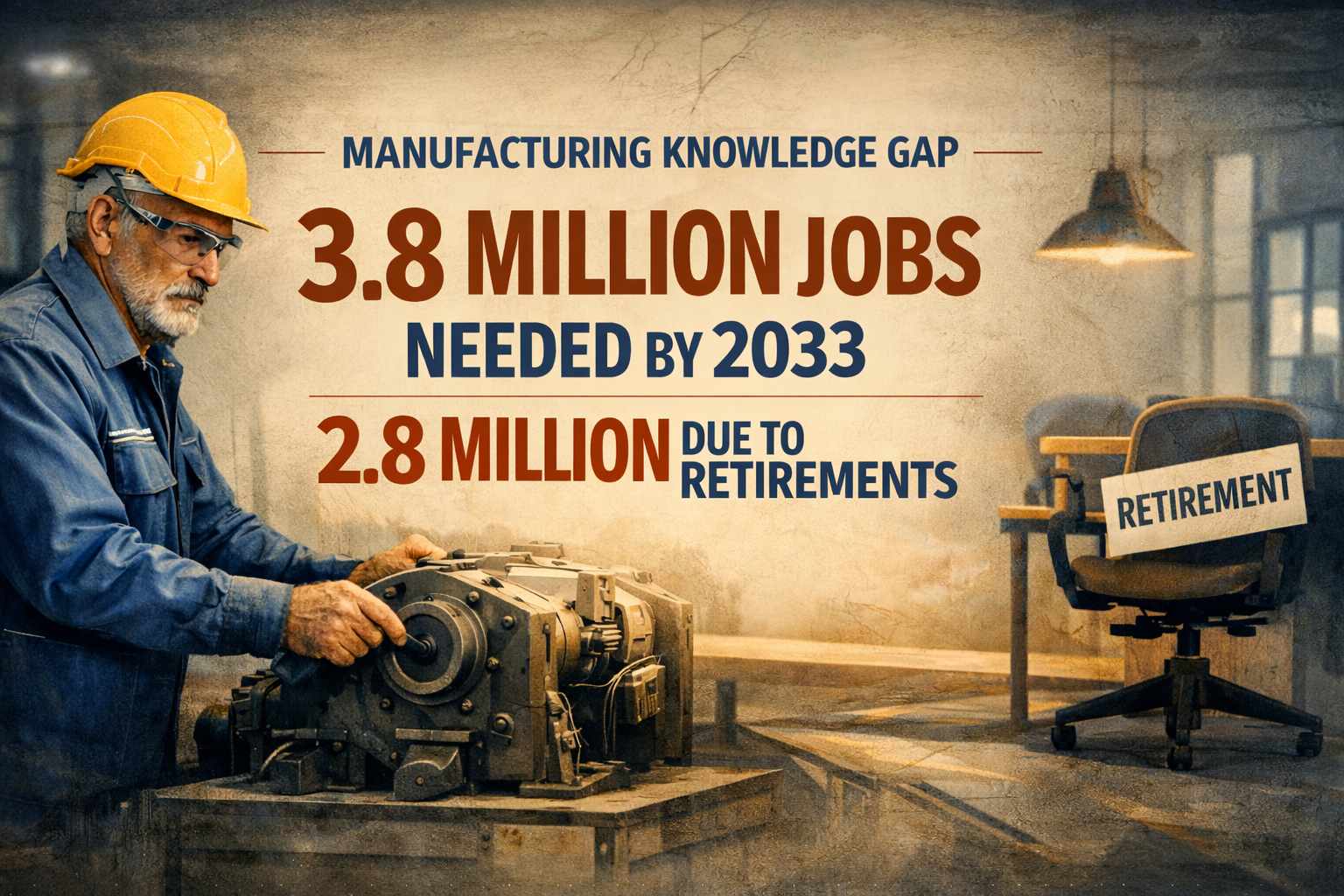
The urgency for robust manufacturing SOPs has never been higher. According to Deloitte and The Manufacturing Institute's 2024 Digital Skills Report, the manufacturing sector will need to fill 3.8 million jobs by 2033, with 2.8 million of those roles driven directly by retirements. As experienced workers leave, the knowledge trapped in their heads—and in unwatched training videos—must be captured in usable SOPs before it's gone forever.
Defining the Manufacturing SOP
An SOP in manufacturing is a comprehensive, step-by-step guide that outlines how to perform a specific task or process. It's the playbook that ensures every team member is on the same page, following the same rules, and working towards the same goal.
📌 Key Point
SOPs are detailed, written instructions that describe how to perform a routine activity in a manufacturing setting, ensuring consistency and quality across operations.
The Critical Role of SOPs in Manufacturing
SOPs are the unsung heroes of the manufacturing world. They provide:
- Quality Control: SOPs help maintain consistent product quality by standardizing processes and implementing quality controls at critical points.
- Efficiency: Well-designed SOPs streamline manufacturing processes, reducing errors and improving operational efficiency.
- Training: SOPs serve as excellent training tools for new employees, ensuring they understand the necessary steps for each task.
- Regulatory Compliance: SOPs help manufacturers meet industry standards and regulatory requirements, crucial for avoiding penalties and maintaining certifications.
- Continuous Improvement: Regular reviews of SOPs facilitate ongoing process updates and the implementation of best practices.
💡 Pro Tip
Implementing well-designed SOPs can lead to a 20-30% increase in overall productivity. (Source: Manufacturing Excellence Institute)
The Consequences of Poorly Managed SOPs
Failing to properly manage SOPs can lead to serious consequences:
- Increased errors and quality issues
- Safety risks and compliance violations
- Inefficiencies and wasted resources
- Inconsistent product quality
- Difficulty in training new employees
- Loss of institutional knowledge
⚠️ Warning
Outdated or poorly written SOPs can lead to a 15-20% increase in production errors and quality issues.
Components of an Effective Manufacturing SOP
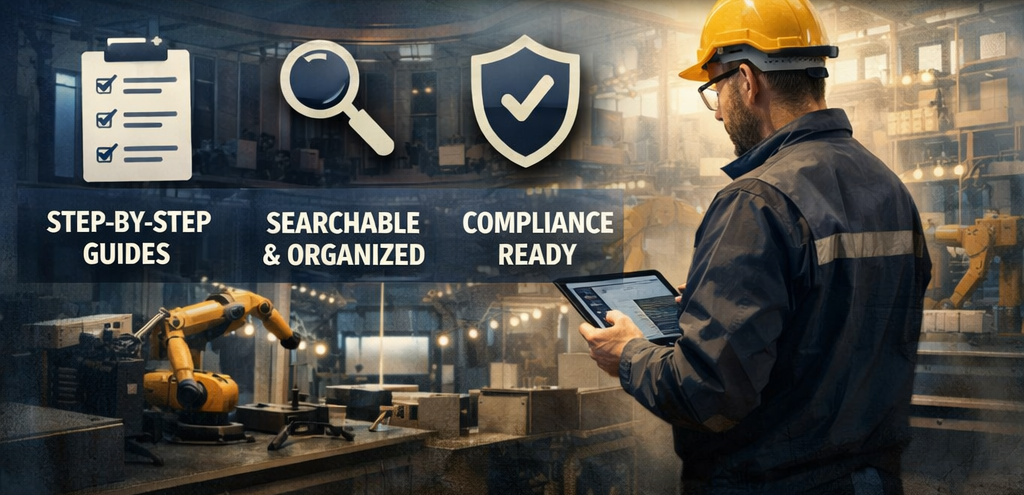
A well-crafted SOP is more than just a list of steps. It's a comprehensive document that includes:
- Objective or Purpose: The 'why' behind the procedure
- Scope: What the SOP covers (and what it doesn't)
- Responsibilities: Who does what
- Procedure Steps: The heart of the SOP - detailed instructions
- Quality Control: How to ensure the output meets standards
- Safety Considerations: Precautions and protective measures
- Documentation and Records: What needs to be recorded and how
SOP Component Checklist
☐ Objective clearly stated
☐ Scope defined
☐ Responsibilities assigned
☐ Procedure steps detailed
☐ Quality control measures included
☐ Safety considerations outlined
☐ Documentation requirements specified
Manufacturing SOP Examples by Industry
Different manufacturing sectors require specialized SOP approaches. Here are examples by industry:
Automotive Manufacturing SOPs
Automotive production demands precision at every step:
- Assembly line procedures with exact torque specifications for each fastener
- Quality inspection checkpoints at each station with go/no-go criteria
- Tool changeover procedures to minimize downtime between model runs
- Paint booth protocols including surface prep, spray patterns, and curing times
💡 Example
A carburetor assembly SOP generated from a 30-minute training video now includes 47 clearly numbered steps, torque specifications at each fastener point, quality checkpoints, and safety warnings—all searchable by workers on the line.
Aerospace Manufacturing SOPs
Compliance-critical documentation for aerospace production:
- AS9100 compliant procedures with full traceability
- Part tracking and verification at every assembly stage
- Non-destructive testing protocols (NDT) for critical components
- Foreign Object Debris (FOD) prevention procedures
Pharmaceutical Manufacturing SOPs
FDA-ready documentation for regulated production:
- Clean room entry and gowning with step-by-step verification
- Batch documentation with automated compliance checks
- Equipment cleaning validation between product runs
- Environmental monitoring and deviation handling
Food & Beverage Manufacturing SOPs
HACCP compliant procedures for food safety:
- Sanitation and hygiene protocols with verification steps
- Allergen control procedures including dedicated line cleaning
- Production line changeover with allergen removal verification
- Temperature monitoring and logging for food safety
Electronics Manufacturing SOPs
Precision documentation for electronics assembly:
- ESD (electrostatic discharge) prevention protocols
- Soldering procedures with temperature profiles and inspection criteria
- Component handling and storage for moisture-sensitive devices
- PCB assembly and testing sequences
The Transformative Impact of SOPs on Manufacturing
Consistency and Standardization: The Foundation of Quality
SOPs create a uniform approach across all production lines, ensuring that whether it's Monday morning or Friday night, the product quality remains consistent.
By standardizing processes, SOPs help:
- Reduce variability in output
- Minimize defects and rework
- Ensure products meet or exceed quality standards consistently
Quality Control: Elevating Standards to New Heights
With clear guidelines, maintaining high standards becomes second nature. SOPs act as a constant reminder of what 'good' looks like.
Well-implemented SOPs can significantly improve manufacturing efficiency by:
- Reducing production time
- Minimizing waste and resource usage
- Streamlining workflows and eliminating unnecessary steps
🏆 Success Story
After implementing comprehensive SOPs, one Automotive Manufacturer saw a 40% reduction in product defects within the first six months.
The Role of Team Members in SOP Implementation
Managers play a crucial role in ensuring the successful implementation of SOPs across the organization. They are responsible for:
- Overseeing SOP creation and updates
- Ensuring team members understand and follow SOPs
- Conducting regular reviews of SOP effectiveness
- Addressing questions and concerns from frontline workers
- Facilitating continuous improvement of SOPs
Regulatory Compliance: Staying Ahead of the Curve
SOPs help manufacturers stay on the right side of laws and regulations, reducing the risk of penalties or shutdowns. They provide a clear trail for auditors and inspectors.
In today's highly regulated manufacturing environment, SOPs play a crucial role in ensuring compliance:
- Documenting processes for audits and inspections
- Ensuring adherence to industry standards (e.g., ISO 9001)
- Providing a framework for meeting safety and environmental regulations
Manufacturing SOP Software: AI-Powered Generation
Why Video-to-SOP Matters for Manufacturing
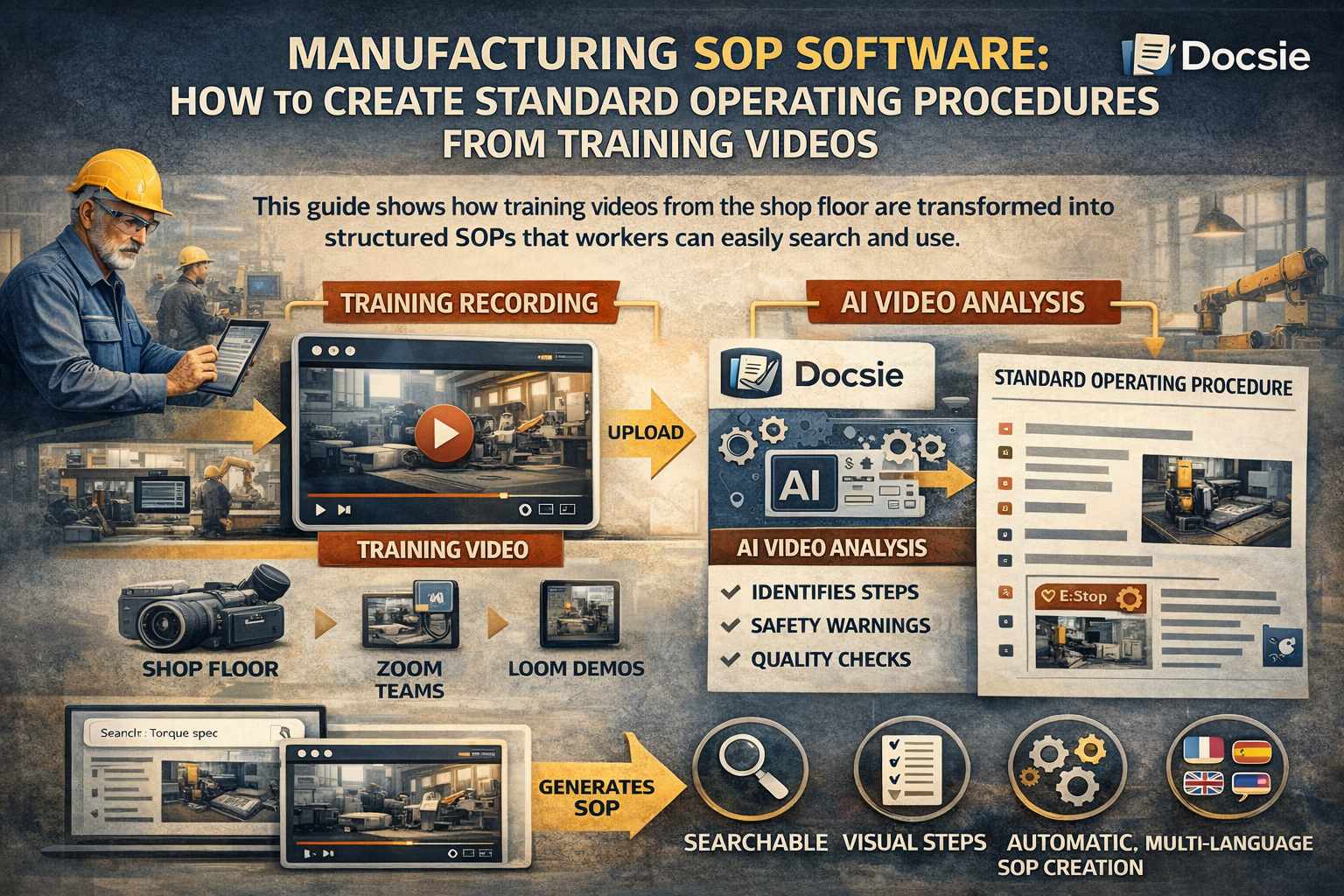
Traditional SOP creation takes 8-12 hours per procedure, requiring senior technicians or engineers to stop production work to write documentation. Most manufacturers don't have that luxury.
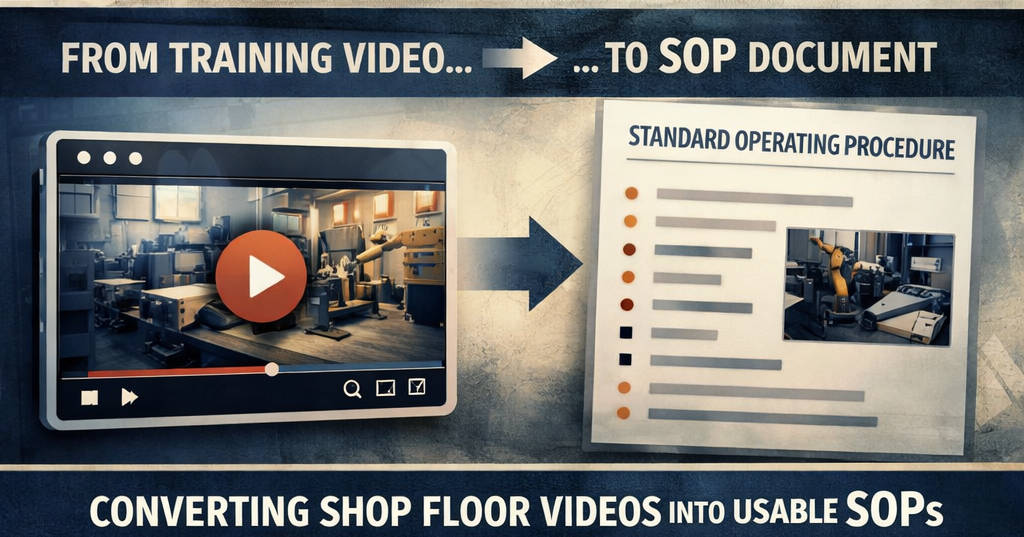
Instead, they're recording shop floor processes, maintenance procedures, and quality inspections on video—but those recordings sit unwatched in folders and cloud storage. Manufacturing SOP software solves this by converting existing training videos into searchable, structured procedures that workers can actually use on the shop floor.
No more scrubbing through 45-minute videos to find a single torque specification.
Automated SOP Generation from Video
Modern platforms leverage the power of video and artificial intelligence to streamline the SOP creation process. Here's how it works:
- Video Capture: Manufacturers record their processes using any standard video recording device—smartphones, GoPros, screen recordings, or existing Zoom/Teams training sessions.
- AI-Powered Analysis: Sophisticated algorithms analyze the video content, identifying key steps, safety measures, and quality control points.
- Automatic SOP Draft Generation: Based on the video analysis, the system generates a draft SOP document including:
- Step-by-step instructions with numbered sequences
- Annotations highlighting critical safety and quality points
- Still images extracted from the video to illustrate important steps
- Searchable text so workers can find specific information instantly
- Expert Review and Refinement: Manufacturing experts review the auto-generated SOP, making any necessary adjustments before approval.
Manufacturing SOP Software in Action
Here's how different manufacturing sectors use video-to-SOP software:
- Automotive: Carburetor assembly SOP from 30-minute video—includes torque specs, quality checkpoints, and safety warnings extracted automatically
- Aerospace: Wing assembly compliance SOP with AS9100 traceability requirements built in
- Food Production: Sanitation protocol SOP with HACCP compliance checkpoints and verification steps
- Pharmaceutical: Clean room gowning SOP with FDA-ready documentation format
This innovative approach offers significant advantages:
- Time Efficiency: What once took 8-12 hours can now be accomplished in 15-30 minutes.
- Increased Accuracy: Captures the actual process in action, ensuring no crucial steps are overlooked.
- Visual Context: Includes images and video references for rich visual context.
- Searchability: Workers find "step 3 torque spec" instantly instead of watching entire videos.
- Consistency: Standardized creation process ensures consistency across different SOPs.
Time Comparison: Traditional vs. Video-to-SOP
❌ Traditional Approach
- Watch 45-minute video
- Take manual notes
- Write SOP from scratch
- Find/create screenshots
- Format document
- Review with SME
- Total: 8-12 hours
✅ Manufacturing SOP Software
- Upload existing video
- AI extracts steps automatically
- Screenshots extracted
- Formatted SOP generated
- SME reviews and approves
- Total: 15-30 minutes
Enhanced Training and Onboarding with Video SOPs
Video-based documentation transforms how procedures are used for training and onboarding:
- Interactive Learning: New employees can watch the actual process while reading the corresponding instructions, providing a multi-modal learning experience.
- Self-Paced Training: Team members can revisit specific sections of the video SOP as needed, allowing for self-paced learning and reinforcement.
- Multilingual Support: Video content can be easily translated and subtitled, making it ideal for diverse workforces in global manufacturing operations.
- Knowledge Preservation: Capture expertise from retiring workers before they leave, preserving decades of tribal knowledge.
🏭 Industry Insight
Companies that integrate their SOPs with real-time data systems see a 30% improvement in response time to production issues.
Creating and Implementing New SOPs: A Step-by-Step Guide
Developing a new SOP or updating an existing one requires careful planning. Follow these steps:
- Identify the need for a new or updated SOP
- Gather information from subject matter experts
- Draft the SOP using a clear, concise format
- Review and revise the draft with stakeholders
- Obtain necessary approvals
- Train employees on the new or updated SOP
- Implement the SOP and monitor its effectiveness
- Conduct regular audits and updates as needed
Best Practices for SOP Writing
- Keep language clear and concise
- Use active voice and present tense
- Include visual aids where appropriate
- Break complex processes into manageable steps
- Specify the target audience for each SOP
- Include examples and scenarios for clarity
- Regularly review and update SOPs
🎯 Good Principle
"An effective SOP should be detailed enough to guide a novice but concise enough not to overwhelm an expert."
Manufacturing SOP Frequently Asked Questions
How long does it take to create a manufacturing SOP?
Traditional manual SOP creation takes 8-12 hours per procedure, including research, writing, formatting, and review. With manufacturing SOP software that converts training videos to documentation, the same SOP can be created in 15-30 minutes.
What is manufacturing SOP software?
Manufacturing SOP software is a platform that helps factories create, manage, and distribute Standard Operating Procedures. Modern solutions include AI-powered features that can automatically generate SOPs from training videos, extract screenshots, and make procedures searchable for shop floor workers.
How do you create SOPs from training videos?
Upload your existing training video to the platform. AI analyzes the content, identifies key steps and safety points, extracts relevant screenshots, and generates a formatted SOP draft. A subject matter expert reviews and approves the document before distribution.
What should be included in a manufacturing SOP?
A complete manufacturing SOP includes: objective/purpose, scope, responsibilities, detailed procedure steps, quality control checkpoints, safety considerations, required tools and materials, and documentation/record-keeping requirements.
How often should manufacturing SOPs be updated?
Manufacturing SOPs should be reviewed at minimum annually, and updated immediately when processes change, equipment is modified, regulatory requirements change, or quality issues are identified. Video-to-SOP software makes updates faster by allowing you to simply re-record the changed process.
What's the difference between a work instruction and an SOP?
SOPs provide the high-level process overview and quality/safety requirements, while work instructions provide the detailed step-by-step guidance for specific tasks. Many manufacturers use video-based SOPs that combine both—showing exactly how to perform each step while documenting compliance requirements.
How do you ensure SOP compliance on the shop floor?
Make SOPs accessible where workers need them (tablets, mounted screens), use searchable digital formats instead of paper binders, track which SOPs are accessed most frequently, and gather feedback from frontline workers to improve clarity and usability.
Conclusion: Embracing SOPs as Your Competitive Edge
SOPs are more than just documents—they're the secret weapon behind every high-performing production line. By implementing comprehensive, clear, and adaptable SOPs, you're not just following best practices; you're building a culture of excellence that permeates every aspect of your manufacturing process.
With 3.8 million manufacturing jobs to fill by 2033 and 2.8 million driven by retirements, the companies that capture and structure their operational knowledge now will have a massive competitive advantage. Manufacturing SOP software makes it possible to preserve decades of expertise before it walks out the door.
🔑 Final Thought
Invest in developing robust SOPs today, and watch as your manufacturing operations transform, driving consistency, quality, and efficiency to new heights.
Ready to capture your manufacturing knowledge?
Manufacturing teams are converting training videos into searchable SOPs in minutes, not weeks. See how Docsie helps you capture operational knowledge before it walks out the door.