
Clueso vs Document360: Which Platform Delivers Real Enterprise Readiness in 2026?
Enterprise software buyers face a peculiar problem when evaluating documentation tools: vendors use identical terminology to describe wildly different capabilities. "Enterprise-ready" might mean SOC 2 compliance for one platform and SSO for another—or neither. This ambiguity makes comparing tools genuinely difficult, especially when your organization needs both security credentials and multi-user governance features.
Clueso and Document360 both market themselves as enterprise solutions, but they solve fundamentally different problems. Clueso transforms screen recordings into polished product videos with professional editing and AI voiceovers. Document360 provides purpose-built knowledge base infrastructure with approval workflows and help desk integrations. Neither offers multi-tenant portals, and only Clueso processes screen recordings (not real-world video content).
This comparison examines what "enterprise readiness" actually means for each platform—and where both fall short of comprehensive knowledge orchestration.
What Clueso Actually Does
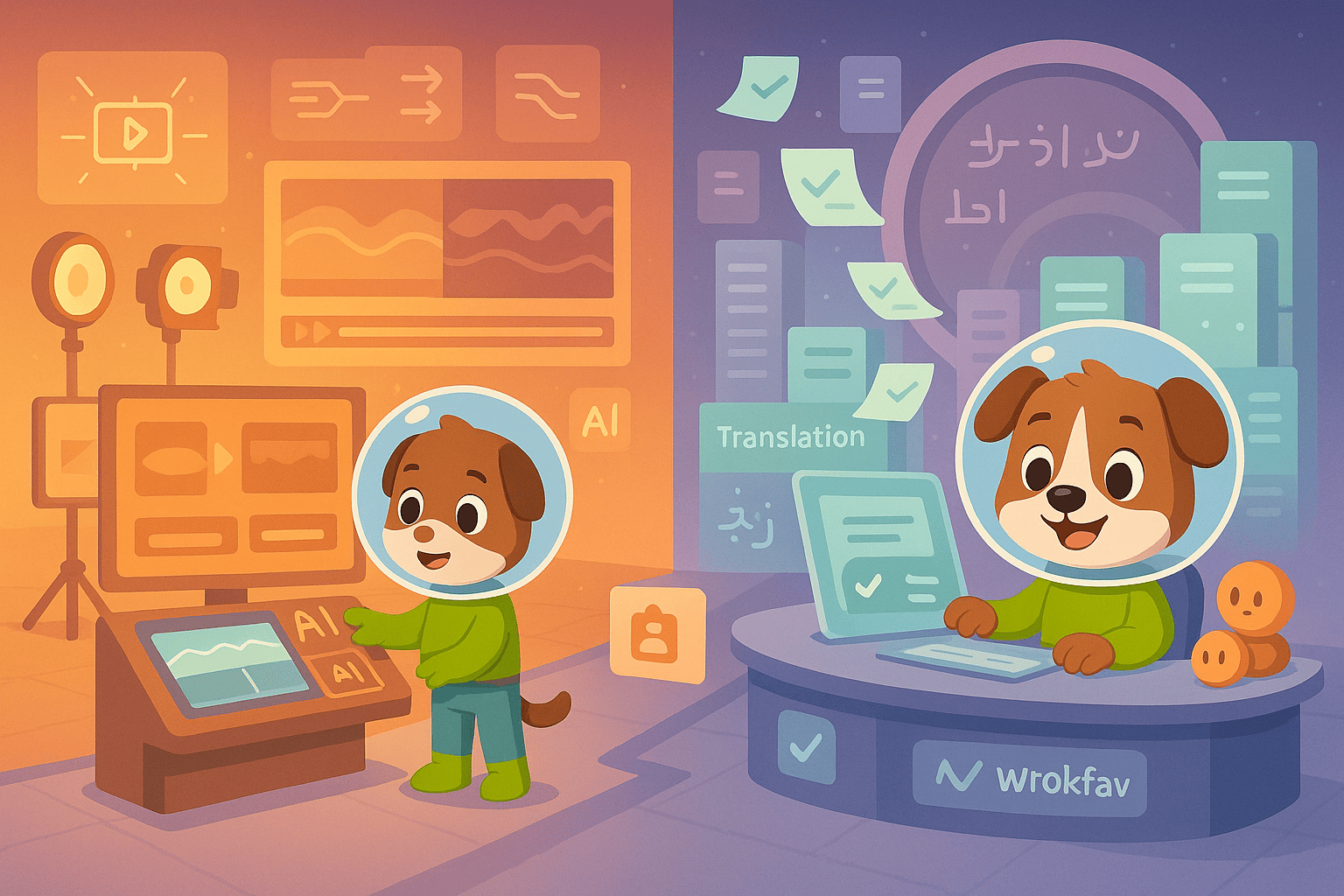
Clueso positions itself as an AI video creation platform for SaaS customer education. You record your screen demonstrating a product feature, upload the recording to Clueso, and the platform applies AI-powered editing: auto-zoom on cursor actions, smooth panning between interface elements, cursor smoothing, and professional transitions. Add an AI voiceover script, select branded styling (colors, fonts, logos), and Clueso renders a polished tutorial video that looks professionally produced.
The platform simultaneously generates a step-by-step written article from the same recording, giving you dual output formats from one source. This matters for teams creating help documentation where users want both video tutorials and searchable text instructions.
From an enterprise compliance perspective, Clueso holds SOC 2 Type II and ISO 27001 certifications—strong credentials for organizations with security review requirements. Pricing is transparent: published rates range from $120-$200/month depending on video output volume, with self-service purchasing available.
The platform's limitation is its singular focus: it processes screen recordings only. If you have existing training videos filmed in conference rooms, recorded webinars, or any content that isn't a screen capture, Clueso cannot process it. The platform also lacks administrative features like SSO, role-based access control, or audit logs. It's a video production tool with compliance certifications, not a documentation platform with governance capabilities.
What Document360 Actually Provides
Document360 takes the opposite approach: it's purpose-built infrastructure for external knowledge bases. You get version control, approval workflows, category management, and content governance features designed specifically for maintaining customer-facing documentation at scale.
The platform's Eddy AI suite offers practical content assistance: translation into 50+ languages, video-to-text transcription, audio-to-content conversion, and writing suggestions. Integration with help desk platforms (Zendesk, Intercom, Freshdesk) connects documentation directly to support workflows, surfacing relevant articles during ticket resolution.
For enterprise buyers, Document360 provides SSO via SAML, role-based access control, audit logs, and API access for programmatic content management. You can deploy a branded knowledge portal on a custom domain with your organization's styling.
The challenge is accessibility and scope. Document360 discontinued its free tier in November 2024, implementing fully sales-led, quote-based pricing. All pricing is now hidden—prospective customers must contact sales for quotes, creating friction for teams wanting to evaluate the platform. More fundamentally, Document360 is single-tenant architecture: you deploy one knowledge base per instance. Organizations serving multiple clients (implementation partners, consultancies, MSPs) would need separate instances for each client, multiplying management overhead and cost.
Document360 recently acquired Floik for screen-recording-to-demo capability, but this doesn't address existing video content conversion or multi-tenant portal requirements.
Enterprise Readiness Comparison: Four Critical Dimensions
Security and Compliance Credentials
Clueso delivers dual certifications: SOC 2 Type II and ISO 27001. This combination satisfies most enterprise vendor security reviews, particularly in organizations with strict procurement requirements. The certifications demonstrate third-party audited controls around data security, availability, and confidentiality.
Document360's compliance posture is less documented. The platform mentions GDPR compliance and data protection measures, but doesn't prominently advertise SOC 2 or ISO certifications on public-facing materials. For enterprises where vendor security questionnaires require specific audit frameworks, this creates additional procurement friction.
Winner for compliance transparency: Clueso provides clearer security credentials upfront.
Administrative Controls and Governance
Clueso lacks enterprise administrative features entirely. There's no SSO, no role-based access control beyond basic team permissions, and no audit logging of user actions. The platform assumes a small team creating videos collaboratively rather than a complex organization with governance requirements.
Document360 provides comprehensive administrative controls: SAML-based SSO, granular role-based permissions, approval workflows for content publication, version history with rollback capability, and audit logs tracking content changes. These features support compliance requirements around access control and change documentation.
Winner for governance: Document360 by a substantial margin—Clueso isn't competing in this category.
Content Scope and Conversion Capability
Clueso processes screen recordings exclusively. The AI editing quality is genuinely impressive—auto-zoom follows cursor movements intelligently, panning is smooth, and the output looks professionally edited. But if your organization has 200 existing training videos filmed in classrooms or recorded conference presentations, Clueso cannot process them. The platform's computer vision is purpose-built for screen interface recognition, not real-world video analysis.
Document360 doesn't process video content at all—it's a documentation authoring and publishing platform. The Eddy AI suite can transcribe video to text, but this produces unstructured transcripts, not the structured knowledge base articles with screenshots, steps, and metadata that make documentation useful. The Floik acquisition adds screen recording capability, but this creates new recordings rather than converting existing video libraries.
Neither platform addresses a critical enterprise need: converting existing video training libraries into structured, searchable documentation. Organizations often have substantial investments in video content that remains locked in video format, unsearchable and difficult to maintain.
Deployment Architecture and Multi-Tenancy
Clueso operates as a single shared workspace per account. Teams collaborate on video creation within one environment. This works fine for internal use but doesn't support scenarios where you need separate branded portals for different clients.
Document360 uses single-tenant architecture. Each knowledge base is a separate instance with its own domain, branding, and content. This provides excellent isolation for one customer-facing knowledge base, but organizations serving multiple clients face a choice: pay for multiple Document360 instances (expensive) or consolidate all client documentation into one portal (poor user experience and potential data exposure concerns).
The multi-tenant gap is significant. Implementation partners, SAP consultancies, MSPs, and similar organizations need to deliver branded documentation portals to dozens or hundreds of clients from one system. Neither platform supports this architecture.
Who Should Choose What?
Choose Clueso When...
You need screen recording-to-video conversion with professional editing quality for customer-facing tutorials. The AI-powered editing (auto-zoom, panning, cursor smoothing) and branded video output significantly reduce video production time compared to manual editing.
Your organization requires SOC 2 Type II and ISO 27001 certifications for vendor procurement but doesn't need administrative governance features like SSO or audit logging.
You want transparent, self-service pricing without sales calls. Clueso publishes rates ($120-$200/month) and allows immediate purchase.
Your focus is video production, not documentation platform capabilities. You have other systems for content management and need Clueso specifically for creating polished tutorial videos.
Choose Document360 When...
You need a purpose-built external knowledge base platform with version control, approval workflows, and content governance for customer-facing documentation.
Your organization requires SSO, role-based access control, and audit logs to meet internal security policies or compliance frameworks.
Help desk integration is critical—you want documentation articles surfaced automatically during support ticket resolution in Zendesk, Intercom, or Freshdesk.
You're deploying a single-tenant documentation portal with custom domain and branding, and the sales-led pricing process isn't a barrier.
You need API access for programmatic content management, integrating documentation into CI/CD pipelines or other automated workflows.
The Gap Both Platforms Leave: Real Enterprise Knowledge Orchestration
Clueso creates videos beautifully but lacks documentation platform infrastructure. Document360 manages documentation well but can't convert existing videos and forces multi-instance complexity for multi-client scenarios. For enterprises needing comprehensive knowledge orchestration—converting existing content, managing documentation with governance, and delivering through branded portals to multiple clients—both platforms fall short.
This is where Docsie provides a fundamentally different architecture.
Docsie handles real-world video conversion, not just screen recordings. Organizations with training video libraries filmed in conference rooms, recorded webinars, or any video content can process it using computer vision and OCR technology. The platform extracts structured knowledge—steps, screenshots, metadata—creating searchable documentation from previously locked video content. This addresses the conversion gap both competitors leave.
Docsie provides true multi-tenant portal architecture. Implementation partners can deliver unlimited branded documentation portals to clients from one system, with complete content isolation, individual custom domains, and separate branding per client. Each client sees only their documentation in their branded environment. This eliminates the single-tenant limitation forcing expensive multi-instance deployments with Document360 or the lack of client portal capability with Clueso.
Docsie includes comprehensive governance features: SSO via SAML, role-based access control, audit logging, version control with branching and rollback, approval workflows, and full API access. These administrative controls match Document360's capabilities while maintaining transparent pricing ($199-$750/month published rates, no sales gate required).
Docsie maintains strong compliance credentials: SOC 2 Type II certification matching Clueso's security posture, plus GDPR and HIPAA-ready compliance frameworks. The combination addresses enterprise procurement requirements without compromising governance capabilities.
The platform includes agentic AI chatbot with tool calls for accurate documentation search, auto-translation into 100+ languages using neural machine translation, embeddable widgets for in-app help, and semantic search across all content. These features support the complete knowledge orchestration workflow: CONVERT existing content → MANAGE with governance → DELIVER through branded portals.

The Bottom Line for Enterprise Buyers
If your only need is creating polished product videos from screen recordings with strong compliance credentials, Clueso delivers excellent AI editing quality with transparent pricing. The platform does one thing exceptionally well.
If you need a single external knowledge base with governance features and help desk integration—and sales-led pricing isn't a barrier—Document360 provides purpose-built infrastructure for that specific use case.
But for organizations needing comprehensive knowledge orchestration—converting existing video libraries, managing documentation with enterprise governance, and delivering through multi-tenant branded portals to multiple clients—neither platform provides complete capabilities.
Compare Clueso vs Document360 in detail to see the full feature breakdown, or explore how Docsie's architecture addresses the gaps both platforms leave.
For SAP implementation partners with 50 client portals to manage, training companies converting classroom recordings into searchable knowledge bases, or any enterprise serving multiple clients with substantial existing video content, the choice extends beyond these two platforms.
Start your free Docsie trial to see how multi-tenant portals, real-world video conversion, and complete knowledge orchestration work in practice—without sales calls or hidden pricing friction.