
Archbee vs GitBook: Which Documentation Platform Is Truly Enterprise-Ready in 2026?
Choosing documentation tools for enterprise teams means looking beyond clean interfaces and markdown editors. The real question isn't whether a platform can create beautiful docs—it's whether it can scale across hundreds of documentation sites, satisfy compliance auditors, survive security reviews, and support your team when critical systems go down at 2 AM.
Archbee and GitBook both position themselves as developer-focused documentation platforms with strong API documentation capabilities. Both offer modern editing experiences, version control, and the OpenAPI/Swagger support that technical teams expect. But when enterprise teams dig into security certifications, pricing transparency, scalability limits, and administrative controls, significant differences emerge.
This comparison examines what enterprise readiness actually means for documentation platforms, comparing Archbee and GitBook across the dimensions that matter when you're documenting products for Fortune 500 clients or managing compliance requirements across multiple jurisdictions.
What Is Archbee?
Archbee markets itself as a product and API documentation platform built for developer teams, with an advertised entry price of $50/month that appears competitive at first glance. The platform offers a modern editing interface, OpenAPI/Swagger support for API documentation, and workflow features like approval processes.
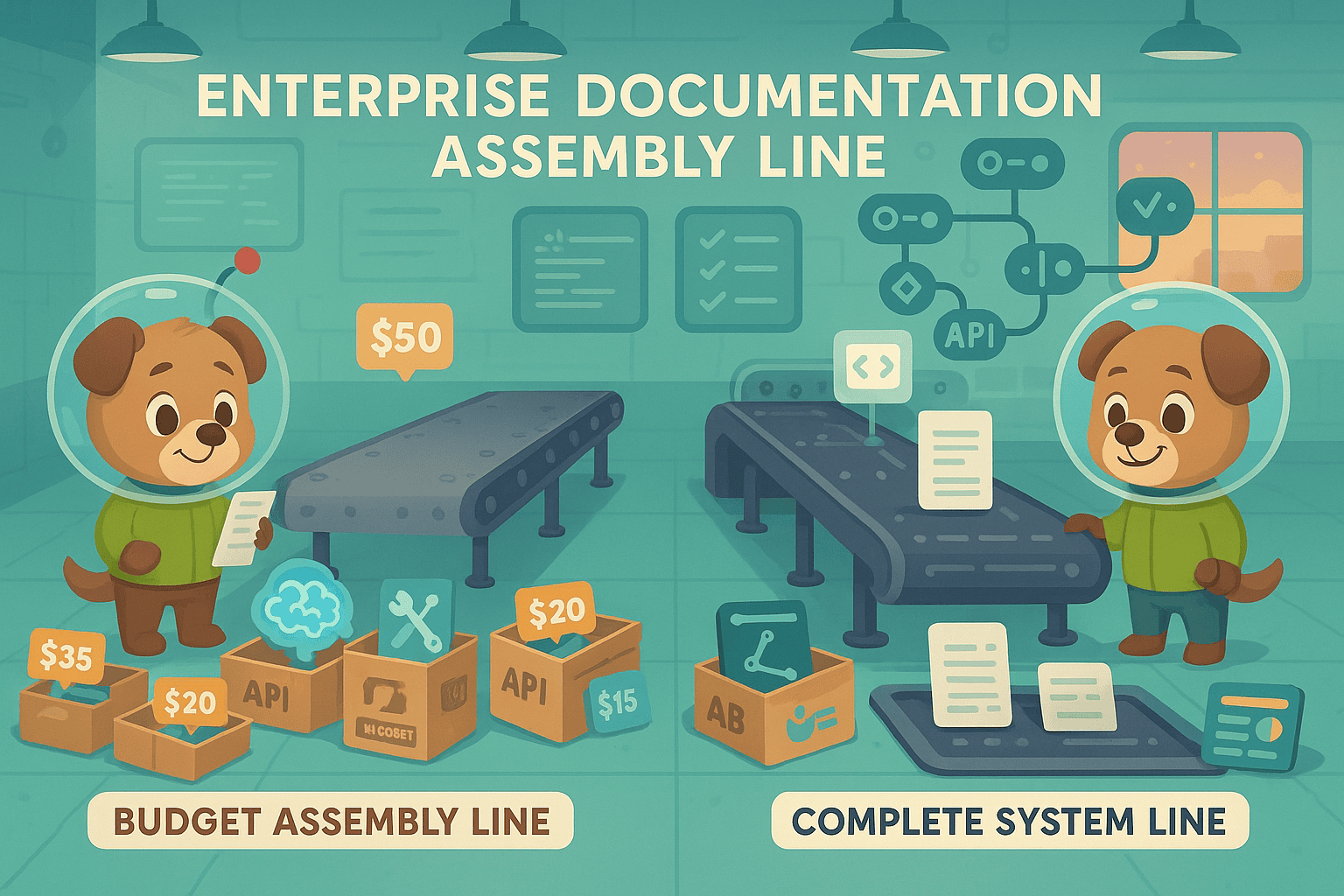
The challenge with Archbee's positioning becomes apparent when enterprise teams evaluate actual costs. AI Write Assist, App Widget, API Access, and Analytics are all separate paid add-ons—not included in that base price. Organizations that need API access to integrate documentation into CI/CD pipelines or analytics to understand documentation usage will see real costs jump to $150-230/month once necessary add-ons are included. For enterprise procurement teams accustomed to transparent pricing, this creates friction during evaluation and budget approval processes.
What Is GitBook?
GitBook has positioned itself as the technical documentation platform purpose-built for API docs and developer portals since 2014. The platform's core architecture centers on Git-native version control, making it a natural fit for developer teams who already think in branches, pull requests, and merge workflows.
GitBook restructured its pricing model in 2024-2025 to a site-based approach. While this provides clarity around what you're paying for, it introduces scaling costs for organizations managing multiple documentation sites. Custom domains cost $65 per site, which becomes a significant line item for enterprises running dozens or hundreds of documentation portals. GitBook holds ISO 27001 certification alongside SOC 2 compliance, demonstrating commitment to enterprise security standards that many competitors lack.
Enterprise Security & Compliance Comparison
For documentation platforms handling sensitive product information, API credentials, or customer data, security certifications aren't optional—they're table stakes for passing procurement reviews.
GitBook's Security Posture: GitBook holds both SOC 2 Type II and ISO 27001 certifications. This dual certification demonstrates comprehensive security management systems and information security controls that meet international standards. ISO 27001 specifically matters for organizations operating in European markets or selling to enterprises with strict vendor security requirements. GitBook supports SAML/SSO authentication for enterprise identity management integration.
Archbee's Security Posture: Archbee maintains SOC 2 Type II compliance and supports SAML/SSO authentication. The platform provides standard enterprise security features including role-based access control and encryption. However, Archbee lacks ISO 27001 certification as of 2026, which may create hurdles for teams facing stringent international compliance requirements or working with European customers who specifically require ISO certification from vendors.
Critical Gap for Both Platforms: Neither Archbee nor GitBook offers data residency options. For enterprises requiring data to remain within specific geographic boundaries—whether for GDPR compliance, government contracts, or customer data sovereignty requirements—this represents a fundamental limitation. Both platforms also lack explicit HIPAA-ready environments for healthcare organizations handling protected health information in documentation workflows.
Scalability & Architecture
Enterprise readiness isn't just about handling today's documentation needs—it's about supporting growth from 10 documentation sites to 1,000 without platform limitations forcing painful migrations.
GitBook's Git-Native Architecture: GitBook's foundation on Git version control provides unlimited history and branching capabilities that developer teams understand intuitively. Teams can manage documentation changes through pull request workflows, maintaining the same code review processes they use for product development. This architecture excels for single-organization documentation where developers are the primary authors and technical accuracy requires engineering review.
The site-based pricing model creates predictable costs but introduces scaling friction. Organizations managing documentation for multiple products, API versions, or client implementations face per-site fees that compound quickly. The $65/site custom domain cost becomes particularly expensive when scaling to hundreds of branded documentation portals.
Archbee's Version History: Archbee offers version history retention up to 5 years depending on plan tier, providing auditability without requiring teams to understand Git workflows. This approach works well for organizations where product managers and technical writers create documentation without deep developer tooling expertise.
However, Archbee's scalability faces the same fundamental challenge as GitBook: neither platform architecture supports true multi-tenancy. Organizations serving multiple clients—implementation partners, agencies, consultancies—cannot deliver one centrally managed knowledge base to unlimited branded client portals. Each client requires a separate documentation instance, multiplying administrative overhead and content management complexity.
Administrative Controls & Support
When documentation systems go down or teams need to make emergency updates, enterprise support expectations differ dramatically from self-service SaaS norms.
GitBook Support Model: GitBook provides email-based support for paying customers with priority handling for enterprise accounts. The platform's longer market presence since 2014 means more established documentation, community resources, and integration patterns. However, GitBook doesn't advertise dedicated support managers or custom SLA options for enterprise accounts requiring guaranteed response times.
Archbee Support Model: Archbee offers similar email-based support with faster response times for higher-tier plans. The platform provides modern onboarding experiences but lacks published information about dedicated support resources or custom SLAs for enterprise deployments.
Critical Enterprise Gaps: Neither platform offers white-labeling capabilities for organizations delivering client-facing documentation at scale. Both lack published uptime SLAs—enterprises accustomed to 99.9% availability guarantees with financial penalties for downtime won't find these commitments. For organizations where documentation downtime directly impacts customer implementations or API adoption, this represents meaningful risk.
Pricing Transparency & Total Cost of Ownership
Enterprise procurement teams need to understand true costs—not just advertised entry prices that balloon with necessary features.
Archbee's Pricing Reality: The $50/month base price becomes $150-230/month once teams add essential enterprise features. AI capabilities cost an additional $20/month. Analytics—critical for understanding documentation effectiveness—costs $80/month extra. API access for CI/CD integration is another paid add-on. This pricing structure creates budget surprises and complicates TCO calculations during vendor evaluation.
GitBook's Pricing Clarity: GitBook's site-based pricing provides clearer cost predictability, though scaling to multiple sites increases expenses in a linear, foreseeable way. The $65/site custom domain fee is transparent but expensive at scale. Organizations planning to run 100+ documentation sites can accurately calculate costs, even if those costs become substantial.
For a detailed feature-by-feature breakdown, see our complete Archbee vs GitBook enterprise comparison.
Who Should Choose What?
Choose Archbee if you need: Developer documentation for a single organization with straightforward compliance needs. Archbee works well when you need modern UI, built-in approval workflows, and long version history without Git complexity—assuming you can work within budget constraints after adding necessary features. Teams with non-technical documentation authors may appreciate Archbee's interface over Git-based workflows.
Choose GitBook if you need: ISO 27001 certification alongside SOC 2 compliance, which matters for international sales or customers with strict vendor requirements. GitBook excels when your documentation authors are developers comfortable with Git workflows and pull request change management. The platform's established track record since 2014 and MCP server integration for AI agent connectivity provide confidence for technical teams investing in long-term documentation infrastructure.
The Enterprise Documentation Gap Neither Tool Fills
Both Archbee and GitBook deliver solid developer-focused documentation platforms for single-organization use cases. But they share critical enterprise limitations that become dealbreakers for specific organizational needs:
- No multi-tenant architecture: Cannot deliver one knowledge base to unlimited branded client portals
- No data residency options: Cannot keep data within specific geographic boundaries for compliance
- No scalability beyond single-organization use: Per-site costs or architectural limits prevent scaling to thousands of documentation sites
- Limited content conversion: Neither offers video-to-documentation or PDF-to-documentation workflows
- No client portal delivery: Cannot white-label documentation for client-facing delivery at scale
For enterprises requiring documentation infrastructure that scales beyond single-organization needs—particularly implementation partners, consultancies, agencies, and software companies serving multiple clients—these gaps represent fundamental architectural limitations, not feature requests.
Why Docsie Outperforms Both for Enterprise Scale
Docsie addresses the enterprise documentation challenges that Archbee and GitBook's architectures cannot solve.
True Multi-Tenant Architecture: Docsie delivers one centrally managed knowledge base to unlimited branded client portals. Implementation partners serving 50 clients maintain one source of truth while each client accesses their own branded documentation portal. This architecture eliminates the administrative nightmare of managing hundreds of separate documentation instances.
Complete Enterprise Compliance: Docsie provides SOC 2 Type II, GDPR compliance, HIPAA-ready environments, plus EU data residency options for organizations requiring geographic data controls. The platform includes 99.9% uptime SLA with dedicated support managers and custom SLAs for enterprise accounts.
Scalability Without Per-Site Penalties: Organizations scale to 10,000+ documentation sites without per-site fees or add-on costs. Transparent enterprise pricing includes all features—API access, analytics, AI capabilities—without hidden add-ons that inflate costs during scaling.
Complete Content Workflow: Docsie's CONVERT → MANAGE → DELIVER workflow transforms videos, PDFs, websites, and other content formats into structured documentation. Teams convert existing knowledge assets rather than starting from scratch, accelerating documentation creation by 10x compared to manual authoring.
100+ Language Support: Built-in translation workflows support global documentation delivery without separate translation management tools or services.
For enterprises serving multiple clients, scaling to hundreds of documentation sites, or requiring comprehensive compliance with data residency controls, Docsie solves the fundamental architectural limitations both Archbee and GitBook share.

Make the Right Choice for Enterprise Documentation
Choosing between Archbee and GitBook depends on your specific enterprise requirements. GitBook demonstrates stronger overall enterprise readiness with ISO 27001 certification and proven track record. Archbee offers competitive capabilities if pricing transparency concerns don't derail procurement and ISO certification isn't required.
But if you're an implementation partner, consultancy, agency, or software company serving multiple clients—or if you need data residency, true scalability to thousands of sites, or multi-tenant delivery—both platforms' architectural limitations will force you to either accept significant constraints or plan for an expensive migration later.
Ready to see enterprise documentation done right? Start your free Docsie trial today and experience the only platform built from the ground up for multi-tenant enterprise documentation delivery at scale.